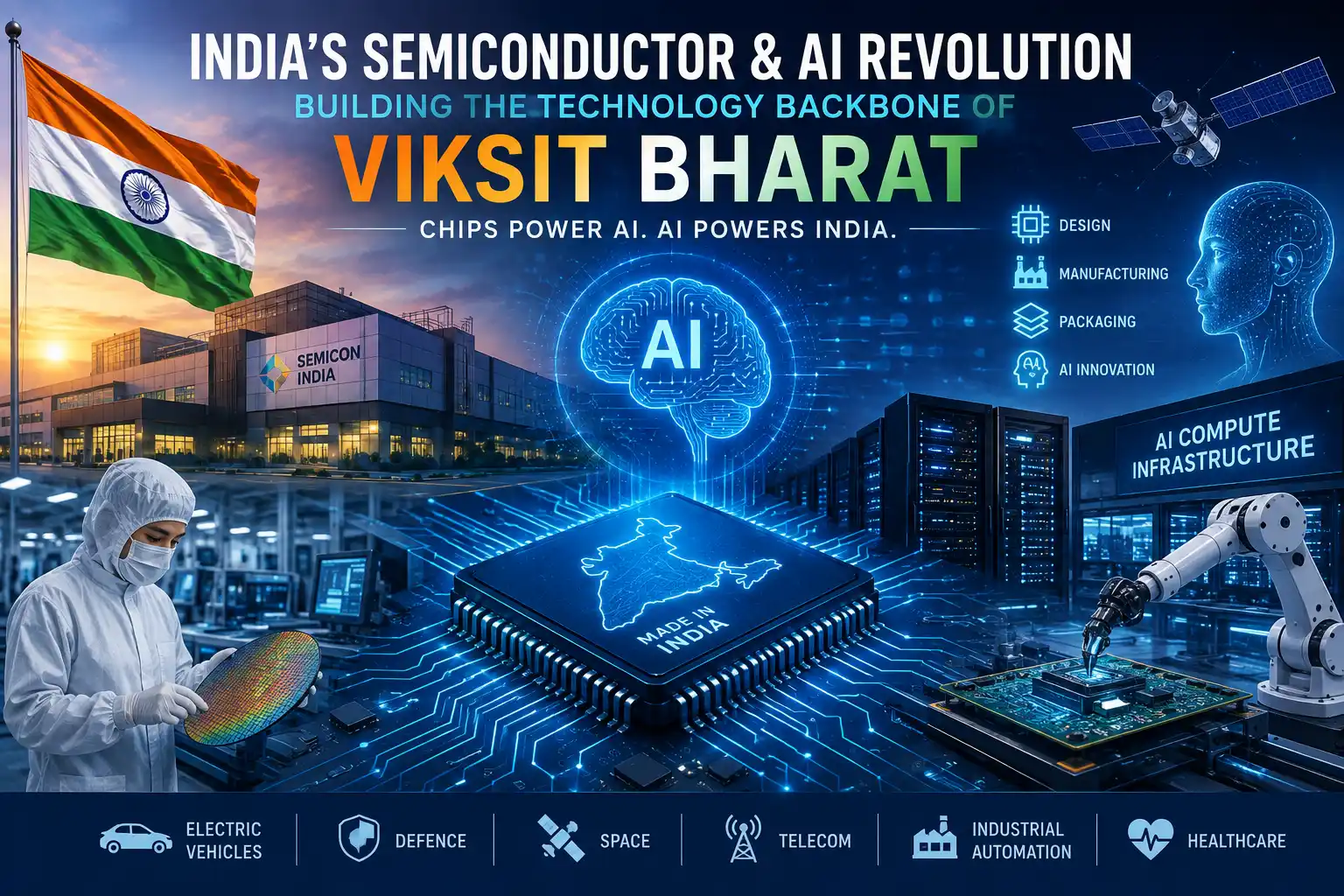
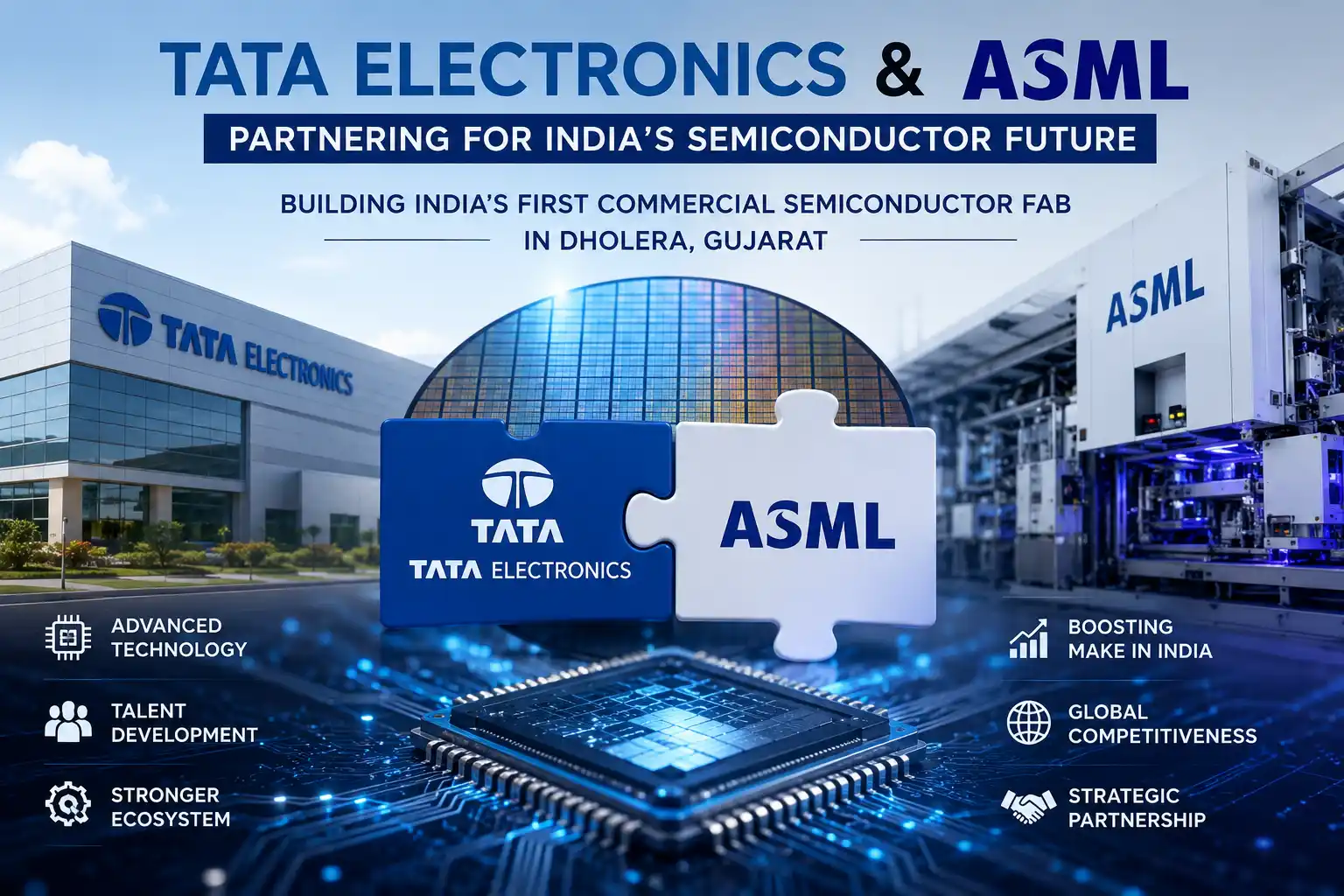
India is rapidly moving ahead in semiconductor manufacturing. In this direction, Tata Electronics and ASML have announced an important partnership. This partnership has been formed to strengthen India’s first commercial semiconductor fabrication plant (Fab).
The deal is being considered a historic step for India’s semiconductor mission because ASML is one of the world’s most advanced chipmaking equipment companies.
Latest News
On May 16, 2026, Tata Electronics and ASML officially signed a Memorandum of Understanding (MoU). This agreement will support India’s first commercial 300mm semiconductor fab being developed in Dholera, Gujarat.
The agreement was signed in the presence of Indian Prime Minister Narendra Modi and Netherlands Prime Minister Rob Jetten.
What is Tata Electronics?
Tata Electronics is the electronics and semiconductor manufacturing company of the Tata Group. The company was established in 2020.
The company operates in several areas:
- Semiconductor Manufacturing
- Chip Packaging & Testing
- Electronics Manufacturing Services
- Design Services
The company currently has operations in Gujarat, Assam, Tamil Nadu, and Karnataka.
What is ASML?
ASML is a global semiconductor equipment company based in the Netherlands. The company manufactures some of the world’s most advanced lithography machines, which are used in semiconductor chip production.
Major global chip companies such as:
- TSMC
- Samsung
- Intel
all use ASML’s machines.
Why is This Partnership Important?
Lithography technology is one of the most critical processes in semiconductor manufacturing, and ASML is the global leader in this field.
Under this partnership, ASML will:
- Supply advanced lithography tools to Tata Electronics
- Support the setup of the Dholera Fab
- Help in local talent training
- Assist in building the supply chain and R&D ecosystem
This could help India become globally competitive in semiconductor manufacturing.
What is the Dholera Semiconductor Fab?
Tata Electronics is building India’s first commercial 300mm semiconductor fabrication plant in Dholera, Gujarat, with an investment of around $11 billion.
The plant will manufacture chips for:
- Automotive sector
- Mobile devices
- Artificial Intelligence (AI) applications
- Industrial electronics
The facility is also expected to supply chips to global customers.
Why is ASML’s Technology Special?
Chip manufacturing requires nano-level precision. ASML’s lithography machines are used to create microscopic circuits on silicon wafers.
Modern AI chips and advanced processors heavily depend on ASML technology. Because of this, ASML is considered one of the most strategic companies in the global semiconductor industry.
How Will India’s Semiconductor Mission Benefit?
India has long depended on imported semiconductor chips. However, the government is now strongly promoting domestic chip manufacturing.
This partnership could help:
- Strengthen India’s semiconductor ecosystem
- Increase high-tech manufacturing
- Create new employment opportunities
- Reduce electronics imports
- Improve India’s role in the global supply chain
Focus on Talent Development
Tata Electronics and ASML will not only supply machines but will also:
- Develop skilled engineers
- Run semiconductor training programs
- Build local R&D infrastructure
This is considered extremely important for creating a long-term semiconductor ecosystem in India.
India Could Benefit from Global Geopolitics
After the US-China technology tensions, many semiconductor companies have started searching for alternative manufacturing hubs.
In this environment, India could:
- Become a trusted manufacturing destination
- Benefit from semiconductor supply chain diversification
- Attract more foreign investments
Analysis
This partnership is not just a business deal but also a strategic step for India’s technology future.
Key reasons:
- A world-leading company like ASML entering India is a major development
- Tata Group is working with a long-term manufacturing vision
- India is moving rapidly toward semiconductor self-reliance
- Growing demand for AI, EVs, and electronics will further increase chip demand in the coming years
If the Dholera Fab becomes successful, India could secure a strong position on the global semiconductor manufacturing map in the future.
Outcome
The partnership between Tata Electronics and ASML could become a milestone for India’s semiconductor sector. This deal is not limited to chip manufacturing alone but could also accelerate technology development, talent creation, supply chain growth, and economic expansion.
India is now moving rapidly toward becoming not just an electronics consumer but also a future semiconductor producer.
Source: PIB