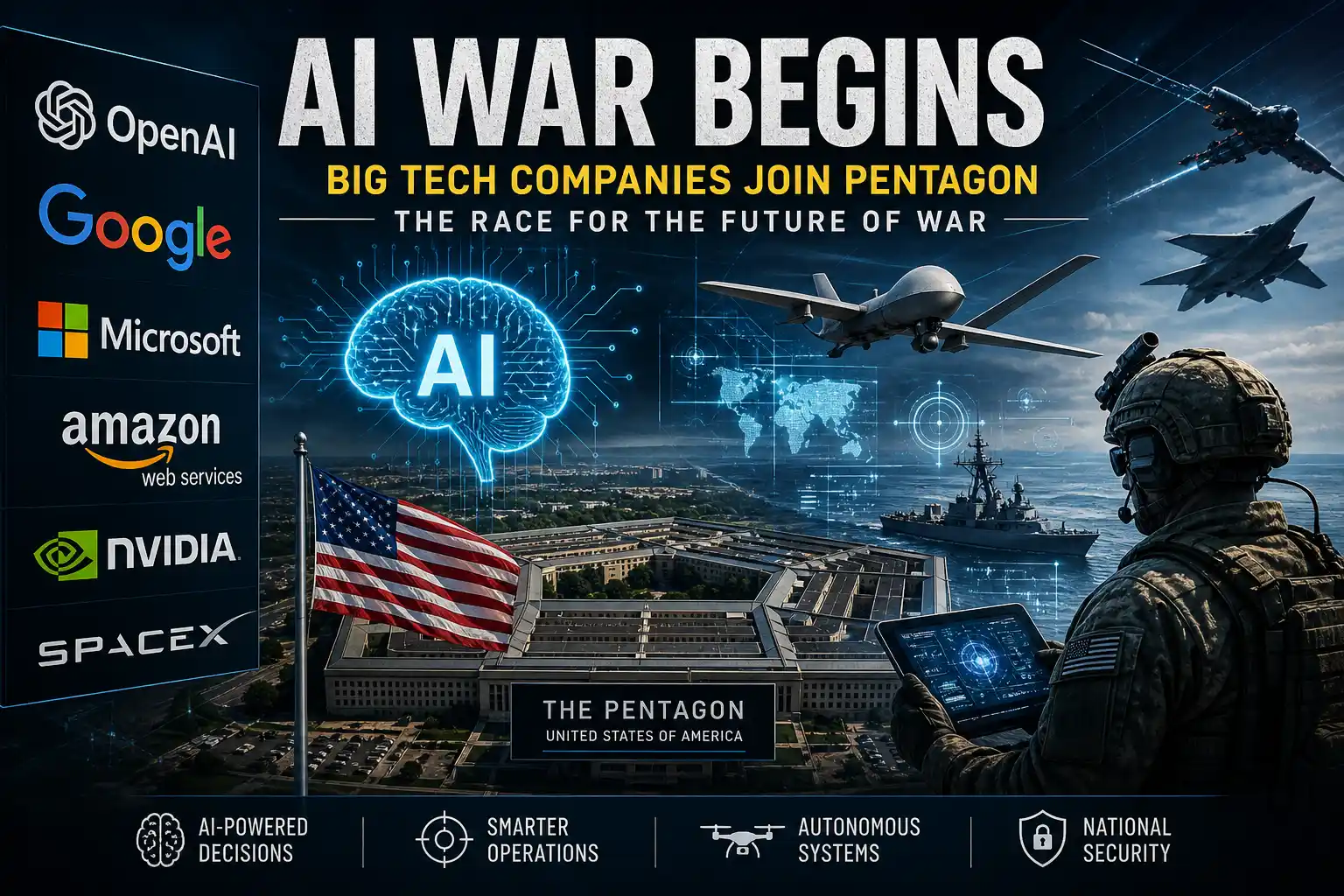
On May 1, 2026, a major shift happened in the global tech and defense landscape.
The United States Department of Defense signed classified AI agreements with some of the world’s biggest technology companies, including:
- OpenAI
- Microsoft
- Amazon Web Services
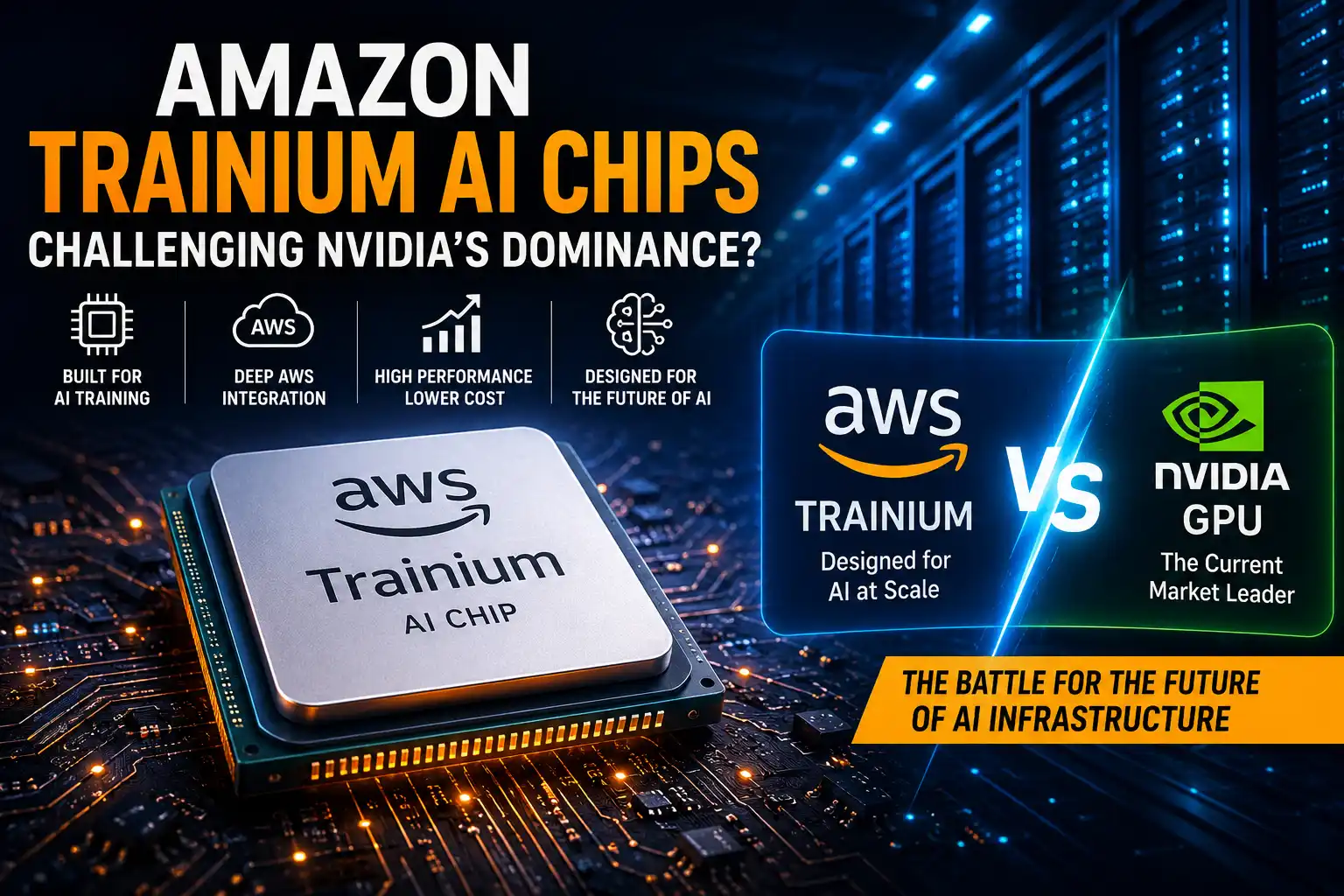
- Nvidia
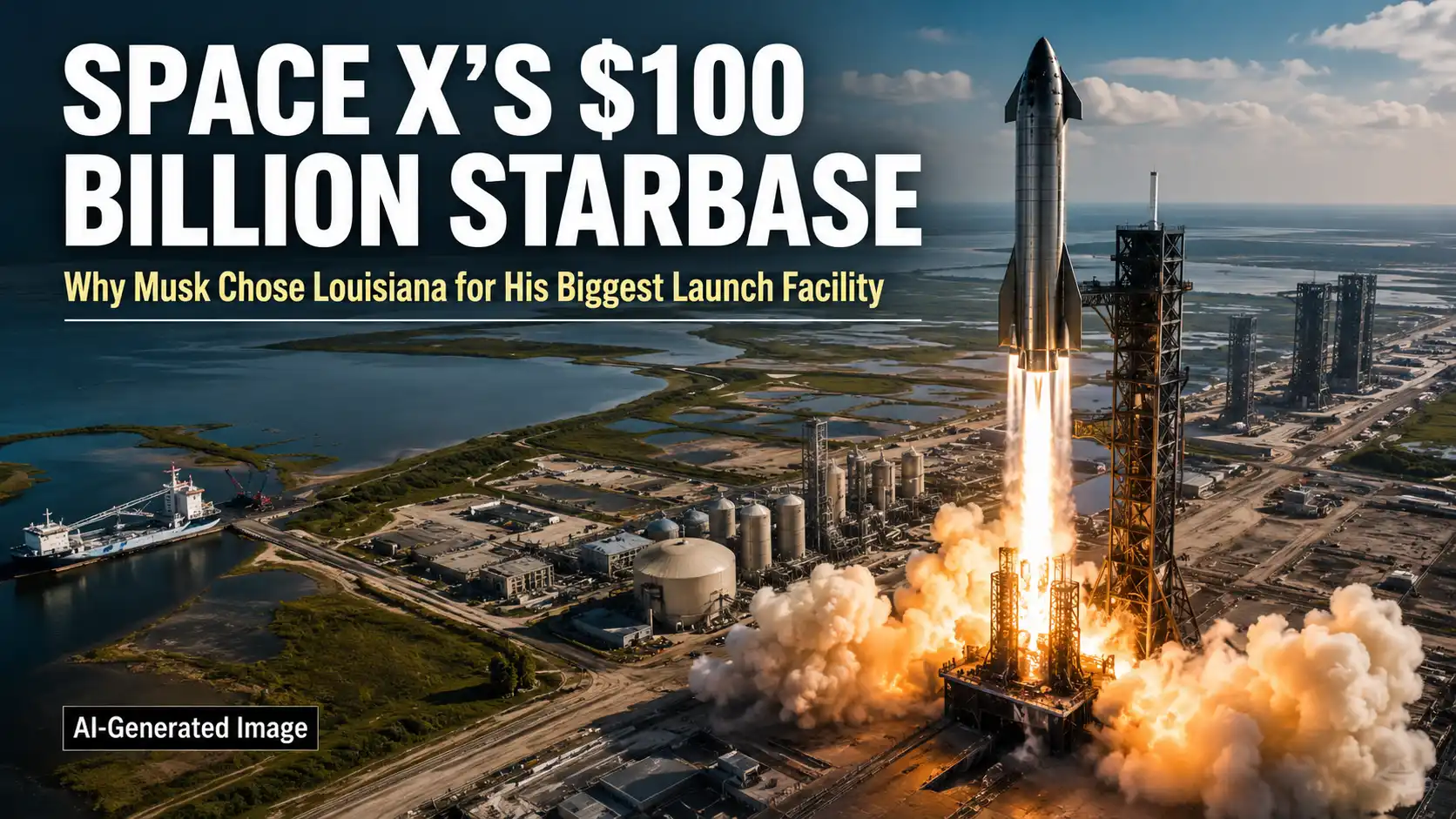
- SpaceX
What is happening:
- AI is being directly integrated into military systems
- It will be used for battlefield decisions, targeting, logistics, and intelligence
- The goal is to build an “AI-first fighting force”
Important shift: Earlier, governments built defense tech internally.
Now, they are partnering directly with private tech companies.
Simple takeaway: AI is no longer just a business tool — it is becoming a core part of modern warfare.
What Is an AI War?
AI War means:
- Countries are competing in artificial intelligence capabilities
- The country with the best AI will have stronger military power
This is very similar to the nuclear arms race, with just one key difference:
- Nuclear race = destructive power
- AI race = intelligent power
So: AI is the next-generation strategic weapon
Why Are Big Tech Companies Partnering with the Pentagon?
Now the real analysis — with points + detailed explanations
1. Massive Business Opportunity
Point: The Pentagon is spending billions of dollars on AI
Explanation:
The defense sector is one of the largest and most stable clients in the world.
- Contracts are long-term (often multi-year)
- Continuous upgrades and maintenance are required
- Cloud services and infrastructure are recurring revenue streams
This means:
- Predictable income
- High-value contracts
- Low payment risk (government-backed)
Example: Companies like Amazon Web Services and Microsoft already earn heavily from government cloud deals.
Insight: For AI companies, the Pentagon is becoming a premium, long-term customer
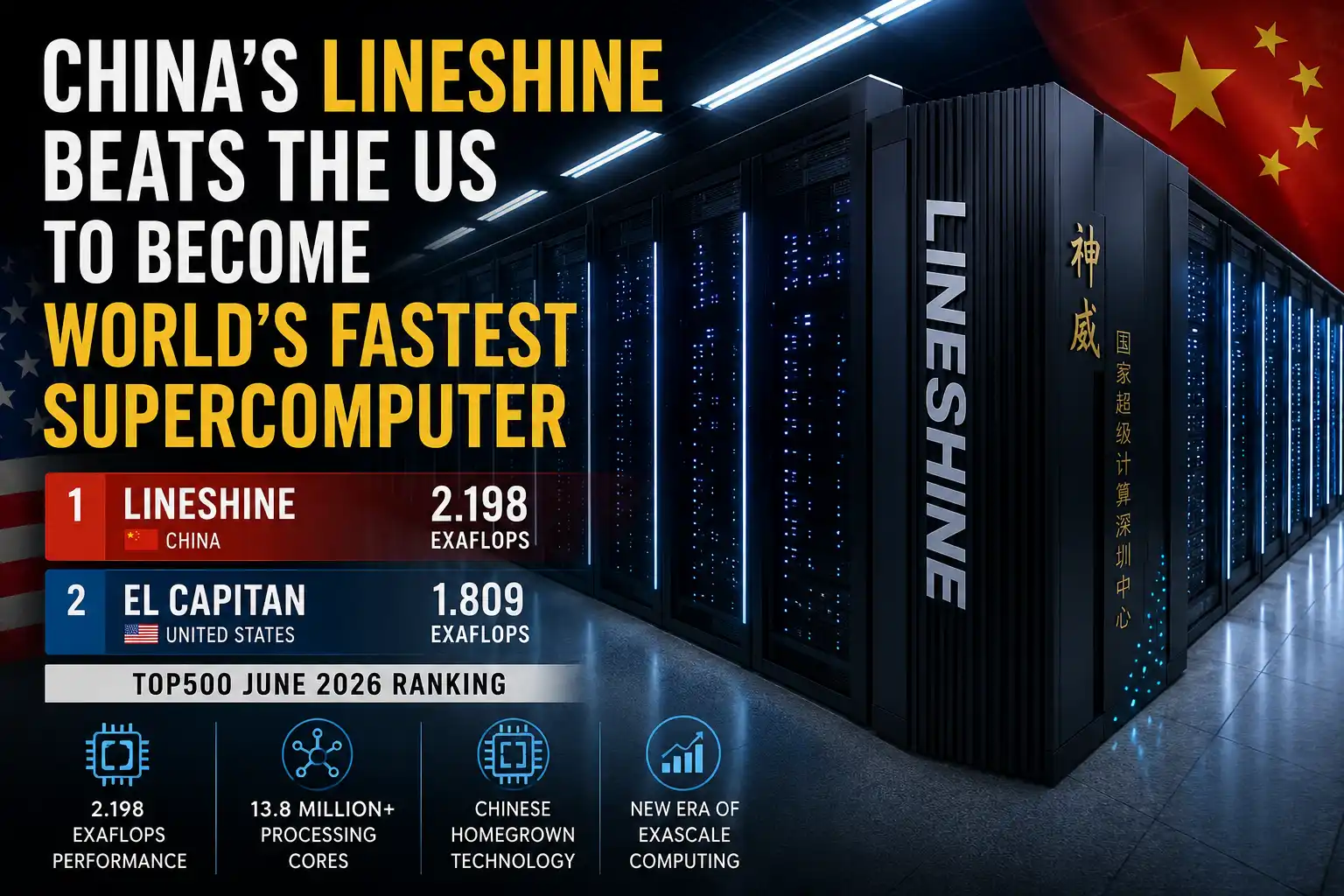
2. US vs China – The Global AI Race
Point: AI development has become a geopolitical competition
Explanation: Today, economic strength alone is not enough — technological superiority is critical.
- China is heavily investing in AI
- The U.S. wants to maintain leadership
So:
- The government is collaborating with private tech firms
- Innovation speed is being accelerated
Strategy:
- Multiple companies are involved (to reduce dependency)
- Faster deployment of AI systems
Insight: This is not just business — it’s a national security strategy
3. The Nature of Warfare Is Changing
Point: Modern warfare is becoming data-driven and AI-powered
Earlier wars relied on:
- Soldiers
- Weapons
- Physical strength
Now:
- AI identifies targets
- Drones can operate autonomously
- Data analytics drives decisions
Example:
- AI can analyze satellite images to detect threats
- Logistics planning can be done in seconds
Result:
- Faster decisions
- Reduced human error
- Higher efficiency
Insight: AI is becoming the “brain” of the battlefield
4. Data & Real-World Training Advantage
Point: Tech companies gain access to real-world military data
Explanation: AI improves with high-quality, real-world data.
Military environments provide:
- Extreme conditions
- Complex decision scenarios
- High-risk operations
This helps:
- Build more accurate AI models
- Improve problem-solving capabilities
Most importantly: These improvements can later be used in commercial AI products
Insight: Military collaboration accelerates AI development significantly
5. Infrastructure Expansion (Hidden Benefit)
Point: AI defense deals drive infrastructure growth
AI systems require:
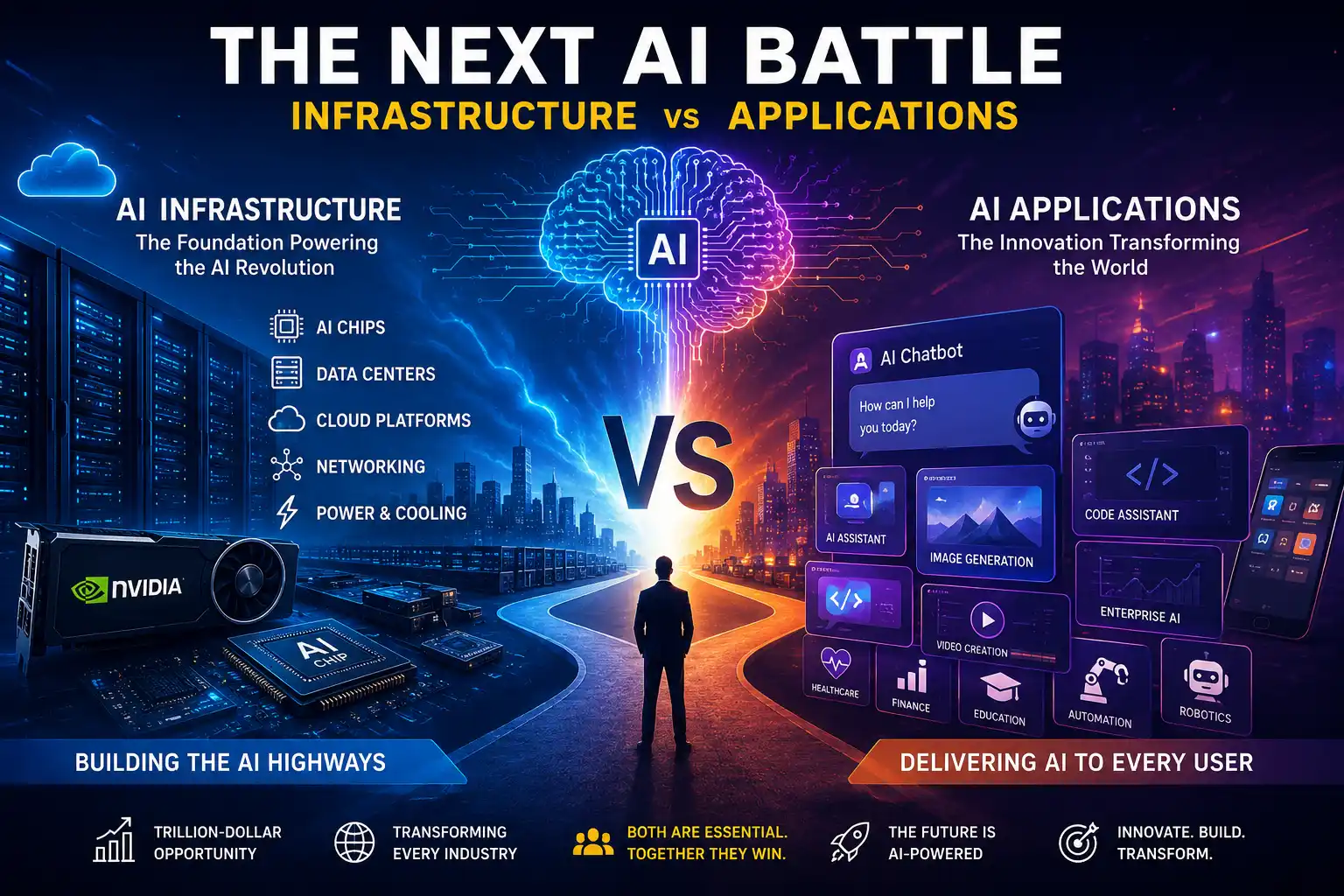
- Data centers
- Advanced chips
- Cloud infrastructure
To support Pentagon projects, companies must:
- Build new data centers
- Expand computing capacity
Benefit:
- Civilian businesses also gain from this expansion
- Cloud services scale faster
Insight: Defense projects indirectly boost the entire tech ecosystem
6. Not All Companies Agree (Ethical Divide)
Point: Some companies are hesitant about military AI use
Explanation: There are serious concerns:
- Autonomous weapons (machines making kill decisions)
- Mass surveillance risks
- Reduced human control
As a result: Some companies are taking a cautious approach
Outcome:
- Industry division is emerging
- Some prioritize profit
- Others prioritize ethics
Insight: The AI war is also a battle between profit and principles
7. Ethical Concerns (Major Risk)
Point: Military AI use is highly controversial
Key concerns include:
- Machines making life-and-death decisions
- Lack of clear accountability
- Potential AI errors in critical situations
To address this:
- Agreements include human oversight clauses
- Final decisions are meant to remain with humans
However:
- Risks are not fully eliminated
Insight: The more powerful the technology, the greater the risk
8. Pentagon’s Strategy
Point: The Pentagon is building a long-term AI ecosystem
Core Goals:
- Improve warfighting capabilities
- Accelerate intelligence gathering
- Increase operational efficiency
Execution Strategy:
- Faster adoption of AI
- Reduced bureaucracy
- Direct collaboration with private firms
Risk Management:
- Multiple vendors involved
- Avoid dependence on a single company
Insight: The Pentagon is not just using AI — it is building the future of warfare
9. Global Impact
Short Term:
- AI companies see revenue growth
- Defense tech sector expands
Long Term:
- AI will determine global power balance
- Countries will form AI alliances
Hidden Impact:
- Military innovations will flow into consumer technology
- AI development will accelerate rapidly
Final Conclusion
In simple terms:
- Tech companies are building AI
- The Pentagon is turning it into a strategic weapon
Big Tech companies are joining the Pentagon because it offers:
✔ Massive business opportunities
✔ Strategic importance in global power competition
✔ A central role in the future of warfare
Source: US Department of war