In 2026, the global economy is being influenced by several major factors such as high interest rates, the US Federal Reserve’s tight monetary policy, oil prices rising to around $115–$120 per barrel, and ongoing geopolitical tensions.
All these factors have a direct impact on the banking sector.
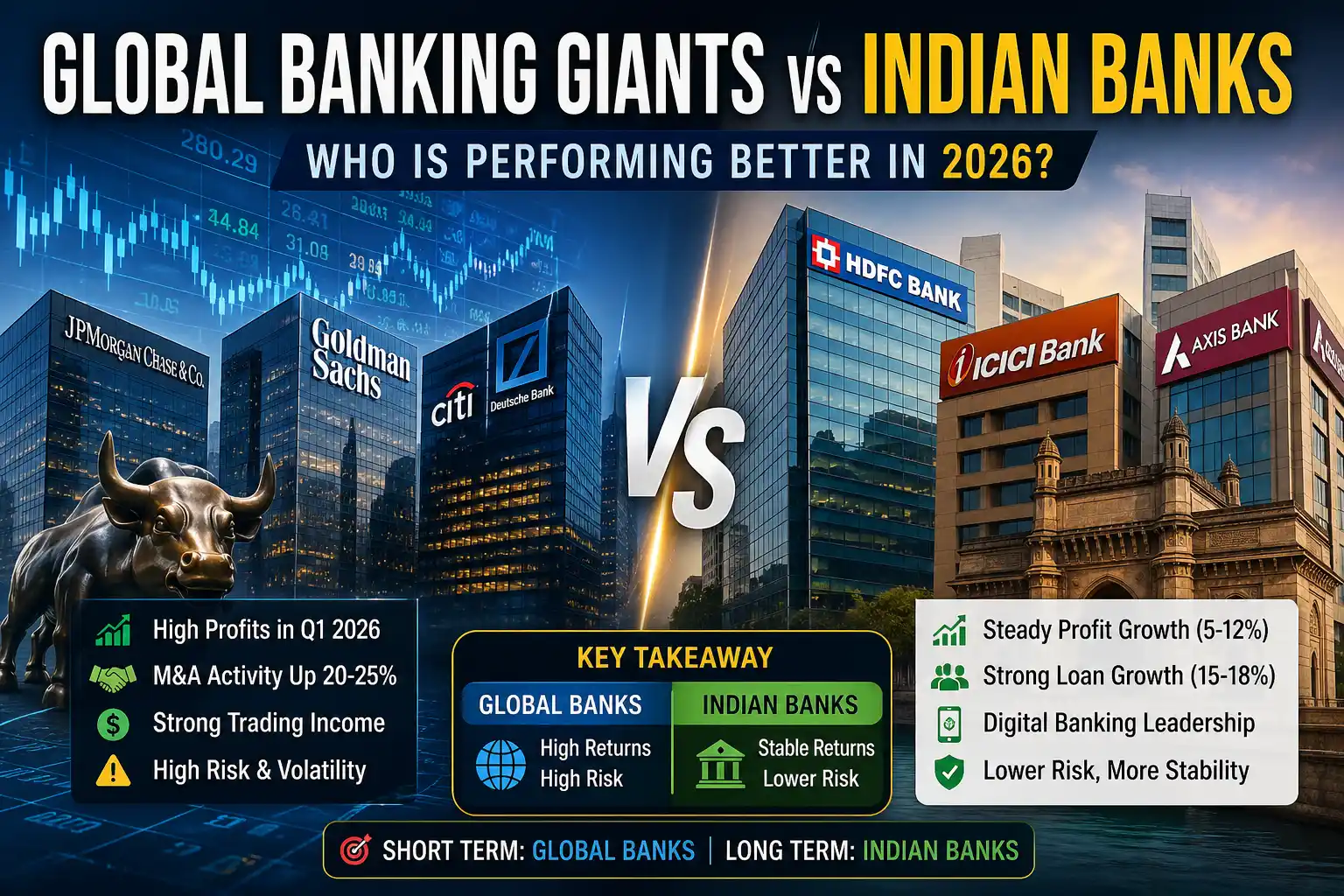
On one side, global giants like JPMorgan Chase, Goldman Sachs, and Deutsche Bank are reporting strong profits driven by trading and deal-making activities.
On the other side, Indian banks such as HDFC Bank, ICICI Bank, and Axis Bank are delivering stable growth supported by India’s expanding economy.
The key question is: Who is performing better in 2026?
Global Banks Performance – High Profit but High Risk
(A) Profit Growth – Strong but Cyclical
According to Q1 2026 data:
- JPMorgan Chase → net profit growth ~12–15% YoY
- Goldman Sachs → investment banking fees up ~40–50%
- Citigroup → revenue at multi-year highs
Reasons:
- High market volatility → surge in trading income
- Elevated interest rates (~5% in the US) → improved lending margins
However, this growth is not stable and depends heavily on market cycles.
(B) Investment Banking & M&A Boom
- Global M&A activity increased by ~20–25% in Q1 2026
- Large cross-border deals are returning
This benefits banks through:
✔ Advisory fees
✔ Deal commissions
✔ Trading gains
Investment banking is clearly in a revival phase
(C) Hidden Risks
- Corporate default risks are gradually rising
- Private credit exposure is at record levels
- European banks are increasing provisions
Deutsche Bank reported strong profits but also raised provisions
This means:
Profits are strong, but sustainability is uncertain
Key Insight (Global Banks)
- High earnings (double-digit growth)
- Market-driven income
- Volatile earnings
- High risk exposure
Indian Banks Performance – A Stable Growth Story
(A) Consistent Profit Growth (Latest Data)
- HDFC Bank → profit growth ~6–8% YoY (Q4 FY26 expected)
- ICICI Bank → steady growth ~10–12%
- Axis Bank → slightly below estimates but stable
Growth is moderate but predictable
(B) Loan Growth – Strong Demand
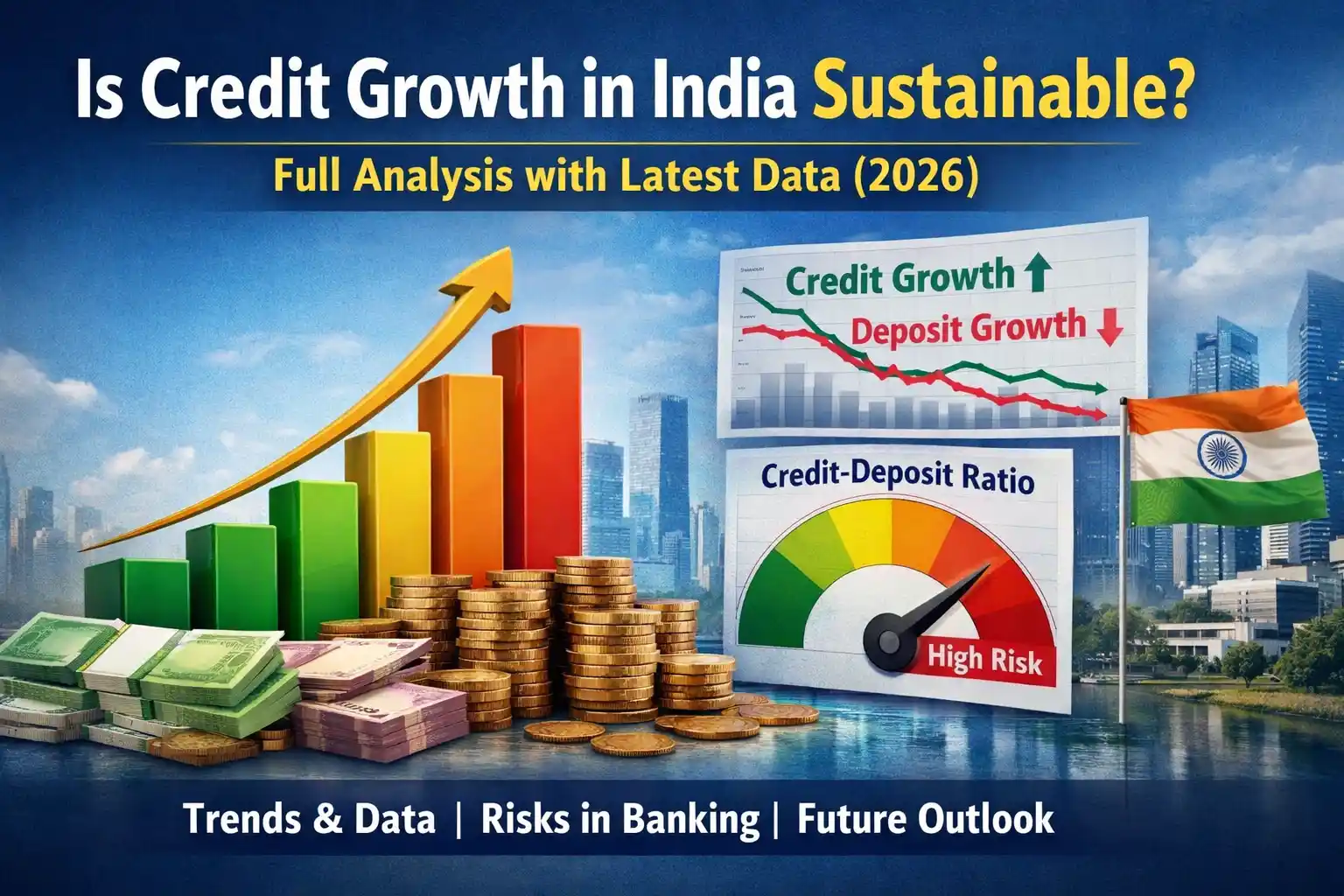
- India credit growth: 15–18% (FY26)
- Retail loans dominate (home + personal loans)
- Rising MSME and infrastructure lending
This indicates:
India’s economic cycle is strongly supporting banks
(C) Digital Banking Advantage
- UPI transactions are at record monthly levels
- Cost-to-income ratios improving
- Faster customer acquisition
Indian banks are ahead in digital adoption compared to many global peers
(D) Challenges
- Pressure on Net Interest Margins (NIM)
- Stricter RBI regulatory norms (ECL framework discussion)
- FII outflows impacting valuations
Key Insight (Indian Banks)
- Stable earnings (5–12% growth)
- Strong domestic demand
- Lower volatility
- Not high growth
Business Model Difference (Core Understanding)
🔹 Global Banks
- Trading + investment banking
- Income depends on market conditions
Benefiting from volatility in 2026
🔹 Indian Banks
- Loan + deposit-driven model
- Income depends on economic growth
Growth is slower but stable
Detailed Comparison
| Factor | Global Banks | Indian Banks |
| Profit Growth | 12–20% | 6–12% |
| Risk Level | High | Moderate |
| Loan Growth | 5–8% | 15–18% |
| Revenue Source | Trading + M&A | Lending |
| Stability | Medium | High |
| Visibility | Low | High |
Who Is Performing Better in 2026?
Based on the current scenario (April 2026):
Global Banks:
- Benefiting from oil crisis and market volatility
- Strong short-term outperformance
Indian Banks:
- Supported by strong credit growth
- Delivering long-term compounding
Investor Perspective
Short-term (6–12 months): Global banks outperform (higher earnings growth)
Long-term (3–5 years): Indian banks perform better (economic growth driven)
Ideal strategy: 60% Indian + 40% Global exposure
Final Conclusion
Global Banks = High Returns (12–20%) + High Risk
Indian Banks = Stable Returns (6–12%) + Lower Risk
Clear verdict for 2026:
- Short term → Global banks are winners
- Long term → Indian banks are more reliable
“Global banks move with markets, while Indian banks grow with the economy — and in the long run, the economy is the strongest driver.”