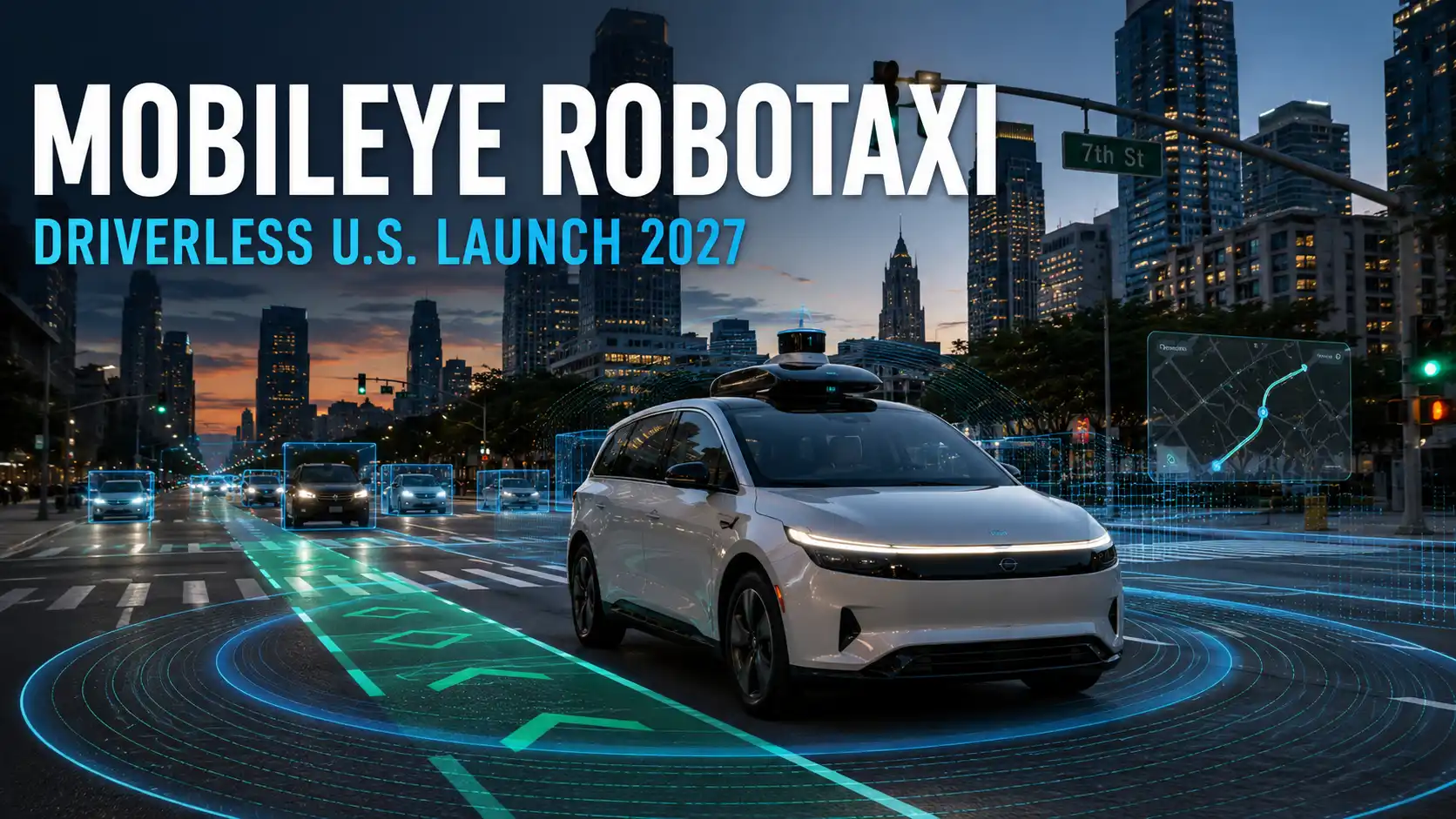
Autonomous driving technology company Mobileye is preparing to launch its own fully driverless robotaxi service in the United States in 2027.
The move represents an important strategic shift for the company. Mobileye has traditionally focused on supplying autonomous driving and advanced driver-assistance technology to automakers and mobility companies. Now, it plans to become not only a technology provider but also a robotaxi operator.
Mobileye plans to initially deploy around 100 autonomous vehicles in a major U.S. metropolitan market during 2027. If the initial operation is successful, the company aims to expand its fleet to approximately 17,000 vehicles over the following five years.
What Is Mobileye?
Mobileye is an Israel-based autonomous driving technology company and a subsidiary of Intel.
The company develops technologies that help vehicles understand their surroundings and make safer driving decisions. Its technology portfolio includes cameras, radar, lidar, computer vision, artificial intelligence, mapping and autonomous driving software.
Mobileye’s technology is used across different levels of vehicle automation, from advanced driver-assistance systems (ADAS) to higher levels of autonomous driving.
What Is Mobileye’s New Robotaxi Plan?
Mobileye’s new strategy goes beyond developing autonomous driving technology.
The company is working toward controlling several parts of the robotaxi ecosystem, including:
- Autonomous driving technology
- Vehicle integration
- Fleet management
- Customer-facing applications
- Trip planning
- Autonomous vehicle mission control
- Remote assistance infrastructure
- Mobility services
Mobileye plans to combine its Mobileye Drive autonomous driving system with mobility technology from its subsidiary Moovit.
In simple terms, the company wants to bring together the technology that drives the vehicle, the software that manages the fleet and the platform through which passengers can request rides.
How Many Robotaxis Will Mobileye Deploy?
Mobileye plans to begin with approximately 100 autonomous vehicles.
The vehicles are expected to be deployed in phases during 2027 in a major U.S. metropolitan market.
One of the most important aspects of the plan is that Mobileye is targeting fully driverless operation, rather than simply vehicles equipped with driver-assistance technology.
The company has not yet publicly disclosed the specific U.S. city where the initial service will operate.
Mobileye’s 17,000-Robotaxi Ambition
The initial 100 vehicles are only the beginning of Mobileye’s planned robotaxi business.
If the initial deployment performs successfully, the company aims to expand its fleet to approximately:
17,000 Robotaxis
over the following five years.
This makes the project more than a technology demonstration. Mobileye is positioning the initial deployment as the first stage of a potentially large commercial robotaxi business.
What Is Mobileye Drive?
Mobileye Drive is the company’s autonomous-driving platform.
It is designed to help vehicles understand their surroundings, detect objects, interpret road conditions and make driving decisions.
Depending on the vehicle configuration, Mobileye’s autonomous technology can combine several sensing and computing technologies, including:
- Cameras
- Radar
- Lidar
- Imaging radar
- High-performance computing
- Artificial intelligence
- Digital mapping
The combination of these technologies allows an autonomous vehicle to build an understanding of its environment and navigate roads without relying on a human driver.
What Role Will Moovit Play?
Moovit is another important part of Mobileye’s robotaxi strategy.
Moovit is a mobility platform focused on transportation information and trip planning.
For the robotaxi business, Moovit’s technology can help with areas such as:
- Customer-facing applications
- Trip planning
- Passenger interaction
- Fleet optimization
- Mobility management
This could allow Mobileye to move closer to the passenger instead of remaining solely behind the scenes as an autonomous-driving technology supplier.
Why Is Mobileye Entering the Robotaxi Business?
This is one of the most important strategic aspects of the announcement.
Historically, the business model was largely:
Mobileye → Autonomous Technology → Automaker/Mobility Company
The new robotaxi model could become:
Mobileye → Autonomous Technology → Vehicle Fleet → Passenger → Mobility Revenue
Operating its own robotaxi fleet could give Mobileye direct experience with real-world autonomous transportation.
It could also allow the company to collect operational data, validate its technology and develop a new source of revenue.
Mobileye has indicated that its direct robotaxi business is intended to complement, rather than replace, its existing relationships with automakers and mobility companies.
Mobileye and Volkswagen’s MOIA Program
Mobileye is also working with Volkswagen Group’s MOIA on autonomous mobility.
The companies have been developing autonomous mobility services using Mobileye’s technology, with testing and commercialisation planned across multiple markets.
Mobileye’s partnership strategy is important because it provides another route for its autonomous-driving technology to reach commercial robotaxi services.
This creates two potential business models for Mobileye:
1. Partner-Operated Robotaxis
Automakers and mobility companies operate services using Mobileye’s autonomous technology.
2. Mobileye-Operated Robotaxis
Mobileye directly operates its own autonomous vehicle fleet and mobility service.
This combination could give the company greater flexibility as the robotaxi industry develops.
Mobileye’s SuperVision Technology
Robotaxis are not Mobileye’s only major technology business.
The company’s SuperVision platform is another important part of its automotive portfolio.
SuperVision is primarily designed for advanced driver-assistance and hands-off driving applications. It should not be confused with a fully autonomous robotaxi system.
In simple terms, SuperVision is designed to assist the human driver, while Mobileye Drive is aimed at much higher levels of vehicle automation.
Mobileye’s broader technology roadmap therefore covers several stages of vehicle automation, from:
ADAS → SuperVision → Chauffeur → Drive → Fully Autonomous Mobility
What Could Mobileye Gain From Robotaxis?
If its robotaxi program succeeds, Mobileye could benefit in several ways.
1. Real-World Driving Data
Thousands of autonomous rides could generate valuable data about real-world road conditions, passenger behaviour and autonomous vehicle performance.
2. Technology Validation
Running its own service would allow Mobileye to demonstrate how its technology performs in commercial environments rather than relying only on laboratory tests or demonstrations.
3. New Revenue Opportunity
Instead of generating revenue mainly by supplying technology to automakers, Mobileye could potentially earn revenue directly from autonomous mobility services.
4. Stronger Market Position
A successful commercial robotaxi service could strengthen Mobileye’s position against other major autonomous-driving companies.
What Are the Major Risks?
Launching a driverless robotaxi service is not an easy task.
The biggest challenge is safety and regulation.
Mobileye will need to meet regulatory requirements in the locations where its vehicles operate. Autonomous vehicles also need to handle unexpected road situations safely and consistently.
Other challenges include:
- Autonomous driving safety
- Regulatory approval
- Insurance and liability
- Vehicle maintenance
- Remote assistance
- Charging infrastructure
- Customer adoption
- Fleet operating costs
- Competition
The economics of operating thousands of autonomous vehicles will also be an important test.
Mobileye vs. Waymo vs. Tesla
The robotaxi market is becoming increasingly competitive.
Waymo has already established commercial autonomous ride-hailing operations in multiple U.S. cities and continues to expand its service footprint.
Tesla is also pursuing autonomous ride-hailing through its Cybercab strategy.
Mobileye’s planned 2027 U.S. deployment would therefore put it into direct competition with companies that are already developing or operating autonomous mobility services.
The key question will not simply be whether Mobileye’s technology works. The bigger question will be whether the company can safely operate and scale a commercially viable robotaxi network.
Why 2027 Could Be Important for Mobileye
2027 could become an important year for Mobileye because the company is working on several advanced automotive technologies at the same time.
These include:
- Advanced driver-assistance systems
- SuperVision
- Chauffeur technology
- Mobileye Drive
- Robotaxi services
- Autonomous mobility partnerships
The planned U.S. robotaxi operation could therefore become an important test of Mobileye’s broader autonomous-driving strategy.
Our Analysis
Mobileye’s biggest change is that it is moving from being primarily an autonomous-driving technology supplier toward becoming a mobility operator.
The planned 100-vehicle deployment may look small compared with the company’s long-term ambitions. However, the initial fleet will be an important test of whether Mobileye can successfully combine:
Autonomous driving technology + vehicles + software + fleet management + customer services
into one commercial business.
If the initial operation succeeds, the planned expansion toward 17,000 vehicles could make Mobileye a significant player in the global robotaxi market.
However, competition is becoming intense. Waymo, Tesla and other autonomous-driving companies are also working aggressively to expand their services.
Therefore, execution, safety, regulatory approval and operating economics will likely determine whether Mobileye can turn its robotaxi ambitions into a large-scale business.
Key Facts About Mobileye’s Robotaxi Plan
| Category | Details |
| Company | Mobileye |
| Parent Company | Intel |
| Industry | Autonomous Driving / Mobility |
| New Business | Direct Robotaxi Service |
| Target Market | United States |
| Expected Launch | 2027 |
| Initial Fleet | Approximately 100 vehicles |
| Long-Term Target | Approximately 17,000 vehicles |
| Autonomous Platform | Mobileye Drive |
| Mobility Platform | Moovit |
| Target Operation | Fully Driverless |
| Major Partner Program | Volkswagen / MOIA |
| Stock Ticker | NASDAQ: MBLY |
Outcome
Mobileye’s planned robotaxi business could mark a major transition for the company.
Instead of only providing autonomous-driving technology to automakers, Mobileye wants to operate a direct driverless mobility service in the United States.
The planned 2027 launch, starting with around 100 vehicles and potentially expanding to 17,000 vehicles, could give Mobileye a new role in the rapidly developing autonomous transportation industry.
The next major milestones to watch will be the announcement of the U.S. launch city, regulatory approvals, vehicle partners, initial deployment and the performance of the first commercial robotaxi fleet.
Source:
Mobileye’s official announcements and 2026 corporate updates, along with current reporting on the autonomous-vehicle and robotaxi market.