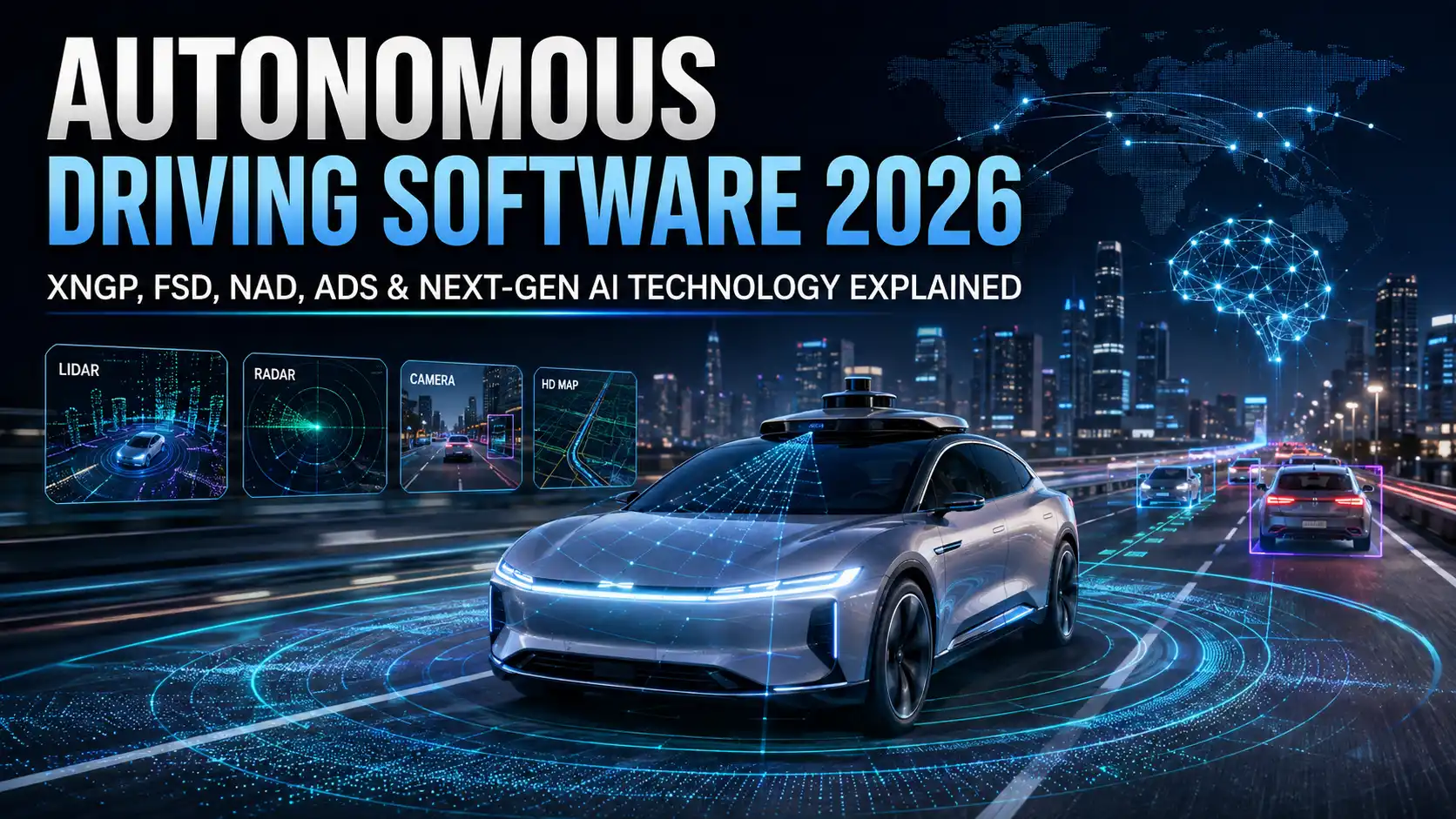
The competition in the next generation of electric vehicles is no longer limited to battery range, charging speed, motor performance, or design. Automakers are increasingly competing on another important area: autonomous-driving software and AI.
Companies such as XPeng, Tesla, NIO, Huawei, Baidu, Waymo, Mobileye and Wayve are developing their own autonomous-driving platforms and software systems. Examples include XPeng XNGP, Tesla FSD, NIO NAD, Huawei ADS, Baidu Apollo and Waymo Driver.
At first glance, these systems appear to have the same purpose: make vehicles capable of driving with less human input. However, the technology behind them can be quite different. Companies may use different combinations of cameras, LiDAR, radar, AI models, computing platforms, maps, sensor fusion, prediction and planning technologies.
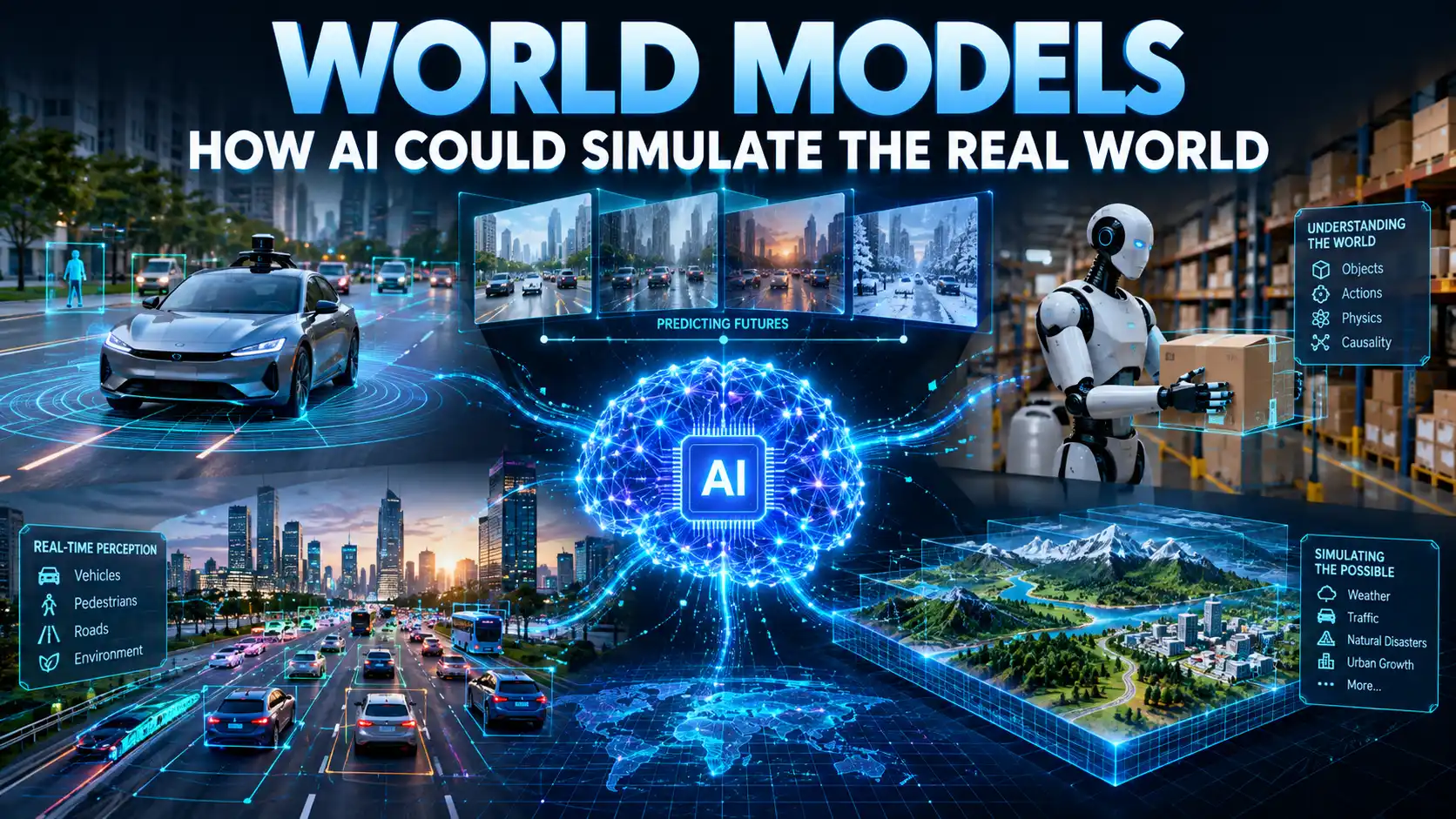
The next stage of the industry is becoming even more interesting. Companies are moving beyond traditional ADAS toward end-to-end AI, world models, Vision-Language-Action (VLA) models, physical AI and map-light or map-free driving. XPeng, for example, is developing VLA 2.0 and its X-World world model for autonomous-driving applications.
This means software and AI could become as important to a vehicle’s identity as its battery and electric motor.
What Does Autonomous-Driving Software Actually Do?
In simple terms, autonomous-driving software helps a vehicle answer three basic questions:
Where am I?
What is happening around me?
What should I do next?
The vehicle’s cameras, radar, LiDAR and other sensors collect information about the surroundings. Software and AI process that information and determine what the vehicle should do.
For example:
A camera detects a pedestrian → AI identifies the pedestrian → the system predicts that the person may cross the road → the vehicle reduces its speed → once the road is clear, the vehicle continues.
This entire process is part of the autonomous-driving technology stack.
Which Companies Are Developing Their Own Autonomous-Driving Platforms?
Several major companies are developing autonomous-driving technologies using different approaches.
| Company | Platform / Software | Main Direction |
| XPeng | XNGP / VLA | AI, end-to-end AI and physical AI |
| Tesla | FSD | Neural networks and vision-based driving |
| NIO | NAD / NOP+ ecosystem | Multi-sensor + AI |
| Huawei | Qiankun ADS | Multi-sensor + AI platform |
| Baidu | Apollo / Apollo Go | Autonomous driving and robotaxis |
| Waymo | Waymo Driver | Purpose-built Level 4 autonomy |
| Mobileye | SuperVision / Chauffeur / Drive | ADAS to autonomous driving |
| Wayve | AI Driver | End-to-end AI |
| Mercedes-Benz | DRIVE PILOT / MB.OS | Automated driving and vehicle software |
| Qualcomm | Snapdragon Ride | Automotive computing and AI ecosystem |
Some companies primarily develop the technology for their own vehicles, while others also provide platforms or technology to other automakers.
XPeng XNGP: Moving Toward AI-Based Driving
XPeng has taken an aggressive approach to intelligent driving.
Its XNGP system represents the company’s broader intelligent-driving ecosystem, but XPeng is now looking beyond traditional ADAS.
The company has been developing VLA 2.0 and its X-World world model as part of its autonomous-driving development.
What does this mean?
Traditional autonomous-driving systems can rely heavily on individually designed modules and rules.
New AI-based approaches are attempting to make the system more capable of:
Seeing → Understanding → Predicting → Reasoning → Acting
This could allow vehicles to handle a wider range of real-world situations.
XPeng is also connecting its AI development with broader areas such as physical AI, robotaxis and humanoid robots, creating a larger AI ecosystem around physical machines.
Tesla FSD: Strong Focus on Vision and Neural Networks
Tesla’s Full Self-Driving (FSD) is one of the world’s best-known autonomous-driving software systems.
Tesla has focused heavily on cameras and neural networks as key parts of its driving approach.
In simplified form:
Cameras → Neural Networks → Driving Decision → Vehicle Control
One of Tesla’s major advantages is its large fleet of vehicles and the real-world driving data generated by those vehicles.
However, Tesla’s approach is also part of a major industry debate.
Waymo, for example, argues for a multi-sensor approach involving technologies such as cameras, LiDAR and radar for fully autonomous driving.
This creates an important question for the industry:
Can advanced AI achieve full autonomy primarily through cameras, or are multiple sensor types necessary for higher levels of autonomy?
There is still no universal answer.
Waymo Driver: Designed for Full Autonomy
Waymo follows a different strategy from Tesla.
Its Waymo Driver was designed around fully autonomous operation and uses multiple sensor technologies, including cameras, LiDAR and radar.
The basic philosophy is:
Use multiple sensing technologies to create redundancy and improve reliability.
For example, if one sensor has difficulty detecting something because of a particular condition, information from another sensor may help the system.
Waymo is also different because its technology is already being used for driverless robotaxi operations, rather than being primarily positioned as a consumer driver-assistance system.
NIO NAD: Combining Sensing, Computing and AI
NIO has developed its own intelligent-driving ecosystem.
Its architecture has included technologies such as:
NAD — NIO’s assisted/intelligent-driving system
Aquila — sensing architecture
Adam — computing platform
The concept can be simplified as:
Sensors → Computing → AI → Driving Software
This shows why an autonomous-driving “platform” is usually much broader than a single software feature.
The company is integrating sensing, computing and software to deliver advanced intelligent-driving capabilities across its vehicle lineup.
Huawei ADS: A Different Business Model
Huawei is particularly interesting because it is not a traditional automaker.
Instead, Huawei develops automotive technologies and provides intelligent-driving solutions to vehicle manufacturers.
Its Qiankun ADS ecosystem combines sensing, computing and intelligent-driving software.
Huawei has continued developing new generations of its ADS technology and AI architecture.
This creates a different model:
Huawei Technology
↓
Automaker
↓
Vehicle
So Huawei’s technology does not necessarily have to be limited to one vehicle brand.
This is very different from Tesla’s vertically integrated approach.
Baidu Apollo: Strong Focus on Robotaxis
Baidu’s Apollo is another major autonomous-driving ecosystem.
One of its most visible applications is Apollo Go, the company’s robotaxi service.
Instead of focusing mainly on advanced driver assistance for privately owned vehicles, Baidu has invested heavily in:
- Driverless robotaxis
- Autonomous mobility
- Mapping
- AI driving
- Fleet operations
Baidu reported around 1 million fully driverless operational rides in Q2 2026, with cumulative public rides exceeding 23 million by June 2026.
This makes Baidu’s strategy particularly focused on autonomous transportation as a service.
Mobileye: A Modular Autonomous-Driving Strategy
Mobileye takes another approach.
Rather than relying on a single autonomous-driving product, it has developed a broader portfolio.
Its technology ecosystem includes:
ADAS
↓
SuperVision
↓
Chauffeur
↓
Drive
These products are designed for different levels of automated driving.
This gives automakers the ability to choose technology according to their requirements.
For example:
A mainstream vehicle may need advanced ADAS.
A premium vehicle may need hands-off driving.
A future robotaxi may require a fully autonomous system.
Mobileye’s modular strategy allows it to address several of these markets.
Wayve: End-to-End AI
UK-based Wayve is pursuing an AI-first approach to autonomous driving.
Wayve has partnered with Qualcomm to integrate its AI Driver with the Snapdragon Ride automotive platform. The goal is to develop production-ready end-to-end AI driving technology that can scale toward more advanced automated driving.
This represents another emerging model:
AI Software Company + Automotive Computing Company + Automaker
In the future, automakers may not need to develop every part of their autonomous-driving stack internally.
Are All Autonomous-Driving Software Systems the Same?
No.
Their ultimate goal may be similar:
Make vehicles capable of driving more safely and with less human involvement.
But their technical approaches can be very different.
Some companies focus heavily on:
Camera + AI
For example, Tesla.
Others emphasize:
Camera + LiDAR + Radar + AI
For example, Waymo and several other autonomous-driving systems.
Some are moving toward:
End-to-End AI
Such as Wayve and XPeng’s newer AI direction.
Others focus strongly on:
Robotaxis
Such as Waymo and Baidu.
And some focus on:
Technology platforms for automakers
Such as Huawei and Mobileye.
So there is no single formula being followed by the entire industry.
What New Autonomous-Driving Technologies Could Arrive Next?
The industry is moving beyond traditional ADAS.
1. End-to-End AI
In traditional systems, perception, prediction and planning can operate as separate modules.
End-to-end AI attempts to connect these processes more directly within an AI model.
The goal is to make the vehicle better at handling complex and unfamiliar driving situations.
2. Vision-Language-Action (VLA)
VLA is an emerging AI approach that connects vision, language, reasoning and action.
For example, imagine the vehicle receives an instruction:
“Turn right at the next intersection.”
The AI needs to:
See the road → understand the instruction → understand the environment → reason about the situation → perform the driving action.
XPeng is developing VLA 2.0 as part of its next-generation intelligent-driving technology.
3. World Models
A world model attempts to help AI understand not only what is happening now, but also how the surrounding world may behave.
XPeng’s X-World is an example of this direction.
According to XPeng, the system is being used for areas such as simulation, reinforcement learning and data generation for autonomous-driving development.
For example, instead of simply recognizing a pedestrian, an AI model could learn to estimate how that pedestrian might behave over the next few seconds.
4. Map-Light and Map-Free Driving
Older autonomous-driving approaches can depend heavily on detailed high-definition maps.
The problem is that creating and continuously updating these maps for every road and city is difficult and expensive.
Newer AI systems are therefore attempting to rely more heavily on:
- Real-time sensor information
- AI perception
- Generalized driving models
- Onboard computing
This could make autonomous-driving systems easier to expand into new locations.
5. V2X and Cooperative Driving
Future autonomous vehicles may not operate completely independently.
Vehicles could communicate with:
- Other vehicles
- Traffic signals
- Roadside infrastructure
- Cloud systems
For example, your car may not be able to see an accident because a truck is blocking the road.
But another connected vehicle or roadside system could send information about the accident.
The autonomous system could then change its route before reaching the problem.
Research into cooperative autonomous driving and V2X is also expanding.
6. Simulation and AI Training
Testing every possible real-world situation on public roads is extremely difficult.
Companies can therefore use simulation to create scenarios involving:
- Heavy rain
- Fog
- Pedestrians
- Accidents
- Unusual traffic
- Construction zones
- Dangerous situations
AI can be trained and tested in these virtual environments before being deployed on real vehicles.
This makes simulation and AI training increasingly important parts of autonomous-driving development.
Who Is Working on Which Technology?
| Company | Main Technology Direction |
| XPeng | XNGP, VLA, World Models, Physical AI |
| Tesla | Vision + Neural Networks + FSD |
| Waymo | Multi-sensor L4 + Robotaxi |
| NIO | Multi-sensor + Computing + AI |
| Huawei | Intelligent-driving platform for automakers |
| Baidu | Robotaxi + Apollo autonomous platform |
| Mobileye | Modular ADAS → Higher automation |
| Wayve | End-to-End AI |
| Qualcomm | Automotive compute + AI ecosystem |
| Mercedes-Benz | Vehicle software + Automated Driving |
Will One Technology Eventually Win?
It is still too early to say.
Different technologies may prove more useful for different applications.
Private EVs
Camera + AI + advanced ADAS may be sufficient for many use cases.
Premium Autonomous EVs
Camera + radar + LiDAR + AI may provide additional redundancy.
Robotaxis
Redundant sensors and highly validated Level 4 software may be more important.
Highway Driving
End-to-end AI could become particularly useful.
Urban Driving
AI + sensors + maps + V2X could work together.
Therefore, the future may not have one universal autonomous-driving technology. Several approaches could coexist.
The Real Competition Is Moving to Software
The automotive competition has changed significantly.
Earlier, consumers often compared:
Engine power
Then:
EV range and charging speed
Now:
Software and intelligent driving
And the next question could be:
Which company can deliver the safest and most capable autonomous-driving AI at the lowest hardware and computing cost?
That is why companies are investing heavily in software, AI models, sensors, computing and real-world data.
Outcome
There is currently no single autonomous-driving platform that has emerged as the universal winner. XPeng XNGP, Tesla FSD, NIO NAD, Huawei ADS, Waymo Driver, Baidu Apollo, Mobileye’s platforms and Wayve AI Driver are all trying to solve the same broad problem through different technological and business strategies.
The next major shift could come from end-to-end AI, VLA models, world models, physical AI, simulation and cooperative driving.
The companies that succeed may not simply be the ones with the most sensors or the most powerful computers. The real winners are likely to be those that can combine AI intelligence, safety, computing efficiency, hardware cost and real-world reliability.
For consumers, this means that future EV buying decisions may involve more than battery capacity and driving range. Buyers may also need to consider which autonomous-driving platform, AI software, sensors and computing architecture a vehicle uses.
Sources: Company websites and official technology announcements from XPeng, Tesla, NIO, Huawei, Waymo, Baidu, Mobileye, Qualcomm, and relevant industry/research reports.