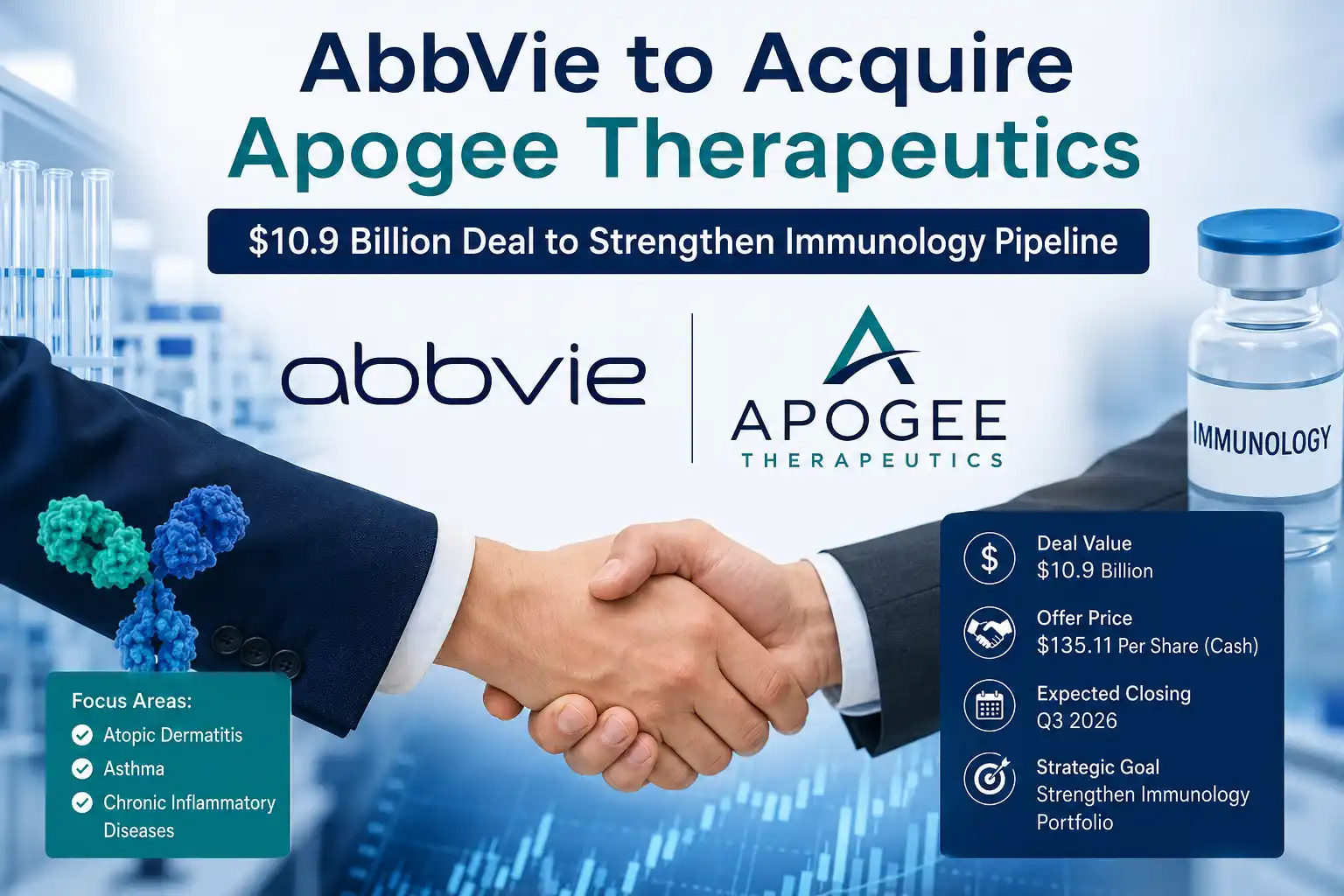
The global pharmaceutical industry has witnessed another major acquisition. U.S.-based biopharmaceutical giant AbbVie has announced an agreement to acquire clinical-stage biotechnology company Apogee Therapeutics for approximately $10.9 billion. The acquisition marks AbbVie’s largest deal in recent years and is aimed at strengthening its immunology pipeline as the company prepares for long-term growth beyond its blockbuster drug Humira.
Latest News
On June 22, 2026, AbbVie announced that it had entered into a definitive agreement to acquire Apogee Therapeutics for $135.11 per share in cash, valuing the company at approximately $10.9 billion.
The offer represents a 49% premium over Apogee’s closing share price on June 18, 2026. The transaction has been unanimously approved by the boards of both companies and is expected to close in the third quarter of 2026, subject to shareholder and regulatory approvals.
About AbbVie
AbbVie Inc. is a global biopharmaceutical company headquartered in North Chicago, Illinois, USA. The company was established in 2013 after being separated from Abbott Laboratories.
AbbVie focuses on discovering, developing, and commercializing medicines across several therapeutic areas, including:
- Immunology
- Oncology
- Neuroscience
- Eye Care
- Aesthetics
Some of AbbVie’s best-known products include:
- Humira
- Skyrizi
- Rinvoq
- Botox
For many years, Humira was the world’s highest-selling prescription medicine, making AbbVie one of the leading pharmaceutical companies globally.
About Apogee Therapeutics
Apogee Therapeutics is a U.S.-based clinical-stage biotechnology company founded in 2022.
The company specializes in developing next-generation monoclonal antibody therapies for inflammatory and immune-mediated diseases. Its research primarily targets conditions such as:
- Atopic Dermatitis (Eczema)
- Asthma
- Chronic Inflammatory Diseases
Its lead drug candidate, Zumilokibart (APG777), is currently undergoing clinical development and is considered one of the company’s most valuable assets.
Acquisition Highlights
| Details | Information |
| Acquirer | AbbVie |
| Target Company | Apogee Therapeutics |
| Deal Value | Approximately $10.9 Billion |
| Offer Price | $135.11 per share (Cash) |
| Premium | Approximately 49% |
| Expected Closing | Q3 2026 |
| Strategic Purpose | Strengthen AbbVie’s Immunology Portfolio |
Why Is AbbVie Acquiring Apogee?
1. Replacing Declining Humira Revenue
Humira has been one of AbbVie’s biggest revenue generators for years. However, following the expiration of its patents, biosimilar competition has significantly reduced its sales.
To maintain future revenue growth, AbbVie is investing heavily in innovative medicines with long-term commercial potential.
2. Strengthening the Immunology Business
AbbVie is already a leader in immunology with successful products such as Skyrizi and Rinvoq.
By acquiring Apogee, the company gains access to promising next-generation therapies that could further strengthen its leadership position in treating immune-related diseases.
3. Zumilokibart Is the Key Attraction
The primary reason behind this acquisition is Zumilokibart (APG777).
This experimental therapy is being developed to treat several inflammatory diseases, including:
- Atopic Dermatitis
- Asthma
- Eosinophilic Esophagitis
Industry analysts believe the drug has the potential to compete with blockbuster biologics such as Dupixent, one of the leading treatments for eczema and other inflammatory conditions.
Why Is Zumilokibart Important?
Current biologic therapies often require patients to receive injections every few weeks.
Zumilokibart has been engineered with an extended half-life, which may allow patients to receive treatments less frequently while maintaining effectiveness.
If clinical trials continue to produce positive results, the drug could offer greater convenience for patients and become a strong competitor in the growing immunology market.
Benefits for AbbVie
Stronger Drug Pipeline
The acquisition adds several promising clinical-stage assets to AbbVie’s research portfolio.
Long-Term Revenue Growth
New medicines could help offset declining Humira sales and support sustainable revenue growth over the next decade.
Expansion in Respiratory Diseases
The deal strengthens AbbVie’s presence in asthma and other respiratory disease treatments.
Competitive Advantage
The acquisition positions AbbVie to compete more effectively with pharmaceutical companies such as Sanofi, Regeneron, and other leaders in immunology.
What Do Apogee Shareholders Receive?
Under the agreement, AbbVie will pay $135.11 in cash for each outstanding Apogee share.
Following the announcement, Apogee’s stock surged by nearly 47%, reflecting investors’ positive response to the acquisition and the premium offered.
Potential Risks
Although the acquisition offers significant growth opportunities, there are several risks:
- Zumilokibart is still in clinical development.
- Regulatory approvals are still pending.
- Clinical trials may not produce the expected outcomes.
- Commercial success cannot be guaranteed until the drug reaches the market.
As with most biotechnology acquisitions, the long-term return depends on successful product development and regulatory approval.
Analysts’ View
Many Wall Street analysts consider the acquisition a strategically important move for AbbVie.
According to several investment firms, the transaction strengthens AbbVie’s immunology franchise and provides additional long-term growth opportunities after Humira. Analysts also believe Zumilokibart has the potential to become a valuable commercial product if its clinical development remains successful.
Deal Outcome
AbbVie’s $10.9 billion acquisition of Apogee Therapeutics is more than just another pharmaceutical deal—it represents a long-term investment in the future of immunology. As Humira’s revenue continues to decline due to biosimilar competition, AbbVie is building the next generation of blockbuster therapies to sustain future growth.
With the addition of promising assets such as Zumilokibart, AbbVie strengthens its research pipeline, expands its presence in inflammatory diseases, and positions itself for long-term leadership in one of the fastest-growing segments of the global pharmaceutical industry. If the acquired pipeline successfully progresses through clinical development and receives regulatory approvals, this acquisition could become one of AbbVie’s most significant strategic investments of the decade.
Source: abbvie news