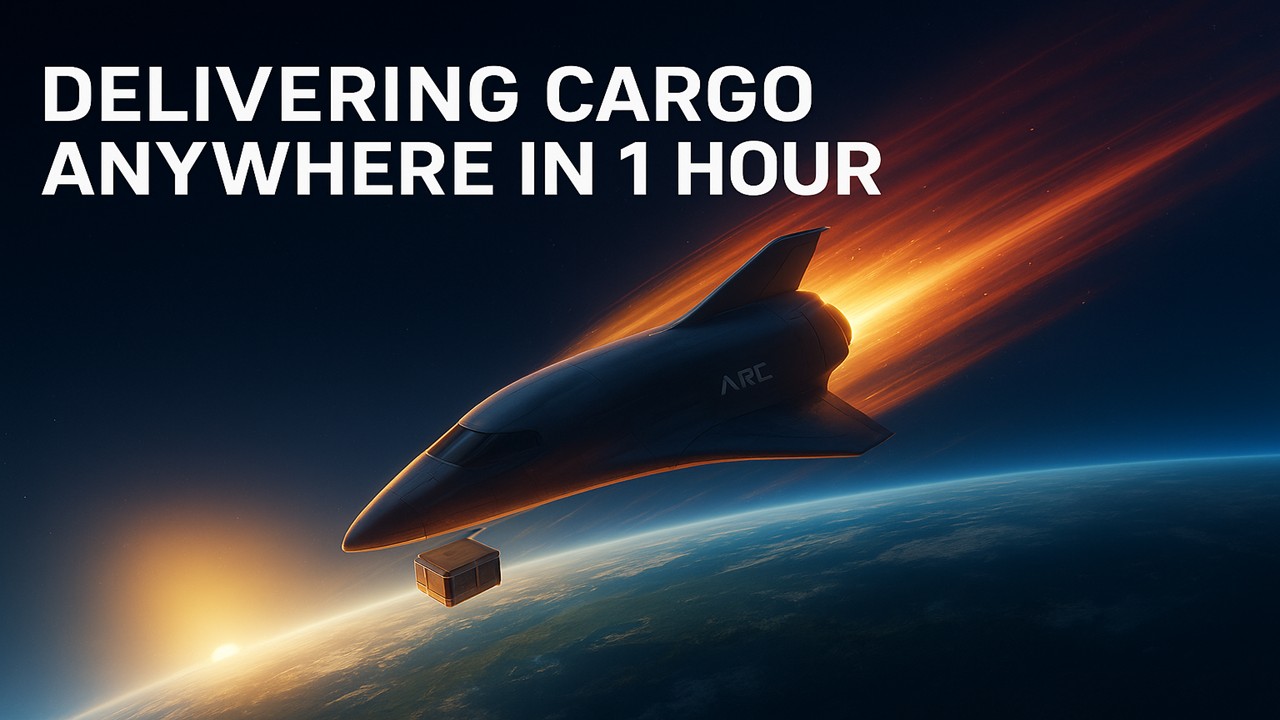

The space industry is moving beyond simply launching satellites into orbit. As the number of satellites and commercial activities in space increases, a new requirement is emerging: the ability to transport, service and safely bring valuable payloads back to Earth.
This is the opportunity that Blackstar Orbital Technologies Corporation is targeting with its reusable SpaceDrone technology. The company is developing spacecraft designed to travel to Low Earth Orbit (LEO), perform missions in space and return payloads to Earth, with the long-term goal of reusable orbital transportation.
To take this technology to the public market, Blackstar has entered into a definitive business combination agreement with Pono Capital Four, Inc., a Nasdaq-listed special purpose acquisition company (SPAC). The transaction gives Blackstar a base purchase price of approximately $380 million, while the combined company is expected to operate under the name Blackstar Orbital Corporation.
The transaction is currently proposed and is expected to close in Q1 2027, subject to shareholder approval and other closing conditions.
Deal Snapshot
| Deal Detail | Information |
| Acquirer / SPAC | Pono Capital Four, Inc. |
| Target | Blackstar Orbital Technologies Corporation |
| Deal Type | SPAC Merger / Business Combination |
| Announcement | 6 August 2026 |
| Base Purchase Price | Approximately $380 million |
| Target Industry | Aerospace & Space Technology |
| Target Country | United States |
| Pono Exchange | Nasdaq |
| Pono Ticker | PONO |
| Expected New Company Name | Blackstar Orbital Corporation |
| Industry | Space Technology |
| Key Technology | SpaceDrone |
| Expected Closing | Q1 2027 |
| Additional Financing Target | $30 million |
| Commercial LOIs | More than $120 million |
| Government R&D Funding | Approximately $1.9 million |
| Transaction Status | Proposed |
Pono Capital Four: Company Introduction
Pono Capital Four, Inc. is a Special Purpose Acquisition Company (SPAC).
A SPAC is a publicly listed company created mainly to identify and combine with a private operating company. Instead of a traditional IPO, a private company can use a SPAC merger as another route to becoming a publicly traded company.
Pono Capital Four completed its IPO in March 2026, raising approximately $120 million through the sale of 12 million units at $10 per unit. Its units trade under the ticker PONOU, while its Class A ordinary shares trade under PONO on Nasdaq.
Following the proposed transaction, Pono is expected to change its name to Blackstar Orbital Corporation.
Blackstar Orbital: Company Introduction
Blackstar Orbital Technologies Corporation is a U.S.-based aerospace technology company focused on reusable spacecraft and orbital transportation.
The company’s main technology is called SpaceDrone.
The basic idea is different from a conventional satellite. Instead of sending a payload into space and leaving it there, SpaceDrone is being developed to provide a platform that can:
- Travel to Low Earth Orbit
- Carry payloads and technology into space
- Perform orbital missions
- Support in-space activities
- Return valuable payloads to Earth
- Potentially land on a runway
- Be reused for future missions
This could make SpaceDrone part of a future space logistics and transportation ecosystem.
How Will the Pono–Blackstar Merger Work?
This transaction is not a conventional acquisition in which Pono simply pays $380 million in cash to buy Blackstar.
Instead, it is structured as a SPAC business combination.
Pono Capital Four has established a wholly owned merger subsidiary, Pono Four Merger Sub, Inc.
The planned structure is broadly:
Pono Capital Four → Merger Sub → Blackstar Orbital
The merger subsidiary will merge with Blackstar, with Blackstar surviving the transaction.
After completion, Blackstar is expected to become a wholly owned subsidiary of Pono, while the public company is expected to change its name to Blackstar Orbital Corporation.
This structure allows Blackstar to transition from a private aerospace company into a publicly traded business through the SPAC route.
What Does the $380 Million Valuation Mean?
The transaction assigns Blackstar a base purchase price of approximately $380 million.
However, this should not be interpreted as Blackstar receiving $380 million in cash.
Under the merger agreement, Blackstar’s existing equity holders are expected to receive shares of the combined company. The number of shares is linked to the $380 million base purchase price and the applicable redemption price.
Therefore, for investors, there is an important distinction:
$380 million transaction value ≠ $380 million cash going to Blackstar.
The actual amount of cash available to the combined company will depend on factors such as SPAC shareholder redemptions, transaction expenses and additional financing.
What Will Blackstar Shareholders Receive?
Blackstar’s existing shareholders and certain other equity-linked holders are expected to receive shares in the combined public company according to the merger agreement.
This means existing Blackstar owners will continue to have an equity interest in the business after the transaction.
The agreement also provides for an equity incentive plan reserve of up to 6 million shares, in addition to the merger consideration.
This could allow the future public company to use equity-based compensation to attract employees and key technical talent.
Why Is the $30 Million Financing Important?
Another important part of the transaction is the proposed $30 million Closing Financing.
Pono and Blackstar have agreed to use commercially reasonable efforts to arrange financing of approximately $30 million. The financing could involve:
- Private placement
- Convertible debt
- Non-redemption agreements
- Other financing arrangements
The additional capital could provide Blackstar with funds to continue developing and testing its spacecraft technology.
However, investors should note that the $30 million financing is not simply guaranteed cash.
The merger agreement indicates that failure to complete this financing by itself does not automatically prevent the transaction from closing.
Therefore, investors should watch future SEC filings for details about the actual financing structure and how much cash the combined company has at closing.
What Happens to Pono’s $120 Million IPO Proceeds?
Pono raised approximately $120 million in its March 2026 IPO.
However, it would be incorrect to assume that the entire $120 million will automatically become available to Blackstar after the merger.
SPAC shareholders can generally have redemption rights when a business combination takes place.
Therefore, the amount of cash remaining after:
- Shareholder redemptions
- Transaction expenses
- Financing
- Other adjustments
could be significantly different from the original IPO proceeds.
This is one of the most important points investors should monitor before the merger closes.
What Is Blackstar’s SpaceDrone?
The SpaceDrone is the centerpiece of Blackstar’s technology strategy.
Traditional satellites are generally designed to remain in orbit after completing their mission. Returning them to Earth is usually not the primary objective.
Blackstar is attempting a different approach.
The SpaceDrone concept is designed around a reusable orbital spacecraft that could follow a mission cycle similar to:
Rocket Launch → Orbit → Space Mission → Re-entry → Earth Landing → Reuse
If successfully developed, such a system could potentially reduce the need to build a completely new spacecraft for every mission.
It could also create new opportunities for transporting valuable materials and technology between Earth and space.
What Could SpaceDrone Be Used For?
Blackstar sees several potential applications for its technology.
1. In-Space Logistics
SpaceDrone could potentially transport equipment and payloads within the space environment.
As orbital infrastructure becomes more complex, logistics could become an increasingly important part of the space economy.
2. Payload Return
One of the most interesting applications is bringing payloads back to Earth.
This could be useful for:
- Scientific experiments
- Manufacturing materials
- Technology demonstrations
- Space hardware
- Other valuable payloads
Instead of leaving the payload in orbit, a reusable spacecraft could potentially return it safely.
3. In-Space Servicing
Future versions of the technology could potentially support satellite inspection, servicing or other orbital operations.
This could become increasingly important as the number of satellites in orbit continues to increase.
4. Space Research
Researchers could use reusable spacecraft to conduct experiments in orbit and then return the experimental material to Earth for further analysis.
5. Defense and National Security
The company is also targeting government and national-security applications.
Reusable spacecraft could potentially provide governments with additional flexibility for orbital missions.
6. In-Space Computing
Blackstar has also highlighted interest from potential commercial customers in areas such as in-space computing.
Government Support for Blackstar
Blackstar has received U.S. government support for its technology development.
The company has disclosed approximately $1.9 million in cumulative U.S. government R&D funding, including programs associated with SpaceWERX and the U.S. Space Force.
The U.S. government’s SBIR database also shows awards involving Blackstar Orbital.
A 2024 Phase I award was approximately $74,810, while a subsequent Phase II award was approximately $1.9 million. The projects involve reusable satellite and hypersonic-related technology development.
Government R&D support is a positive signal because it provides external validation and funding for technology development.
However, government funding should not be interpreted as a guarantee that the technology will become commercially successful.
Blackstar Has More Than $120 Million in Commercial LOIs
Another important part of the deal is Blackstar’s commercial pipeline.
According to the transaction announcement, the company has received more than $120 million in signed commercial Letters of Intent (LOIs).
These potential opportunities include areas such as:
- In-orbit servicing
- Space logistics
- In-space computing
- Other orbital applications
This indicates that potential customers are showing interest in reusable orbital transportation.
However, investors should make an important distinction:
LOI is not the same as revenue.
A Letter of Intent shows potential commercial interest, but it does not necessarily mean that the company has already booked $120 million of revenue.
The company’s ability to convert these LOIs into binding contracts and actual revenue will be an important factor in determining its future valuation.
What Stage Is Blackstar’s Technology At?
This is one of the most important areas to understand before evaluating the merger.
Blackstar is still in the technology development and testing stage.
The company’s website states that its BX-100 flight article is undergoing a qualification campaign and that the company is preparing for future flight activities.
Blackstar has also announced a partnership with Starfighters Space to conduct flight testing of SpaceDrone technology using an F-104 aircraft.
The planned testing includes captive-carry and later high-speed release testing.
This means Blackstar has not yet reached the stage where its reusable spacecraft technology is operating as a mature commercial orbital service.
That creates both the biggest opportunity and biggest risk in the transaction.
Why Could the Space Market Create a Large Opportunity?
The number of satellites and commercial activities in orbit is increasing rapidly.
According to information cited in the transaction announcement, the global space economy was approximately $429 billion, while the commercial satellite industry generated about $303 billion in 2025.
The number of satellites deployed in 2025 also reached a record level, with approximately 4,434 satellites deployed.
As more satellites enter orbit, the space industry could require more than just launch services.
There could be growing demand for:
Launch → Transportation → Servicing → Maintenance → Payload Return → Recovery
Blackstar is trying to position itself in this broader space-logistics opportunity.
What Does Pono Gain From the Transaction?
Pono Capital Four is a SPAC and does not have a conventional operating aerospace business of its own.
By combining with Blackstar, Pono gains an operating company focused on an emerging area of the space economy.
The transaction could give Blackstar:
- Access to public capital markets
- Potential additional funding
- Greater visibility with investors
- A Nasdaq-listed structure
- Access to public equity for future growth
- Greater flexibility for strategic partnerships and acquisitions
The transaction announcement indicates that available proceeds will be used for purposes including continued technology development and general corporate purposes.
What Are the Biggest Risks?
Technology Risk
Reusable orbital spacecraft are extremely difficult to develop.
The company must successfully solve multiple technical challenges, including:
Launch → Orbital Operations → Re-entry → Thermal Protection → Landing → Recovery → Reuse
A problem at any stage could increase costs or delay commercialization.
Commercialization Risk
The company’s more than $120 million in LOIs are encouraging, but they are not the same as confirmed revenue.
Blackstar will need to convert potential customer interest into actual contracts and recurring business.
Funding Risk
Space hardware development can require significant amounts of capital.
The company’s future funding requirements could therefore be much larger than the initial $30 million financing target.
Investors should watch how much cash the company actually has after the merger and how quickly it spends that capital.
Merger Completion Risk
The transaction is still proposed.
The expected closing is Q1 2027, subject to shareholder approval and other customary closing conditions.
Until closing is completed, the transaction remains subject to change or termination under the terms of the agreement.
Public Market Risk
Once Blackstar becomes a public company, it will face the additional pressures associated with being publicly traded, including:
- SEC reporting requirements
- Quarterly financial disclosures
- Nasdaq requirements
- Investor expectations
- Share-price volatility
- Potential dilution from future fundraising
For an early-stage aerospace company, these factors can create significant stock-price volatility.
What Should Investors Watch Next?
There are several important milestones to watch before and after the proposed merger.
1. Shareholder Approval
Pono shareholders will need to approve the transaction.
2. SPAC Redemptions
The level of shareholder redemptions will determine how much of Pono’s IPO cash remains available.
3. $30 Million Financing
Investors should watch the final terms, investors involved and amount actually raised.
4. SpaceDrone Testing
Successful testing will be one of the most important technology milestones.
5. Commercial Contracts
The conversion of LOIs into binding contracts and revenue will be critical.
6. Merger Closing
The transaction is currently expected to close in Q1 2027.
7. Nasdaq Trading Under the New Structure
Following completion, the combined company is expected to operate as Blackstar Orbital Corporation.
Overall Analysis
The proposed Pono Capital Four and Blackstar Orbital merger is an interesting transaction because it combines the SPAC route to public markets with an emerging reusable spacecraft and space-logistics technology business.
Blackstar’s SpaceDrone concept addresses an important potential problem in the future space economy: how to move, service and return valuable payloads rather than simply leaving them in orbit.
The company also has several positive factors:
- Reusable spacecraft technology
- U.S. government R&D support
- SpaceWERX and U.S. Space Force involvement
- NASA-related program participation
- More than $120 million in commercial LOIs
- A rapidly growing satellite ecosystem
- Potential access to public-market capital
However, the company is still at a relatively early stage of commercialization.
The most important point for investors is that the $380 million transaction value should not be confused with $380 million of cash being paid to Blackstar.
The actual financial strength of the combined company will depend on:
SPAC redemptions + financing + cash available at closing + future revenue + technology execution.
If Blackstar successfully moves its SpaceDrone technology from qualification and flight testing to orbital operations, and if its commercial LOIs turn into actual contracts, the company could have an opportunity to participate in the growing space-logistics market.
But if technology development takes longer than expected, funding requirements increase or commercial customers do not convert into revenue, the company’s valuation could face significant pressure.
The Bottom Line
The real story behind this merger is not simply the $380 million headline valuation.
The bigger question is:
Can Blackstar turn its reusable SpaceDrone technology into a reliable and commercially viable orbital transportation platform?
The answer to that question will ultimately determine whether this SPAC merger becomes a successful entry into the growing commercial space economy or remains a high-risk technology bet.
Source: sec , globenewswire