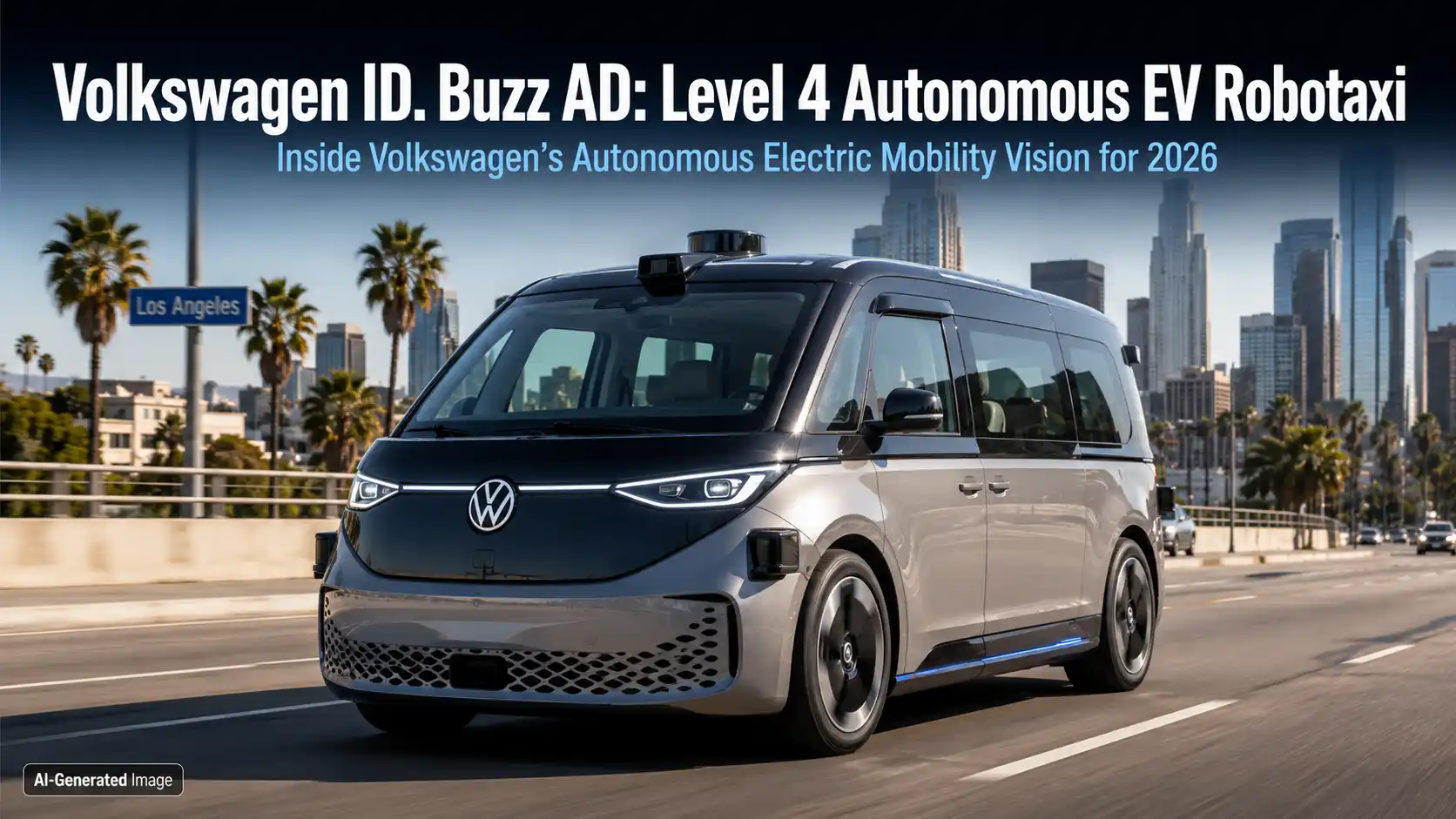
Autonomous driving is moving beyond technology demonstrations and entering real-world mobility services. Automakers and mobility companies are increasingly developing vehicles that can operate as robotaxis, autonomous shuttles, and ride-pooling vehicles.
One of the notable examples is the Volkswagen ID. Buzz AD, a fully electric autonomous vehicle developed specifically for mobility services. Based on the electric ID. Buzz platform, the vehicle is being developed for autonomous ride-pooling, shuttle, and robotaxi operations rather than conventional private ownership.
Volkswagen Group presented the series-production version of the ID. Buzz AD in 2025. In 2026, the vehicle entered on-road validation in Los Angeles, with Volkswagen and MOIA planning to introduce autonomous rides through the Uber platform by the end of 2026.
Volkswagen ID. Buzz AD: Key Details
| Key Detail | Information |
| Vehicle Name | Volkswagen ID. Buzz AD |
| Manufacturer | Volkswagen |
| Autonomous Mobility Brand | MOIA |
| Vehicle Type | Electric Van / Autonomous Shuttle |
| Powertrain | Fully Electric |
| Autonomous Driving | Level 4 |
| Primary Use | Autonomous Mobility, Ride-Pooling, Robotaxi |
| Current Status | On-road validation / Pre-commercial deployment |
| Current Testing Location | Los Angeles, USA |
| Ride-Hailing Partner | Uber |
| Planned Deployment | Late 2026 |
| Initial U.S. Market | Los Angeles |
| Target Users | Passengers using autonomous mobility services |
| Consumer Sale | Not offered for private sale |
| Autonomous Mobility Provider | MOIA America |
| Business Model | Autonomous mobility service |
Volkswagen describes the ID. Buzz AD as a series-production autonomous vehicle developed specifically for mobility services rather than conventional consumer sales.
About Volkswagen
Volkswagen is one of the world’s major automobile manufacturers and the flagship automotive brand of Volkswagen Group.
The company has been expanding its focus beyond conventional vehicles toward electric mobility, connected vehicles, software, and autonomous driving.
The ID. Buzz AD is part of this broader strategy. Instead of simply developing an autonomous driving system for private cars, Volkswagen is also exploring how autonomous vehicles can become part of commercial mobility services.
What Is MOIA?
MOIA is Volkswagen Group’s mobility brand focused on ride-pooling and autonomous mobility solutions.
Unlike a conventional automaker, MOIA’s focus is not limited to building vehicles. It is developing an integrated approach that combines vehicles, autonomous driving technology, software, fleet management, and mobility services.
MOIA already has experience with electric ride-pooling services. Its autonomous mobility strategy is designed to help cities and mobility operators introduce autonomous transportation services.
In 2026, Volkswagen’s U.S. autonomous-driving operation was renamed MOIA America, further highlighting MOIA’s role in Volkswagen Group’s autonomous mobility strategy.
What Is the Volkswagen ID. Buzz AD?
The ID. Buzz AD can be described as an autonomous version of Volkswagen’s electric ID. Buzz platform, but its purpose is significantly different from the standard consumer ID. Buzz.
The vehicle is designed specifically for autonomous mobility services.
Volkswagen presented its series-production version in 2025 and described it as its first fully autonomous production vehicle.
This is important because the ID. Buzz AD is no longer simply a technology concept. It has been developed toward real commercial deployment.
However, it is not a conventional consumer vehicle that customers can purchase from a Volkswagen dealership. Its primary purpose is to operate as part of autonomous mobility fleets.
Level 4 Autonomous Driving
One of the most important features of the ID. Buzz AD is its Level 4 autonomous driving capability.
In simple terms, Level 4 automation allows a vehicle to perform the driving task without continuous human control within specific operating conditions and defined areas.
This is different from Level 2 driver-assistance systems, where the driver must remain responsible for monitoring the vehicle.
With Level 4 autonomous driving, the vehicle is designed to handle driving itself within its approved operational conditions.
Volkswagen has worked with technology partners including Mobileye on autonomous driving technology for its ID. Buzz autonomous program.
How Does the Autonomous Technology Work?
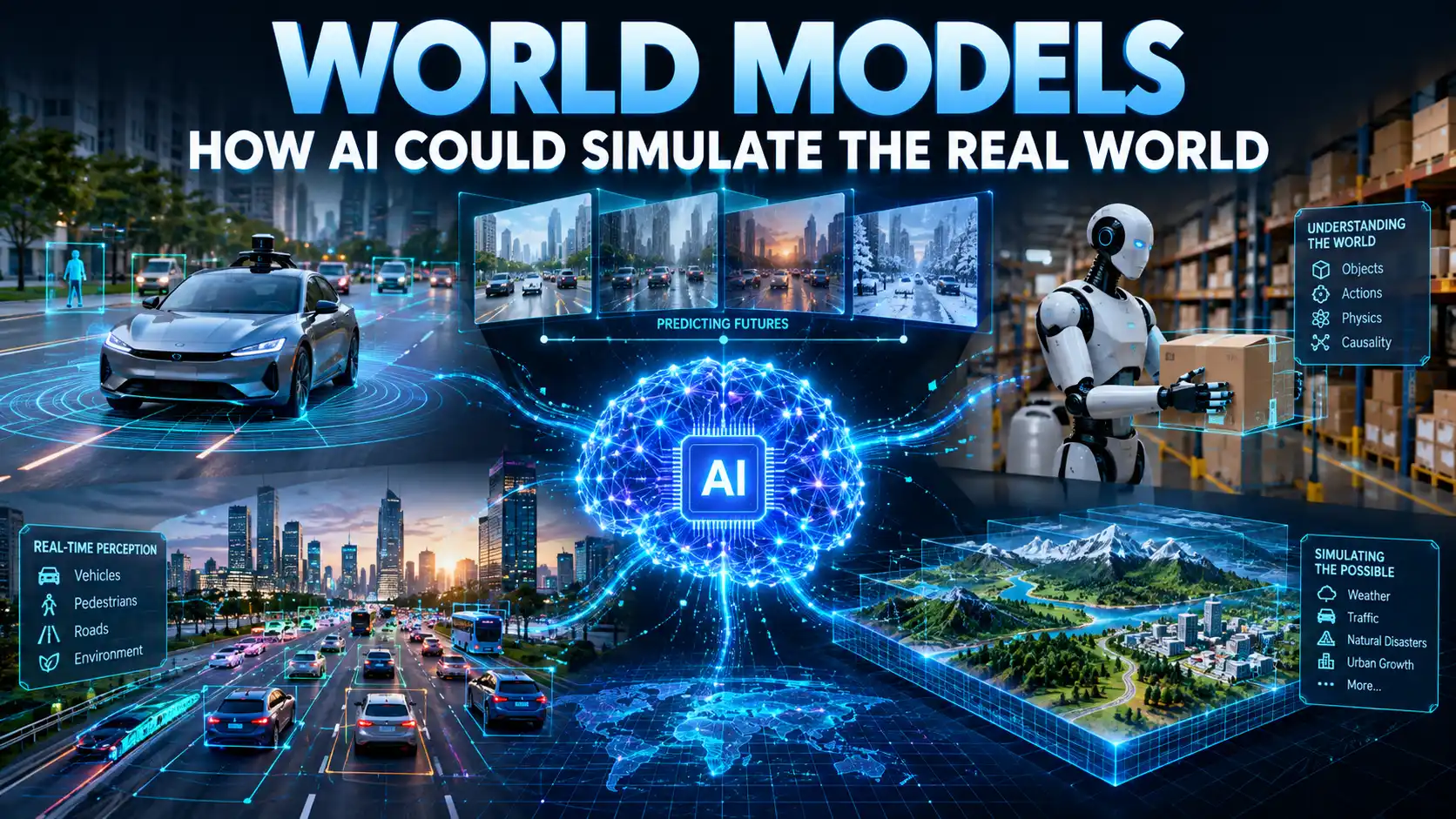
The ID. Buzz AD uses multiple sensors and computing systems to understand its surroundings and make driving decisions.
The autonomous system continuously monitors the road environment, including vehicles, pedestrians, road conditions, and other traffic situations.
The software then processes this information and controls important driving functions such as:
- Steering
- Acceleration
- Braking
- Traffic response
- Route-related driving decisions
The goal is to allow the vehicle to operate without a traditional human driver in its approved operating environment.
However, safety validation remains one of the most important stages before large-scale commercial deployment. This is why the vehicles are undergoing extensive on-road testing before passenger services begin.
How Will the ID. Buzz AD Work as a Robotaxi?
The ID. Buzz AD is designed to work differently from a traditional taxi.
Passengers can use a ride-hailing platform such as Uber to request a ride. An autonomous ID. Buzz can then be assigned to the passenger and drive them to their destination.
The basic model is:
Passenger → Uber App → Autonomous ID. Buzz → Destination
The passenger does not need to own the vehicle. Instead, the vehicle becomes part of a shared mobility service.
This model could allow autonomous vehicles to operate for much longer periods than privately owned cars because they can be managed as commercial fleets.
Los Angeles Deployment in 2026
Los Angeles is one of the most important markets for the ID. Buzz AD project.
Volkswagen Group and MOIA America announced that autonomous ID. Buzz vehicles had entered on-road validation testing in Los Angeles.
The companies are targeting late 2026 for autonomous rides on the Uber platform.
During the initial testing and validation phase, safety drivers are expected to remain in the vehicles to monitor the autonomous system.
This means that, as of August 2026, it would be more accurate to describe the vehicle as being in the validation and pre-commercial deployment phase, rather than calling it a fully scaled driverless robotaxi service.
What Is Uber’s Role?
Uber is not developing or manufacturing the ID. Buzz AD.
Its role is primarily to provide the ride-hailing platform and passenger network.
Volkswagen and MOIA provide the autonomous vehicles and mobility technology, while Uber connects passengers with the autonomous fleet through its platform.
This partnership combines:
Volkswagen/MOIA → Vehicle + Autonomous Mobility Technology
Uber → Ride-Hailing Platform + Passenger Demand
This could provide a faster route toward scaling autonomous mobility compared with building an entirely new transportation network.
Why Is the ID. Buzz AD Not a Normal EV?
This distinction is particularly important when classifying the vehicle.
The standard ID. Buzz can be considered a:
Consumer Electric Van
The ID. Buzz AD is better classified as:
Commercial Autonomous Electric Mobility Vehicle
Its primary applications include:
- Autonomous Robotaxi
- Autonomous Shuttle
- Ride-Pooling
- Mobility-as-a-Service
- Commercial Autonomous Transportation
Therefore, it should ideally be treated as a separate vehicle entry from the standard Volkswagen ID. Buzz in an EV and autonomous vehicle database.
Why Is the ID. Buzz AD Important?
The significance of the ID. Buzz AD comes from the combination of three major technologies and business models.
1. Electric Vehicle
The vehicle is based on Volkswagen’s electric ID. Buzz platform.
2. Level 4 Autonomous Driving
It is designed to perform the driving task autonomously within defined operating conditions.
3. Mobility-as-a-Service
Passengers do not need to purchase the vehicle. Instead, they use it as a transportation service through a mobility platform.
This combination makes the ID. Buzz AD an interesting example of how future transportation could move from vehicle ownership toward autonomous mobility services.
Volkswagen’s Autonomous Mobility Strategy
For Volkswagen, autonomous driving is not simply about adding another technology feature to its vehicles.
It could eventually create a different business model.
The traditional automotive model is:
Automaker → Sells Vehicle → Customer Owns Vehicle
The autonomous mobility model could become:
Automaker → Operates Autonomous Fleet → Mobility Platform → Passenger Pays Per Ride
The ID. Buzz AD represents Volkswagen’s move toward this second model.
If autonomous fleets become commercially successful, vehicle manufacturers could potentially generate revenue not only from vehicle sales but also from long-term mobility services.
Current Status in 2026
Based on the latest official information available, the ID. Buzz AD can be classified as follows:
| Development Area | Status |
| Vehicle Development | ✅ Advanced |
| Series-Production Version | ✅ Presented |
| Autonomous Technology | ✅ Level 4 |
| On-Road Validation | ✅ Underway |
| Uber Integration | ✅ Planned |
| Commercial Passenger Service | 🟡 Planned for Late 2026 |
| Consumer Sales | ❌ Not Offered |
| Large-Scale Driverless Operation | 🟡 Future Expansion |
Therefore, calling the ID. Buzz AD simply a concept vehicle would not be accurate. Volkswagen has already presented a series-production version, while commercial deployment is currently progressing through validation and rollout stages.
Future Expansion
Los Angeles is intended to be an important starting point rather than the final destination for Volkswagen’s autonomous mobility strategy.
Volkswagen/MOIA and Uber have discussed expanding the autonomous ID. Buzz fleet to additional U.S. markets.
The long-term strategy involves building a much larger autonomous fleet that can support commercial ride-hailing services.
If the Los Angeles deployment performs successfully, it could provide Volkswagen and Uber with valuable real-world experience for expanding autonomous mobility to other cities.
Final Analysis
The Volkswagen ID. Buzz AD is more than an autonomous version of an electric van. It represents Volkswagen Group’s attempt to build a complete commercial autonomous mobility solution.
The project brings together three important components: Volkswagen’s electric vehicle platform, MOIA’s autonomous mobility technology and Uber’s ride-hailing network.
The most important milestone will be the planned late-2026 launch of autonomous rides in Los Angeles. If the service successfully moves from validation testing into commercial operation, the ID. Buzz AD could become an important example of how autonomous electric vehicles can transition from testing programs to real-world mobility services.
Sources: Volkswagen Group, MOIA and Uber official announcements.