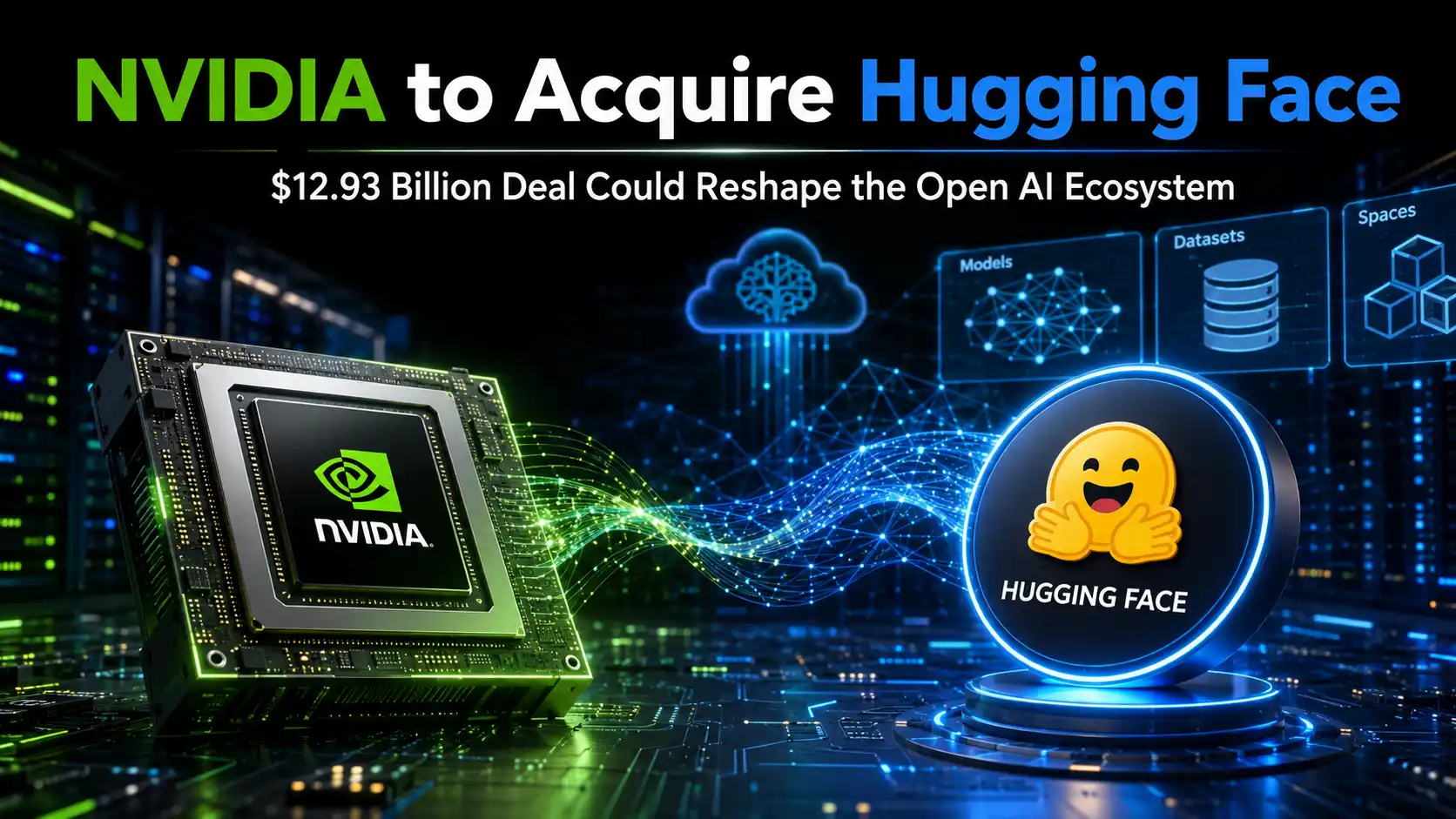
NVIDIA announced an agreement to acquire Hugging Face for approximately $12.93 billion. The deal is one of NVIDIA’s largest acquisitions and represents a major strategic move beyond AI hardware into AI models, software, developers, and the broader artificial intelligence ecosystem.
According to NVIDIA’s announcement and its SEC filing, approximately $11.9 billion will go to Hugging Face shareholders, while around $1 billion in equity-based retention awards will be provided to eligible Hugging Face employees who join NVIDIA.
The transaction is expected to close during the first half of 2027, subject to regulatory approvals and other customary closing conditions.
Importantly, NVIDIA has said that Hugging Face will remain an open platform. Developers will continue to have the ability to use different AI models, frameworks, cloud providers, inference providers, and computing hardware.
This means the acquisition is not simply about NVIDIA buying a software company. It is a strategic attempt to strengthen NVIDIA’s position across the rapidly growing AI ecosystem.
What Is NVIDIA?
NVIDIA is best known for developing GPUs (Graphics Processing Units).
However, the company has evolved far beyond traditional graphics technology.
Today, NVIDIA provides:
- AI GPUs and accelerators
- Data-center computing systems
- Networking technologies
- CUDA software
- AI development tools
- AI software platforms
- Robotics technologies
- Autonomous-driving technologies
- AI infrastructure
NVIDIA’s GPUs have become a major foundation for training and running modern AI models.
A Simple Example
Imagine a company wants to build an AI chatbot.
It needs:
AI Model → Software → Computing Power → GPU → Data Center
NVIDIA is already extremely strong in the computing and GPU parts of this chain.
With Hugging Face, NVIDIA is moving closer to the models, developers, and applications side as well.
What Is Hugging Face?
Hugging Face is one of the world’s leading platforms for AI and machine-learning developers.
A simple way to understand Hugging Face is to think of it as something similar to GitHub for AI models and machine-learning development.
GitHub allows software developers to share and collaborate on code.
Hugging Face allows AI developers and researchers to discover, share, develop, and use:
- AI models
- Datasets
- Machine-learning tools
- AI applications
- Development frameworks
According to NVIDIA, Hugging Face has more than:
- 18 million developers, researchers and creators
- 3 million AI models
- 500,000 datasets
- 1 million applications
- 200,000 companies
This large ecosystem is one of the biggest reasons Hugging Face is strategically valuable to NVIDIA.
NVIDIA is not simply acquiring a software business. It is gaining access to a massive AI developer and model ecosystem.
What Does Hugging Face Actually Do?
Let’s understand it with a simple example.
Suppose a developer wants to create an AI chatbot.
Instead of creating an AI model completely from scratch, the developer can search Hugging Face for an existing model.
The process could look like this:
Find a Model → Download or Access It → Customize/Fine-Tune → Test → Deploy
Hugging Face provides tools and infrastructure that help developers through different stages of this process.
Therefore, Hugging Face is much more than a simple AI model library.
It has developed into a broader AI development ecosystem.
What Are Open-Weight and Open-Source AI Models?
Understanding this concept is important for understanding the NVIDIA-Hugging Face deal.
There are broadly different approaches to AI models.
Closed AI Models
Companies such as OpenAI and other AI developers may provide access to their models through APIs or applications while keeping important parts of the underlying model technology private.
Users generally do not receive complete access to the model weights.
Open-Weight Models
With open-weight models, model weights are made available so developers can download, customize, fine-tune, and potentially run them on their own infrastructure, depending on the model’s license and terms.
Open-weight does not necessarily mean that every component of a model is fully open-source.
Hugging Face has become one of the most important platforms for this broader open-model ecosystem.
This makes the platform strategically important as the AI industry moves toward a mixture of closed and open AI models.
Why Is NVIDIA Acquiring Hugging Face?
This is the most important question surrounding the deal.
There are several major strategic reasons.
1. NVIDIA Wants to Expand From GPUs to the AI Software Ecosystem
NVIDIA’s biggest strength has traditionally been AI computing hardware.
But the AI industry is changing.
Future competition will not be based only on:
Who makes the most powerful AI chip?
It will also depend on:
Who provides the best ecosystem for AI developers?
NVIDIA already has GPUs and CUDA.
Hugging Face has developers, models, datasets, and AI applications.
Combining these ecosystems could strengthen NVIDIA’s position across the AI technology stack.
2. NVIDIA Gains Access to a Huge Developer Community
One of Hugging Face’s most valuable assets is its developer community.
According to NVIDIA, the platform has more than 18 million developers, researchers, and creators.
Think about it this way:
NVIDIA = AI Computing
Hugging Face = AI Developers + Models + Datasets + Applications
Together, these could create a much broader AI ecosystem.
This developer relationship could become extremely valuable as AI applications continue to expand.
3. Open AI Models Are Becoming Increasingly Important
The AI market is no longer dominated only by large closed-model providers.
Open-weight models are becoming increasingly important for businesses and developers that want more control over their AI systems.
Companies may want to:
- Customize AI models
- Fine-tune models using their own data
- Run models on their own infrastructure
- Reduce dependence on external AI APIs
- Have greater control over deployment
- Build specialized AI applications
Hugging Face is positioned at the center of this ecosystem.
By acquiring the company, NVIDIA gains a much stronger position in the open-model movement.
4. NVIDIA Could Benefit From the Growth of AI Inference
AI is not only about training models.
After a model has been trained, it needs to process user requests.
This process is called inference.
For example, when you ask an AI chatbot a question and it generates an answer, computing resources are being used for inference.
As AI applications become more widespread, inference demand is expected to grow significantly.
Hugging Face’s enormous collection of models and applications could therefore create additional opportunities for NVIDIA’s AI infrastructure and inference technologies.
5. Custom AI Chips Are Becoming a Challenge for NVIDIA
This is one of the most interesting strategic aspects of the acquisition.
Major technology companies are increasingly developing their own AI chips and accelerators.
For example:
- Google has developed TPUs.
- Amazon has developed its own AI accelerators.
- Microsoft and other large technology companies are also investing in custom AI silicon.
This could eventually reduce the dependence of some companies on NVIDIA GPUs.
Therefore, NVIDIA cannot rely only on hardware leadership.
It also needs a strong software, developer, and AI-model ecosystem.
Hugging Face could help provide that strategic advantage.
How Could NVIDIA and Hugging Face Work Together?
The potential ecosystem can be understood through a simple chain:
Developer
↓
Hugging Face Models
↓
Fine-Tuning / Development
↓
AI Application
↓
Inference
↓
NVIDIA Computing Infrastructure
This could allow NVIDIA to become involved in more stages of the AI development process.
However, NVIDIA has said that Hugging Face will remain an open platform rather than becoming an NVIDIA-only ecosystem.
Will Hugging Face Become Exclusive to NVIDIA Hardware?
No, based on NVIDIA’s current announcement.
This is one of the most important points in the deal.
NVIDIA has said that Hugging Face will remain an open platform.
Developers will continue to be able to use their preferred:
- Models
- Frameworks
- Cloud providers
- Inference providers
- Computing platforms
NVIDIA has not announced that developers will be required to use NVIDIA hardware.
This commitment is particularly important because Hugging Face’s value comes partly from its broad and relatively open ecosystem.
Financial Details of the Deal
| Deal Detail | Information |
| Acquirer | NVIDIA |
| Target | Hugging Face |
| Announcement | September 3, 2026 |
| Total Transaction Value | Approximately $12.93 billion |
| Shareholder Consideration | Approximately $11.9 billion |
| Employee Retention Program | Approximately $1 billion |
| Expected Closing | First half of 2027 |
| Deal Status | Agreement announced |
| Regulatory Approval | Required |
| Platform Strategy | Hugging Face to remain open |
The transaction remains subject to regulatory approvals and other closing conditions.
Why Is NVIDIA Paying $12.93 Billion?
This is another important question.
Hugging Face had a valuation of approximately $4.5 billion following its 2023 funding round.
NVIDIA’s proposed transaction value of approximately $12.93 billion is therefore significantly higher.
This suggests that NVIDIA is not simply paying for Hugging Face’s current revenue.
It is paying for the company’s broader strategic assets:
Developers + Models + Datasets + Applications + Community + AI Ecosystem + Future Growth
In other words, this is more of an ecosystem acquisition than a traditional software acquisition.
What Is the Biggest Potential Benefit for NVIDIA?
The biggest strategic benefit could be developer access.
A company can sell GPUs to customers.
But developers who build AI models and applications can influence which technologies become widely adopted in the future.
If millions of developers continue using a particular ecosystem, that ecosystem can become extremely valuable.
This is why Hugging Face could become an important developer distribution layer for NVIDIA.
What Does Hugging Face Gain?
The acquisition could also provide significant advantages for Hugging Face.
More Computing Infrastructure
Modern AI models require enormous computing resources for training and inference.
NVIDIA has one of the world’s largest AI computing ecosystems.
Hugging Face could benefit from access to NVIDIA’s infrastructure and technology.
Greater Scale
Supporting millions of users, millions of models, and a growing number of AI applications requires significant infrastructure.
NVIDIA’s resources could help Hugging Face scale further.
Better AI Deployment
Creating a model is only one part of the AI process.
Companies also need to deploy and run models efficiently.
NVIDIA’s AI infrastructure and inference technologies could potentially improve this part of the ecosystem.
What Are the Risks?
The acquisition has major opportunities, but it also carries important risks.
1. Hugging Face’s Neutrality Could Be Questioned
Hugging Face’s strength comes partly from supporting a broad range of AI technologies.
Now that NVIDIA is acquiring the company, competitors could ask:
Will Hugging Face remain genuinely neutral?
NVIDIA has said that the platform will remain open.
However, the way this commitment is implemented after the acquisition will be extremely important.
2. Regulatory Scrutiny
NVIDIA already has a powerful position in AI hardware and infrastructure.
Acquiring a major AI development platform could attract additional regulatory attention.
Regulators may examine whether the deal could affect competition in AI hardware, software, models, or developer platforms.
The transaction therefore needs to receive the necessary regulatory approvals before it can close.
3. NVIDIA Could Become Both Supplier and Ecosystem Player
There is another interesting strategic issue.
Many of NVIDIA’s customers are also developing AI models and AI applications.
If NVIDIA becomes increasingly powerful in the AI software ecosystem, some customers could potentially view NVIDIA not only as a technology supplier but also as an ecosystem competitor.
Maintaining Hugging Face’s openness could therefore be important for NVIDIA’s long-term relationships with customers and developers.
4. The $12.93 Billion Price Tag Is Significant
$12.93 billion is a very large investment.
For the acquisition to deliver strong returns, NVIDIA will need Hugging Face’s ecosystem to continue growing and generate significant strategic or financial value.
If open-model adoption slows or competition in the AI developer ecosystem changes dramatically, the expected return from the acquisition could be lower than anticipated.
NVIDIA vs. Hugging Face: What Does Each Company Bring?
| NVIDIA Brings | Hugging Face Brings |
| AI GPUs | AI developer community |
| AI computing | AI models |
| CUDA | Datasets |
| Data-center infrastructure | AI applications |
| Networking | Model distribution |
| Inference technology | Open-model ecosystem |
| Global scale | Developer relationships |
Together, the two companies could potentially cover a much larger part of the AI technology stack.
What Could the Deal Mean for OpenAI and Anthropic?
The acquisition is not just about NVIDIA and Hugging Face.
It could also influence the broader AI competitive landscape.
The AI industry is increasingly developing along two major directions:
Closed AI ecosystems
and
Open-weight/open AI ecosystems
Companies such as OpenAI and Anthropic have built powerful AI models and services, while Hugging Face has become a major hub for open models and developer collaboration.
By acquiring Hugging Face, NVIDIA could become a much more influential player on the open-model side of the AI industry.
This could encourage more businesses to build and deploy customizable AI models, potentially increasing demand for AI computing infrastructure.
A Simple Example to Understand the Acquisition
Imagine that the AI industry is a huge city.
NVIDIA
NVIDIA provides much of the city’s computing infrastructure and power.
Hugging Face
Hugging Face is like a huge AI marketplace and developer community, where people build, share, and discover AI models and applications.
Now NVIDIA is acquiring that marketplace.
But NVIDIA is also saying:
The marketplace will remain open and developers will continue to have choices.
If NVIDIA successfully maintains that openness, the combination could become a powerful force in the AI industry.
The Acquisition Fits NVIDIA’s Bigger AI Strategy
NVIDIA is gradually expanding beyond its traditional GPU business.
Its broader strategy can be viewed as:
GPU
↓
CUDA
↓
AI Infrastructure
↓
AI Software
↓
AI Models
↓
AI Agents
↓
Robotics and Physical AI
The Hugging Face acquisition fits into this larger strategy.
It gives NVIDIA a stronger connection to AI models, developers, and applications.
Why Did NVIDIA Choose Hugging Face?
The biggest strategic value of this deal may not be Hugging Face’s technology alone.
It is the ecosystem that Hugging Face has already built.
NVIDIA could develop more AI software and tools on its own.
But building a massive community of developers, researchers, models, datasets, and applications from scratch would take years.
Hugging Face has already built that ecosystem.
Therefore, NVIDIA is effectively acquiring a major gateway to the AI developer community.
That could become extremely valuable as AI continues to expand.
Is NVIDIA Trying to Control the Entire AI Stack?
Not completely.
But the direction is certainly interesting.
Consider the broad AI stack:
Hardware → Computing → Software → Models → Developers → Applications
NVIDIA has traditionally been strongest in hardware and computing.
CUDA helped the company establish a powerful position in software.
The Hugging Face acquisition would strengthen its presence in:
Models + Developers + Applications
This makes the transaction an important form of vertical expansion.
Final Analysis
NVIDIA’s proposed $12.93 billion acquisition of Hugging Face is much more than a normal technology acquisition.
It represents NVIDIA’s attempt to strengthen its position across the rapidly expanding AI ecosystem.
NVIDIA gets:
- A massive AI developer community
- Millions of AI models
- Datasets
- AI applications
- Open-model ecosystem
- Stronger developer relationships
Hugging Face gets:
- NVIDIA’s computing resources
- AI infrastructure
- Greater ability to scale
- Potentially stronger model deployment capabilities
- Access to NVIDIA’s global technology ecosystem
The biggest opportunity:
The combination of AI computing + AI models + developers + applications.
The biggest risk:
Maintaining Hugging Face’s neutrality and openness after it becomes part of NVIDIA.
Most importantly, the transaction is not yet a completed acquisition. It is an announced agreement, with closing expected in the first half of 2027, subject to regulatory approvals and other conditions.
Bottom Line
NVIDIA built the engine powering the AI revolution. By acquiring Hugging Face, it is moving closer to the developers, models, and applications that run on that engine.
If NVIDIA can maintain Hugging Face’s open-platform approach while combining it with its computing infrastructure, the acquisition could become one of the most strategically important moves in the AI industry.
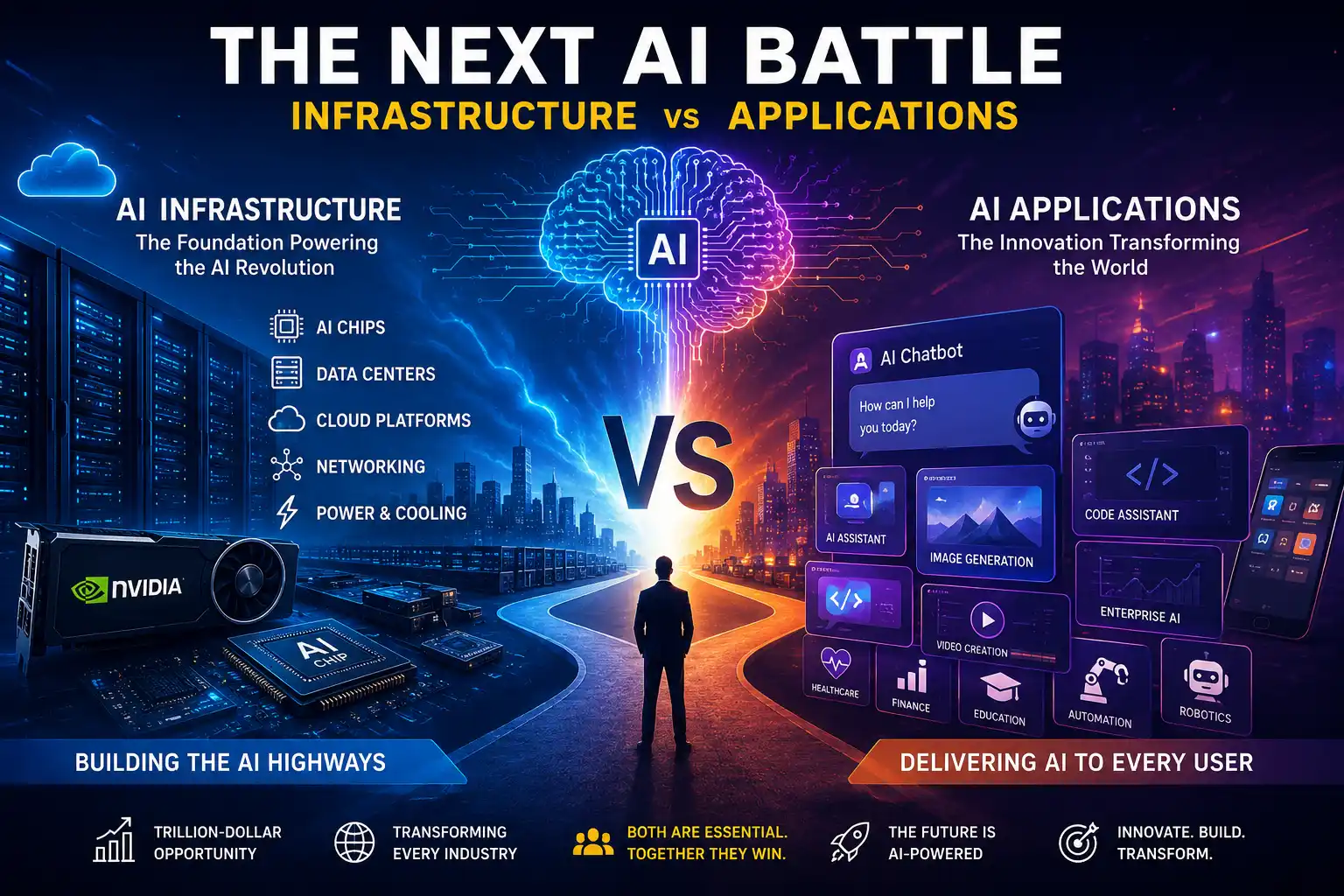
The deal shows a broader shift in the AI market: the future battle may not be only about who builds the fastest AI chip, but also who controls the ecosystem where AI models are created, shared, customized, and deployed.
Source: Nvidia