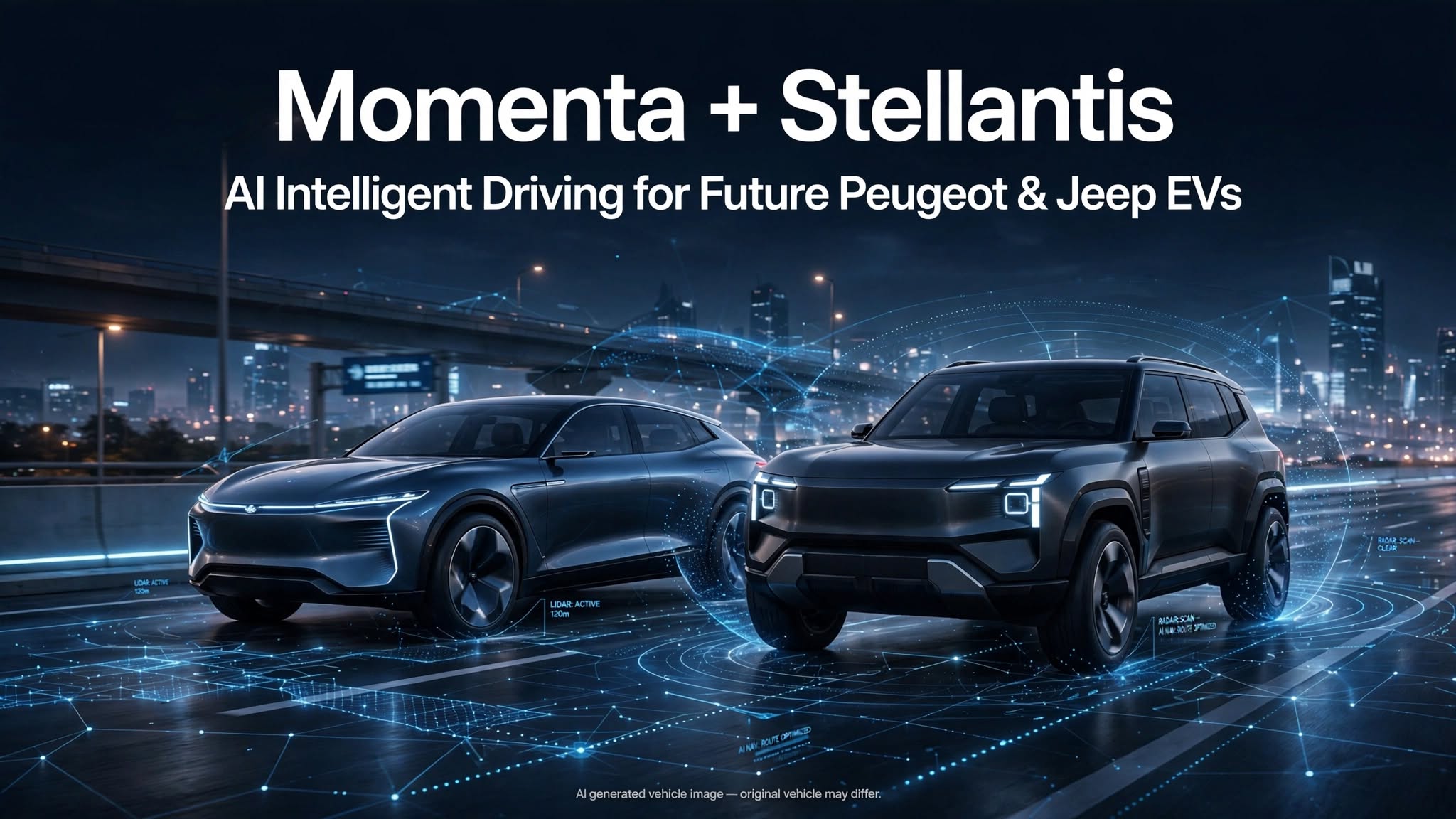
The automotive industry is increasingly moving beyond electric powertrains toward software-defined vehicles, artificial intelligence, and intelligent driving technologies. In this shift, Chinese intelligent-driving technology company Momenta has entered into a strategic partnership with Dongfeng Stellantis Automotive Technology (DSAT), Stellantis’ joint venture in China.
Under the partnership, Momenta and DSAT will jointly develop advanced intelligent-driving assistance systems for new mass-production Peugeot and Jeep vehicles. The technology is planned for vehicles serving China, Europe, and other global markets.
The partnership is particularly notable because Momenta’s technology is being brought into the vehicle development process rather than simply being treated as an external software feature. The companies plan to work together from the product-definition and development stages, with the technology adapted to the different driving characteristics of Peugeot and Jeep vehicles.
However, this agreement should not be interpreted as a confirmation that Peugeot or Jeep is launching fully autonomous Level 4 or Level 5 vehicles. The confirmed scope is advanced intelligent driving and driver-assistance technology, while the exact capabilities of future production models have yet to be disclosed.
Key Details at a Glance
| Detail | Information |
| Companies | Momenta and Dongfeng Stellantis Automotive Technology (DSAT) |
| Stellantis Brands | Peugeot and Jeep |
| Announcement Date | September 28, 2026 |
| Agreement Signed | September 24, 2026 |
| Technology | Intelligent Driving / Advanced Driver Assistance Systems (ADAS) |
| Technology Platform | Momenta R7 World Model |
| Vehicle Type | New mass-production vehicles |
| Target Markets | China, Europe and other global markets |
| Expected Vehicle Programs | New Peugeot and Jeep models from 2027 onward |
| China Joint Venture | Dongfeng Stellantis Automotive Technology (DSAT) |
| Autonomous Level | Not officially announced as Level 4 or Level 5 |
| Main Objective | Joint development and integration of intelligent-driving technology |
| EV Connection | Future Peugeot and Jeep new-energy vehicle programs |
What Happened Between Momenta and Stellantis?
Momenta and DSAT signed their strategic agreement on September 24, 2026, with the partnership announced publicly on September 28.
The two companies will jointly develop advanced intelligent-driving systems for new Peugeot and Jeep production vehicles.
An important point is that this is described as a joint development project, rather than simply Stellantis purchasing an already finished software package.
Momenta and DSAT will work together during the vehicle product-definition and development stages. This allows intelligent-driving functions to be integrated into the vehicle’s overall architecture and driving experience.
According to Momenta, the technology will be adapted to the different characteristics of Peugeot and Jeep vehicles.
What Is Momenta?
Momenta is a Chinese technology company focused on autonomous driving and intelligent-driving systems.
Its technology is designed to help vehicles understand their surroundings, process road information, predict possible situations, and provide driving assistance.
Momenta has increasingly focused on bringing AI-based driving technology into mass-production vehicles, rather than limiting its technology to research or prototype vehicles.
The company says its intelligent-driving systems had been deployed in more than 1.2 million vehicles by September 2026.
This mass-production experience is important because developing an autonomous-driving system for a prototype is very different from deploying the same technology across large numbers of consumer vehicles.
What Is Dongfeng Stellantis Automotive Technology (DSAT)?
DSAT is the China-based technology and engineering joint venture associated with Stellantis and Dongfeng.
The partnership with Momenta is connected to Stellantis and Dongfeng’s broader plans to develop new-energy vehicles in China.
In May 2026, Stellantis and Dongfeng announced plans to strengthen their cooperation and develop new Peugeot and Jeep new-energy vehicles at the Wuhan plant.
The planned vehicles are intended not only for the Chinese market but also for export to international markets.
This makes DSAT an important link between Stellantis’ vehicle programs in China and Momenta’s intelligent-driving technology.
Which Stellantis Brands Are Involved?
The partnership specifically covers two major Stellantis brands:
Peugeot
Peugeot’s future vehicles can use Momenta’s intelligent-driving technology as part of their advanced driver-assistance systems.
The technology can be adapted to Peugeot’s vehicle design and driving characteristics rather than being used as a completely generic system.
Jeep
Jeep is also included in the partnership.
The companies have indicated that intelligent-driving technology can be adapted to Jeep’s specific vehicle characteristics and use cases, including its focus on SUV and off-road vehicles.
This means that the same underlying technology does not necessarily have to behave identically in Peugeot and Jeep vehicles.
What Is the R7 World Model?
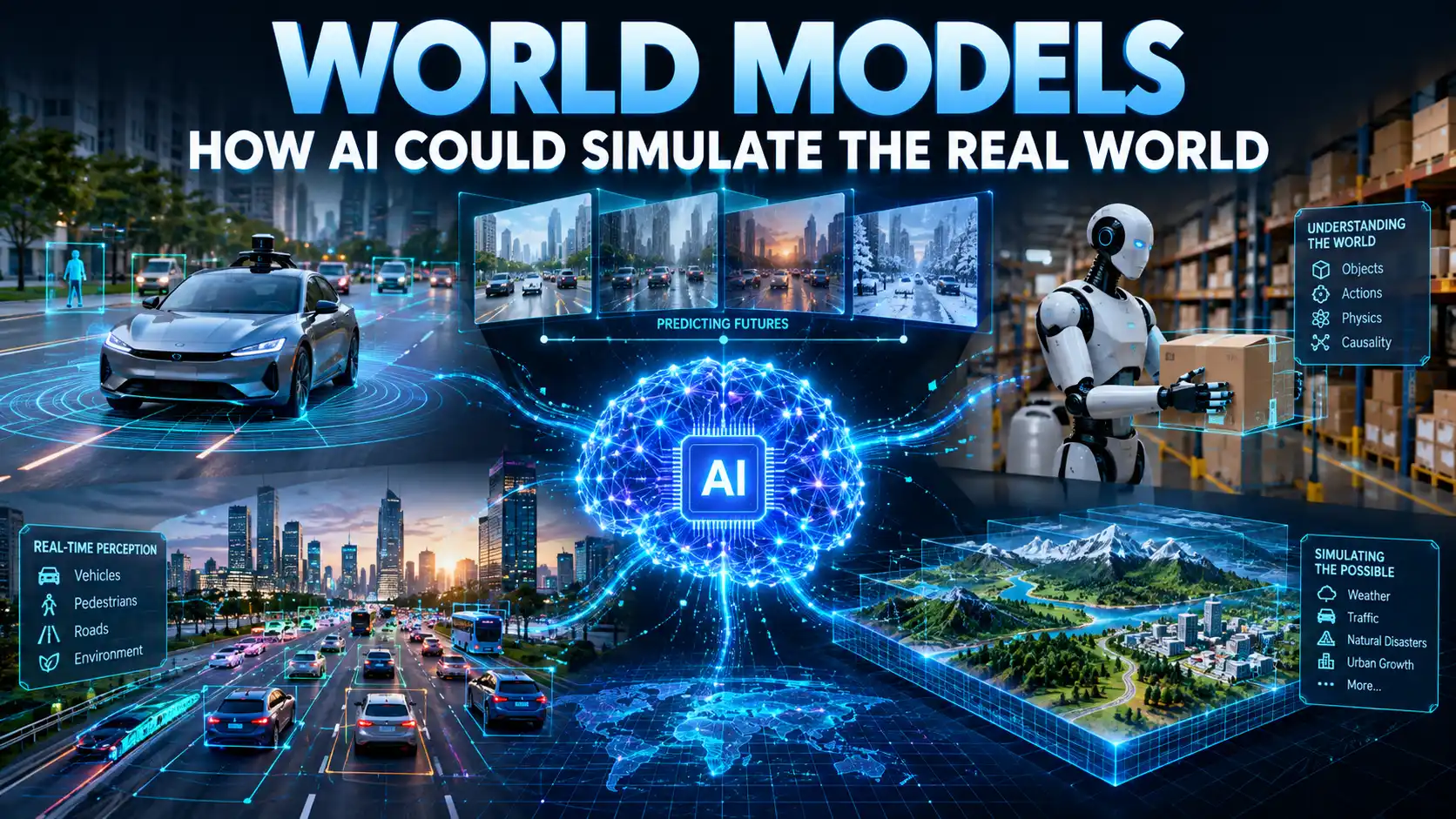
One of the most important parts of the partnership is Momenta’s R7 World Model technology.
A traditional driver-assistance system generally uses sensors and cameras to identify objects, road markings, vehicles, pedestrians, and other road conditions.
A World Model approach attempts to go further by building a deeper understanding of the physical environment and predicting how that environment may change.
Momenta says its R7 World Model combines real-world driving data, physical-world understanding, simulation, and reinforcement learning.
1. World Model Pre-Training
The system is trained using large amounts of real-world data.
This allows the model to learn patterns and relationships associated with road environments and driving situations.
2. World Model Simulation
The model can then be used in simulated environments to reproduce different driving situations.
This can help developers test scenarios that may be difficult or dangerous to reproduce repeatedly on public roads.
3. Reinforcement Learning
The system can be exposed to different scenarios in a simulated environment and learn from the results of different decisions.
This approach can help developers train intelligent-driving systems for a wider range of road situations.
Also Read: World Models: The Next Big AI Technology and How It Could Understand the Real World
Does This Mean Peugeot and Jeep Will Become Fully Autonomous?
Not necessarily.
This distinction is important.
The official announcement refers to advanced intelligent-driving assistance systems, rather than confirming Level 4 or Level 5 autonomous vehicles.
Advanced driver-assistance technology can include functions such as:
- Lane assistance
- Adaptive driving assistance
- Highway driving assistance
- Collision-related assistance
- Parking assistance
- Navigation-related driving support
The exact functions that will be available on future Peugeot and Jeep models have not yet been fully disclosed.
Therefore, it would be inaccurate to describe this partnership simply as a “Peugeot and Jeep autonomous-car launch.”
A more accurate description is:
Peugeot and Jeep are working with Momenta to develop advanced intelligent-driving and ADAS technology for future production vehicles.
Technology Will Target Global Markets
Another important part of the partnership is its international scope.
The technology is intended for vehicles serving:
- China
- Europe
- Other global markets
This is significant because road conditions, regulations, traffic patterns, and driver behaviour vary between countries.
A system developed for China’s roads cannot necessarily be deployed unchanged in Europe or other markets.
Momenta and DSAT will therefore need to adapt the technology to different regulatory and driving environments.
Why Is This Partnership Important for Stellantis?
The partnership gives Stellantis access to technology developed by a Chinese company with experience in intelligent-driving systems and mass-production vehicle integration.
China has become one of the world’s most competitive markets for electric vehicles and smart-driving technology.
Modern EV competition is increasingly moving beyond:
Battery + Range + Price
toward:
Battery + Range + Software + AI + ADAS + Connectivity
For Stellantis, integrating intelligent-driving technology into future Peugeot and Jeep models could therefore become an important part of its broader strategy for next-generation vehicles.
However, the actual impact will depend on how the technology performs in production vehicles and how successfully it can be adapted to different markets.
Why Is the Partnership Important for Momenta?
For Momenta, working with Peugeot and Jeep provides an opportunity to expand its technology beyond Chinese automotive brands.
There are several important aspects to the partnership.
Global OEM Exposure
Peugeot and Jeep are international automotive brands. Their future vehicle programs can potentially introduce Momenta’s technology to customers outside China.
Mass-Production Integration
The partnership focuses on production vehicles rather than only experimental autonomous-driving projects.
This can help Momenta further demonstrate its ability to integrate AI driving technology into large-scale automotive programs.
Global Adaptation
China, Europe, and other markets have different:
- Traffic regulations
- Road environments
- Driving behaviour
- Safety requirements
- Data regulations
Successfully adapting intelligent-driving technology across these environments will be an important technical challenge.
How Is This Connected to Future EVs?
The partnership is closely connected to Stellantis and Dongfeng’s plans for new-energy vehicles in China.
The companies have announced plans to develop new Peugeot and Jeep NEVs, with production planned at the Wuhan facility from 2027.
According to Stellantis, the broader program includes plans for new Peugeot and Jeep-branded new-energy vehicles, with China also serving as a potential export base.
Momenta’s intelligent-driving technology could therefore become part of the software and AI layer of these future vehicles.
This reflects a wider change in the EV industry.
Earlier, EV competition focused heavily on:
- Battery capacity
- Driving range
- Charging speed
- Price
Now manufacturers are increasingly competing on:
- AI
- Software
- ADAS
- Autonomous-driving capabilities
- Connectivity
- Digital user experience
What Could Happen From 2027 Onward?
The next important stage will be the arrival of actual production vehicles using the technology. Several questions will become clearer when those vehicles are officially introduced:
Which Peugeot or Jeep Model Will Come First?
The companies have not yet disclosed every production model that will use the technology.
The first confirmed production vehicle will provide a clearer picture of how the partnership is being implemented.
What ADAS Features Will Be Available?
It is still necessary to wait for official vehicle specifications to determine whether the systems will focus mainly on highway assistance, urban driving assistance, parking, navigation, or a broader combination of functions.
How Will the Technology Work in Europe?
European deployment will require the technology to meet local regulatory and safety requirements.
This could make international deployment more complex than simply transferring the same software from China to Europe.
China as a Development Hub for Intelligent Driving
The Momenta-Stellantis partnership also reflects a broader development in the automotive industry.
Chinese companies have developed significant capabilities in:
- EV technology
- Battery systems
- Intelligent driving
- AI-based automotive software
- Vehicle connectivity
International automakers are increasingly exploring partnerships with Chinese technology companies to access these capabilities.
Momenta’s partnership with Stellantis is an example of this trend, particularly because the technology is intended to be integrated into vehicles that can eventually serve markets outside China.
However, a technology partnership and successful global deployment are two different stages. The real results will become clearer after the technology reaches production vehicles and is tested under different regulatory and road conditions.
Conclusion
The partnership between Momenta and Stellantis’ China joint venture DSAT represents a new step in the integration of AI-based intelligent-driving technology into mass-production vehicles.
Instead of treating intelligent driving as a separate software feature, the companies plan to work together during the vehicle development process so that the technology can be adapted to Peugeot and Jeep vehicles.
The global scope of the project is particularly notable. Technology developed with a Chinese intelligent-driving company is planned for vehicles serving China, Europe and other international markets.
The next major development will be the arrival of production Peugeot and Jeep models using Momenta’s technology. Their official specifications will reveal how much of the R7 World Model’s capabilities reach consumer vehicles and what level of driver assistance the systems ultimately provide.
For now, the partnership should be understood as a major intelligent-driving and ADAS development program, rather than a confirmed launch of fully autonomous Peugeot or Jeep vehicles.
Source: momenta