Alibaba Group released its latest quarterly results for the quarter ended June 30, 2026, on August 20, 2026. The quarter represents Alibaba’s fiscal Q1 FY2027.
The results present a mixed picture. Alibaba’s revenue continued to grow, but its profit fell sharply as the company increased spending on artificial intelligence (AI), cloud infrastructure, and other growth initiatives.
The biggest positive was Alibaba Cloud, where AI-related demand continued to grow strongly. At the same time, the company’s aggressive AI investment is putting significant pressure on current profitability and cash flow.
Alibaba’s fiscal Q1 FY2027— Summary
| Metric | June Quarter 2026 | YoY Change |
| Revenue | RMB 268.95 billion | +9% |
| Net Income | RMB 10.44 billion | -75% |
| Adjusted Net Income | RMB 20.72 billion | -38% |
| Adjusted EBITA | RMB 27.33 billion | -30% |
| Cloud Intelligence Revenue | RMB 48.44 billion | +26% |
| AI-related Cloud Revenue | +45% | Strong growth |
| Capital Expenditure | RMB 67.68 billion | +75% |
| Free Cash Flow | Negative | AI investment impact |
Alibaba generated approximately RMB 269 billion in revenue, while net income declined to around RMB 10.44 billion.
Revenue Growth — The Business Is Still Expanding
Alibaba’s quarterly revenue increased 9% year over year to RMB 268.95 billion.
This shows that despite pressure on profitability, Alibaba’s overall business continues to expand. Cloud computing, AI-related services, and quick-commerce operations were important contributors to growth.
However, Alibaba’s traditional e-commerce operations continue to face strong competition in China.
The company is therefore increasingly relying on newer growth areas such as cloud computing, AI, and instant commerce to expand its overall business.
Profit Fell 75%
The biggest negative point in the quarter was Alibaba’s sharp decline in profitability.
GAAP net income fell approximately 75% to RMB 10.44 billion, compared with around RMB 43.1 billion a year earlier.
Adjusted net income also declined 38% to RMB 20.72 billion.
This means Alibaba is currently spending significantly more to support its growth strategy. Revenue is increasing, but the cost of pursuing AI, cloud, and consumer-growth opportunities is putting substantial pressure on earnings.
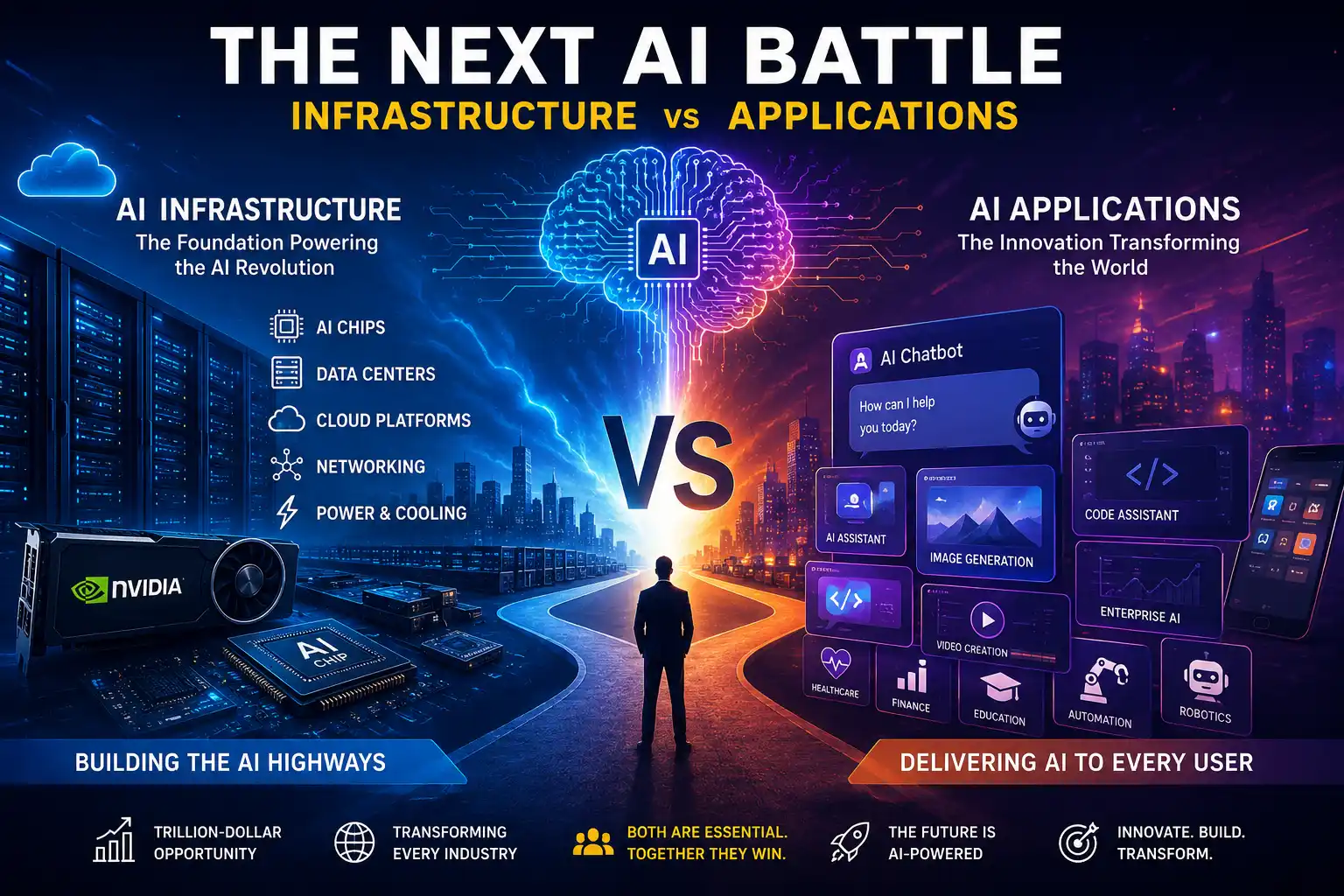
Alibaba Is Making a Massive AI Investment
AI is now one of the most important parts of Alibaba’s long-term strategy.
The company has announced a multi-year investment programme of approximately RMB 380 billion, or around $56 billion, focused on AI and cloud infrastructure.
Alibaba has already spent a significant portion of this planned investment.
Capital expenditure increased approximately 75% to RMB 67.68 billion during the quarter.
Major areas of investment include:
- AI computing infrastructure
- Data centers
- Computing capacity
- AI model development
- Chips and related infrastructure
- Cloud infrastructure
These investments are hurting current profitability, but Alibaba is treating them as long-term investments intended to build its position in the global AI economy.
Alibaba Cloud Is the Strongest Part of the Result
Alibaba Cloud was one of the biggest positives in the latest quarter.
Cloud Intelligence Group revenue reached approximately RMB 48.44 billion, representing 26% year-over-year growth.
More importantly, AI-related revenue within the cloud business grew approximately 45%.
This is significant because Alibaba does not want AI to remain simply an expense.
The company is trying to turn AI into a major source of recurring revenue through:
- AI models
- Cloud computing
- AI applications
- Enterprise AI services
- AI infrastructure
Strong AI-related cloud growth suggests that customer demand is increasing, although Alibaba still has to demonstrate that this demand can eventually translate into sustainable profitability.
AI Revenue Is Growing, but Monetization Is Still Developing
Alibaba’s AI business presents a mixed picture.
On one side, AI-related cloud revenue is growing rapidly.
On the other side, the company is spending even more money on AI infrastructure.
The current situation can therefore be summarized as:
AI demand ↑ → Cloud revenue ↑ → Infrastructure spending ↑↑ → Current profit ↓
The key challenge for Alibaba will be turning its enormous AI investments into high-margin and recurring revenue over the coming years.
If AI adoption continues to accelerate, Alibaba could potentially generate significant returns from its infrastructure investments. But if monetization remains slow, the heavy spending could continue to weigh on profitability.
Traditional E-Commerce Business Faces Pressure
Alibaba’s Taobao and Tmall businesses remain central to the company, but China’s e-commerce market has become increasingly competitive.
Alibaba faces strong competition from companies such as PDD Holdings and JD.com.
The company is also spending heavily to remain competitive in areas such as discounts, customer incentives, and quick commerce.
This means Alibaba is increasingly trying to build a broader consumer ecosystem rather than relying only on traditional online shopping.
Quick Commerce Is Another Growth Area
Alibaba’s quick-commerce business also delivered strong growth.
Revenue from the segment increased approximately 45%, reaching around $7.86 billion during the quarter.
The rapid expansion provides Alibaba with another potential growth engine.
However, quick commerce can also be expensive because companies need to invest heavily in:
- Delivery networks
- Logistics
- Discounts
- Customer acquisition
- Merchant incentives
Therefore, investors will need to watch not only revenue growth but also whether the business can eventually improve its profitability.
Cash Flow Is Under Pressure
Alibaba’s aggressive investment strategy is also affecting cash flow.
The company’s capital expenditure increased significantly during the quarter, particularly because of its AI and cloud infrastructure expansion.
Free cash flow came under pressure as a result.
This is an important issue for investors because earnings alone do not tell the full story.
The key question going forward is:
Can Alibaba grow AI and cloud revenue fast enough to justify its massive infrastructure spending?
If the answer is yes, today’s high spending could become an important competitive advantage.
If growth slows, however, the same spending could become a major burden on profitability and cash generation.
What Does the Result Mean for Investors?
Alibaba’s latest quarterly result is essentially a transition story.
Short-Term Picture
- Revenue growth remains positive
- Net profit has fallen sharply
- Capital expenditure is extremely high
- AI investment is accelerating
- Cash flow is under pressure
- Traditional e-commerce faces strong competition
Long-Term Picture
- Cloud revenue is growing strongly
- AI demand is increasing
- AI-related cloud revenue is expanding rapidly
- Alibaba is building large-scale AI infrastructure
- The company is attempting to make AI a major future revenue engine
Therefore, Alibaba should no longer be viewed only as a traditional e-commerce company.
The company is increasingly becoming a combination of:
E-commerce + Cloud Computing + AI Infrastructure + AI Applications
Outcome
Alibaba’s latest quarterly result is mixed but strategically important.
From a short-term profitability perspective, the result is weak: revenue increased 9%, while net income fell 75%.
However, the strong growth in Alibaba Cloud and AI-related revenue provides an important positive signal for the company’s long-term strategy.
The biggest question for investors is no longer simply how much Alibaba is spending on AI.
The bigger question is:
Can Alibaba turn its massive AI investment into profitable AI and cloud revenue over the next several years?
Bottom Line
| Area | Assessment |
| Revenue Growth | 🟢 Positive |
| Net Profit | 🔴 Weak |
| AI & Cloud Growth | 🟢 Strong |
| Capital Expenditure | 🔴 Very High |
| Cash Flow | 🔴 Under Pressure |
| Long-Term AI Opportunity | 🟢 Potentially Strong |
Overall
Alibaba is sacrificing a significant amount of near-term profitability to build its AI and cloud businesses. The current results show that this strategy is already generating strong AI-related revenue growth, but investors will need to wait for clearer evidence that these investments can produce sustainable and profitable returns.
Source: Alibaba Group’s official Investor Relations materials, including its quarterly results announcement and financial presentation.