When the U.S. Federal Reserve (Fed) announces its monetary policy, the impact is felt far beyond the United States. Stock markets, bond yields, gold prices, the U.S. dollar, and even emerging economies like India react to every decision made by the world’s most influential central bank.
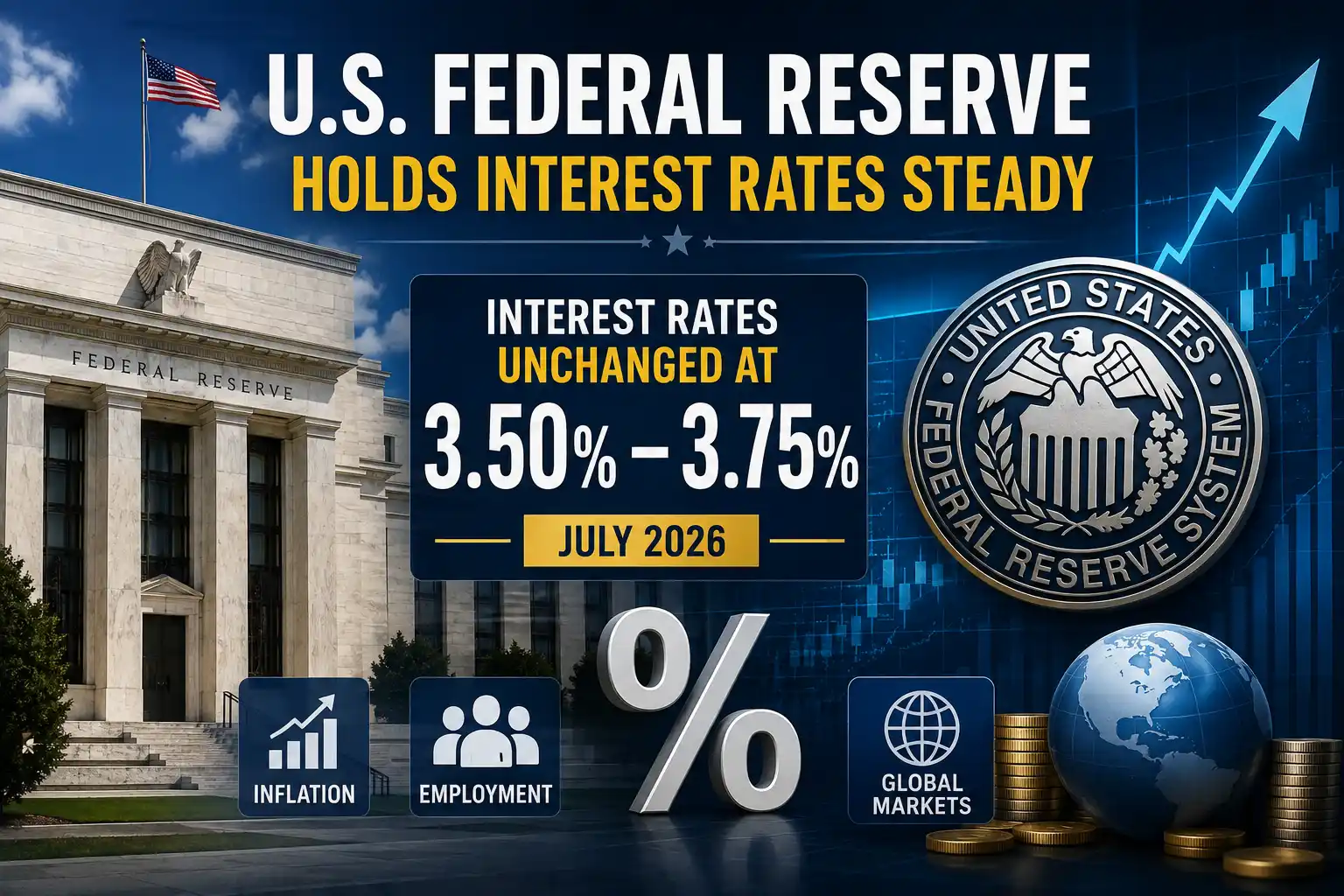
In its latest policy decision, the Federal Reserve kept its benchmark interest rate unchanged, signaling that while inflation has moderated, it is not yet fully under control. At the same time, Fed officials emphasized that they remain ready to raise rates again if inflation shows signs of accelerating.
So, why did the Fed pause instead of cutting rates? What does this decision mean for investors, businesses, and the global economy? Let’s understand the latest U.S. monetary policy in simple terms.
U.S. Fed July 2026 Meeting Key Highlights
| Particular | Details |
| Country | United States |
| Central Bank | Federal Reserve (Fed) |
| Latest Decision | Interest rates kept unchanged |
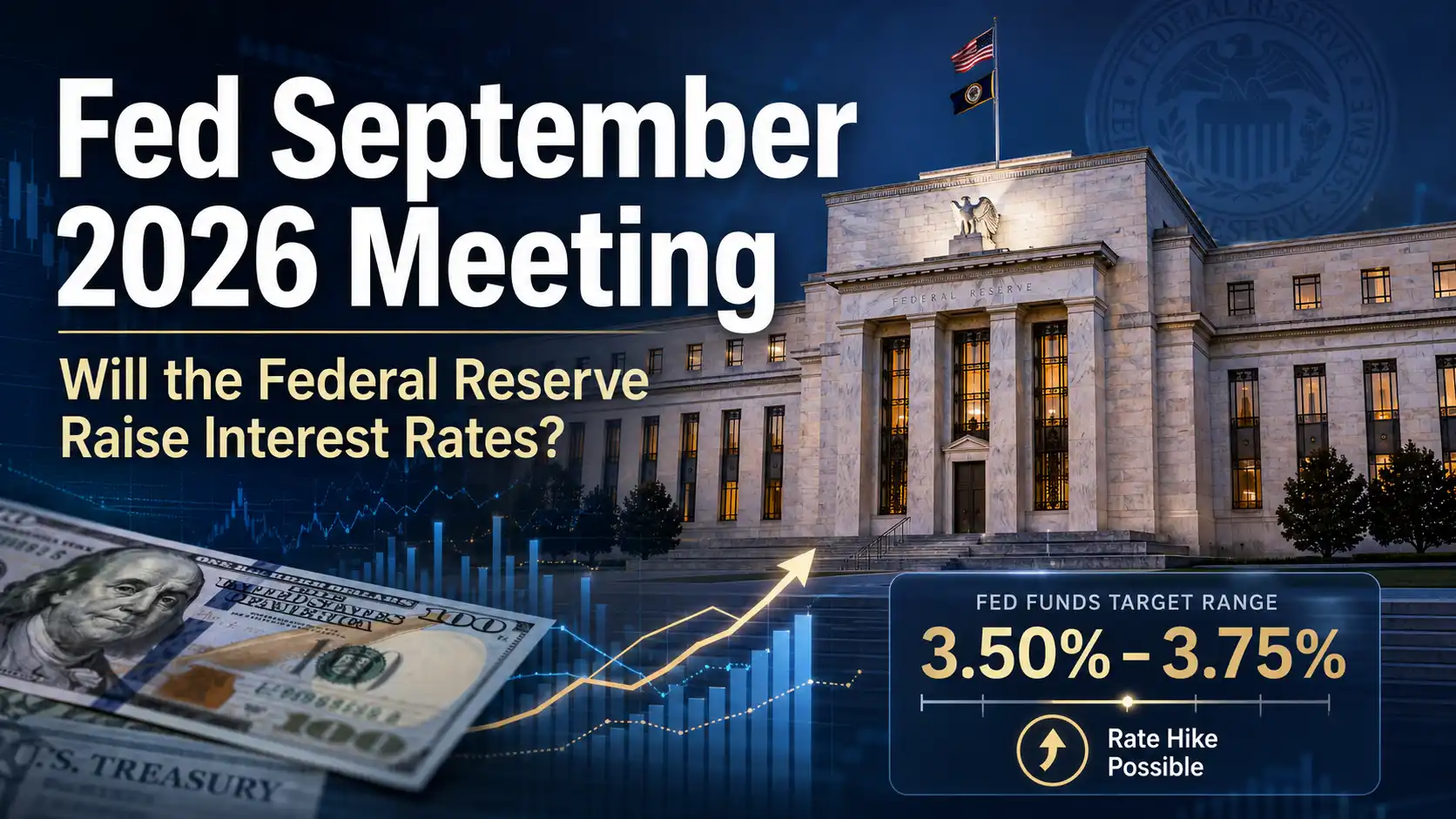
| Current Federal Funds Rate | 3.50%–3.75% |
| Inflation Target | 2% |
| Policy Committee | Federal Open Market Committee (FOMC) |
| Main Concern | Inflation remains above target |
| Next Major Focus | Inflation and Employment Data |
What Is the Federal Reserve?
The Federal Reserve, commonly known as the Fed, is the central bank of the United States. Established in 1913, it is responsible for maintaining economic stability through monetary policy.
Its three primary objectives are:
- Maintain price stability (control inflation)
- Support maximum employment
- Ensure financial system stability
Unlike commercial banks, the Fed does not provide loans to consumers. Instead, it influences the economy by adjusting interest rates and managing the money supply.
Latest Monetary Policy Decision
At its latest Federal Open Market Committee (FOMC) meeting, the Federal Reserve kept the Federal Funds Rate unchanged at 3.50%–3.75%.
Although many investors were hoping for an interest rate cut, policymakers decided that inflation risks remain significant enough to justify keeping borrowing costs at current levels.
The Fed emphasized that future decisions will depend on incoming economic data rather than following a fixed path.
Why Did the Fed Keep Interest Rates Unchanged?
1. Inflation Is Still Above Target
The Fed aims to keep inflation around 2%, which is considered healthy for long-term economic growth.
While inflation has eased from previous highs, it remains above the central bank’s comfort zone.
Reducing rates too early could increase spending and borrowing, potentially pushing inflation higher again.
2. The Economy Remains Resilient
Despite higher borrowing costs, the U.S. economy continues to show strength.
Consumer spending remains healthy, businesses continue investing, and economic activity has not slowed enough to justify immediate monetary easing.
This gives policymakers room to remain cautious.
3. Labor Market Remains Strong
The U.S. labor market continues to perform well with relatively low unemployment.
A strong labor market supports household income and consumer spending, but it can also keep wage pressures elevated, making inflation harder to control.
Inflation vs. Interest Rates: A Simple Example
Imagine a city where everyone suddenly receives additional money. People begin purchasing more cars, homes, and electronics.
As demand increases faster than supply, prices start rising.
To cool the economy, the central bank raises interest rates.
Higher borrowing costs encourage consumers and businesses to spend more carefully, helping reduce inflation over time.
This is exactly how monetary policy works.
What Fed Officials Are Saying
Several Federal Reserve officials have stressed that inflation remains the biggest challenge.
According to recent public comments, policymakers are prepared to tighten monetary policy again if inflation stops declining.
Rather than promising future rate cuts, officials have adopted a “data-dependent” approach.
This means every upcoming inflation report, employment report, and GDP figure will influence future policy decisions.
Market Reaction
Financial markets closely monitor every word in the Fed’s policy statement.
Stock Market
Investors initially welcomed the decision because no additional rate hike was announced.
However, markets also recognized that higher rates could remain in place longer than previously expected.
Technology and growth stocks experienced mixed reactions as investors reassessed future borrowing costs.
Bond Market
U.S. Treasury yields moved higher after the policy announcement.
Higher bond yields generally indicate that investors expect interest rates to stay elevated for longer.
Bond market movements often influence mortgage rates, corporate borrowing costs, and global capital flows.
U.S. Dollar
The U.S. dollar remained relatively firm following the announcement.
Higher interest rates usually attract foreign investment into U.S. assets, supporting the dollar.
A stronger dollar can make imports cheaper for Americans but creates challenges for many emerging markets.
Gold Prices
Gold typically performs better when interest rates fall.
Since the Fed maintained a cautious stance, gold prices experienced limited upside as investors continued evaluating future policy expectations.
Global Impact of the Fed’s Decision
Because the U.S. dollar serves as the world’s primary reserve currency, Federal Reserve decisions affect nearly every economy.
Some major global impacts include:
Emerging Markets
Higher U.S. interest rates encourage investors to move money into dollar-denominated assets.
As a result, capital may flow out of emerging markets, increasing currency volatility.
Global Borrowing Costs
Governments and companies around the world often borrow in U.S. dollars.
When U.S. interest rates remain high, borrowing becomes more expensive internationally.
Commodity Prices
A stronger U.S. dollar often puts downward pressure on commodities such as oil, copper, and industrial metals because they become more expensive for foreign buyers.
What Does This Mean for India?
India closely watches every Federal Reserve policy decision.
Possible impacts include:
Currency
If the U.S. dollar strengthens, the Indian rupee may face depreciation pressure.
Foreign Investment
High U.S. interest rates can reduce foreign portfolio investment into emerging markets, including India.
RBI Policy
Although the Reserve Bank of India (RBI) makes decisions based on domestic economic conditions, persistent high U.S. rates may influence the RBI’s policy approach, especially regarding inflation and exchange rate stability.
What Could Happen Next?
The Federal Reserve has made it clear that future policy decisions will depend on economic data.
The following indicators will receive the most attention before the next FOMC meeting:
- Inflation (Consumer Price Index)
- Employment Report
- Wage Growth
- GDP Growth
- Consumer Spending
If inflation continues to decline, future rate cuts may become possible.
However, if inflation remains elevated, another interest rate hike cannot be ruled out.
Why Investors Should Care
Even if you do not invest in U.S. stocks, Federal Reserve decisions affect:
- Indian stock markets
- Gold prices
- Currency exchange rates
- Mutual funds
- International investments
- Commodity markets
- Corporate borrowing costs
Understanding the Fed helps investors make better long-term financial decisions.
Outcome
The Federal Reserve’s latest monetary policy reflects a careful balancing act between controlling inflation and supporting economic growth. By keeping interest rates unchanged while maintaining a data-dependent approach, the Fed is signaling that the fight against inflation is not yet over.
For investors, businesses, and policymakers worldwide, upcoming inflation and employment data will be critical in determining whether the next move is another rate hike, an extended pause, or the beginning of a rate-cut cycle. Until then, global financial markets are likely to remain highly sensitive to every economic indicator released by the United States.
Source: Federal Reserve – Federal Open Market Committee (FOMC) Policy Statement and Monetary Policy Documents.