
Japan, one of the world’s largest economies, has long been known for maintaining extremely low interest rates. For many years, interest rates in the country remained close to zero—or even below zero—to support economic growth and encourage spending.
However, the situation is now changing.
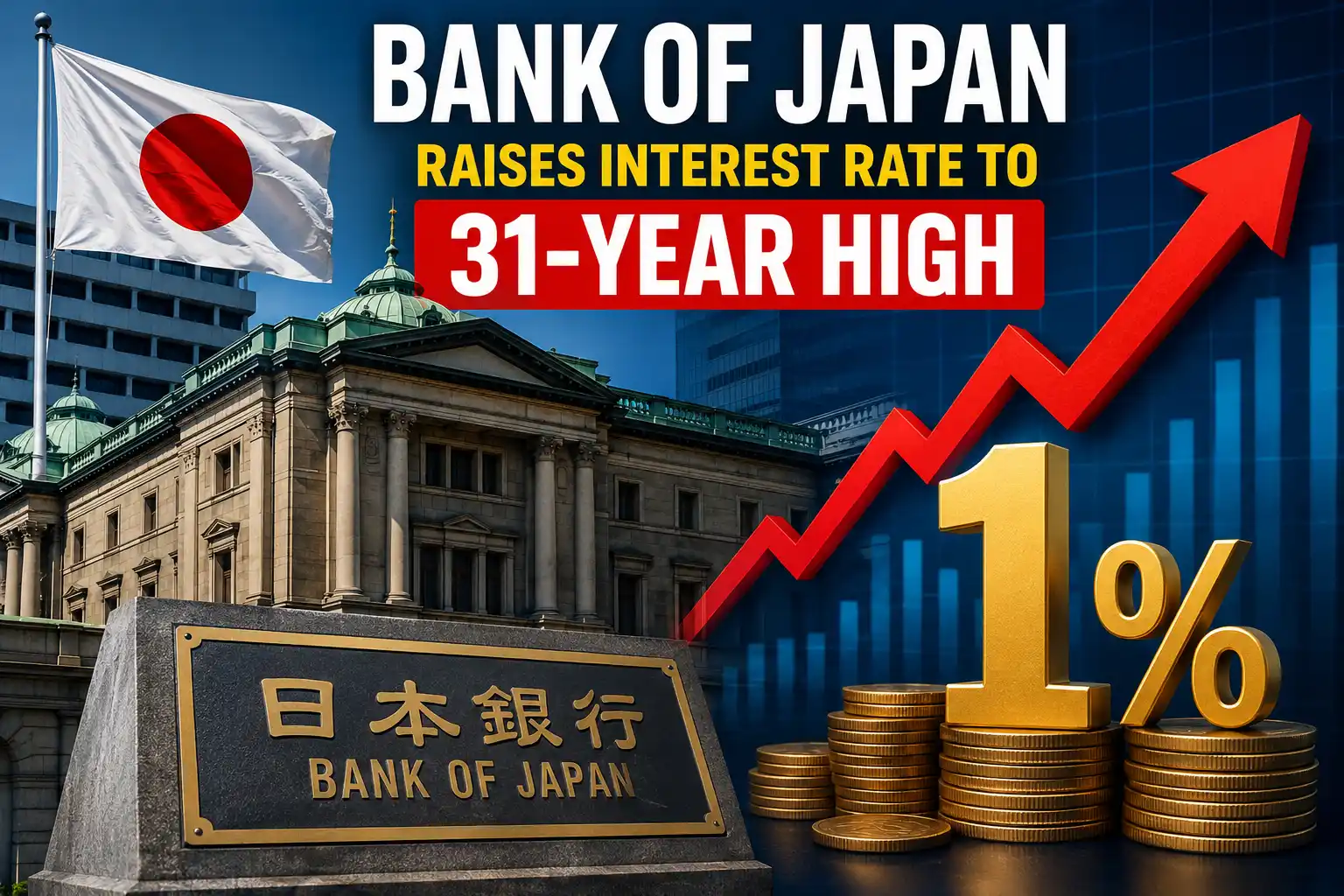
On June 16, 2026, the Bank of Japan raised its key interest rate to around 1%, marking the highest level in 31 years. The move is being viewed as a significant development not only for Japan but also for global financial markets.
What is the Bank of Japan?
The Bank of Japan (BOJ) is Japan’s central bank.
Its main responsibilities include:
- Controlling inflation
- Maintaining financial stability
- Supporting economic growth
- Managing interest rates and money supply
It performs a role similar to that of the Reserve Bank of India in India or the Federal Reserve System in the United States.
Why Did Japan Raise Interest Rates?
For decades, Japan struggled with a problem opposite to inflation—very low inflation and periods of deflation.
However, several economic factors have changed in recent years.
1. Inflation Has Increased
Rising energy and food prices have pushed inflation above the central bank’s target for an extended period.
2. Wages Are Growing
Many major Japanese companies have announced substantial wage increases, boosting household income and spending power.
3. Domestic Demand Has Improved
Consumer spending has shown signs of recovery, providing support to economic growth.
4. Import Costs Have Risen
A weaker Japanese Yen has increased the cost of imported goods, adding further inflationary pressure.
As a result, the BOJ believes that the ultra-loose monetary policies used for many years are no longer necessary to the same extent.
Why Is a 31-Year High Significant?
This is one of the most important monetary policy shifts Japan has made since the early 1990s.
The decision is significant because:
- Japan has been known globally for its ultra-low interest rates.
- Investors around the world have relied on Japan as a source of low-cost funding.
- Global capital flows could change as Japanese assets become more attractive.
- Japanese banks may benefit from higher lending margins.
Many analysts consider this move a historic turning point for Japan’s financial system.
Impact on Japan’s Economy
Benefits for the Banking Sector
Higher interest rates generally allow banks to earn more from loans, which can improve profitability.
Better Returns for Savers
Japanese households may receive higher returns on savings accounts and deposits after years of extremely low rates.
Borrowing Becomes More Expensive
Businesses and consumers may face higher borrowing costs for loans and mortgages.
Potential Slowdown in Investments
Some investment projects could become less attractive as financing costs rise.
What Could Happen to the Japanese Yen?
In general, higher interest rates tend to strengthen a country’s currency.
If foreign investors increase their investments in Japan:
- Demand for the Yen could rise.
- The Japanese currency may strengthen.
- Import costs could decline.
However, currency movements will also depend on global economic conditions and investor sentiment.
Impact on Global Financial Markets
1. Changes in Investment Flows
Higher Japanese interest rates could attract investors toward Japanese government bonds and financial assets.
2. Effects on US and European Bond Markets
Japanese investors hold significant overseas assets. If they shift capital back to Japan, bond markets in the United States and Europe could experience changes in demand and yields.
3. Increased Volatility in Asian Markets
As one of Asia’s largest economies, Japan’s policy decisions often influence financial markets across the region.
What Should Investors Watch Next?
Investors will closely monitor:
- Japan’s inflation rate
- Wage growth trends
- Movements in the Japanese Yen
- Future Bank of Japan policy meetings
- Global interest rate developments
If inflation remains elevated, further interest rate increases cannot be ruled out.
Outcome
The Bank of Japan’s decision to raise interest rates to their highest level in 31 years marks a historic shift in the country’s economic policy. It signals that Japan is gradually moving away from the ultra-loose monetary policies that have defined its economy for decades. The decision could have far-reaching effects on Japanese banks, the Yen, and global financial markets. As inflation and economic conditions continue to evolve, investors around the world will be watching the Bank of Japan’s next moves very closely.