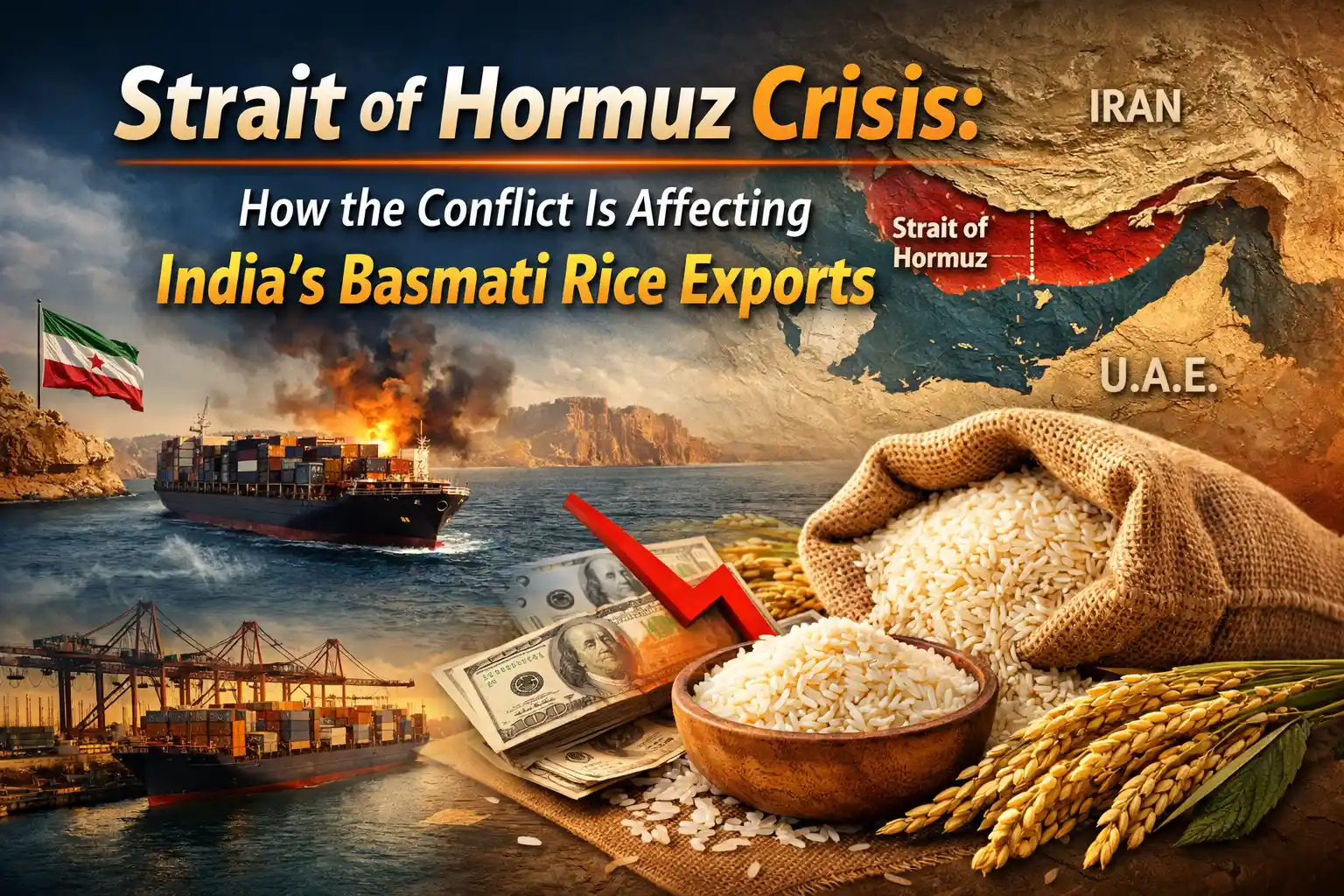
The Strait of Hormuz is one of the most important maritime trade routes in the world. Several Middle Eastern countries—such as Saudi Arabia, United Arab Emirates, Iraq, and Iran—depend on this route to connect with global markets. Recently, rising geopolitical tensions and conflict in the region have disrupted shipping activity in this narrow sea corridor, causing major disruptions in international trade.
The impact is not limited to oil and gas. Agricultural exports are also being affected. India, the world’s largest rice exporter, is experiencing the consequences of this disruption—especially in the trade of Basmati rice.
Let us understand how the Strait of Hormuz crisis is affecting India’s rice exports, which types of rice are most impacted, and what could happen if the situation continues.
How Large Is India’s Rice Export Industry?
India is the largest rice exporter in the world and exports roughly 22–25 million tonnes of rice annually to countries across the globe.
In 2024–25, India exported approximately:
- 6.06 million tonnes of Basmati rice
- Total export value of about ₹50,000 crore (around $5.9 billion)
Major export destinations include:
- Saudi Arabia
- Iraq
- Iran
- United Arab Emirates
- Yemen
Many of these countries are located in the Middle East and rely on shipping routes connected to the Strait of Hormuz.
Why the Strait of Hormuz Crisis Is Affecting Rice Exports
Ships traveling to many Middle Eastern countries pass through the Strait of Hormuz. When conflict or security threats disrupt this route, vessels either stop operations temporarily or take longer alternative routes.
Recent reports indicate that:
- Around 400,000 tonnes of Indian Basmati rice shipments are stuck at ports or in transit.
- Many exporters have paused new export deals due to uncertainty.
- Shipping companies have increased insurance and freight charges because of higher geopolitical risk.
As a result, the rice export trade has slowed significantly.
Which Type of Rice Is Most Affected?
1. Basmati Rice (Most Affected)
India’s Basmati rice exports are heavily dependent on Middle Eastern markets.
According to recent trade data for 2024–25:
- Saudi Arabia imported about 1.17 million tonnes
- Iraq imported about 0.9 million tonnes
- Iran imported about 0.85 million tonnes
These countries are among the largest buyers of Indian Basmati rice.
Additionally, India exported around $698 million worth of rice to Iran alone in 2024.
Because these markets are directly connected to shipping routes through the Strait of Hormuz, disruptions in the region have significantly impacted Basmati rice trade.
2. Non-Basmati Rice (Less Impacted)
Non-Basmati rice exports are more diversified geographically.
Major markets include:
- Africa
- Southeast Asia
- Bangladesh
- Philippines
Since shipments to these regions typically use different maritime routes, non-Basmati rice exports have experienced relatively limited disruption compared to Basmati rice.
Immediate Changes in the Rice Trade
1. Shipments Have Been Delayed
Several vessels destined for Middle Eastern markets have either been delayed or rerouted. As a result, thousands of tonnes of rice are currently accumulating at Indian ports.
2. Freight and Insurance Costs Have Increased
Due to security risks in the region, shipping companies have raised freight charges and insurance premiums. This has increased export costs for rice exporters.
3. Pressure on Domestic Prices
When exports slow down, more stock remains in the domestic market.
Because of this, Basmati rice prices have declined by roughly 5–6% in recent weeks as supply has increased within India.
Which Indian States Could Be Affected?
Basmati rice is primarily cultivated in northern India, particularly in:
- Punjab
- Haryana
- Uttar Pradesh (western region)
- Uttarakhand
If export disruptions continue, the impact could be felt by:
- Farmers
- Rice millers
- Export companies
in these regions.
What Could Happen If the Situation Continues?
1. Farmers May Receive Lower Prices
Reduced export demand could increase domestic supply, putting downward pressure on rice prices and affecting farmers’ income.
2. Exporters Could Face Financial Losses
Export companies may face several challenges, including:
- Shipping delays
- Higher storage costs
- Payment delays from international buyers
These factors could reduce profit margins.
3. India May Need to Find New Markets
If Middle Eastern demand remains disrupted, India may have to increase exports to alternative regions such as:
- Africa
- Europe
- Southeast Asia
This would help reduce dependence on Middle Eastern markets.
4. Global Trade Routes May Shift
Some ships are already avoiding the Strait of Hormuz and taking longer routes, such as around the Cape of Good Hope.
This could increase shipping time by 20–25 days, making exports slower and more expensive.
Outcome
The Strait of Hormuz crisis has significantly affected India’s rice export trade—particularly Basmati rice, which heavily depends on Middle Eastern markets. With nearly 400,000 tonnes of shipments currently disrupted, exporters are facing delays, rising logistics costs, and declining prices.
If geopolitical tensions continue for an extended period, the impact could spread across the entire rice supply chain—from farmers and millers to exporters and international buyers. For India, diversifying export markets and strengthening alternative trade routes may become increasingly important in the coming months.