Crude oil prices play a critical role in the global economy, influencing inflation, transportation costs, manufacturing, airline operations, and financial markets. Over the past few months, rising tensions between the United States and Iran, along with growing instability across the Middle East, pushed global oil prices sharply higher as investors feared a disruption in energy supplies.
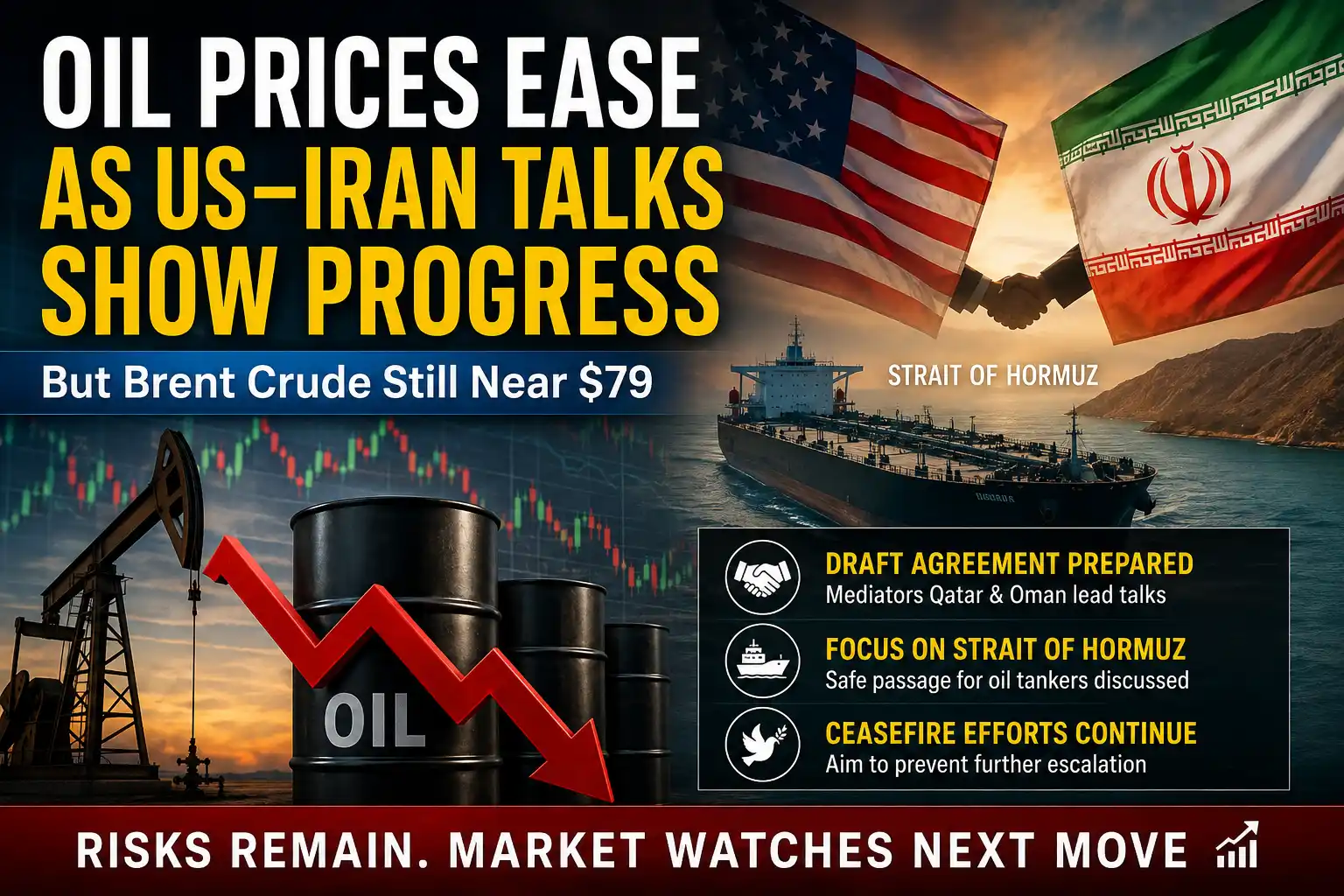
However, on 4–5 August 2026, market sentiment improved after reports suggested that diplomatic efforts led by Qatar and Oman had made progress in discussions between the United States and Iran. The news eased immediate concerns about oil supply disruptions, causing crude prices to retreat from their recent highs. Despite this decline, Brent Crude continues to trade around $78–79 per barrel, indicating that investors still see significant geopolitical risks in the region.
So, what exactly changed? Did the conflict really ease, or are markets simply reacting to hopes of a diplomatic breakthrough? Let’s take a closer look.
Why Did the US–Iran Tensions Push Oil Prices Higher?
The United States and Iran have been at odds for years over economic sanctions, Iran’s nuclear program, regional security, and military activities across the Middle East.
In recent months, the situation escalated as concerns grew over potential attacks on commercial shipping and the possibility of disruptions in the Strait of Hormuz, one of the world’s most important oil transit routes.
Since a significant portion of global oil exports passes through this narrow waterway, any threat to its security immediately raises fears of supply shortages, driving oil prices higher.
Why Is the Strait of Hormuz So Important?
The Strait of Hormuz is one of the most strategically important shipping lanes in the world.
- Around 20% of global seaborne crude oil trade passes through the strait.
- Major oil-producing countries such as Saudi Arabia, Iraq, the UAE, Kuwait, Iran, and Qatar rely heavily on this route to export crude oil.
- Any disruption can significantly impact global energy supplies and international trade.
For this reason, every military or political development in the region has a direct impact on global crude oil prices.
What Progress Was Made on 4–5 August 2026?
It is important to clarify that the United States and Iran have not signed a final peace agreement.
Instead, diplomatic mediators reported meaningful progress in several key areas.
1. A Draft Agreement Has Been Prepared
According to reports, mediators—particularly Qatar and Oman—have helped prepare a preliminary draft agreement.
The objective of this framework is to:
- Prevent further military escalation.
- Preserve the current ceasefire efforts.
- Create a foundation for formal negotiations.
The draft has not yet received final approval from all parties.
2. Discussions on Reopening and Securing the Strait of Hormuz
One of the most significant developments involves negotiations aimed at ensuring the safe movement of commercial vessels and oil tankers through the Strait of Hormuz.
The discussions focus on:
- Protecting international commercial shipping.
- Reducing the risk of attacks on oil tankers.
- Establishing temporary maritime security arrangements.
- Maintaining uninterrupted global energy supplies.
If successfully implemented, these measures could significantly reduce supply concerns in global oil markets.
3. Efforts to Strengthen the Ceasefire
Mediating countries are also working to strengthen and maintain the ceasefire between both sides.
Although negotiations continue, several critical political and security issues remain unresolved.
What Issues Are Still Unresolved?
Despite diplomatic progress, major disagreements continue.
Iran’s Position
Iran is seeking:
- Continued authority over shipping regulations within its territorial waters.
- Relief from certain international sanctions.
- Recognition of its regional security concerns.
The US Position
The United States continues to seek:
- Free and secure international navigation through the Strait of Hormuz.
- Stronger regional security guarantees.
- Clear commitments regarding Iran’s nuclear program.
- Reduced military tensions across the region.
Until these issues are resolved, a comprehensive agreement remains unlikely.
Why Did Oil Prices Fall?
Oil markets are driven by expectations rather than current events alone.
When investors learned that:
- Diplomatic negotiations were progressing,
- A draft framework had been prepared,
- Talks on securing the Strait of Hormuz were advancing, and
- The probability of an immediate supply disruption had declined,
they began reducing the geopolitical risk premium that had been built into crude oil prices.
As a result, Brent Crude retreated from its recent peak.
Why Is Brent Crude Still Trading Around $78–79?
If the conflict had been fully resolved, crude oil prices would likely have fallen much further.
However, investors remain cautious because:
- No final peace agreement has been reached.
- Maritime security risks still exist.
- Negotiations remain ongoing.
- Any new military incident could quickly reverse market sentiment.
For these reasons, Brent Crude continues to trade near $78–79 per barrel, reflecting the market’s remaining geopolitical concerns.
What Is the Geopolitical Risk Premium?
The geopolitical risk premium is the additional value that investors are willing to pay for oil when there is uncertainty about future supply.
This premium increases when markets fear:
- Military conflict,
- Supply disruptions,
- Shipping route closures,
- Economic sanctions, or
- Escalating regional tensions.
As diplomatic progress reduces these risks, the premium gradually declines, putting downward pressure on oil prices.
Which Countries Could Benefit?
If crude oil prices remain stable or decline further, major oil-importing economies stand to benefit.
India
Lower oil prices could:
- Reduce the country’s import bill.
- Improve the current account balance.
- Ease inflationary pressures.
- Lower production and transportation costs.
Also Read : Samudra Manthan Scheme : India Approves ₹84,084 Crore Offshore Exploration Plan
Japan
Cheaper energy imports could support manufacturing and industrial profitability.
Europe
Lower energy costs could improve economic activity and reduce operating expenses for businesses.
Which Industries Could Benefit?
A sustained decline in crude oil prices would be positive for several industries, including:
- Airlines
- Logistics
- Chemicals
- Paint manufacturers
- Cement producers
- FMCG companies
- Transportation businesses
Lower fuel and raw material costs generally improve profit margins across these sectors.
Which Companies Could Face Pressure?
Lower crude oil prices may negatively impact:
- Oil exploration companies
- Upstream energy producers
- Offshore drilling firms
- Oilfield service providers
If prices remain weak for an extended period, earnings in these sectors could come under pressure.
What Should Investors Watch Next?
Global markets will closely monitor:
- The next round of US–Iran negotiations.
- Whether the draft agreement becomes a formal deal.
- Security developments in the Strait of Hormuz.
- Any new military incidents in the Middle East.
- OPEC+ production decisions.
- China’s oil demand.
- US crude inventory reports.
Any major development in these areas could significantly influence global oil prices.
Outcome
The decline in crude oil prices on 4–5 August 2026 does not mean that the Middle East conflict has ended. Instead, it reflects growing optimism that diplomatic negotiations are reducing the immediate risk of supply disruptions. Progress on a draft agreement, efforts to strengthen the ceasefire, and discussions on securing commercial shipping through the Strait of Hormuz have improved investor confidence.
However, significant disagreements remain unresolved, and no final agreement has been reached. This is why Brent Crude continues to trade around $78–79 per barrel instead of returning to pre-conflict levels. Going forward, the outcome of US–Iran negotiations, security developments in the Middle East, and OPEC+ production decisions will determine whether oil prices continue to decline or move higher once again.
Source: Reuters, AP News, The Wall Street Journal (WSJ), Gulf News, and official market reports on US–Iran diplomatic talks, Strait of Hormuz developments, and global crude oil market updates (4–5 August 2026).