The artificial intelligence (AI) industry is advancing rapidly as companies develop models that can write software, analyze complex information, perform research, and complete multi-step tasks. China’s Moonshot AI is one of the companies working to push these capabilities further through its Kimi family of AI models.
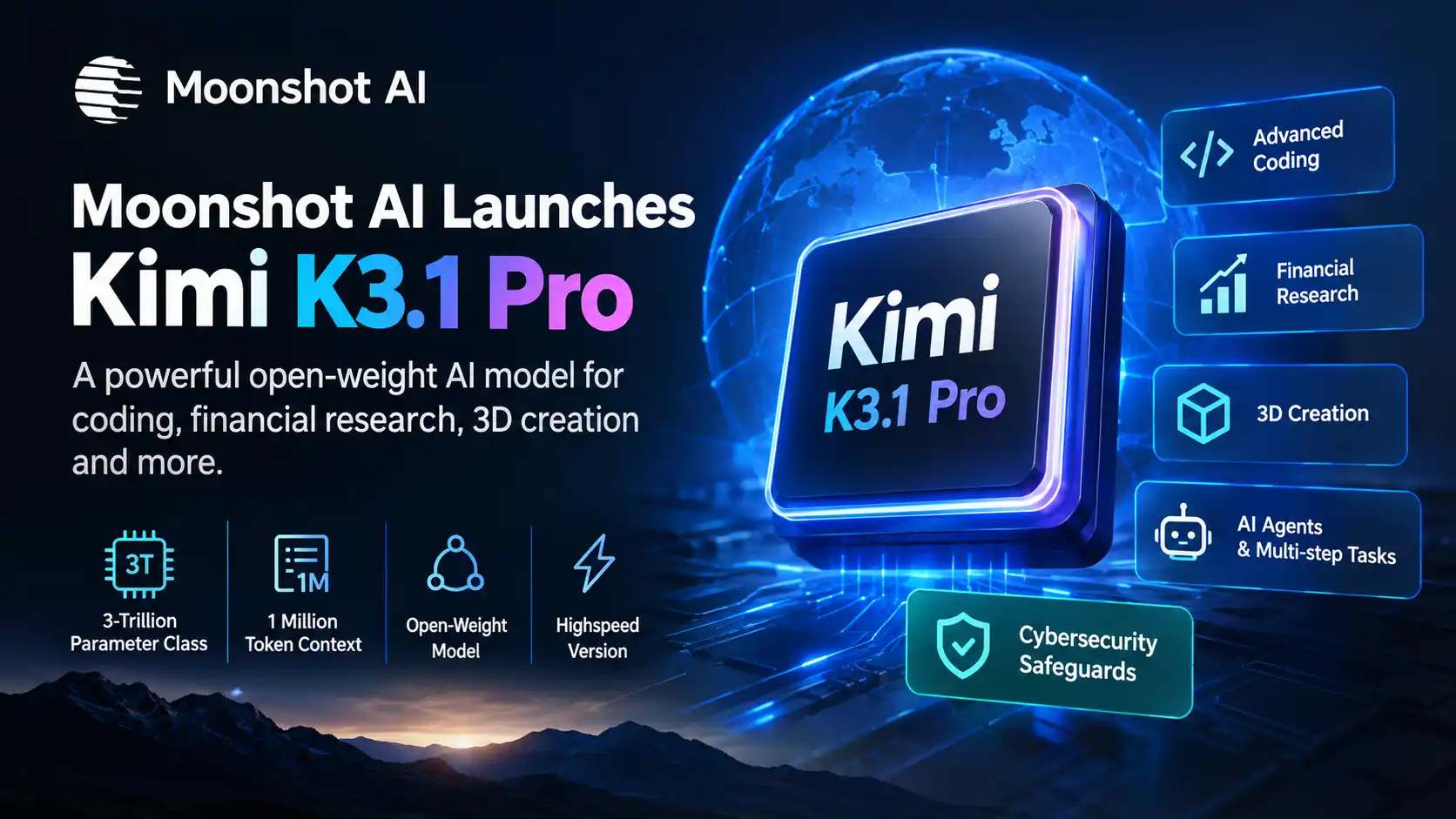
On October 24, 2026, Moonshot AI introduced Kimi K3.1 Pro, an advanced open-weight AI model designed to improve coding, 3D creation, financial research, and other complex AI-assisted tasks. The company also introduced Kimi K3.1 Pro Highspeed, a faster version designed to deliver responses more quickly.
One of the most important aspects of the launch is the company’s approach to cybersecurity. As AI models become better at understanding software and identifying vulnerabilities, their capabilities can be useful for protecting computer systems but may also create risks if misused. Moonshot AI says it modified the model’s training process to reduce potentially dangerous offensive cybersecurity capabilities while preserving its general coding usefulness.
The model features a reported one-million-token context window, allowing it to process large amounts of information in a single interaction. It is intended to support tasks ranging from fixing errors in existing code to developing complete software projects.
This launch highlights two important developments in the AI industry: increasingly capable models for professional work and growing attention to the security risks associated with advanced AI systems.
Moonshot AI: Company Introduction
Moonshot AI is a Chinese artificial intelligence company founded in April 2023. Based in Beijing, the company was established by AI researcher Yang Zhilin. Its best-known product is Kimi, a family of AI assistants and large language models.
The company focuses on developing AI systems capable of understanding complex information, performing advanced reasoning, assisting with software development, and carrying out tasks that require multiple steps.
Rather than concentrating only on conversational AI, Moonshot AI is also developing models for coding, document analysis, financial research, and AI agents that can work with software tools.
What Is Kimi K3.1 Pro?
Kimi K3.1 Pro is an advanced AI model developed by Moonshot AI as part of its Kimi model family. It builds on the earlier Kimi K3 model, with additional post-training designed to improve performance across several demanding tasks.
According to Moonshot AI, the model offers improvements in coding, 3D creation, financial research, and long-horizon agent capabilities.
In simple terms, a basic AI assistant might help write a short program or summarize a document. A more advanced model can potentially analyze a large software project, understand the relationships between multiple files, investigate errors, and help complete a complex task through several stages.
Key Features of Kimi K3.1 Pro
| Feature | Details |
| Model name | Kimi K3.1 Pro |
| Developer | Moonshot AI |
| Announcement date | October 24, 2026 |
| Model category | Open-weight AI model |
| Model scale | 3-trillion-parameter class |
| Context window | Up to 1 million tokens |
| Coding | Software development and debugging |
| Other applications | 3D creation and financial research |
| AI agents | Multi-step task execution |
| Faster variant | Kimi K3.1 Pro Highspeed |
| Planned full model-weight release | By November 4, 2026 |
The company announced that Kimi K3.1 Pro and its Highspeed version were available through the Kimi platform, Kimi Work, Kimi Code, and the Kimi API. The complete model weights were scheduled for release by November 4, 2026.
The scheduled release date should not be confused with confirmation that the complete weights have already been published.
What Does an Open-Weight AI Model Mean?
One of the important features of Kimi K3.1 Pro is its open-weight approach.
AI models learn patterns from training data. The numerical parameters produced during training are called weights. These weights help determine how a model processes information and generates responses.
When a company makes model weights available, developers may be able to download the model, run it on their own infrastructure, evaluate its capabilities, and integrate it into applications, subject to the applicable licence.
Benefits for Developers
Greater control: Businesses may be able to run an AI model on their own infrastructure rather than relying entirely on a hosted service.
Software integration: Developers can potentially connect the model to internal tools, coding platforms, document-processing systems, and other business applications.
Research and experimentation: Researchers can study the model’s behaviour, test its limitations, and investigate its performance across different tasks.
Flexible deployment: Organisations may be able to adapt their deployment arrangements to their own technical requirements.
However, open-weight does not automatically mean that every use is free or unrestricted. Licensing conditions, hardware requirements, and commercial-use permissions must be considered.
It is also important to distinguish open-weight from fully open-source. Releasing model weights does not necessarily mean that all training data, training code, and development processes are publicly available.
For Kimi K3.1 Pro, Moonshot AI announced that the complete weights would be released by November 4, 2026.
Why Is the One-Million-Token Context Window Important?
A context window determines how much information an AI model can process as part of a particular interaction. It can include instructions, documents, source code, and conversation history.
Kimi K3.1 Pro supports a context window of up to one million tokens, according to Moonshot AI.
This capability can be useful when working with large documents, lengthy reports, or complex software projects.
Example: Analysing a Company’s Financial Reports
Imagine an analyst needs to study a company’s annual report, financial statements, business strategy, and historical performance.
A model with a large context window can help process these materials together, identify important trends, summarize risks, and prepare questions for further investigation.
The analyst could then use the model to compare revenue growth, operating expenses, profitability, and changes in the company’s business strategy.
Example: Understanding a Large Software Project
A software engineer may need to understand how several parts of an application interact. Instead of examining every file separately, the engineer can provide relevant source code and ask the AI to identify dependencies, explain the program’s structure, or investigate a potential error.
However, a large context window does not guarantee perfect accuracy. The model can still misunderstand information, overlook important details, or produce incorrect conclusions. Human review remains necessary for important decisions.
Coding and Software Development Capabilities
Coding is one of the major areas in which Moonshot AI aims to improve Kimi K3.1 Pro.
Modern AI models can help developers write code, understand existing programs, identify potential bugs, and automate parts of the software development process.
A. Writing and Improving Code
The model can assist with programming tasks such as creating website features, writing functions, integrating APIs, and improving existing code.
For example, a developer building a business website might ask the AI to create a search feature, explain how the feature works, and suggest ways to handle common errors.
B. Debugging Software
Debugging involves identifying and fixing errors in a program. Developers can use AI to interpret error messages, inspect relevant code, suggest possible solutions, and generate tests to verify a fix.
The AI’s suggestions still need to be checked against the actual behaviour of the application.
C. Working With Large Codebases
Large software projects often contain many files, libraries, and interconnected components. A model with advanced reasoning and a large context window can help developers understand these relationships and investigate problems that span multiple files.
D. Building Complete Projects
Moonshot AI describes Kimi K3.1 Pro as capable of supporting the full range of coding tasks, from small fixes in existing codebases to full-project development.
In practical terms, this means the model is intended to assist with planning, generating code, using development tools, and working through multi-step tasks.
It does not mean that every project can be completed correctly without human intervention. Complex applications still require testing, security reviews, and verification before deployment.
Financial Research and 3D Creation
Kimi K3.1 Pro is not limited to programming. Moonshot AI also highlights improvements in financial research and 3D creation.
Financial Research
AI can help analysts organize financial information, extract important figures from reports, summarize company performance, and compare business trends.
For example, an analyst could use an AI model to organize information about revenue, operating expenses, debt, and profitability before preparing a financial report.
Such assistance can reduce repetitive work, but financial figures and conclusions should be verified against official company filings and other primary documents. AI-generated analysis should not be treated as a substitute for independent financial research.
3D Creation
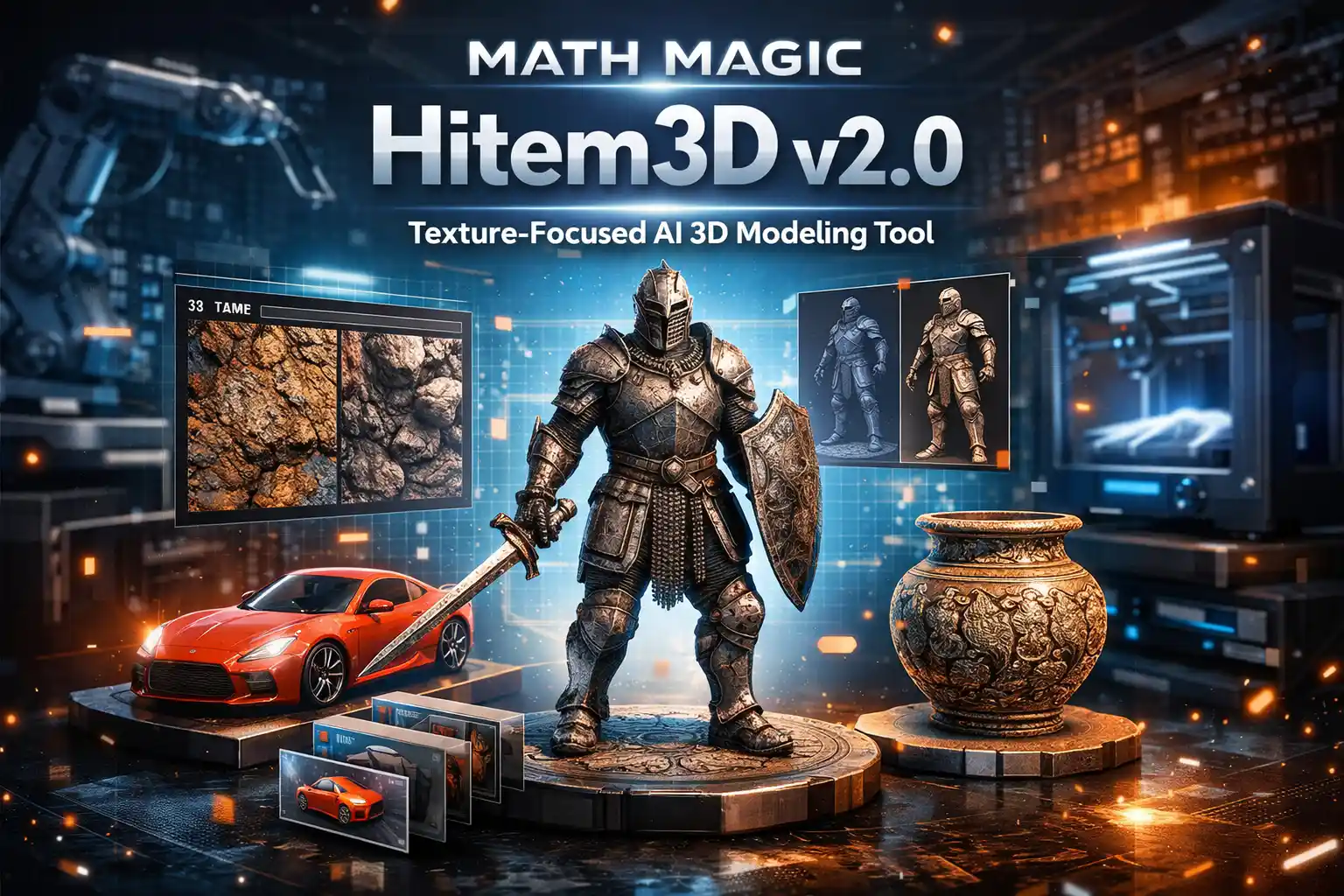
The model is also designed to assist with 3D creation and the development of interactive digital experiences.
Potential applications include generating or modifying code for 3D scenes, supporting game-development workflows, and helping developers work with 3D software tools.
These capabilities could be useful for game developers, designers, and teams building interactive applications. The final results depend on the tools used and the complexity of the project.
Understanding AI Agents and Long-Horizon Tasks
Another important area for Kimi K3.1 Pro is agentic capability.
An AI agent is a system that can work toward a goal by performing multiple steps, using tools, evaluating results, and adjusting its approach.
For example, creating a software feature might require the following process:
- Understand the requested feature.
- Inspect the existing code.
- Plan the required changes.
- Write or modify the code.
- Run tests and inspect errors.
- Make corrections and verify the result.
A model designed for long-horizon tasks aims to handle this type of multi-step workflow more effectively.
Kimi K3.1 Pro is intended to improve these capabilities across coding, knowledge work, and other complex tasks.
However, an AI agent’s performance depends on the tools it can access, the permissions it receives, and the quality of its planning and verification. Important operations should have appropriate safeguards and human oversight.
Cybersecurity: How Moonshot AI Is Trying to Reduce Risk
One of the most significant aspects of Kimi K3.1 Pro is Moonshot AI’s approach to cybersecurity.
AI models can help security researchers identify weaknesses in software and improve system protection. However, similar capabilities can also be misused to find and exploit vulnerabilities in systems without authorization.
Moonshot AI says it introduced targeted training controls to reduce the model’s potential for offensive cybersecurity misuse while preserving its general usefulness.
What Changes Did the Company Make?
According to Moonshot AI’s official technical announcement, the company identified cyber-related material in its training process and applied controls at two stages:
- Training-data filtering: The company removed cyber-related data from the relevant mid-training corpus.
- Reinforcement-learning controls: It also removed cyber-related tasks from the reinforcement-learning environment mix used to develop the model.
The purpose was to reduce the model’s offensive cybersecurity capabilities without removing the general-purpose coding tasks needed for ordinary software development.
Why Is This Important?
Consider a company that wants to identify weaknesses in its own software before attackers discover them.
AI can help its security team inspect source code, understand potential vulnerabilities, and improve the application’s protection.
However, a malicious user might attempt to use similar capabilities to exploit weaknesses in systems they do not own or have permission to test.
This creates a challenge for AI developers: they need to support legitimate software development and defensive security research while limiting the risk of harmful use.
Moonshot AI’s approach attempts to address this problem through changes to the model’s training process.
These measures may reduce particular risks, but they cannot guarantee that the model will never be misused.