
On June 5, 2026, the Reserve Bank of India (RBI) delivered one of its most closely watched monetary policy decisions of the year. While the central bank kept the repo rate unchanged at 5.25%, the real highlight was a series of measures aimed at attracting foreign capital and stabilizing the Indian rupee. These steps come at a time when rising crude oil prices, geopolitical tensions in West Asia, and foreign investor outflows have put significant pressure on India’s currency and external sector.
Rather than raising interest rates and slowing economic growth, the RBI chose a different strategy: make India more attractive to global investors and increase foreign currency inflows into the country.
What Did RBI Announce?
The Monetary Policy Committee (MPC) unanimously decided to keep the repo rate unchanged at 5.25% and retained its “Neutral” policy stance. RBI also revised its economic projections in response to changing global conditions.
Key Highlights
| Indicator | Latest Forecast |
| Repo Rate | 5.25% |
| Policy Stance | Neutral |
| FY27 GDP Growth | 6.6% |
| FY27 Inflation | 5.1% |
The central bank believes that inflation risks have increased due to higher oil prices and geopolitical uncertainty, while economic growth could face headwinds from a weaker global environment.
Why Is RBI So Focused on Foreign Investors?
The biggest concern for policymakers currently is the pressure on the Indian rupee.
Over the past few months, the rupee has weakened significantly as foreign investors pulled money out of emerging markets and global investors shifted towards safer assets. Rising oil prices have further increased India’s demand for dollars because the country imports most of its crude oil requirements.
When foreign investors sell Indian assets and take money abroad, dollars leave the country. This reduces foreign currency availability and puts pressure on the rupee.
To address this challenge, RBI decided to encourage fresh foreign investment instead of using aggressive interest-rate hikes.
The Biggest Announcement: Tax Benefits for Foreign Investors
One of the most significant measures announced by the government and RBI is the removal of capital gains tax and interest tax on certain investments by foreign investors in Indian government bonds.
Why Is This Important?
Foreign investors compare opportunities across countries. If taxes are high, they may prefer investing elsewhere.
By reducing the tax burden, India is making its government bond market more attractive to:
- Global pension funds
- Sovereign wealth funds
- Insurance companies
- International asset managers
- Foreign portfolio investors (FPIs)
This could lead to billions of dollars flowing into Indian debt markets over the coming months.
Expansion of the Fully Accessible Route (FAR)
Another major reform is the expansion of the Fully Accessible Route (FAR).
Under FAR, foreign investors can buy specified Indian government securities without investment restrictions. RBI has now expanded this facility to cover more long-term government bonds, including new 15-year, 30-year and 40-year securities.
Why Does FAR Matter?
Large international investors typically prefer long-duration bonds because they match their long-term liabilities.
By increasing access to these bonds, India is:
- Improving bond market liquidity
- Attracting long-term foreign capital
- Reducing dependence on short-term flows
- Strengthening demand for Indian government securities
This move is expected to increase India’s appeal among global fixed-income investors.
RBI Opens More Investment Opportunities for Overseas Investors
RBI has also relaxed certain investment norms for non-resident investors and expanded access to overseas individuals. The objective is to make India’s financial markets easier to access and more investor-friendly.
These reforms signal that India wants to position itself as one of the most attractive destinations for global capital at a time when many investors are looking for alternatives to slowing developed economies.
Special Measures for NRI Deposits
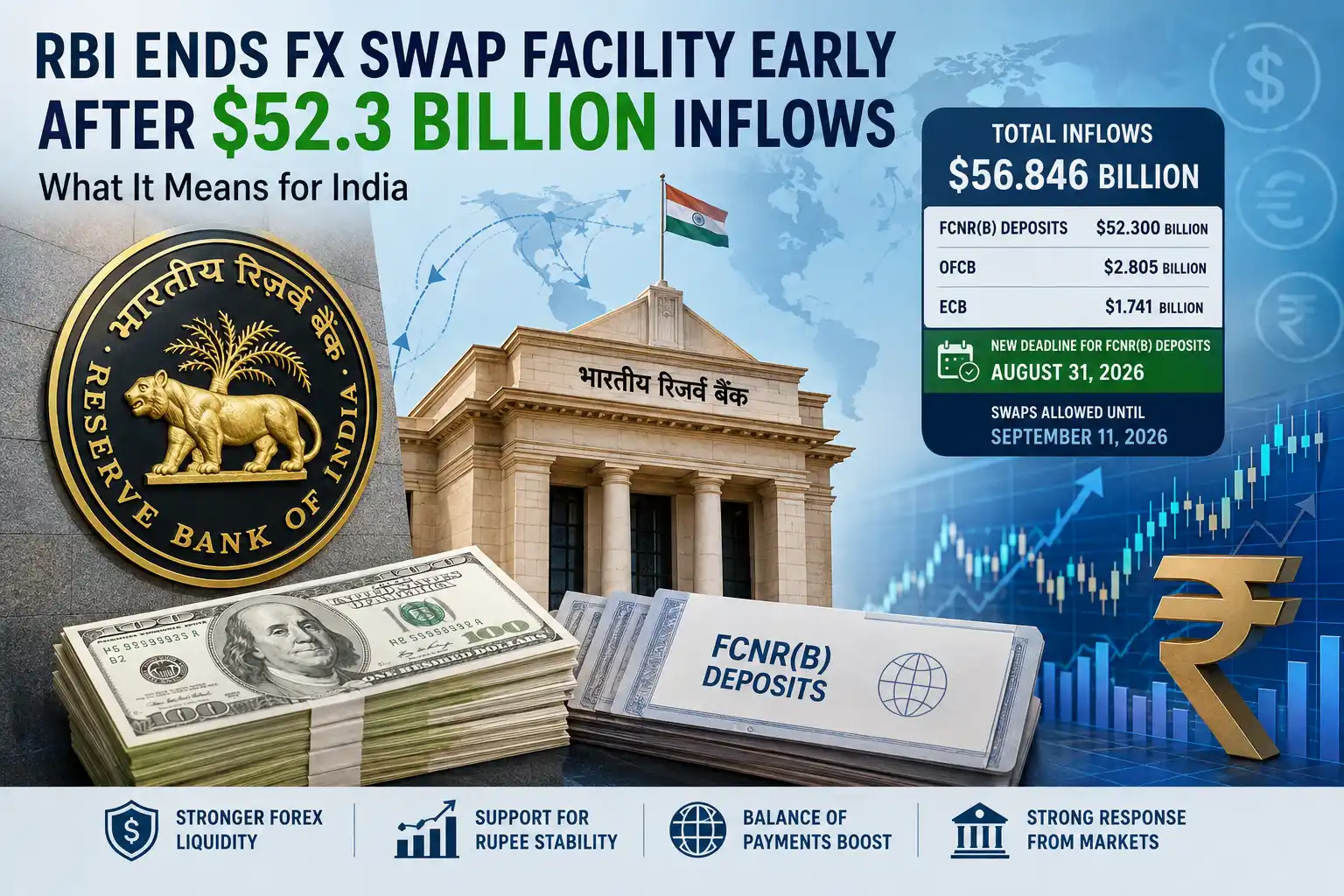
RBI has introduced additional support for Foreign Currency Non-Resident (FCNR) deposits and NRI dollar deposits. Banks raising foreign currency deposits will receive hedging-related support, making it easier and cheaper for them to attract overseas funds.
Why Is This Important?
India has successfully used NRI deposits during previous periods of currency stress.
Benefits include:
- Increased foreign currency reserves
- Improved dollar liquidity
- Reduced pressure on the rupee
- Greater confidence among global investors
Forex Swap Facility for State-Owned Companies
RBI also announced concessional foreign exchange swap facilities for selected state-owned companies. These companies often need large amounts of dollars for imports and overseas obligations.
The swap facility helps them access dollars more efficiently, reducing pressure on the foreign exchange market.
How Much Foreign Capital Could India Attract?
Market analysts estimate that the combined measures could bring approximately $40 billion to $60 billion of additional foreign capital into India over time. This would significantly improve external-sector stability and support the rupee without requiring sharp interest-rate increases.
If these inflows materialize, India could strengthen its foreign exchange reserves and improve investor confidence even during periods of global uncertainty.
Immediate Impact on the Rupee
Financial markets responded positively to the RBI’s announcements.
Following the policy decision and foreign-investor-focused measures, the rupee strengthened sharply against the US dollar, reflecting improved market sentiment and expectations of future capital inflows.
This indicates that investors viewed the RBI’s strategy as a credible alternative to raising interest rates.
What Are the Risks Going Forward?
Despite these supportive measures, several risks remain:
Rising Crude Oil Prices
India remains heavily dependent on imported oil. Higher oil prices increase the country’s import bill and dollar demand.
West Asia Conflict
Continued geopolitical tensions could disrupt energy markets and increase global volatility.
Global Interest Rates
If major central banks keep rates elevated, foreign investors may continue to prefer developed-market assets over emerging markets.
Inflation Risks
RBI has already raised its inflation forecast to 5.1%, indicating that price pressures remain a concern.
Why This Policy Matters
The June 2026 RBI policy is less about interest rates and more about capital flows.
Instead of using traditional monetary tightening, RBI has chosen to strengthen the rupee through foreign investment-friendly reforms. This approach allows the central bank to protect economic growth while addressing external-sector risks.
The focus on tax incentives, easier bond market access, NRI deposits, and forex-support measures shows that policymakers believe foreign capital inflows are currently the most effective tool for stabilizing the rupee. If global conditions do not deteriorate significantly, these measures could improve investor confidence and help India attract substantial long-term foreign investment.
Outcome
The RBI’s June 5, 2026 policy decision marks a shift from rate-based intervention to investment-driven currency support. By keeping the repo rate at 5.25% while simultaneously making India more attractive to foreign investors, policymakers are attempting to balance growth, inflation, and currency stability.
For foreign investors, the message is clear: India is opening more doors for global capital. For the rupee, the success of this strategy will depend on how much new foreign money enters the country in the coming months and whether global economic conditions remain supportive.
Source: Reserve Bank of India (RBI) and various media reports.