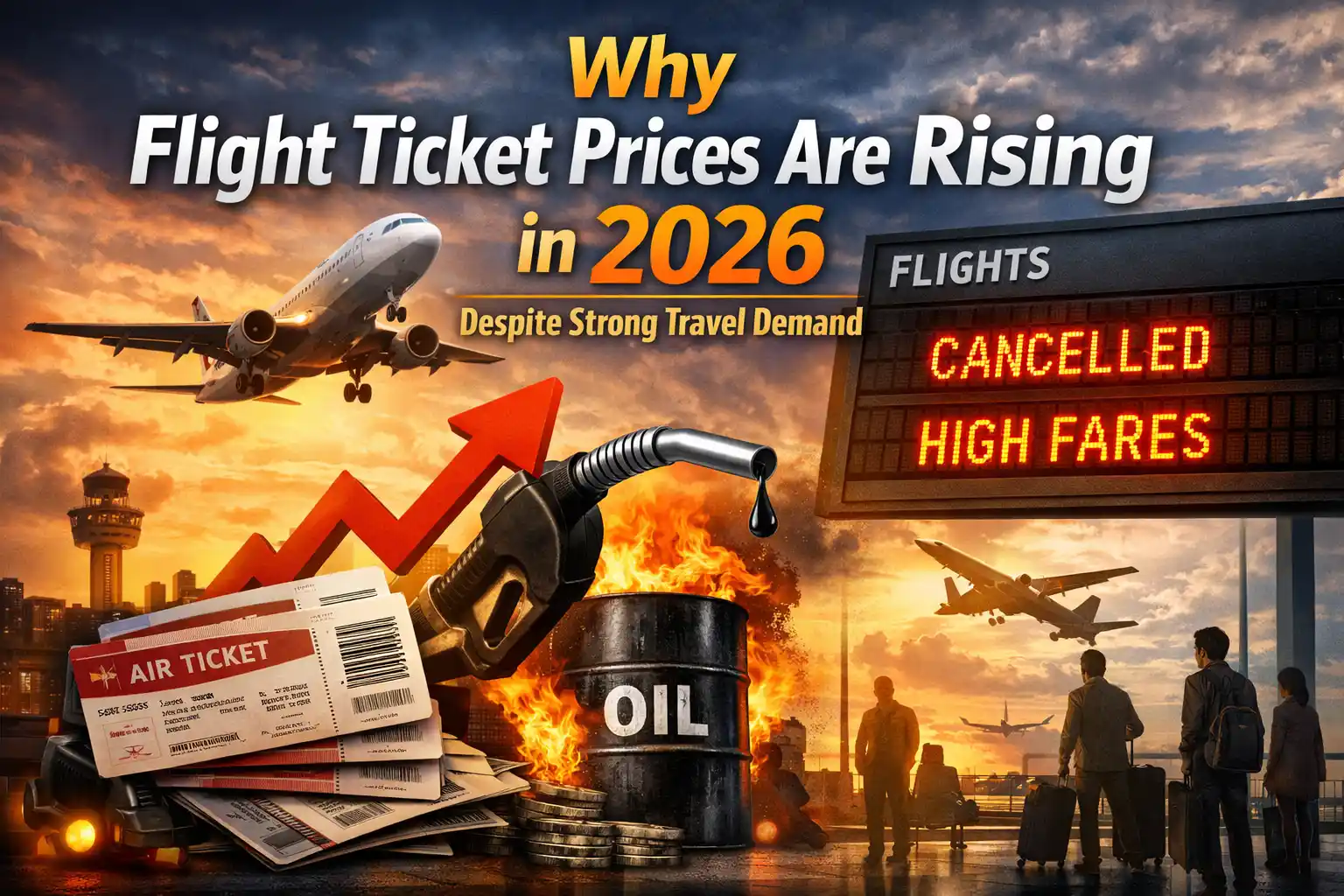
In 2026, the global aviation industry is facing a rare and complex situation:
- Travel demand remains strong
- But ticket prices are continuously rising
According to the latest data, air travel demand grew around 1% year-on-year in March 2026, with millions of passengers continuing to fly. At the same time, industry estimates suggest global air travel demand could grow by ~5–6% in 2026.
However, rising fuel costs, geopolitical tensions, and supply constraints have forced airlines to increase fares.
In simple terms:
Demand is strong, but costs are rising even faster
Why Travel Demand is Still Stable
1. Demand Growth Continues Despite Crisis
- Global air travel demand is expected to grow ~5–6% in 2026
- In the U.S., over 78 million passengers traveled in March 2026
- Demand has not yet been significantly impacted by rising fuel prices
This shows that travel demand is highly resilient, even during global uncertainty.
2. Premium & Business Travel Remain Strong
- Airlines are expanding premium cabins
- Corporate travel demand has recovered
- In some aircraft, 40–50% seats are shifting toward premium categories
High-income and business travelers are supporting airline revenues, keeping overall demand stable.
3. Travel Behavior is Shifting, Not Declining
- Travelers are avoiding high-risk regions
- Demand is shifting toward safer destinations like Southern Europe
- Short-haul travel is increasing compared to long-haul
Demand is not falling—it is changing direction.
4. Strong Long-Term Demand Outlook
- Global air travel demand is expected to double by 2050
- Asia-Pacific (including India and China) will lead growth
This clearly shows that aviation remains a long-term growth industry.
Why Ticket Prices Are So High
1. Jet Fuel Prices – The Biggest Driver
- Jet fuel prices have reached up to $195 per barrel in some markets
- Around $4.5 per gallon in the U.S.
- In India, ATF prices have risen sharply (monthly increase ~8%+)
Fuel accounts for 35–45% of airline costs, so fare increases are inevitable.
If fuel costs rise, ticket prices follow almost immediately.
2. War & Oil Supply Disruption
- Middle East tensions have disrupted oil supply
- Strait of Hormuz (a key global oil route) is at risk
- Crude oil prices have surged above $100
Result:
- Jet fuel prices spike
- Airline operating costs increase significantly
3. Airline Loss Pressure & Fare Hikes
- Airlines are facing heavy cost pressure
- Some industry leaders have even warned about potential bankruptcies
- Ticket prices have already increased by up to ~20% in some routes
Airlines are left with two choices:
✔️ Increase fares
✔️ Or absorb losses
Most are choosing to increase fares.
4. Fuel Surcharges & Additional Charges
- Airlines have added fuel surcharges
- International routes have seen sharp increases
Example:
- Some routes have seen fuel surcharge increases of 200%+
These hidden costs directly increase ticket prices.
5. Aircraft Supply Constraints
- Aircraft deliveries are delayed
- Some planes are grounded due to maintenance issues
- Fleet expansion is slower than expected
Result:
Limited capacity + stable demand = higher fares
6. Longer Routes Increase Costs
- Airlines are avoiding conflict zones
- Flights are taking longer routes
- Fuel consumption has increased
These additional operational costs are passed on to passengers.
7. Overall Cost Explosion
Apart from fuel, other costs are also rising:
- Staff salaries and labor costs
- Maintenance and spare parts
- Airport fees and taxes
Industry reports show that cost growth is faster than revenue growth, putting pressure on airlines.
Airlines Facing a “Perfect Storm”
Airlines are currently under extreme pressure:
🔺 Cost Side:
- Rising fuel prices
- Geopolitical risks
- Limited supply
🔻 Demand Side:
- Still stable
- But could weaken if prices rise further
Experts warn:
If high fares continue, demand may eventually slow down.
Real Impact
Impact on Passengers
- International ticket prices have crossed $1,900+ in some cases
- Last-minute bookings are extremely expensive
- Budget travel has become difficult
Travelers now need to plan and book in advance.
Impact on Airlines
- Airline stocks are under pressure
- Profit margins are shrinking
- Some airlines have entered “emergency mode”
Strategies include:
- Cost cutting
- Route optimization
- Focus on premium customers
Impact on Economy & Markets
- Airline stocks declining
- Energy sector gaining strength
- Tourism remains stable but faces future risks
The global economy is showing mixed signals.
Future Outlook
Short Term (2026)
- Ticket prices likely to remain high
- Fuel prices will be the key driver
- Airlines may increase fares further
Medium Term
- If oil prices stabilize, fares may stabilize
- Governments may intervene (e.g., controlling fuel price hikes)
Long Term
- Demand will continue to grow
- Aviation industry expansion will continue
- New aircraft and technology may reduce costs
Final Conclusion
The aviation industry in 2026 reflects a perfect contradiction:
Demand is strong (stable and growing traffic)
Costs are exploding (fuel, war, supply issues)
As a result:
- Flights are full
- Ticket prices are high
In simple terms:
“Travel demand remains strong, but rising costs are making travel expensive.”
The future will depend on:
- Oil price trends
- Geopolitical stability
- Airline capacity expansion