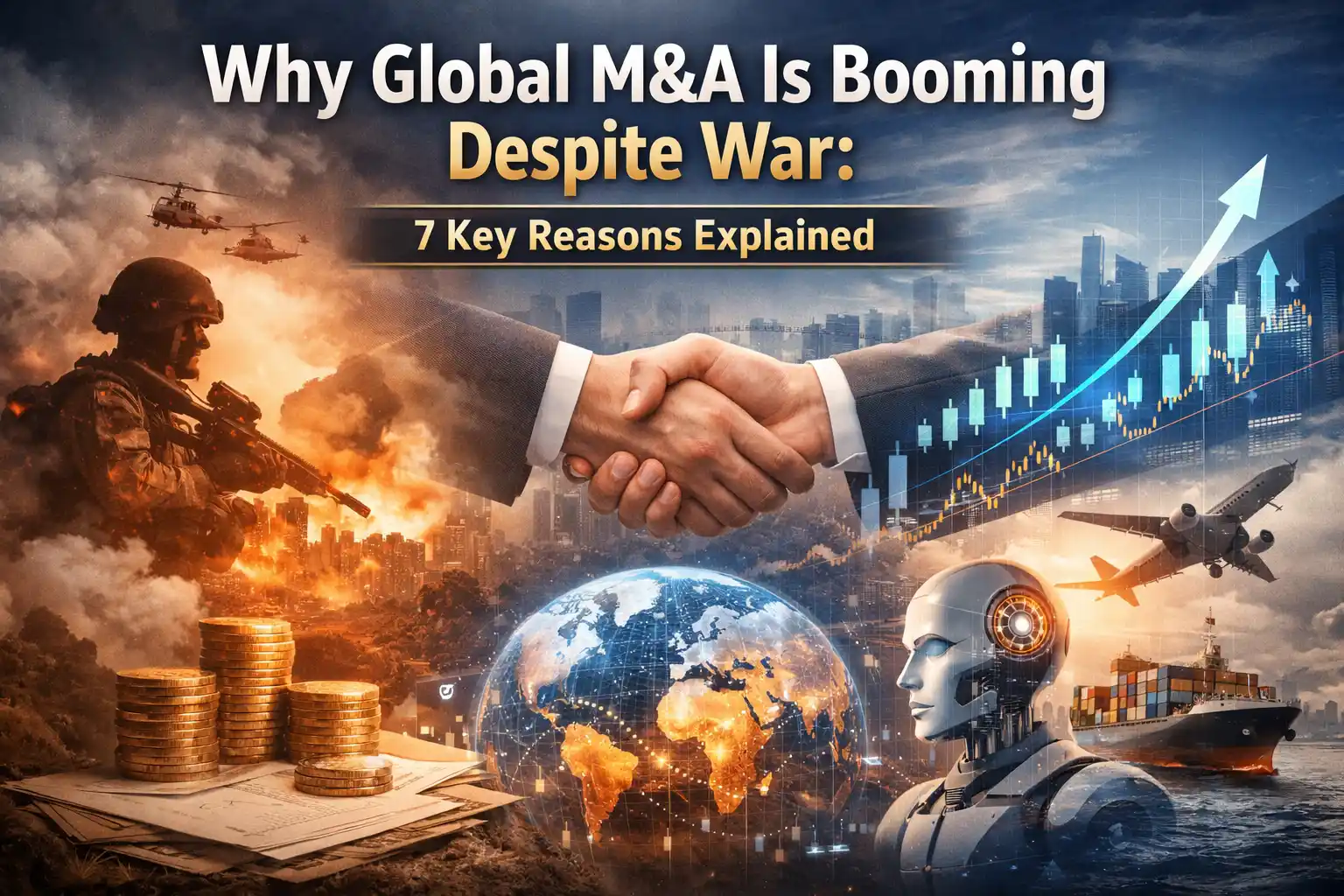
Today’s global business environment is going through a very unusual phase. On one hand, wars and geopolitical tensions are ongoing in different parts of the world, oil prices are highly volatile, and uncertainty is at its peak. But on the other hand, a surprising trend is clearly visible — Mergers & Acquisitions (M&A) are reaching record levels globally.
This is not a coincidence. There are strong reasons behind this trend that are shaping the future of the global economy. Let’s understand it step by step in simple language.
What Does M&A Boom Really Mean?
M&A means when one company acquires another or two companies merge together.
Right now:
- Billion-dollar deals are happening frequently
- Companies are aggressively acquiring others
- Consolidation is increasing across industries
In simple terms:
Companies are doing deals to become bigger, stronger, and future-ready.
Why Are Deals Not Slowing Down Despite War?
Earlier, during wars or crises, deal activity used to slow down.
But now the situation has changed.
- Companies don’t want to wait anymore
- Competition has become extremely fast
- Securing the future has become more important
That’s why:
Companies are continuing deals despite risks.
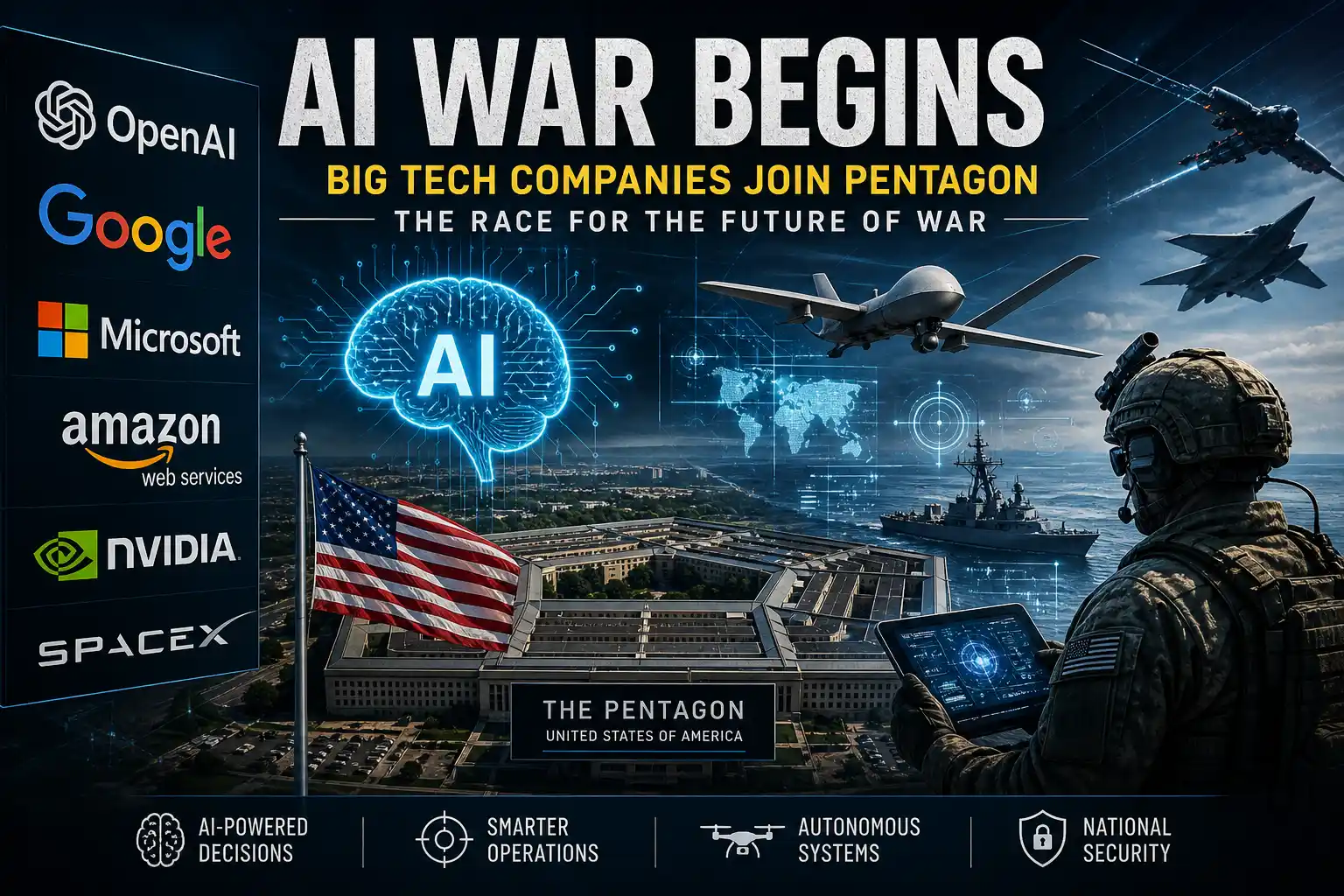
AI Revolution – The Biggest Driver
The biggest reason behind this boom is Artificial Intelligence (AI).
- Every company wants AI capabilities
- Technology is evolving very fast
- Companies without AI risk falling behind
That’s why companies are:
- Acquiring AI startups
- Investing heavily in tech companies
Key takeaway:
AI is the future, and companies are buying that future through M&A.
There Is No Shortage of Capital
Another major reason is strong liquidity in the market.
- Private equity firms have huge funds
- Banks are financing large deals
- Big corporations have strong cash reserves
This means:
Money is easily available to support deals.
Race for Survival and Growth
Competition in business has become intense.
- Strong companies want to become even stronger
- Weak companies are struggling to survive
Result:
- Large companies are acquiring smaller ones
- Market consolidation is increasing
Simple idea:
“Grow or merge” has become the new rule.
Global Expansion Trend
After recent global disruptions, companies have realized one thing:
Depending on a single country is risky.
That’s why:
- Companies are expanding into multiple countries
- Cross-border deals are increasing
Examples include expansion into India, Vietnam, and Mexico.
Insight:
Building a global presence is now essential.
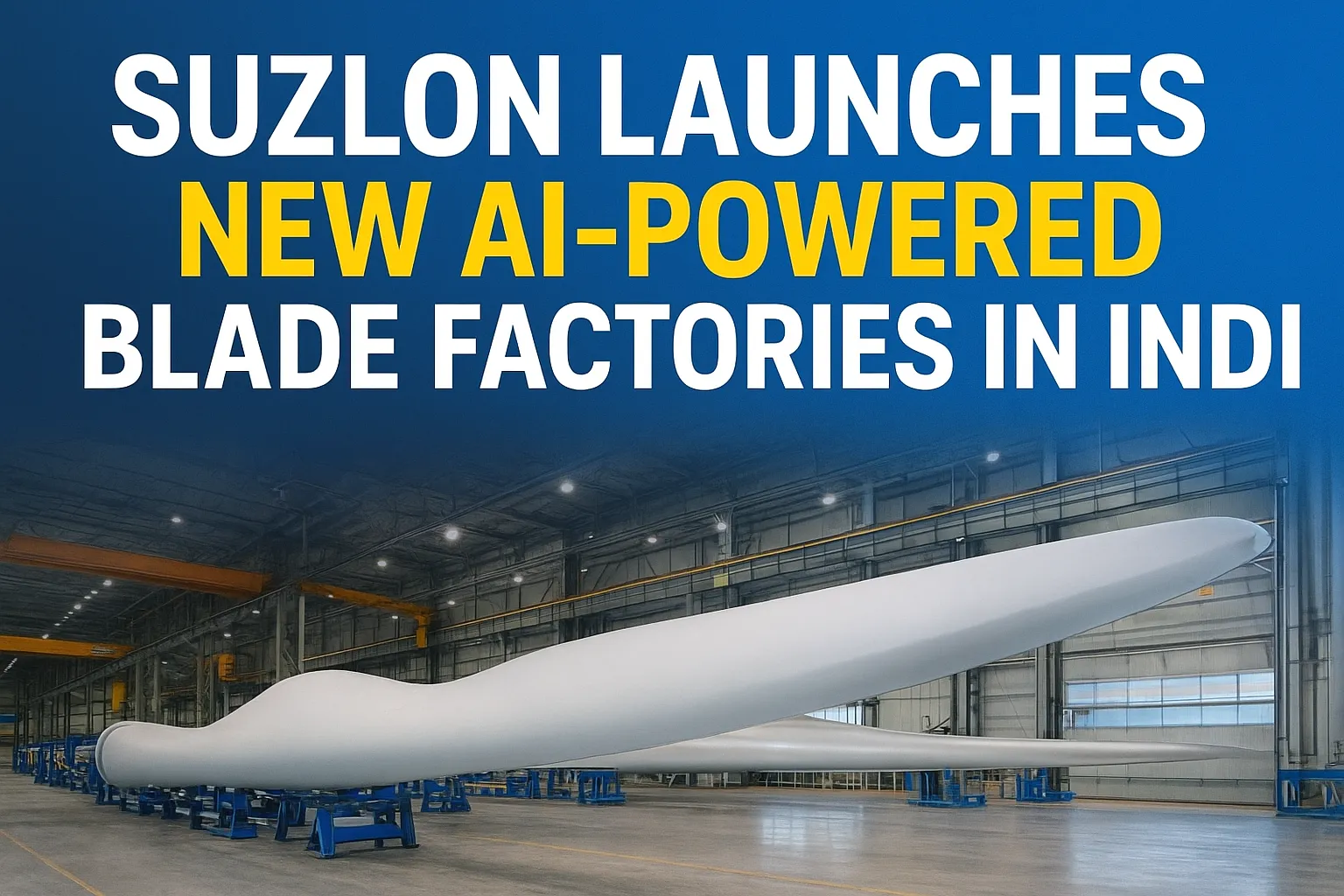
Impact of Supply Chain Shift
War and geopolitics have disrupted global supply chains.
Companies are now:
- Looking for new manufacturing locations
- Acquiring local businesses
Why?
To expand quickly.
Simple explanation:
M&A is the fastest way to enter new markets.
Benefit of Lower Valuations
Crisis also creates opportunities.
- Market uncertainty leads to lower valuations
- Strong companies get chances to buy at cheaper prices
That’s why:
Companies are acquiring undervalued assets for long-term gains.
Competitive Pressure
When one company makes a big deal, others feel pressure.
Result:
- A chain reaction begins
- One deal triggers multiple deals
This is known as:
Competitive deal cycle.
New Deal Structures (Smart Strategies)
Today’s deals are not simple.
Companies are using:
- Joint ventures
- Partial stake acquisitions
- Strategic partnerships
This helps:
- Reduce risk
- Make deals easier
Risks to Watch
Not everything is positive.
- Oil price volatility may increase costs
- War escalation could slow down deals
- Overvaluation, especially in AI, may lead to correction
So:
Opportunities exist, but risks are also high.
Final Conclusion
The current M&A boom is not just a normal growth phase.
It is a strategic shift in global business.
- Companies want to secure their future
- They want to stay ahead of competition
- They are acting despite uncertainty
Final Insight
The global M&A boom is not happening despite war, but because of it — as companies rush to secure their future.