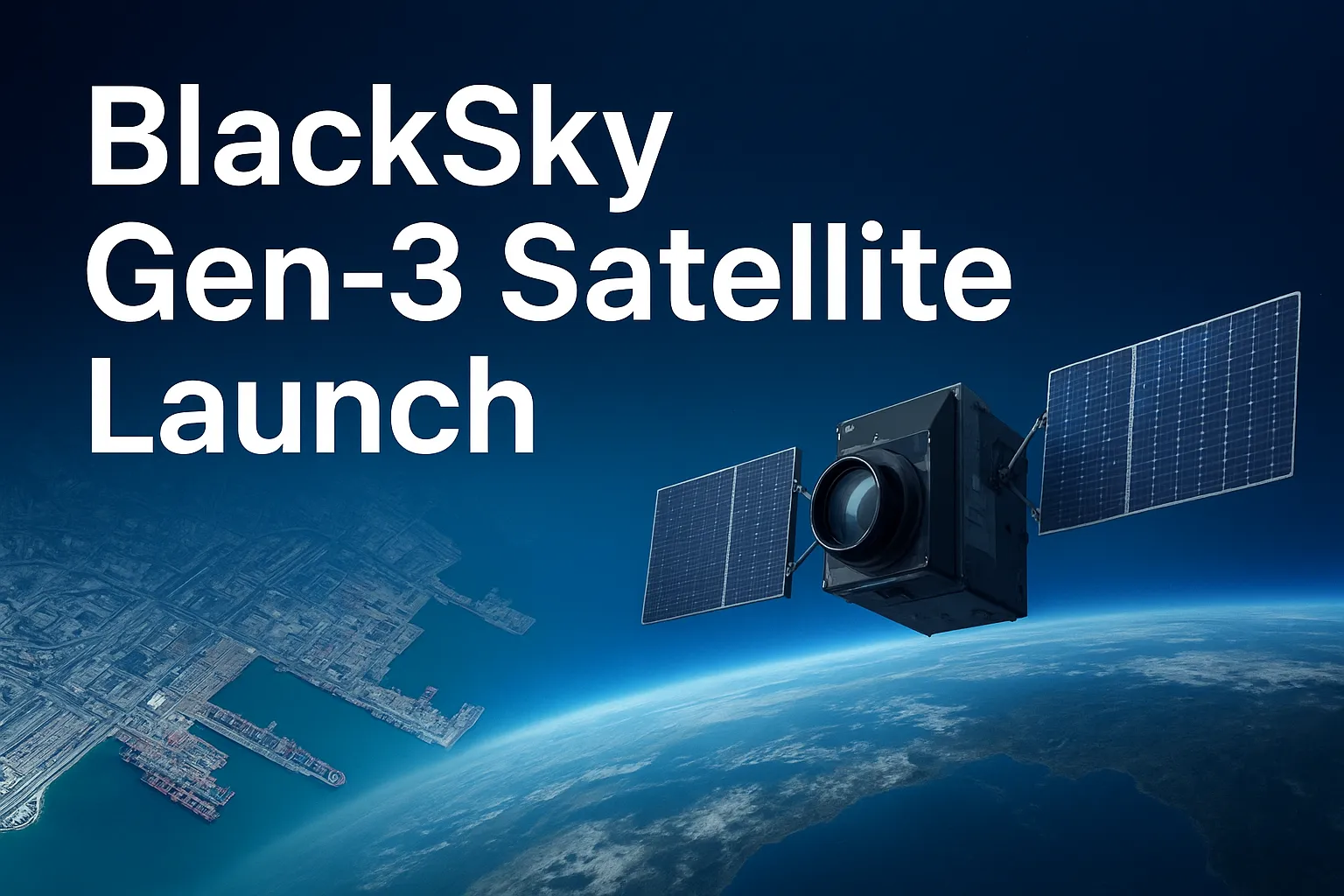

The United States Government has significantly ramped up support for the Space and Defence sector, awarding a series of major contracts worth billions of dollars to leading aerospace and defence firms. The move underlines Washington’s strategic focus on strengthening national security, advancing space-based capabilities, and maintaining technological superiority against global competitors.
Recent contract awards and policy developments have sparked heightened investor interest in defence and space technology stocks, while also signaling long-term industry expansion.
Golden Dome Missile Defence Program Gains Momentum
One of the most noteworthy developments is the acceleration of the Golden Dome Missile Defence Program — an initiative designed to deploy space-based systems capable of detecting and intercepting advanced missile threats.
Under this program, Sidus Space has won a significant contract from the Missile Defence Agency (MDA) to develop and integrate next-generation defence technologies focused on early detection and threat response.
Industry analysts say this contract positions Sidus Space as a key player in layered national defence architecture and could unlock future opportunities with other defence agencies.
$3.5 Billion in Tracking Satellite Contracts Awarded
In a major move, the US Space Development Agency (SDA) has awarded approximately $3.5 billion in contracts for Tracking Layer Satellites — a cornerstone component of America’s future space defence capabilities.
Leading aerospace and defence firms receiving awards include:
- Lockheed Martin
- Northrop Grumman
- Rocket Lab
- L3Harris Technologies
These satellites are designed to provide real-time monitoring of hypersonic missiles, ballistic threats, and other strategic targets — a critical capability as global missile technology evolves rapidly.
According to project timelines, multiple satellites are expected to be operational in orbit by 2029.
Viasat Selected for LEO Communication Services for US Space Force
Viasat has secured a new task order to provide Low Earth Orbit (LEO) satellite communication services for the US Space Force and related defence agencies.
The LEO communication network will enable:
- Higher bandwidth and lower latency secure data transmission
- Enhanced battlefield connectivity for defence operations
- Robust, globally accessible communications even in contested environments
Experts believe this could strengthen military communication infrastructure and expand Viasat’s role in future defence contracts.
Blue Origin Expands Strategic Defence Focus
In a significant leadership development, Blue Origin has appointed Tory Bruno — former CEO of United Launch Alliance (ULA) — as head of its newly formed National Security Group.
The move signals Blue Origin’s intent to aggressively pursue larger government launch contracts and compete more directly with industry leaders like SpaceX for defence and national security space launches.
The appointment of a seasoned defence executive reflects broader industry efforts to integrate commercial space expertise with government needs.
Heightened Geopolitical Tensions as China Sanctions US Defence Firms
In a parallel geopolitical development, China has imposed sanctions on more than 20 US defence companies in response to US arms sales to Taiwan.
While the list includes major contractors, analysts note that most US defence firms have limited direct business in China, meaning the immediate economic impact may be muted. However, the sanctions underline the intensifying geopolitical rivalry and could influence future supply chain and investment decisions.
The sanctions further solidify Washington’s push toward domestic defence production and technological self-reliance.
Driving Factors Behind Increased Government Focus
Experts point to several reasons for the US Government’s heightened investment in space and defence:
- Rising geopolitical competition with China and Russia
- Rapid advancements in hypersonic weapons and missile technology
- The growing importance of space as a strategic domain
- Commercial space companies delivering innovative capabilities
This convergence of strategic, technological, and competitive forces has elevated space and defence to a central priority in national security policy.
Market Implications for Investors
The recent contract awards have broad implications for both defence equities and broader investment strategies:
- Aerospace and defence companies may see stronger long-term revenue pipelines
- Government contracts enhance business visibility and valuation prospects
- Risk appetite for defence technology investments is rising among institutional investors
Analysts suggest that defence and space sectors could remain core drivers of market performance through 2026 and beyond.
Outcome
The US Government’s latest round of contracts clearly signals a renewed focus on advanced defence and space capabilities. From tracking satellites and missile defence systems to secure communications infrastructure, Washington is investing heavily in technologies that could shape the future of national security.
With major companies like Lockheed Martin, Viasat, Rocket Lab, and Sidus Space at the forefront, the Space & Defence industry is poised for significant strategic growth — both in government demand and investor interest.
Source: U.S. Space Development Agency, U.S. Department of Defense, company filings, and Reuters.