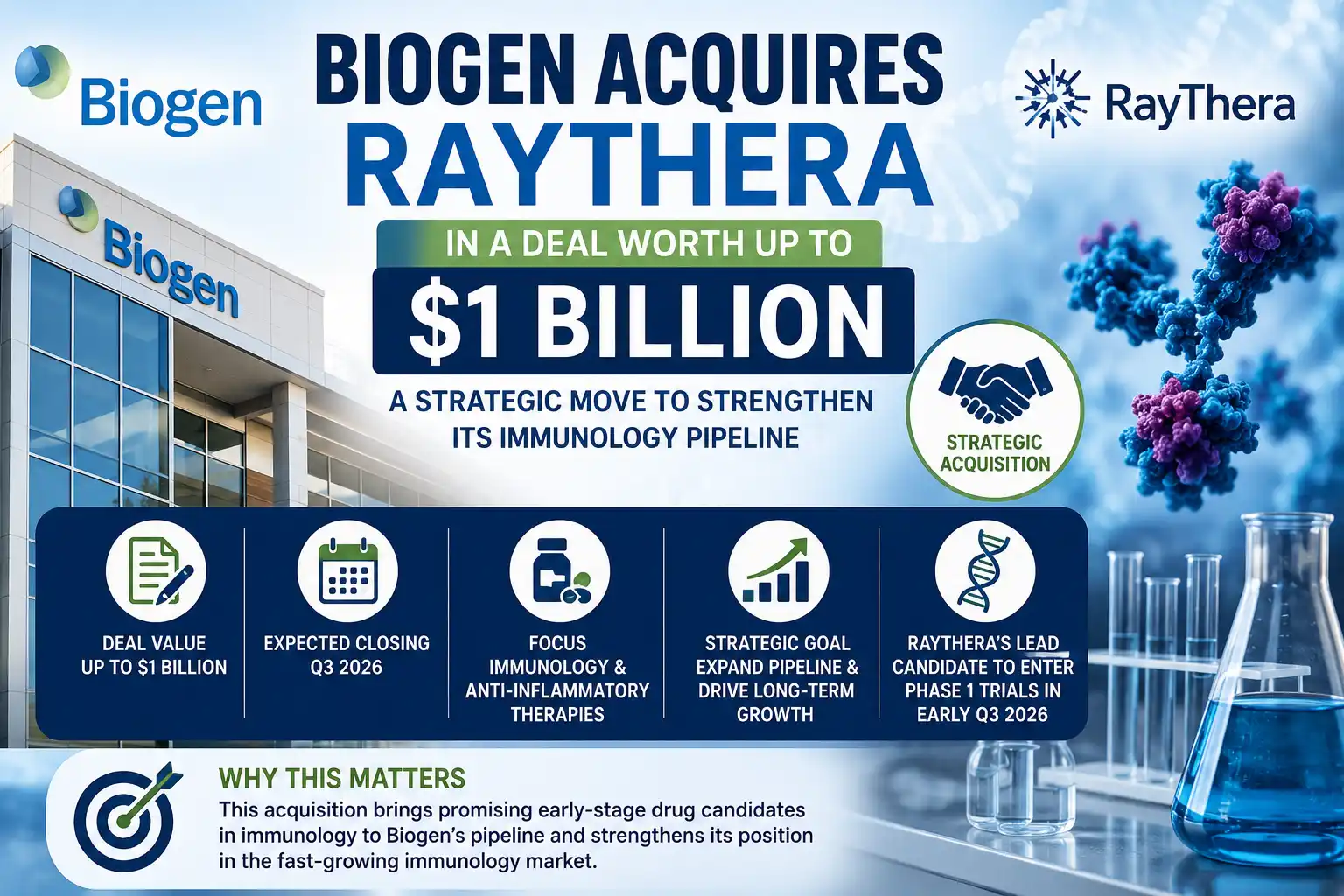
The global biotechnology industry witnessed another major acquisition announcement in June 2026. Biogen, one of the world’s leading biotechnology companies, has agreed to acquire private biotech firm RayThera in a deal valued at up to $1 billion. The acquisition highlights Biogen’s strategy to expand beyond its traditional focus areas and strengthen its presence in the fast-growing immunology market.
The deal is particularly significant because it brings several promising anti-inflammatory and immune-related drug candidates into Biogen’s pipeline at a time when pharmaceutical companies are increasingly investing in next-generation treatments for immune-mediated diseases.
About Biogen
Biogen is a leading biotechnology company founded in 1978 and headquartered in Cambridge, Massachusetts, USA.
The company is known for developing treatments in areas such as:
- Multiple Sclerosis (MS)
- Alzheimer’s Disease
- Neurology
- Rare Diseases
- Immunology
Over the years, Biogen has built a strong reputation for innovative research and has been actively expanding its pipeline through acquisitions, partnerships, and licensing agreements. The RayThera acquisition represents another step in that long-term growth strategy.
About RayThera
RayThera is a privately held biotechnology company based in San Diego, California.
The company specializes in discovering and developing small-molecule therapies aimed at treating immune-mediated and inflammatory diseases.
RayThera was founded by experienced biotechnology executives and recently completed a Series A funding round backed by major healthcare investors including Foresite Capital and OrbiMed Advisors.
Deal Details
| Particulars | Details |
| Acquirer | Biogen |
| Target Company | RayThera |
| Deal Value | Up to $1 Billion |
| Upfront Payment | Undisclosed |
| Additional Consideration | Clinical & Regulatory Milestones |
| Expected Closing | Q3 2026 |
| Industry | Biotechnology / Immunology |
Most of the deal value depends on the successful achievement of future clinical and regulatory milestones, which reduces Biogen’s upfront financial risk while providing significant upside for RayThera shareholders if the drug candidates progress successfully.
Why Is Biogen Acquiring RayThera?
Expanding Beyond Neurology
Biogen has traditionally been known for its neurology-focused portfolio. However, the company has increasingly looked toward immunology as a future growth driver.
The acquisition gives Biogen access to several anti-inflammatory assets that could potentially be developed for a variety of immune-mediated diseases. This diversification could reduce dependence on its existing neurological therapies and create new long-term revenue opportunities.
Access to Promising Drug Candidates
One of the most attractive aspects of the acquisition is RayThera’s lead drug candidate, which is expected to enter Phase 1 clinical trials in early Q3 2026.
While the therapies are still in early development, Biogen believes these assets have the potential to address significant unmet medical needs in immunology.
Strengthening the Immunology Pipeline
The immunology market has become one of the most competitive and lucrative areas in the pharmaceutical industry.
Companies worldwide are investing heavily in treatments targeting:
- Autoimmune diseases
- Chronic inflammatory disorders
- Immune system dysfunction
By acquiring RayThera, Biogen gains multiple anti-inflammatory programs that could support future product launches across several disease categories.
Strategic Importance of the Deal
This acquisition reflects a broader trend in the biotechnology industry where large pharmaceutical companies are acquiring smaller biotech firms with promising early-stage pipelines.
Instead of building every therapy internally, major companies are increasingly purchasing innovative platforms and drug candidates that can accelerate growth and improve research productivity.
For RayThera, the deal provides access to:
- Biogen’s global development expertise
- Large-scale manufacturing capabilities
- Worldwide commercialization network
- Financial resources for clinical development
For Biogen, it offers an opportunity to build a stronger immunology franchise that could contribute meaningfully to future revenue growth.
Potential Benefits for Biogen Investors
Pipeline Diversification
The acquisition reduces dependence on Biogen’s existing therapeutic areas and broadens its future growth opportunities.
Long-Term Growth Potential
If RayThera’s lead candidate and pipeline assets successfully progress through clinical trials, they could become valuable additions to Biogen’s portfolio.
Limited Upfront Risk
Since most of the $1 billion consideration is milestone-based, Biogen only pays the full amount if the programs achieve significant development success.
Risks Investors Should Consider
Despite the strategic rationale, biotechnology acquisitions always carry risks.
Early-Stage Development Risk
RayThera’s programs are still in early development and have not yet demonstrated success in large clinical trials.
Regulatory Uncertainty
Drug candidates must pass multiple stages of testing and obtain regulatory approval before reaching the market.
Commercialization Challenges
Even successful drugs face competition and reimbursement challenges once launched.
Outcome
Biogen’s planned acquisition of RayThera for up to $1 billion represents a strategic move to strengthen its position in the rapidly growing immunology market. The deal brings multiple anti-inflammatory drug candidates into Biogen’s pipeline, including a lead asset expected to enter Phase 1 development later this year.
While the acquisition involves the typical risks associated with early-stage biotechnology assets, it provides Biogen with an opportunity to diversify beyond neurology and build a stronger long-term growth platform. If RayThera’s therapies advance successfully through clinical development, this acquisition could become an important milestone in Biogen’s next phase of growth and innovation.
Source: biogen news