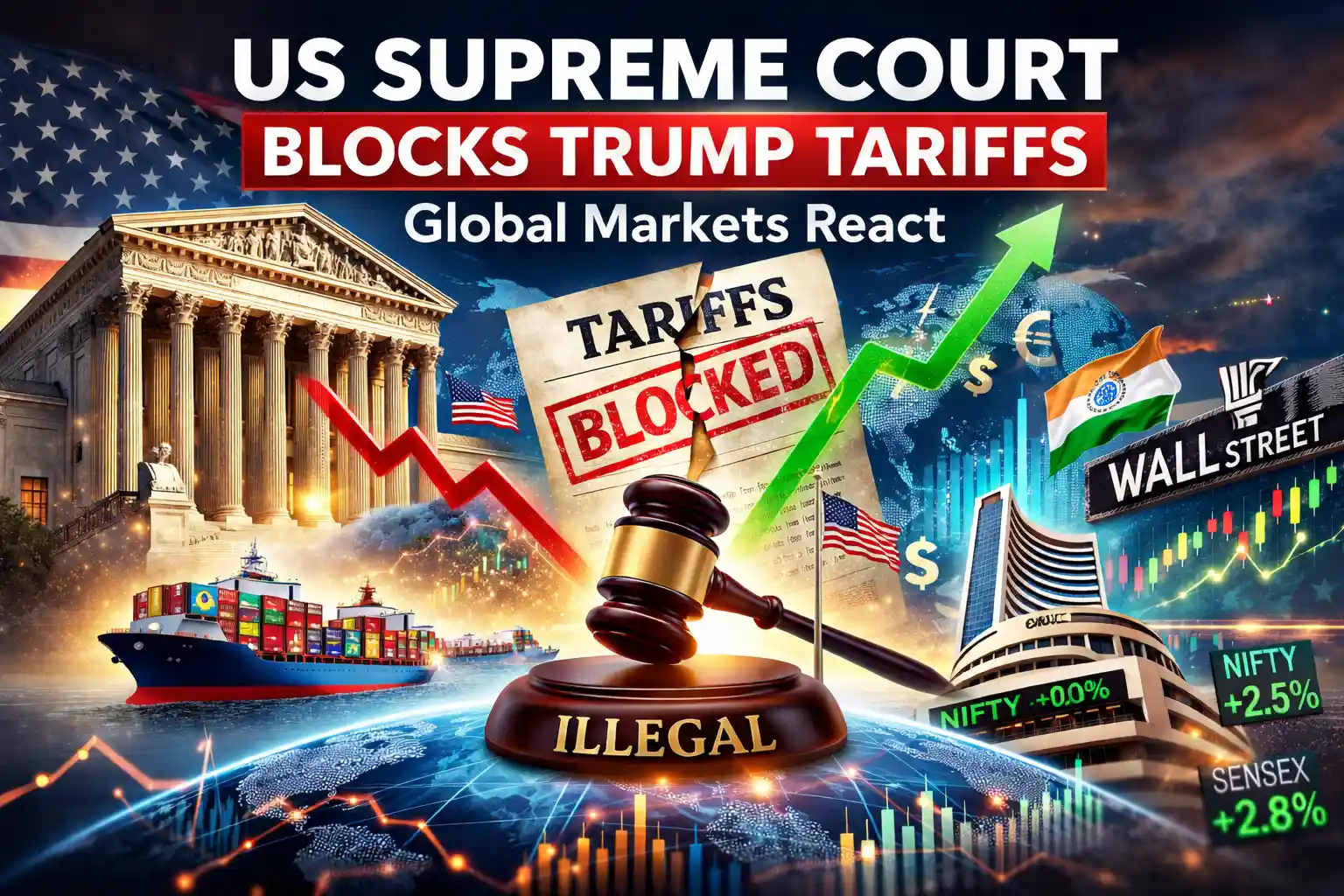
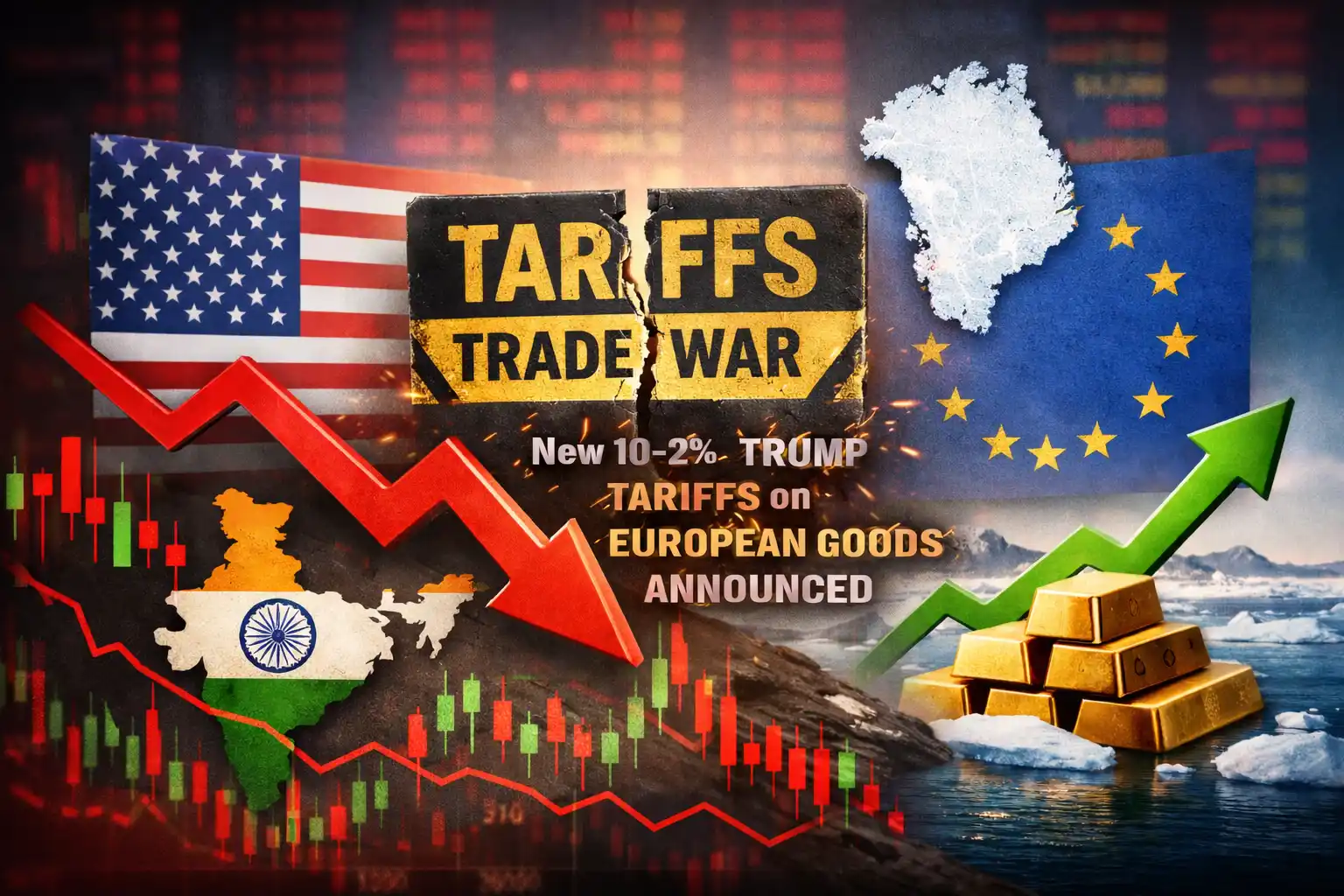
Global financial markets were already moving on shaky ground, but fresh tariff threats from US President Donald Trump have added fuel to the fire. European stock markets witnessed a sharp fall after Trump reiterated his aggressive trade stance, triggering a fresh wave of uncertainty across global indices.
This is not an isolated event. Markets were already under pressure due to earlier tariffs imposed on India, warnings related to Iran-linked trade, and ongoing geopolitical tensions. The renewed tariff rhetoric has now amplified fears of a full-scale global trade disruption, dragging equities lower across Europe, the US, and Asia.
What Exactly Happened in European Markets?
European stock indices reacted negatively as investors rushed to reduce risk exposure:
- Major indices like Germany’s DAX, France’s CAC 40, and UK’s FTSE 100 closed sharply lower.
- Export-heavy sectors such as automobiles, industrial machinery, metals, and chemicals were hit the hardest.
- Banking and financial stocks also declined due to fears of slowing global growth.
The reason is simple: Europe depends heavily on global trade, and any disruption in US-led trade policy directly hurts European corporate earnings.
Trump’s Tariff Policy: Not a New Threat, But a Stronger One
President Trump is not new to tariffs, but what worries markets is the continuity and escalation of his approach.
Earlier Tariffs That Already Hurt Markets
- Tariffs imposed on Indian goods strained US–India trade relations.
- Trump had earlier warned of penalties on countries trading with Iran, increasing compliance risks for global companies.
- These actions had already pushed global markets lower before the latest announcement.
What Changed Now?
- Trump has renewed and widened the tariff threat towards Europe, especially on industrial and strategic goods.
- The tone suggests long-term protectionism, not temporary negotiation tactics.
- Markets now fear that tariffs may expand into technology, defense-linked supplies, and energy equipment.
This renewed stance shattered hopes of trade stability in 2026.
Why European Markets Are More Vulnerable
European economies are export-driven, making them highly sensitive to trade disruptions.
Key Reasons for the Decline:
- High dependence on US markets for exports
- Rising input costs due to tariff-related supply chain disruptions
- Weak domestic demand within Europe
- Already tight monetary conditions
When tariffs rise, European companies face:
- Lower competitiveness
- Reduced profit margins
- Delayed investment plans
Ripple Effect: Global Markets Feel the Heat
The European market fall did not remain limited to the region.
United States
- US futures turned volatile as investors feared retaliatory tariffs.
- Multinational US companies with European exposure faced selling pressure.
Asia and Emerging Markets
- Asian markets opened lower following Europe’s decline.
- Emerging markets like India remained under pressure due to existing tariff stress and capital outflows.
Global investors shifted money toward safe assets such as bonds and gold, reflecting rising fear.
India’s Angle: Already Under Tariff Stress
India’s markets were already weak even before the European sell-off.
Why India Is Affected:
- Existing US tariffs on Indian exports have impacted trade sentiment.
- Earlier warnings related to Iran-linked trade increased uncertainty for Indian companies.
- A stronger US dollar due to global risk aversion adds pressure on Indian equities.
The fresh tariff narrative worsens sentiment further, even without direct new tariffs announced on India this time.
The Greenland Issue: Is It Connected to the Europe Tariff Matter?
What Is the Greenland Issue?
Greenland has recently gained attention due to:
- Its strategic military location
- Rich reserves of rare earth minerals
- Growing importance in Arctic trade routes
Trump has repeatedly expressed strong interest in strategic control and influence over Greenland, which has unsettled European allies, particularly Denmark.
Is It Directly Linked to European Tariffs?
- Directly: No
- Strategically: Yes
Both issues stem from the same core policy:
Trump’s “America First” approach that prioritizes strategic dominance, economic leverage, and reduced dependence on allies.
Trade tariffs and geopolitical pressure are being used as parallel tools to assert US interests globally.
Investor Sentiment: Fear Over Fundamentals
Markets today are driven less by company earnings and more by policy risk.
What Investors Are Worried About:
- Sudden policy changes
- Escalation into trade wars
- Retaliatory tariffs from Europe
- Long-term damage to global growth
As uncertainty rises, investors prefer to exit equities rather than wait, leading to sharp sell-offs even without immediate economic damage.
What Could Happen Next?
Short-Term Outlook
- High volatility in global markets
- Defensive sectors may outperform
- Export-driven stocks may remain under pressure
Medium-Term Risks
- Slower global economic growth
- Delay in corporate investments
- Higher inflation due to tariff-driven costs
If diplomatic dialogue does not improve, markets may continue pricing in worst-case trade scenarios.
A Fragile Global Market Gets Another Shock
European stock markets did not fall in isolation. They fell because confidence was already fragile, and renewed tariff threats from President Trump acted as the final trigger.
With tariffs already impacting India, Iran-related trade tensions unresolved, and geopolitical issues like Greenland adding strategic stress, global markets are entering a phase where policy decisions matter more than profits.
For investors, this is a reminder that trade policy is no longer just economics—it is geopolitics, and markets must now navigate both together.
Analysis is based on media reports and publicly available data.