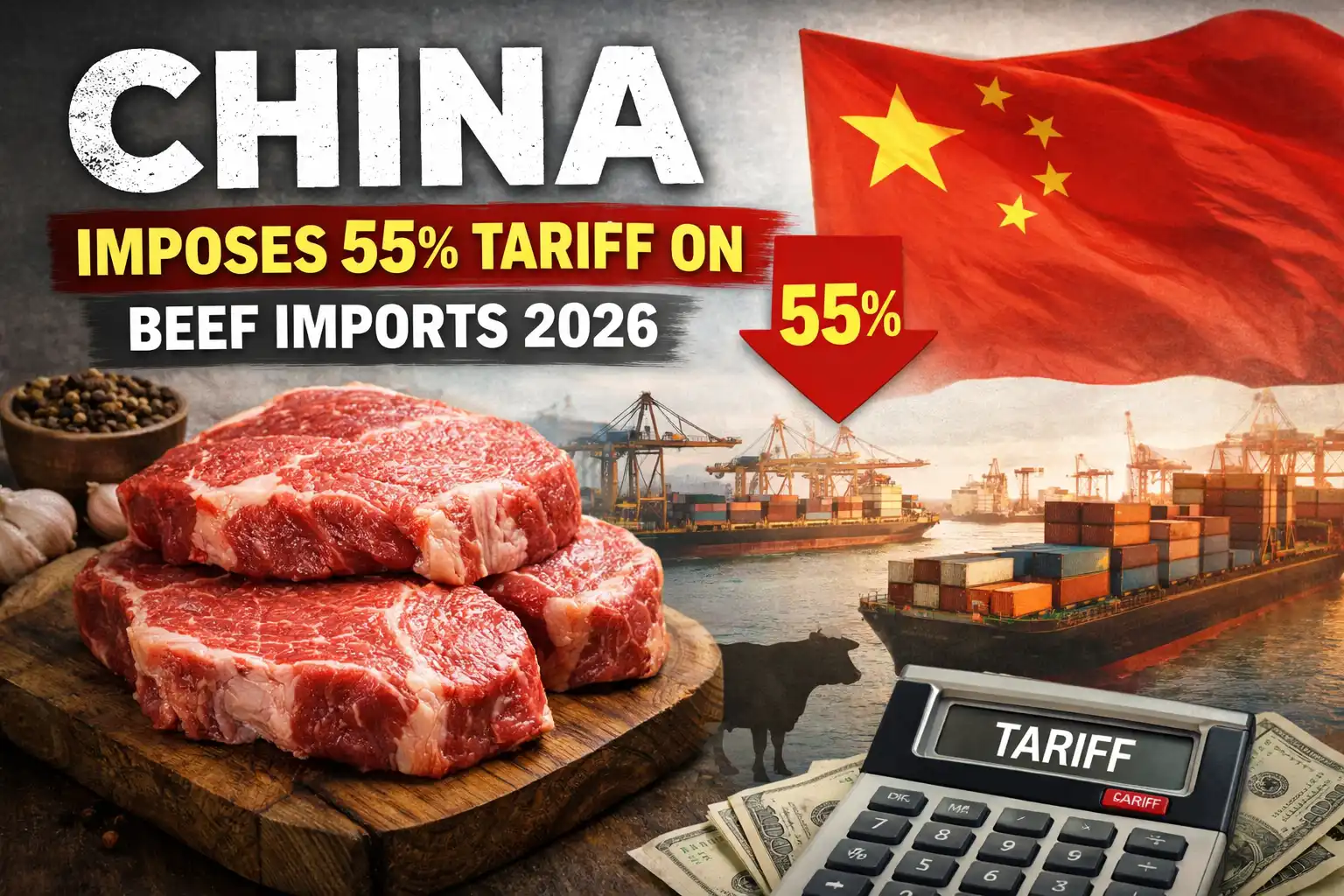
China has started the new year with a major trade move that is expected to impact global agricultural markets. The Chinese government has imposed an additional 55% tariff on beef imports, effective January 1, 2026, aiming to protect its domestic livestock industry.
The decision is likely to affect major beef-exporting countries such as Brazil, Australia, the United States, Argentina, Uruguay, and New Zealand.
What Has China Decided?
China’s Ministry of Commerce (MOFCOM) announced that beef imports will now be regulated under a quota-based system.
- Imports within the approved quota will face normal import duties.
- Imports beyond the quota will attract an additional 55% tariff.
This safeguard measure will remain in force for three years, from 2026 to 2028.
Why Did China Take This Step?
According to the Chinese government, beef imports have increased sharply in recent years, putting heavy pressure on domestic cattle farmers and the local meat industry.
Officials said:
- Domestic cattle breeding has declined
- Local producers are struggling to compete with cheap imports
The tariff has been introduced as a protective measure to give China’s domestic beef industry time to recover and stabilize.
Which Countries Will Be Most Affected?
China is the world’s largest beef importer, making this decision significant for global trade.
The biggest impact is expected on:
- Brazil – China’s largest beef supplier
- Australia – a premium beef exporter
- United States – growing beef shipments to China
Australia has warned that the move could result in annual losses of up to $660 million if exports exceed the quota limits.
Global Reaction to China’s Decision
Several exporting nations and industry groups have expressed disappointment.
- Australian officials said the tariff could hurt free trade agreements
- Industry bodies warned of market disruptions and shifting trade flows
- Some analysts believe the move may increase trade tensions in the agriculture sector
However, China has defended the decision as being in line with international trade rules.
Will Beef Become More Expensive in China?
Market experts believe:
- Reduced imports could push up beef prices inside China
- Exporters may divert supply to other markets, impacting global prices
China argues that increased domestic production will help control prices in the long term.
What Do Experts Say?
Some economists caution that:
“Tariffs alone may not fully solve the structural problems of China’s livestock sector. Productivity improvements and supply-chain reforms will also be necessary.”
Key Highlights at a Glance
- 📅 Effective Date: January 1, 2026
- 💰 Additional Tariff: 55% on beef imports beyond quota
- ⏳ Duration: 2026–2028
- 🌍 Impact: Global beef trade and prices
- 🐄 Objective: Protect China’s domestic cattle industry
Outcome
China’s decision to impose a 55% tariff on beef imports marks a major shift in global agricultural trade dynamics. While the move is designed to support domestic producers, it is expected to reshape global beef supply chains and influence prices worldwide in the coming months.
The full impact of this policy will become clearer as exporters adjust and international trade negotiations respond.
Source: mofcom