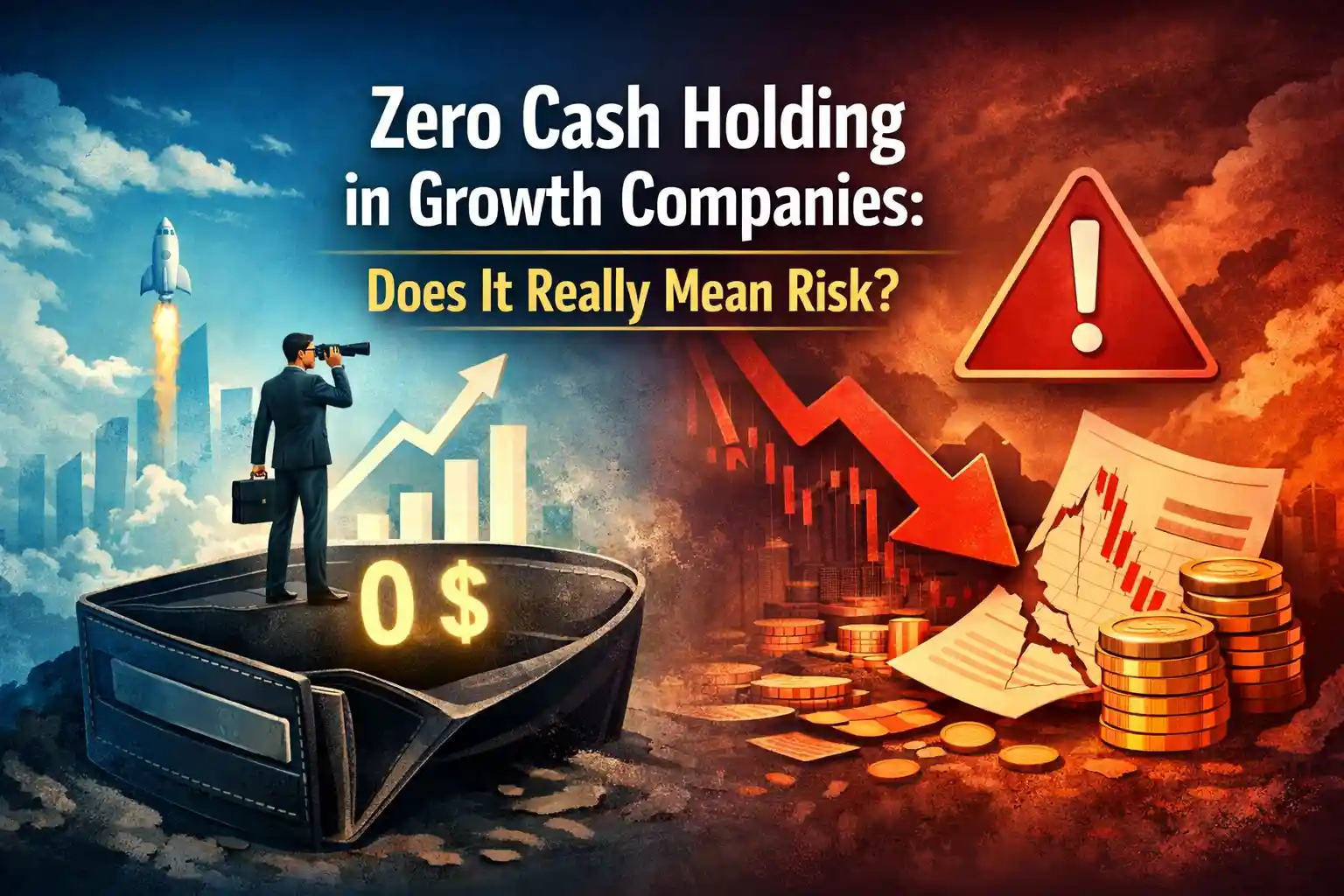
In the stock market, we often hear that “a company should always have cash” or “zero cash means high risk.” But is it really true that every growth company needs large cash reserves?
Many investors assume that if a company’s cash balance is low, it must be risky. The reality, however, is quite different. Many fast-growing companies intentionally use cash for expansion, acquisitions, and growth — which can strengthen their position in the long run.
In this article, we will bust this myth, provide examples, and explain why zero cash holding doesn’t always mean risk.
The Role of Cash and Growth Companies’ Strategy
The basic role of cash is:
- Cover daily operations
- Repay debts
- Handle emergencies
However, high-growth companies approach cash differently:
- They deploy cash into growth rather than accumulating it
- Invest in new projects, R&D, marketing, and acquisitions
- Short-term cash deficit often confuses investors
Example:
- Amazon (in its early years) kept almost zero profits and reinvested all cash into business growth.
- If investors had assumed zero cash = risk, they would have missed huge early opportunities.
Zero Cash Holding = Risk? Myth Busted!
Myth:
“If a company has no cash, it is highly risky.”
Reality:
- Growth-focused companies aim to generate cash and reinvest it
- Temporary zero cash holding is natural if the company has strong cash flow and access to credit
- Risk occurs only when a company has no liquidity + high debt + uncertain revenue
Example:
- Tesla also burned a lot of cash initially but became a market leader through strategic investments.
Cash Burn vs Growth Investment – The Balance Factor
- Cash burn isn’t bad if it’s used for growth opportunities
- Investors should focus on:
- Free Cash Flow (FCF) trends
- Debt levels
- Expansion and strategic plans
Example Table:
| Company | Cash Holding | Growth Strategy | Risk Level |
| Tesla (2020) | Low | Gigafactory expansion, R&D | Moderate |
| Amazon (2005) | Zero | International expansion | Low |
| HDFC Bank | High | Conservative lending | Low |
Here, it’s clear that low or zero cash doesn’t automatically mean high risk — understanding context is key.
Key Takeaways for Investors
- Don’t view cash just as a number — understand its purpose
- Growth vs Stability — companies manage cash differently
- Debt and credit access matter — if strong, zero cash holding is not risky
- Long-term vision — don’t panic over short-term cash deficits
Closing Thought – The Real Investor Mindset
Friends, in the stock market, understanding the difference between myth and reality is crucial.
Zero cash holding in a growth company does not always mean risk. It often signals strategic investment and future expansion.
If you panic just because cash is low, you might miss significant growth opportunities. A smart investor makes decisions based on context, strategy, and vision.
Remember – cash isn’t everything, and calculated risk is part of investing for growth.