

Trading in the stock market is not just about buying and selling shares. If you can accurately predict market direction, you can earn profits whether prices go up or down.
This is where Futures come in – a financial contract that commits you to buy or sell an asset at a future date for a predetermined price. Futures are a powerful tool for both traders and investors, providing opportunities for profit and risk management.
While Futures may seem complex for beginners, understanding them step-by-step makes them an essential part of successful trading and portfolio protection.
Futures – Definition
A Futures contract is an agreement where you agree to buy or sell a specific asset at a predetermined price on a future date.
In simple words:
Futures are binding commitments to buy or sell an asset in the future, regardless of the market price at that time.
Example:
Reliance shares are currently trading at ₹2,500.
- You buy a 1-month futures contract at ₹2,500 → If the price rises to ₹2,600, you make a profit.
- If the price falls to ₹2,400, you incur a loss.
Key Point: Futures involve an obligation, unlike options where you have a choice.
Key Features of Futures
Futures have several key features that beginners must understand. Each feature is explained with examples:
1 Obligation (Commitment to Execute)
In a Futures contract, both buyer and seller must fulfill the contract on expiry.
- Buyer must buy
- Seller must sell
Example:
You buy a Nifty 50 futures contract at 20,000. On expiry:
- If the market rises to 21,000 → Profit is realized
- If the market falls to 19,500 → Loss is realized
Takeaway: Futures have mandatory execution, exposing you to both full profits and full losses.
2 Leverage (Small Capital, Big Exposure)
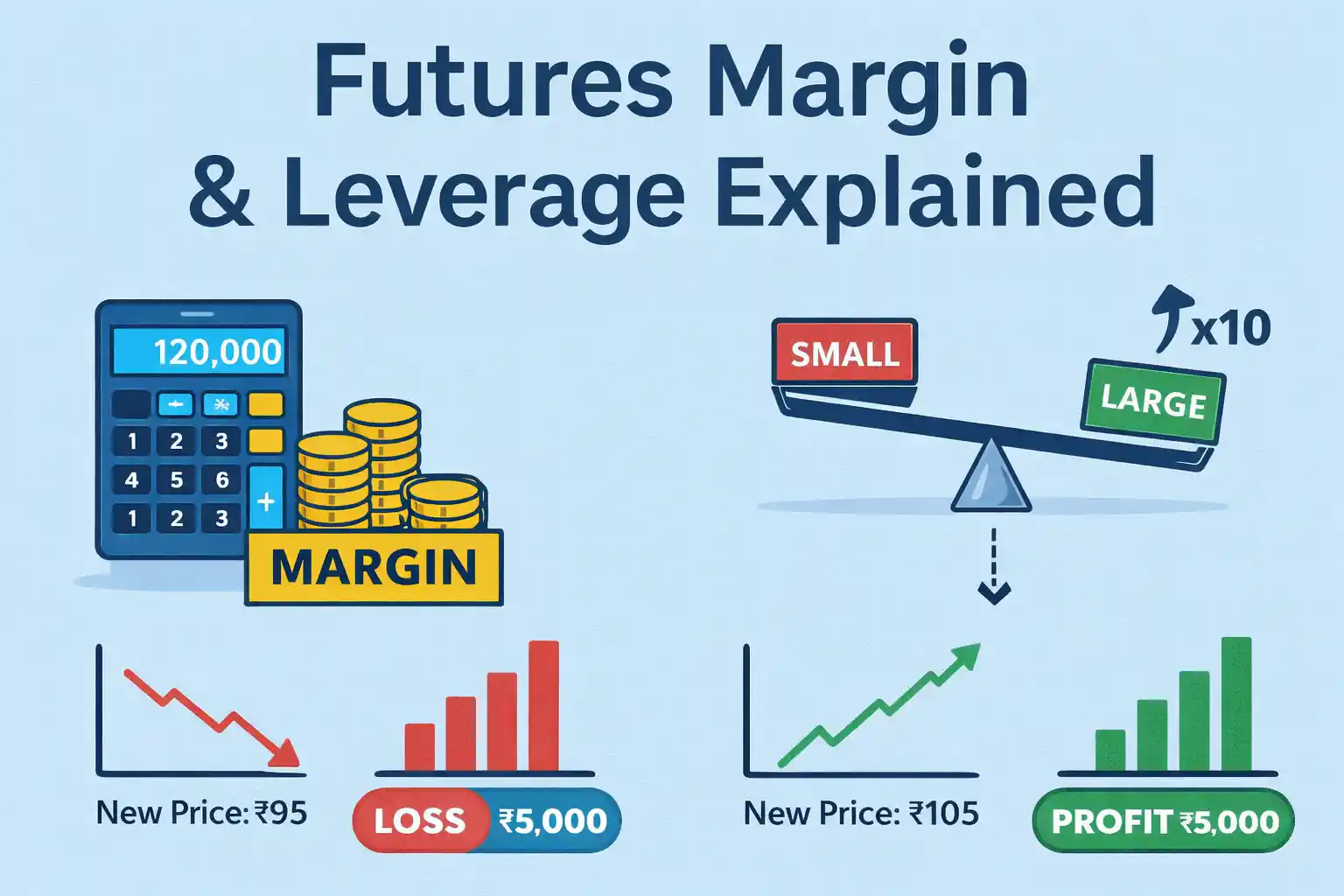
You don’t need to invest the full value of the contract. Paying a margin allows you to control a larger position, magnifying both profits and losses.
Example:
Buy 1 lot of Reliance futures (100 shares) at ₹2,500 → total value = ₹2,50,000
- Margin required = ₹25,000
- Price rises to ₹2,600 → Profit = (2,600–2,500) × 100 = ₹10,000
- Price falls to ₹2,400 → Loss = ₹10,000
Takeaway: Leverage can amplify profits but also increases risk. Proper margin management is crucial.
3 Standardized Contracts (Exchange-Regulated)
Futures are standardized by exchanges, meaning:
- Lot size is fixed
- Expiry date is fixed
- Price tick size is fixed
Example:
Nifty futures → Lot size = 75, expiry = 1 month, tick size = 0.05 points
Takeaway: Standardization ensures fair, transparent trading and predictable contract terms.
4 Hedging & Speculation
Futures are used mainly for two purposes:
- Hedging (Risk Management): Protects your existing portfolio or shares from adverse price movements
- Speculation (Profit Opportunity): Allows traders to bet on market direction
Hedging Example:
You own 200 TCS shares. Market falls → Selling TCS futures helps reduce portfolio losses.
Speculation Example:
You predict Nifty will rise → Buy Nifty futures.
- Price rises → Profit earned
- Price falls → Loss incurred
Takeaway: Futures allow traders and investors to manage risk and seize profit opportunities simultaneously.
Types of Futures
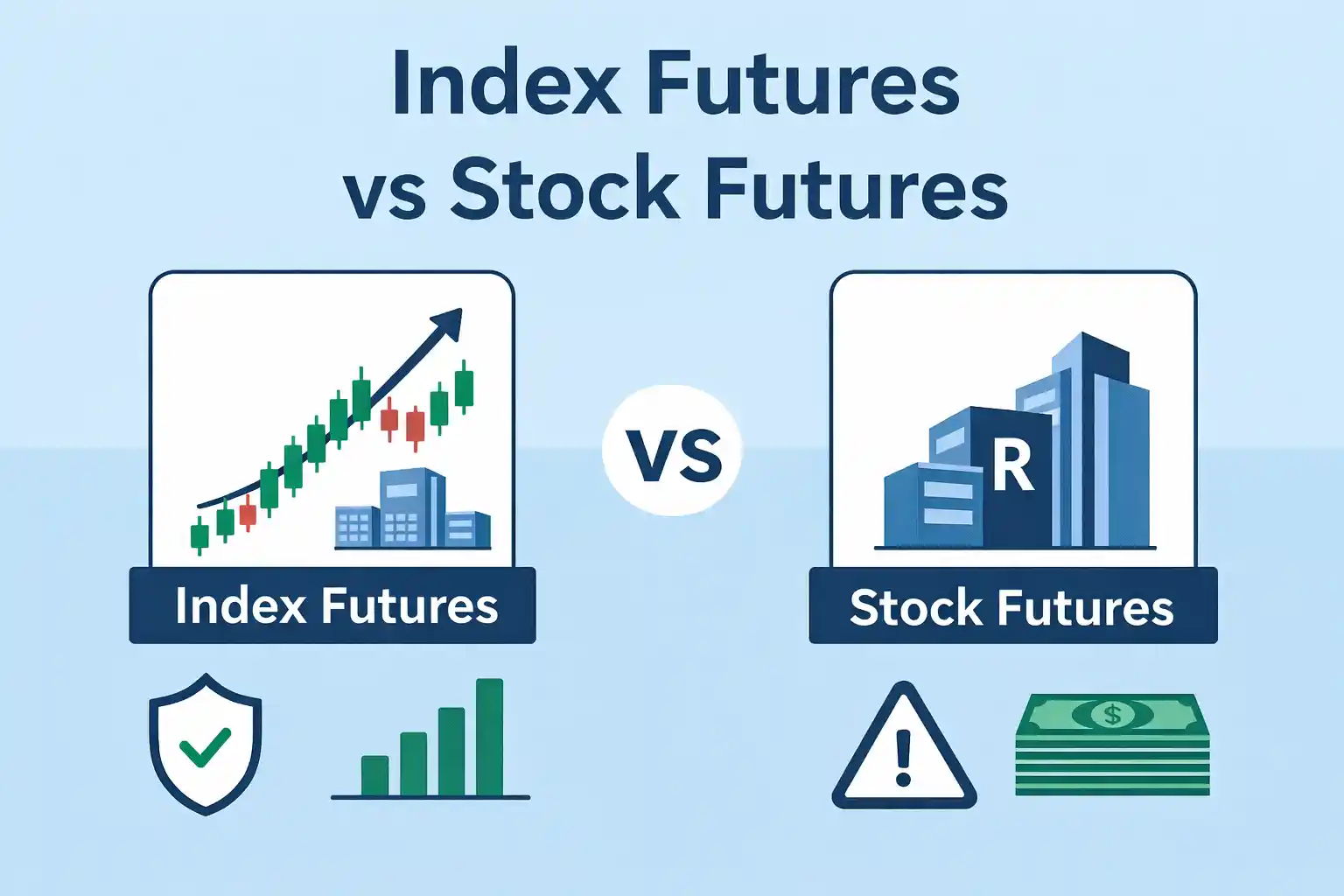
- Stock Futures: Based on individual company shares (Reliance, TCS)
- Index Futures: Based on market indices (Nifty 50, Sensex)
- Commodity Futures: Gold, Silver, Oil, Agricultural products
- Currency Futures: USD/INR, EUR/INR
Example:
Buy 1 Nifty futures lot at 20,000, lot size 75
- Market rises to 21,000 → Profit = (21,000–20,000) × 75 = ₹75,000
- Market falls to 19,500 → Loss = (20,000–19,500) × 75 = ₹37,500
Importance of Futures
- Profit in any market direction: Futures allow earning whether prices go up or down
- Hedging tool: Reduces risk for investors holding shares
- Leverage: Small investment can control a large market position
- Price discovery: Futures activity provides insights into market sentiment and fair value
Example:
You own 100 Reliance shares → market falls → selling futures reduces loss
If the price rises → buying futures maximizes profit
Margin Management – How to Manage Risk in Futures
Margin management is crucial for minimizing losses and using leverage effectively in Futures trading.
Key Points:
- Initial Margin: The minimum deposit required to open a futures position.
- Maintenance Margin: Minimum balance that must be maintained in your account. If balance falls below this, you will get a margin call.
- Monitoring Market Movement: Always track the market daily to ensure your margin is sufficient.
- Limit Exposure: Don’t invest more than your risk tolerance; leverage can magnify losses.
- Use Stop Losses: Set automatic exit points to avoid large unexpected losses.
Example:
- You buy Nifty futures at 20,000, lot size 75, margin required = ₹25,000
- Market falls → Broker issues a margin call if balance < maintenance margin
- You add funds or reduce position to meet margin → prevents forced liquidation
Takeaway: Proper margin management ensures that you can survive market volatility and use Futures trading safely.
Advantages of Futures
- High earning potential for short-term traders
- Effective risk management for long-term investors
- Highly liquid due to large trading volumes
- Transparent and regulated by exchanges
- Strategic flexibility for hedging or speculation
Outcome
Futures trading is an essential tool in the stock market, offering profit, risk control, and market insights. Beginners may find them complex at first, but with examples, margin management, and practice, they become easy to understand and highly effective.
Summary:
- Futures = Obligatory contracts
- Leverage = Small capital, large exposure
- Margin management = Risk control and safe trading
- Uses = Hedging, speculation, and price discovery
Understanding Futures fully prepares you for Options and combined F&O strategies, taking your trading knowledge to the next level.































































)
