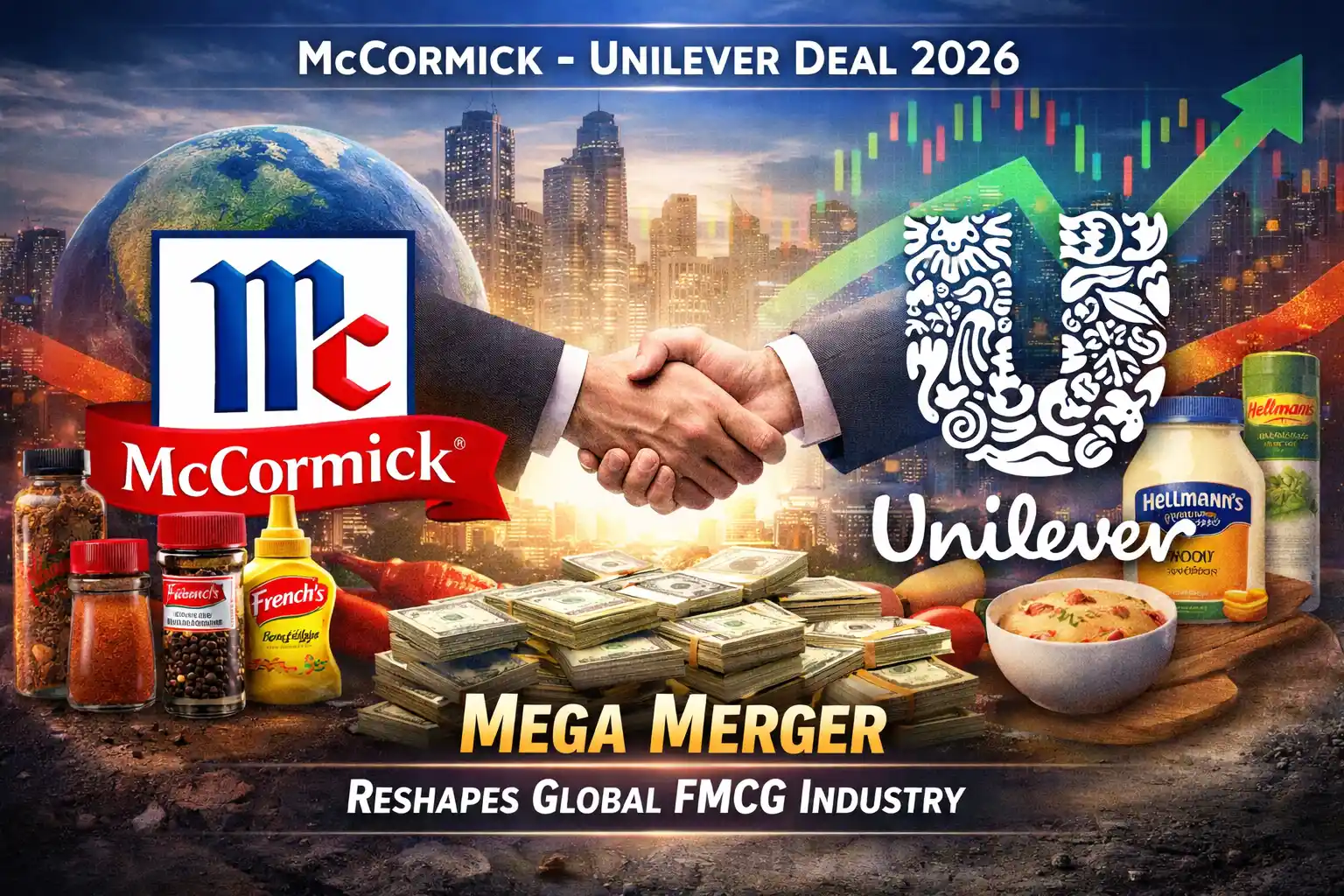
The global FMCG sector has witnessed a major development as McCormick & Company announced a mega merger with the food division of Unilever.
The deal is estimated to be valued between $44.8 billion and $65 billion, making it one of the largest consumer goods transactions of 2026.
Post-merger, the combined entity is expected to become a global leader in flavors, spices, and packaged food products, significantly strengthening its position across international markets.
Company Background
🔹 Unilever
Unilever is a global FMCG giant with a wide portfolio of well-known brands such as:
- Knorr (soups & seasonings)
- Hellmann’s (mayonnaise)
- Marmite
The company is currently shifting its strategy to focus more on high-margin segments like beauty and personal care.
🔹 McCormick & Company
McCormick is a US-based global leader in the spices and condiments segment.
Its major brands include:
- French’s mustard
- Cholula hot sauce
The company has consistently focused on growth through acquisitions and expanding its flavor-based product portfolio.
Key Deal Details
- Deal Value: ~$44.8B – $65B
- Structure: Combination of cash and shares
- Ownership: Unilever shareholders expected to hold ~65% stake in the combined entity
- Cost Synergies: Around $600 million annually
The deal is structured in a tax-efficient manner, making it financially strategic for both companies.
Also read : Indian FMCG Sector 2026: Defensive Play or Risk Amid Middle East War?
Brands to Be Combined
After the merger, several globally recognized brands will come under one umbrella:
Unilever Food Brands:
- Knorr
- Hellmann’s
- Marmite
McCormick Brands:
- French’s
- Cholula
- Core spices portfolio
This will create a powerful “global flavor powerhouse.”
Purpose of the Deal
1. Unilever’s Strategic Shift
Unilever’s food business has shown relatively slower growth. The company now aims to focus on:
- Beauty
- Personal care
2. McCormick’s Expansion Strategy
Through this deal, McCormick will gain:
- Access to global brands
- Strong international distribution network
This positions it to become the world’s leading flavor and condiments company.
Changing Consumer Trends
Modern consumers are increasingly focusing on:
- Healthier food options
- Enhanced taste and flavor
- Home cooking
This merger is designed to capitalize on these evolving trends.
Market Reaction
The market reaction has been mixed:
- Shares of both companies saw slight pressure
- Investors remain cautious about integration challenges and regulatory approvals
Risks and Challenges
- Antitrust and regulatory approvals
- Integration of global operations and cultures
- Financial pressure due to the large deal size
Industry Impact
This deal could reshape the global FMCG landscape:
Positive Impact
- Increased industry consolidation
- Stronger global brand portfolio
- Expansion opportunities in emerging markets
Negative Impact
- Reduced competition
- Potential pricing impact on consumers
Outcome
The McCormick–Unilever merger is not just a deal but a strategic transformation of the FMCG industry.
While Unilever sharpens its focus on high-margin segments,
McCormick is set to expand its global dominance in the flavor industry.
Overall, this deal could significantly redefine the structure and competitive dynamics of the global consumer goods market in the coming years.
Source: unilever news