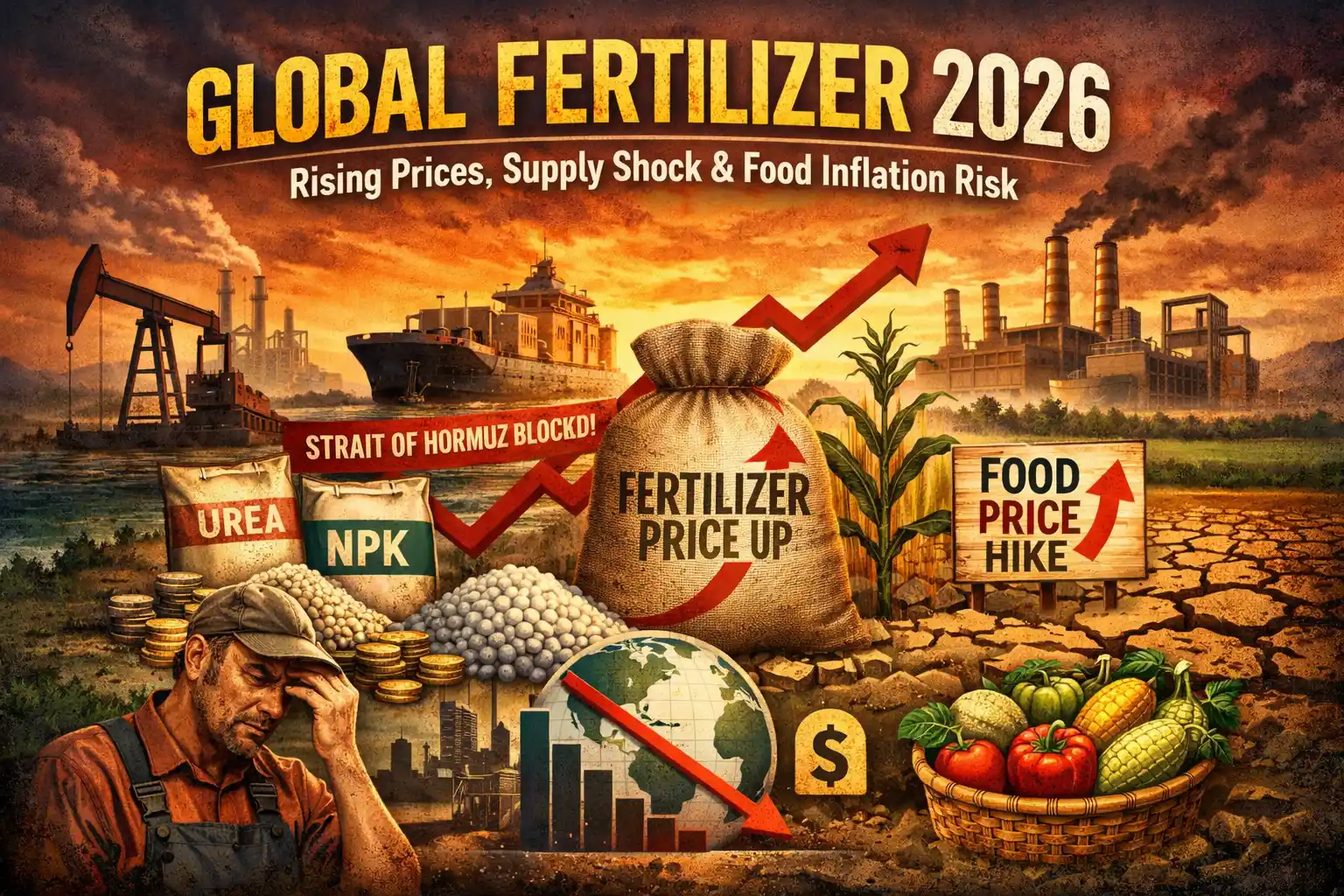
In 2026, the world is facing a new economic pressure—and this time, the problem is not limited to oil or stock markets. This crisis is directly impacting agriculture and food supply.
Globally, fertilizer supply has been disrupted, prices are rising rapidly, and it is becoming difficult for farmers to manage costs. The direct impact of this could be seen in food prices in the future.
In simple terms:
Expensive fertilizer → Expensive farming → Expensive food
Now let’s understand in detail what this crisis is and how big its impact could be.
What Is the Global Fertilizer Crisis?
In 2026, the fertilizer market is facing a major supply shock.
The main reasons behind this are:
- Middle East tensions (Iran war)
- Disruption in shipping routes (Hormuz route)
- Export restrictions by major countries
- Shortage of natural gas
Fertilizer is an essential input for farming. If its supply is affected, the entire agriculture chain gets disturbed.
That’s why experts are calling it a “silent global crisis.”
Supply Shock: The Biggest Problem
The biggest reason behind the fertilizer crisis is a breakdown on the supply side.
Key Points:
- A large portion of global urea supply comes from the Middle East
- Russia has temporarily restricted nitrogen fertilizer exports
- China is limiting exports to protect domestic supply
- Shipping routes (especially Hormuz) are disrupted
This means:
Less supply + same demand = higher prices
Why Are Fertilizer Prices Rising So Fast?
In 2026, fertilizer prices have seen a sharp increase.
Major Trends:
- Urea prices have almost doubled in some markets
- Nitrogen fertilizers are up by 30–40%
- Costs have risen sharply in Europe and the US
- Prices are continuously increasing in Asia
Reasons:
- High energy prices (especially natural gas)
- Supply shortages
- Increased logistics costs
The fertilizer industry is directly dependent on energy—so when oil and gas become expensive, fertilizer prices also rise.
Energy Connection: The Most Important Factor
This is the most important part that many people ignore.
Around 70–80% of fertilizer production cost depends on natural gas.
The simple chain is:
- Oil prices rise
- Gas prices rise
- Fertilizer production becomes expensive
- Final fertilizer prices increase
This is why the 2026 oil crisis has indirectly turned into a fertilizer crisis.
Impact on Farmers
The biggest impact of expensive fertilizer is on farmers.
Possible Effects:
- Farmers may reduce fertilizer usage
- Crop yields may decline
- Farming costs will increase
- Profit margins will shrink
In some countries, farmers are already:
Planning to reduce fertilizer usage
In the long term, this will impact food supply.
Risk of Food Inflation
This is the most dangerous part of the crisis.
If fertilizer remains expensive:
- Crop production may decrease
- Supply will fall
- Food prices will rise
This will directly affect common people.
According to experts:
Food inflation could become a major global issue in 2026–2027
Impact on India
India is a major importer of fertilizers, so this crisis is important for the country.
Current Situation:
- India is searching for alternative suppliers
- The government is taking steps to secure urea supply
- Subsidies are helping farmers manage costs
- Domestic production is also under pressure
Positive side:
India is actively managing the situation, so immediate risk is relatively lower.
Opportunity or Risk for Fertilizer Companies?
Opportunities:
- High prices can increase company profits
- Domestic producers get an advantage
- Exporters see strong demand
Risks:
- Government price controls
- Reduced demand (if farmers cut usage)
- Continued supply chain disruptions
Overall:
Positive in the short term, uncertain in the long term.
Future Outlook (2026–2027)
Expected Trends:
- Prices may remain high in the short term
- Supply could gradually improve
- Government intervention will increase
- Renewable and organic fertilizers will grow slowly
Most important:
The market will remain volatile and take time to stabilize.
Outcome
The fertilizer crisis of 2026 is not just a simple supply problem—it is a multi-layered global issue connecting energy, geopolitics, and agriculture.
Final Takeaways:
- Global supply disruption is ongoing
- Prices have surged sharply
- Farmers are under pressure
- Food inflation risk is high
- India is actively managing the situation
If this crisis is not controlled soon, it could directly impact the global economy and everyday life.