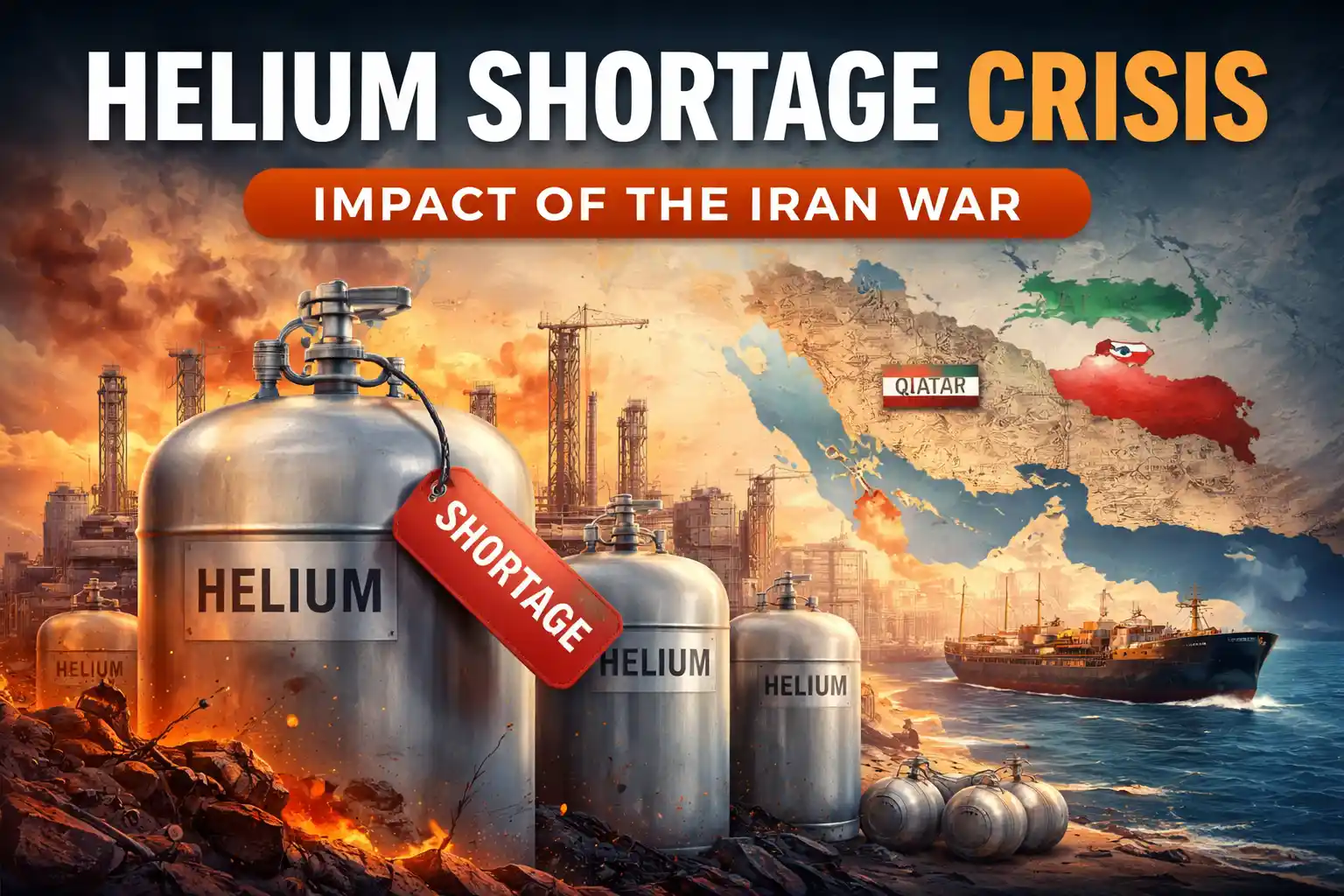
Whenever we talk about war, the first thing that comes to mind is usually an oil or fuel crisis. But this time, the Iran war has created a hidden crisis that very few people are talking about — a helium shortage.
You might think helium is only used in balloons, so why is it such a big issue?
The truth is, helium is critical for modern industries like AI, semiconductors, healthcare, and space research.
In this article, we’ll understand in simple language how the Iran war disrupted helium supply and what impact it is having on the global economy.
What is Helium and Why is it Important?
Helium is a special gas that is not limited to balloons. It plays a crucial role in high-tech industries:
- Semiconductor (chip manufacturing)
- MRI machines (in hospitals)
- Space research
- Fiber optics and defense
Most important point: There is no perfect substitute for helium
That’s why any disruption in its supply directly affects industries.
How Did the Iran War Affect Helium Supply?
Due to the Iran war, a very important global shipping route — Strait of Hormuz — has been disrupted.
This route is not only used for oil but also for transporting helium.
After the war:
- Shipping became unsafe
- Exports were disrupted
- Supply chains broke down
This had a direct impact on the global market.
Why is Qatar So Important in Helium Supply?
A major share of the world’s helium comes from Qatar.
- Around 30–38% of global helium supply comes from Qatar
- Its major plants were shut down due to the war
Result:
- Production stopped
- Export contracts were canceled
This shows how a single region can impact the entire global supply.
Breakdown of the Helium Supply Chain
The helium supply process works like this:
- Helium is extracted from natural gas
- It is processed in plants (like those in Qatar)
- It is shipped across the world
After the war:
- Production stopped
- Transportation halted
This led to a complete breakdown of the supply chain.
What Happened to Helium Prices?
A drop in supply directly affects prices:
- Helium prices have nearly doubled
- Panic buying is happening in the market
If the situation continues:
- Prices may rise further
- A black market could develop
Which Industries Are Most Affected?
1. Semiconductor and AI Industry
Helium is essential in chip manufacturing.
Impact:
- Chip production slows down
- Electronics become expensive
- AI development may face delays
2. Healthcare Sector
- MRI machines depend on helium
- Shortage may increase hospital costs
This could indirectly affect patient treatment.
3. Manufacturing Sector
- Used in welding, cooling, and electronics
- Production costs are rising
4. Space and Research
- Scientific experiments may get delayed
- Space missions could be affected
Impact on the Global Economy
The helium shortage is not just a supply issue—it’s becoming an economic problem:
- Inflation is rising
- Supply chains are disrupted
- Industrial growth may slow down
This crisis is affecting multiple sectors, not just energy.
What is the Impact on India?
India does not produce helium and depends on imports.
Impact:
- Electronics may become expensive
- Healthcare costs could rise
- Industrial costs will increase
This means the common consumer may also feel the effect.
What Could Happen in the Future?
Short-term:
- Existing stock will be used
- Prices will remain high
Long-term (if the war continues):
- Semiconductor crisis may worsen
- Tech industry growth may slow
- Risk of global recession
Outcome
The Iran war has created a hidden crisis — helium shortage
✔ Around one-third of global supply is affected
✔ Prices have surged sharply
✔ Technology, healthcare, and manufacturing are all impacted
If the situation does not improve soon, this crisis could turn into a major global economic problem.