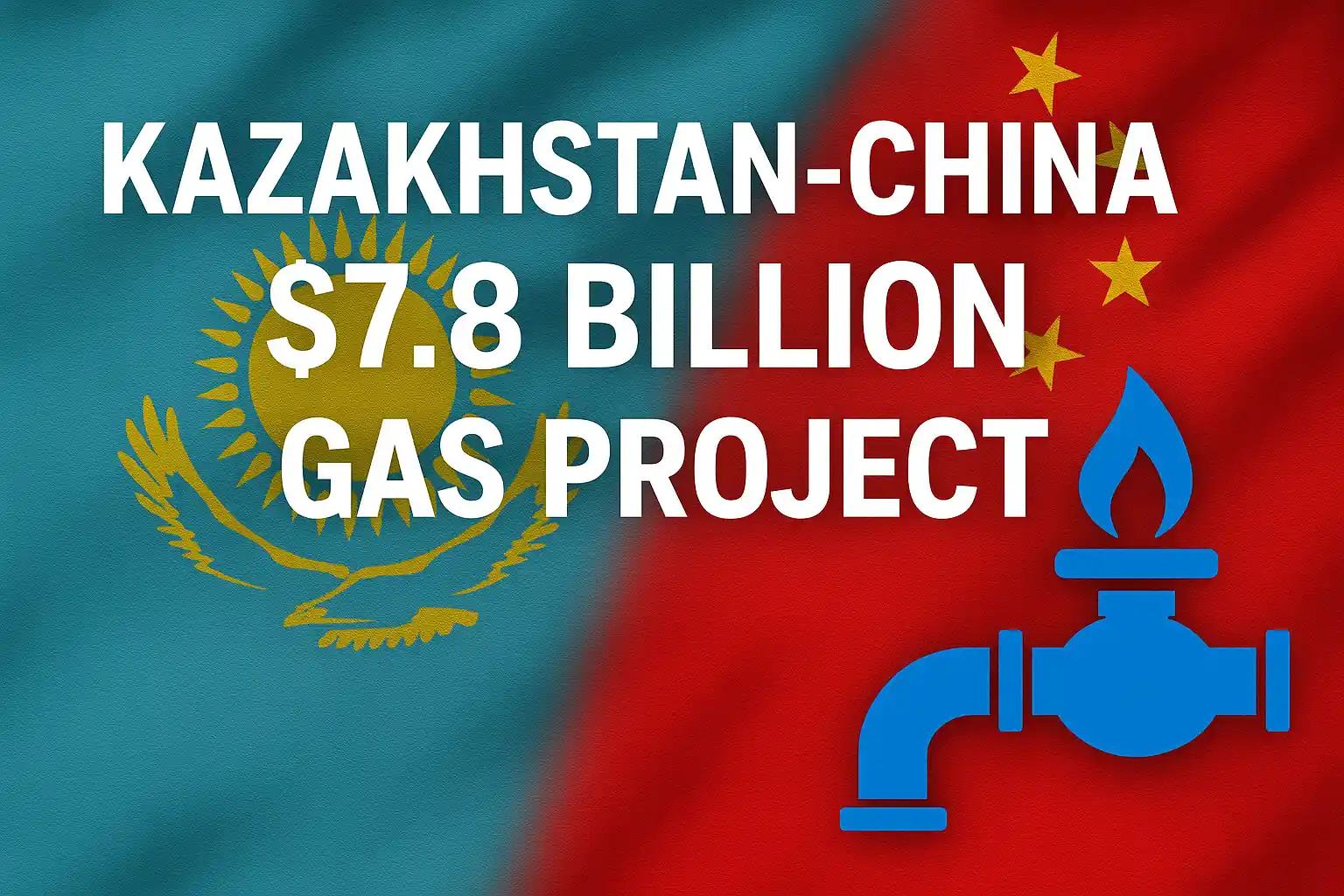
Kazakhstan and China strengthened their energy cooperation through a major investment agreement worth $7.8 billion, aimed at developing one of Kazakhstan’s largest unconventional gas reserves — the Sozak gas field. The project is being seen as a significant step for Kazakhstan’s energy industry and regional energy security.
The agreement is expected to boost gas production capacity, create employment opportunities, and support long-term industrial development in the region.
Key Highlights of the Deal
Under the agreement, Chinese energy company Geo-Jade Petroleum Corporation will invest in the exploration and development of the Sozak gas field. The investment will be executed in multiple phases.
The first phase, starting in 2026, will involve detailed geological studies and confirmation of gas reserves, with around $250 million allocated for exploration and technical evaluation. Once reserves are confirmed, large-scale production infrastructure will be developed.
What is the Sozak Gas Field?
The Sozak gas field is located in southern Kazakhstan and is considered one of the country’s most promising untapped gas regions.
The field contains unconventional or “hard-to-recover” gas, meaning extraction is technically challenging and requires advanced drilling and production technology.
Current estimates suggest:
- Confirmed reserves are around 100 billion cubic meters,
- Total potential reserves may reach up to 1 trillion cubic meters.
If these estimates are realized, the field could become a major long-term gas source for the country.
Economic Importance of the Project
The project is expected to support Kazakhstan’s economy in several ways:
- Strengthening energy self-sufficiency and reducing dependence on imports.
- Supporting gas-based industries such as fertilizers, chemicals, and power generation.
- Generating billions of dollars in tax and royalty revenues for the government over time.
- Boosting economic activity in nearby regions.
Employment and Local Development
The development of the gas field is also expected to generate employment and infrastructure growth:
- Thousands of jobs are expected during initial development stages.
- Long-term employment may reach up to 7,000 positions as production expands.
- Local workers will receive technical training and skill development.
- Infrastructure such as roads, pipelines, and industrial facilities will be developed in the region.
This could significantly improve local economic conditions.
About Geo-Jade Petroleum Corporation
Geo-Jade Petroleum Corporation is a Chinese energy company engaged in oil and gas exploration and production across multiple countries. The company has already invested billions of dollars in Kazakhstan’s energy sector and has operational experience in technically challenging extraction projects.
Its technical expertise and financial strength make it a key player in the development of the Sozak gas reserves.
Where Will the Gas Be Used?
Two possible uses are currently being discussed:
- Supplying Kazakhstan’s domestic gas demand first, and
- Exporting surplus gas to neighboring markets, especially China.
Final decisions will depend on future commercial agreements and global gas price trends.
Challenges Facing the Project
Despite its large potential, the project faces several challenges:
- Extraction of unconventional gas requires expensive technology.
- Initial investment costs are high while production takes time to scale.
- Long-term profitability depends on global gas prices and demand.
Future Development Timeline
A possible roadmap for the project includes:
2026–27: Reserve confirmation and exploration work
2027–2030: Infrastructure construction and production setup
After 2030: Large-scale gas production and possible exports
If development progresses smoothly, Kazakhstan could strengthen its position as a major gas producer in Central Asia.
Outcome
The $7.8 billion Kazakhstan–China gas agreement represents more than just an energy investment. It signals a long-term strategic partnership aimed at boosting energy production, creating employment, and driving industrial growth. Over the coming years, this project could play a crucial role in shaping Kazakhstan’s energy future and regional gas markets.
Source: Information compiled from reports by Qazinform and The Astana Times.