
हिंदी में पढ़ने के लिए मेनू बार से हिंदी भाषा चयन करें।
Overview
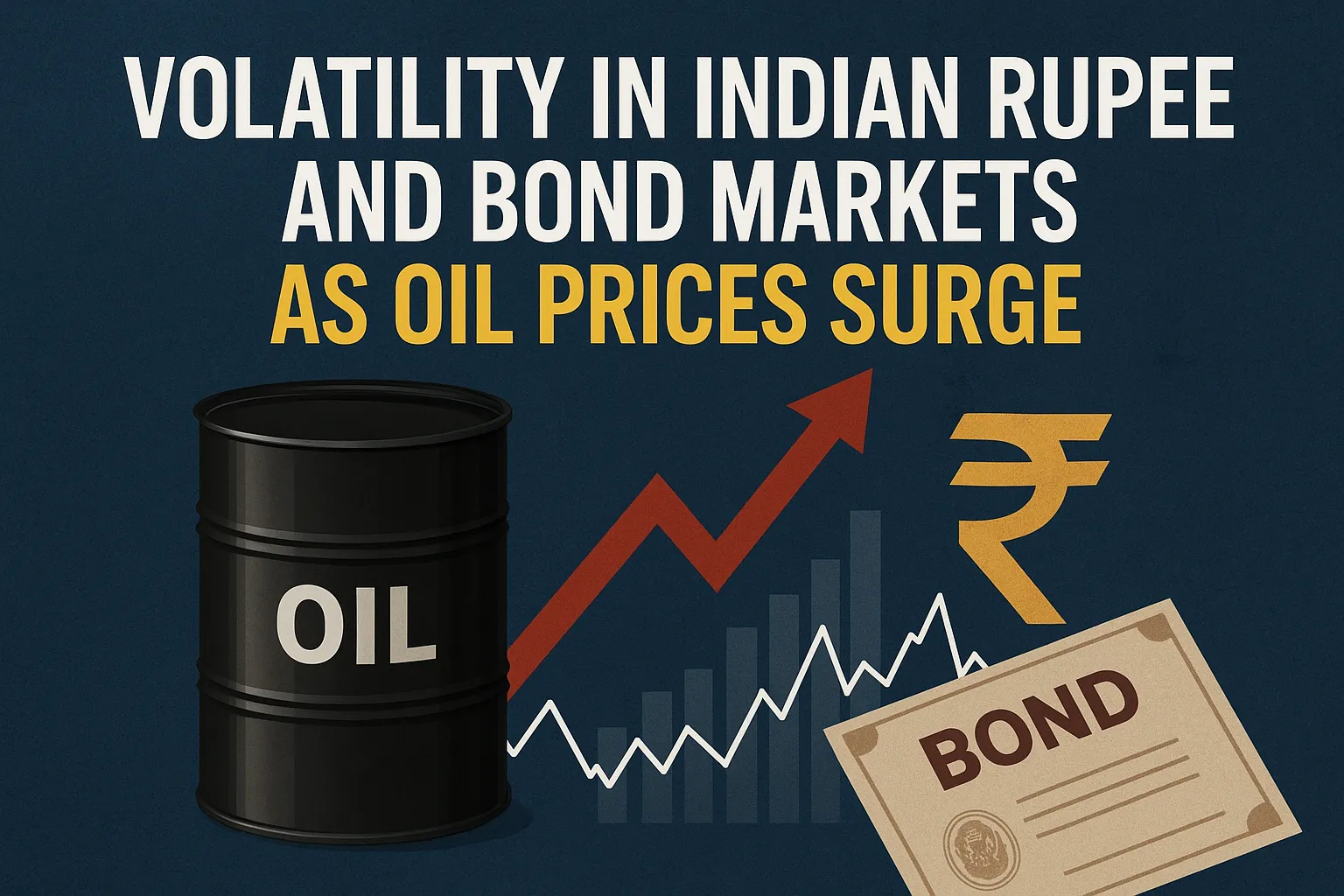
In recent days, global crude oil prices have surged sharply, creating pressure on the Indian currency (rupee) and bond markets. Since India is a major oil-importing country, rising oil prices directly affect its economy — the rupee weakens, inflation risks increase, and foreign investors often turn cautious.
This article explains how the surge in oil prices is impacting the rupee, bond yields, and investment sentiment. It also highlights the Reserve Bank of India’s (RBI) possible actions and what market participants should watch in the coming weeks.
1) Current Situation: Global Oil Prices on the Rise
Brent crude prices have recently climbed to around $63–64 per barrel, driven by global demand recovery, U.S. political uncertainty, and OPEC+ supply decisions. This rise has once again become a major concern for oil-import-dependent economies like India.
2) How Rising Oil Prices Impact the Rupee
When oil becomes expensive, India has to spend more dollars on imports, leading to higher demand for foreign currency and pressure on the rupee. As the rupee weakens, the cost of imported goods rises, pushing inflation higher. This forces the RBI to intervene in the forex market to prevent excessive depreciation.
3) Where the Rupee Stands — RBI’s Intervention
During the first week of November 2025, the rupee traded between ₹88.5 and ₹89 per U.S. dollar. The RBI has intervened by selling dollars to stabilize the exchange rate. Analysts believe that if oil prices continue to rise, the central bank might need to take further measures to protect the currency.
4) Bond Market Volatility
The 10-year government bond yield has increased to around 6.50%–6.52% due to foreign investor outflows, rising government borrowing needs, and shifts in global interest rates. This shows that investors are currently adopting a cautious stance.
5) The Link Between Rupee and Bond Yields
When the rupee weakens, foreign investors tend to pull out funds from Indian markets. This reduces bond demand and increases yields. The chain reaction can be summarized as —
Oil ↑ → Rupee ↓ → FII Outflows ↑ → Bond Yields ↑ → Market Volatility ↑.
6) Sector-Wise Impact
- Winners: Energy and refining companies may benefit from higher oil prices.
- Losers: Aviation, retail, and transport sectors will face rising operational costs.
- Neutral/Positive: IT and export-oriented companies could gain slightly due to a stronger dollar.
Overall, corporate profit margins may come under pressure.
7) RBI’s Options and Limitations
The RBI can:
- Sell U.S. dollars to stabilize the rupee,
- Purchase government bonds (OMO) to control yields,
- Adjust policy rates or forward guidance.
However, each measure has limits — selling too many dollars may reduce forex reserves, and rate moves could fuel inflation. Hence, the RBI is currently maintaining a balanced approach.
8) Investor Strategy
Long-term investors should diversify portfolios — focusing on energy, banking, and export-linked stocks.
For short-term investors, it’s better to avoid long-duration bonds, as yields may rise further.
9) Quick Facts Box
- Brent Crude: $63 – $64 per barrel
- USD/INR: ₹88.5 – ₹89
- 10-Year G-Sec Yield: 6.50 % – 6.52 %
- Change in RBI Forex Reserves: -$5.6 billion (recent data)
10) What to Watch Next
In the coming weeks, investors should monitor:
- OPEC+ decisions on oil supply,
- Movement of crude oil prices,
- RBI’s intervention levels and monetary signals.
If oil remains elevated and the dollar strengthens, volatility in the rupee and bond markets is likely to persist.
Outcome
The surge in global oil prices is putting pressure on India’s currency and bond markets. While the RBI’s intervention is helping to limit volatility, the overall situation may remain unstable until global energy prices and liquidity conditions stabilize.
For investors, this is a time for caution, diversification, and disciplined portfolio management.