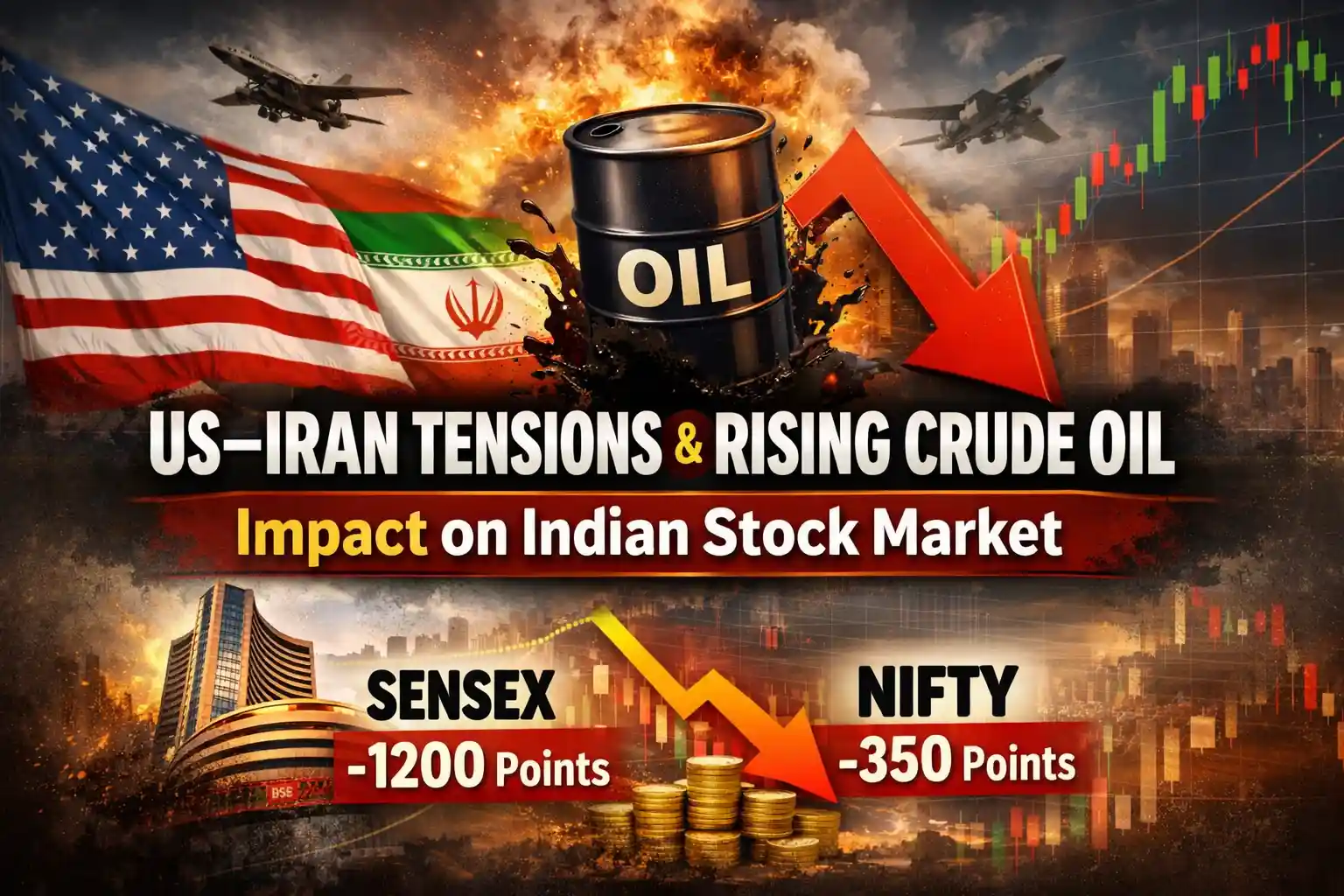

The Indian stock market’s fall in early January 2026 was not a routine correction. For several sessions, markets remained under heavy pressure, and on 12 January the situation looked even worse. Sensex and Nifty slipped sharply in early trade, hitting deep intraday lows.
The core reason behind this fear was the talk of a possible 500% US tariff, which markets treated as a worst-case scenario. However, amid this panic, a key development changed sentiment and forced the market to stage a sharp U-turn.
In this article, we clearly explain:
- What the 500% tariff news actually was
- Why markets reacted so strongly
- Which exact news triggered the rebound
- What the market is currently assuming
- What could happen next
Where Did the 500% Tariff Fear Come From?
In the days before 12 January, reports emerged from the US political and policy space suggesting:
- The US was considering very high tariffs on countries buying Russian oil
- India, being a major buyer of Russian crude, came under the spotlight
- Media headlines used extreme terms like “500% tariff”, amplifying fear
Even though this was linked to a proposed law and political pressure, markets treated it as a serious risk.
Why Was a 500% Tariff So Dangerous for Indian Markets?
If such a tariff were actually imposed, the impact could be severe:
- Indian exports would become uncompetitive in the US market
- Key sectors like metals, engineering goods, textiles, gems & jewellery would suffer
- Corporate earnings estimates would come under pressure
- Foreign investors could pull out capital rapidly
Markets quickly priced in this worst-case economic disruption.
Why Did the Market Keep Falling Before 12 January?
The market’s thinking was simple:
“If the risk is this big, sell first and assess later.”
As a result:
- FIIs increased selling
- Every small recovery was used as an exit opportunity
- Volatility remained extremely high
- Sentiment turned deeply negative
Even on 12 January, the market opened with the same fear and slipped sharply in early trade.
What Changed on 12 January? (The Real Turning Point)
Around midday, an important clarification changed market perception:
India–US Trade Talks Are Still Ongoing
- A senior US official stated that India and the US are actively engaging on trade issues
- The next round of trade discussions was scheduled for 13 January
- This indicated that relations had not broken down
- The extreme tariff threat appeared more like a pressure tactic than an immediate decision
This single signal was enough to shift market psychology.
How Did the Market Interpret This News?
The market read the situation as follows:
- The worst-case scenario may not be imminent
- Ongoing talks mean room for negotiation and compromise
- The 500% tariff talk is not yet a confirmed policy, only a threat
That was enough to stop panic selling.
Why Was the Rebound So Sharp?
The recovery was fast and strong due to three main reasons:
1. Markets Had Already Overreacted
Prices had fallen sharply over previous sessions.
Once fear softened even slightly, buyers stepped in.
2. Short Covering Accelerated the Rally
Traders who had bet on further downside rushed to close positions, creating sudden buying pressure.
3. Institutional Buying at Lower Levels
Large investors believed such an extreme tariff was impractical and unlikely to be implemented immediately, leading to selective buying in strong stocks.
Which Sectors Helped the Market Recover?
- Metal stocks: Relief on global trade fears
- PSU banks: Value buying at lower levels
- Index heavyweights: Provided stability to Sensex and Nifty
Mid-cap and small-cap stocks remained relatively weak, showing that confidence was still selective.
What Is the Market Assuming Now?
Currently, the market seems to believe that:
- The 500% tariff is a threat, not a final decision
- Trade negotiations reduce the probability of extreme action
- Panic may have been excessive
This is why markets are calmer—but not fully bullish.
What Could Happen Next? (Possible Scenarios)
Scenario 1: Trade Talks Progress Positively
- Volatility may reduce
- Markets could stabilize gradually
- Strong companies may recover faster
Scenario 2: Tariff Threat Intensifies Again
- Selling pressure may return
- Export-oriented sectors could underperform
Scenario 3: Sideways and Volatile Market
- Markets react sharply to every headline
- No clear trend in the short term
Outcome
- Markets fell sharply due to fear of a possible 500% US tariff
- This fear triggered panic selling and capital outflows
- On 12 January, confirmation that India–US trade talks are ongoing eased concerns
- Investors realized the worst outcome may be avoidable
- This shift from panic to cautious optimism caused the market’s sharp rebound
👉 The key takeaway:
The Indian market is currently driven more by news flow and sentiment than pure fundamentals. Volatility will remain high until there is clear visibility on trade policy.