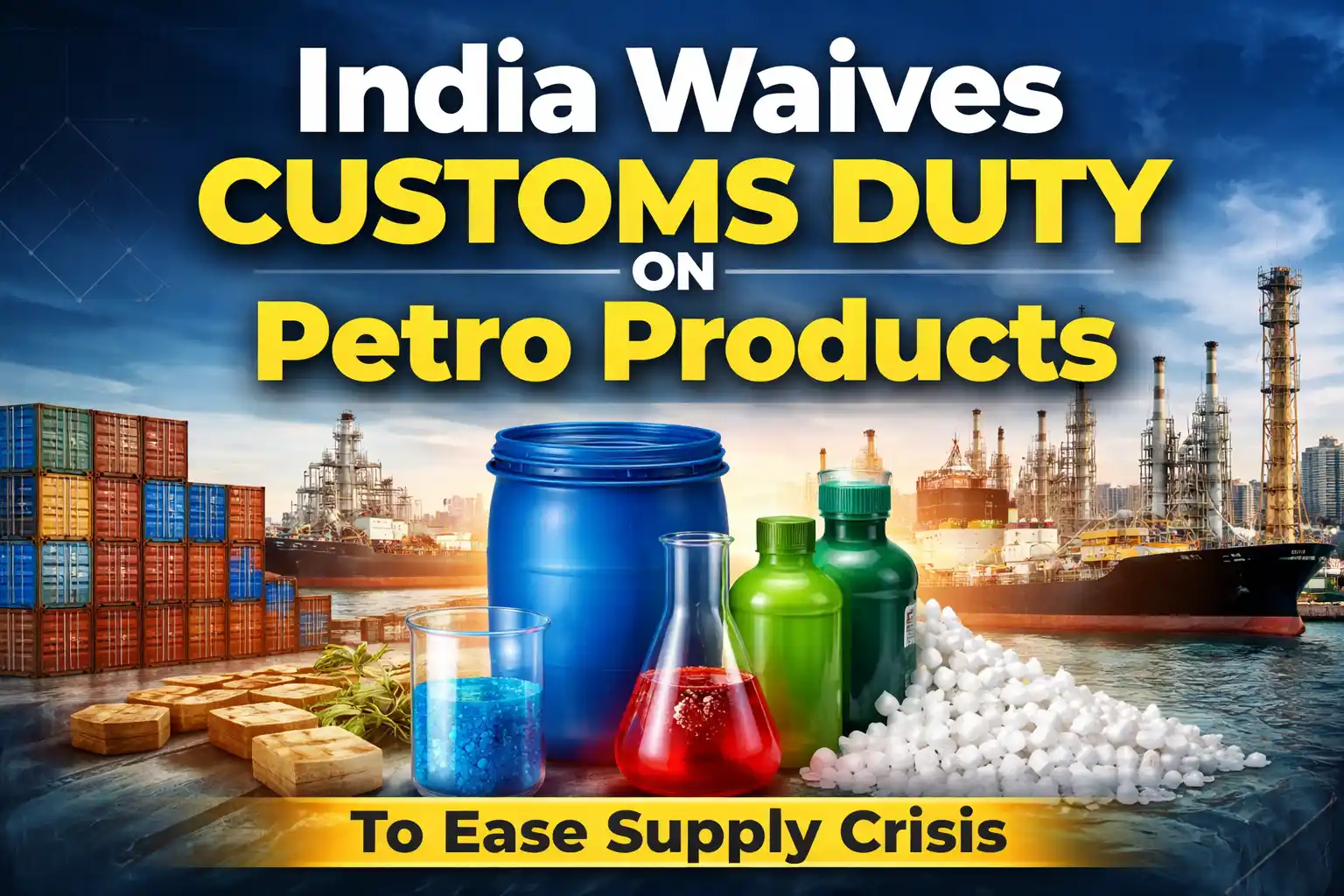
The Government of India has taken a major step amid rising global uncertainty and supply disruptions by removing customs duty (0%) on around 40 petrochemical (petro) products. This decision will remain effective from April 2, 2026 to June 30, 2026, with the primary objective of providing relief to domestic industries facing rising input costs.
What Are Petro Products?
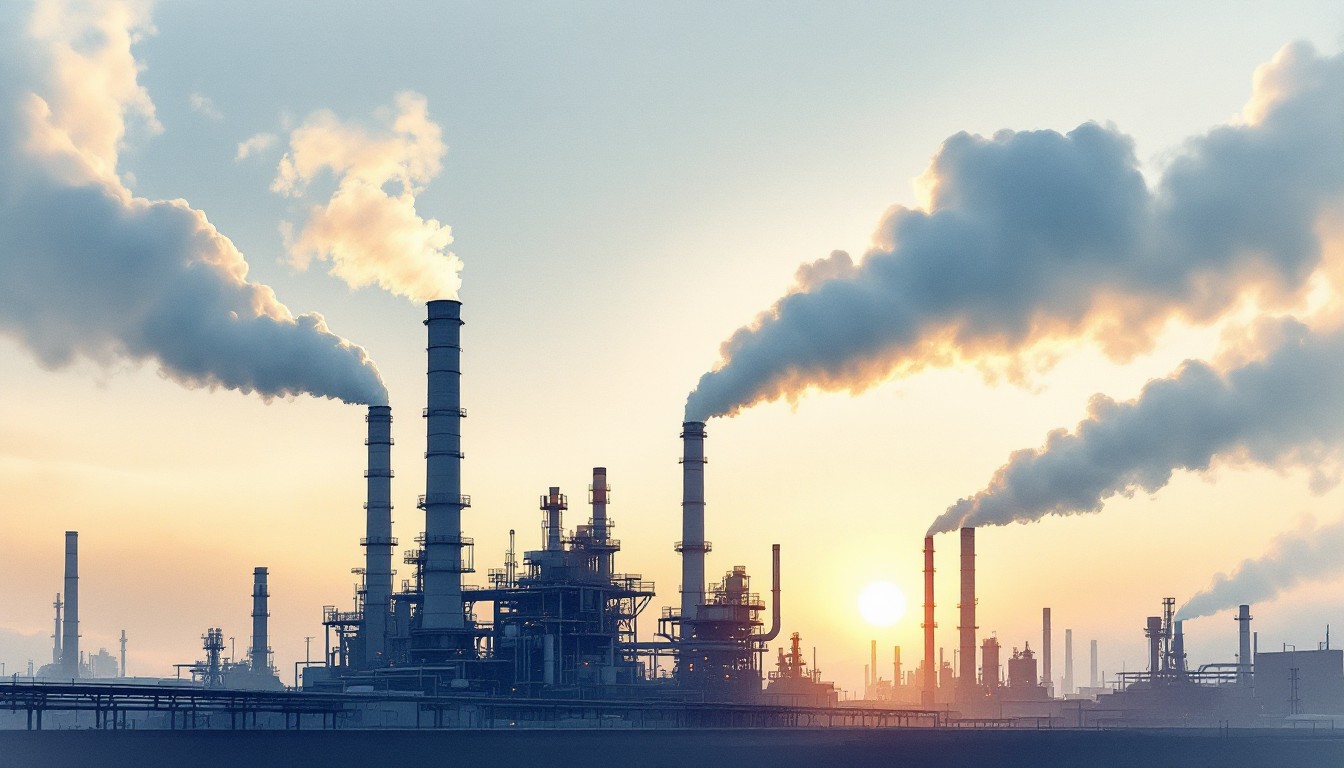
Petro products (petrochemical products) are chemicals derived from crude oil and natural gas.
In simple terms:
When crude oil is processed in a refinery, it produces various chemical products, which are known as petro products.
Where Are They Used?
- Plastic manufacturing
- Textile production (polyester, nylon)
- Pharmaceuticals
- Paints, packaging, tyres, and electronics
In short, many everyday products depend heavily on petrochemicals.
Decision Taken Amid Global Crisis
This move comes at a time when tensions and conflict in the Middle East (West Asia) have significantly disrupted global supply chains.
- Supply of crude oil and petrochemicals has been affected
- Key shipping routes have faced disruptions
- Import costs have increased sharply
As a major importer, India has been directly impacted, prompting the government to remove duties and make imports cheaper.
Which Petro Products Are Covered?
The government has included around 40 products, mainly used as industrial raw materials.
Basic Chemicals
- Methanol
- Ammonia
- Acetic Acid
- Toluene
- Phenol
Industrial Feedstock
- Monoethylene Glycol (MEG)
- Vinyl Chloride Monomer
- Styrene
Textile & Plastic Raw Materials
- Purified Terephthalic Acid (PTA)
- PET Chips
- Polymers (Polyethylene, Polypropylene)
These products are considered the backbone of manufacturing industries.
Which Industries Will Benefit the Most?
This decision is expected to benefit several key sectors:
Major Beneficiaries
- Plastic & Packaging Industry
- Textile Industry
- Pharmaceutical Sector
- Chemical Manufacturers
- Auto Components Industry
Lower raw material costs will help improve margins and stabilize production.
Impact on the Economy
Positive Impact
- Cheaper raw materials
- Support in controlling inflation
- Increased manufacturing activity
- More stable supply chains
Negative Impact
- Possible revenue loss for the government due to duty removal
- Increased competition for domestic producers from cheaper imports
Impact of LPG Diversion
Recently, India has diverted some petrochemical raw materials toward LPG (cooking gas) production to meet domestic demand.
This reduced the availability of raw materials for industries, leading to higher prices.
The duty exemption aims to balance this situation by ensuring adequate supply for industrial use.
Temporary Relief, Not a Long-Term Policy
This exemption is valid only for three months:
- Start: April 2, 2026
- End: June 30, 2026
This clearly indicates that it is a short-term emergency measure.
If global conditions improve, the government may reintroduce customs duties in the future.
Outcome
This move is a strategic intervention by the government aimed at:
- Providing immediate relief to industries
- Reducing cost pressures
- Stabilizing supply chains
It reflects how India is proactively managing the impact of the global energy crisis.
Overall, removing customs duty on petro products is likely to act as a supportive and stabilizing measure for both the economy and key industries in the short term.
Source: pib