Stock markets do not move only on company profits or economic data. Sometimes, a single political statement by a powerful leader can shake markets across the world.
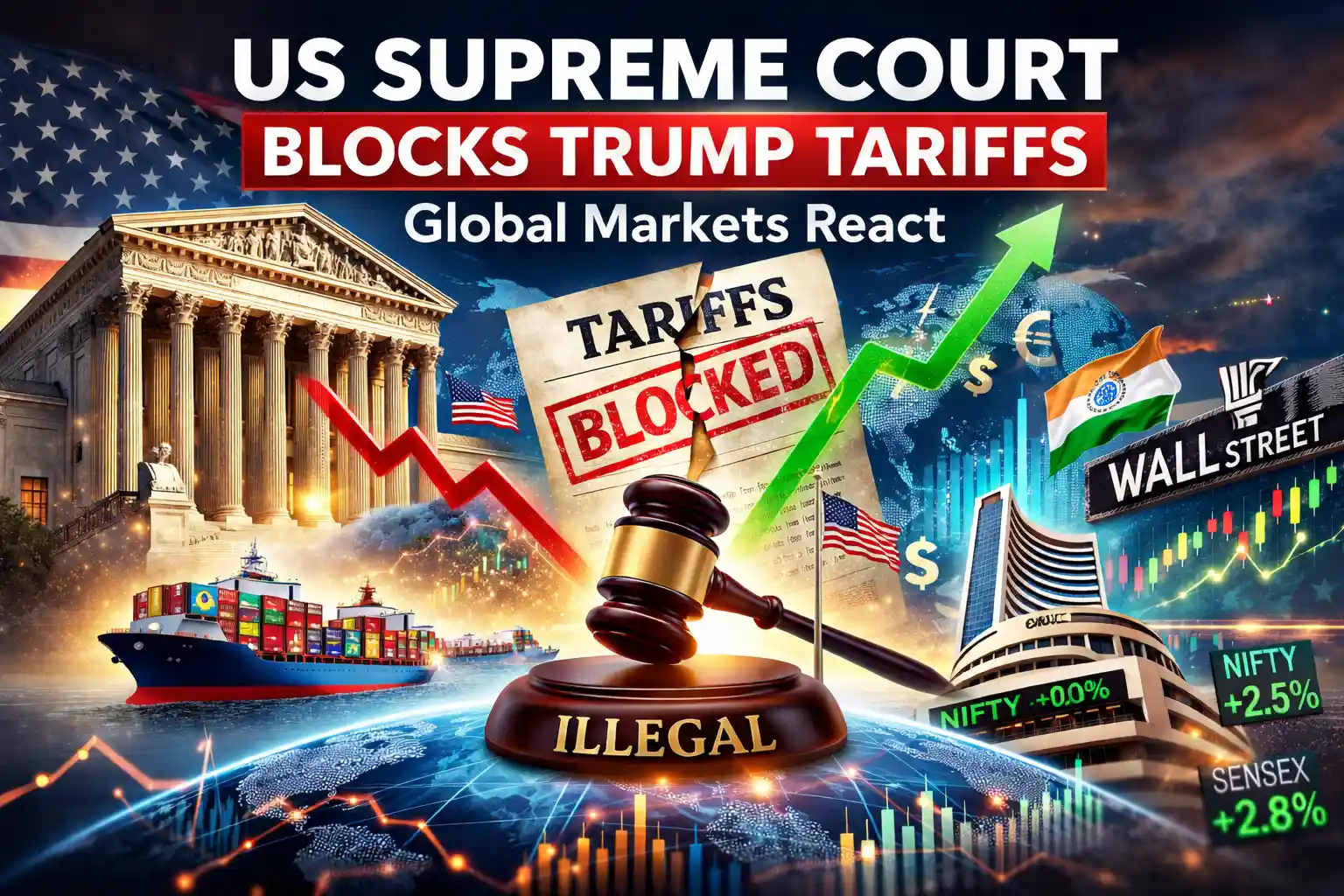
In January 2026, US President Donald Trump’s comments about imposing tariffs on Europe triggered sharp volatility in global markets.
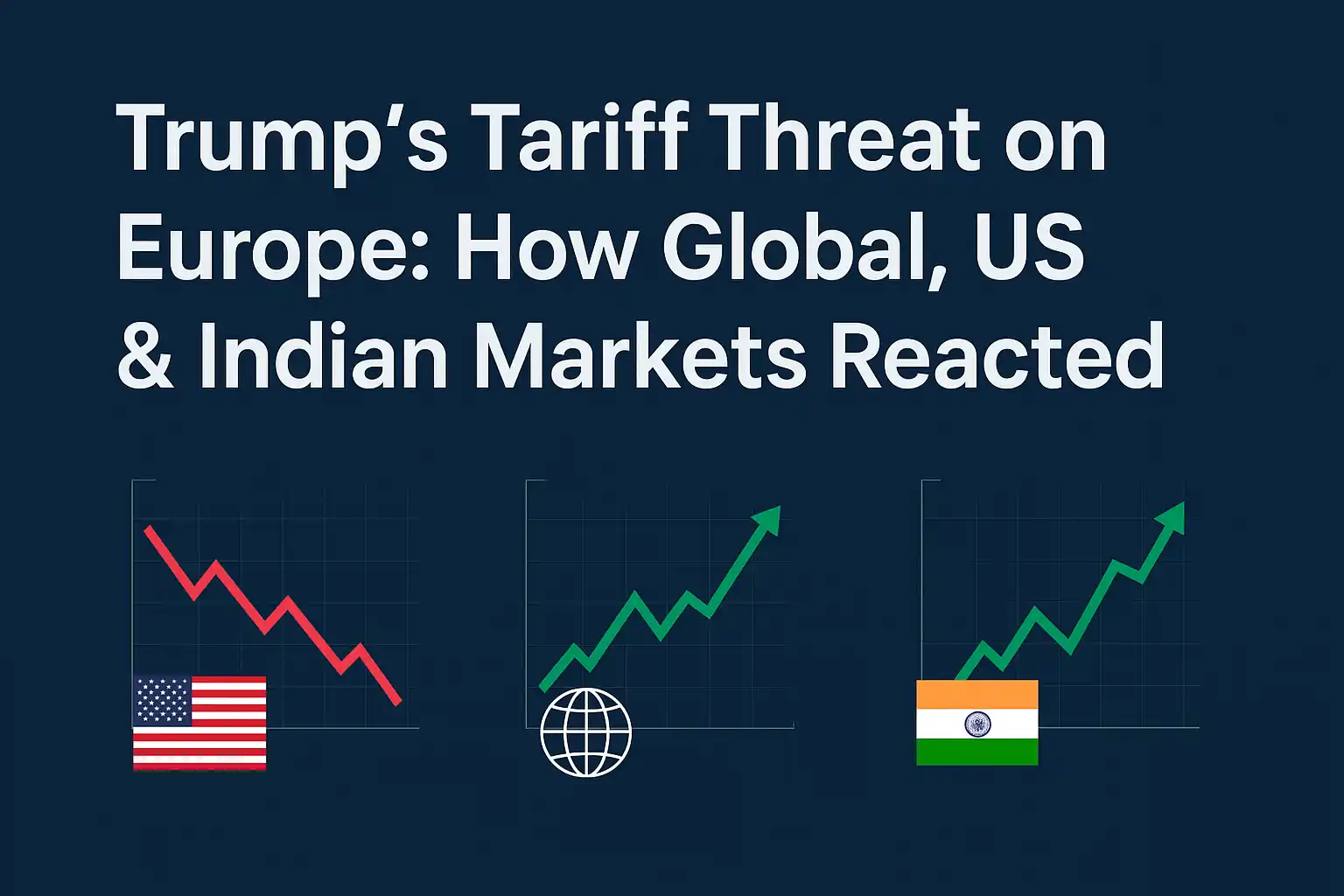
The impact was immediate—US, European, Asian, and Indian markets fell sharply as investors feared a fresh trade war.
However, just days later, Trump softened his stance and delayed the tariff plan. This sudden change led to a strong relief rally across global markets.
In this article, we will clearly explain:
- Why Trump threatened tariffs
- How much US, global, and Indian markets fell
- What happened when Trump softened his stance
- What investors can learn from this episode
What Is a Tariff and Why Did Trump Threaten Europe?
A tariff is a tax imposed on imported goods. When tariffs rise:
- Imports become more expensive
- Company costs increase
- Profit margins shrink
- Trade tensions rise between countries
Reason Behind Trump’s Tariff Threat
In January 2026, Trump warned of imposing 10% to 25% tariffs on European countries.
This threat was linked to:
- Disputes involving Greenland
- NATO-related strategic and trade disagreements
- Trump’s long-standing view that Europe does not trade “fairly” with the US
💡 Market concern:
If tariffs were implemented, it could escalate into a global trade war, slowing economic growth worldwide.
Why Markets Reacted So Negatively
Markets fear uncertainty more than bad news.
Trump’s tariff warning created confusion about:
- Rising costs for global companies
- Disrupted supply chains
- Lower corporate earnings
- Reduced global trade
As a result, investors quickly moved into risk-off mode, selling equities and shifting to safer assets.
US Market Fall After the Tariff Threat
January 20, 2026 – Wall Street Sell-Off
- Dow Jones Industrial Average:
▼ ~870 points (–1.8%) - S&P 500:
▼ ~2.1% - Nasdaq Composite:
▼ ~2.4%
🔹 Technology, industrial, and export-dependent stocks were hit the hardest.
🔹 This was one of Wall Street’s worst sessions in recent months.
Impact on Global Markets
Once US markets fell, the shock spread globally.
🌍 European Markets
- Germany (DAX), France (CAC 40), UK (FTSE)
▼ Declined by 0.6% to 1.1%
🌏 Asian Markets
- Asian indices opened lower and closed weak
- Export-oriented economies faced selling pressure
👉 The situation quickly turned into a global trade risk, not just a US-Europe issue.
Impact on Indian Stock Market
India was not directly involved in the tariff dispute, but global risk aversion hit Indian markets hard.
🇮🇳 January 20–21, 2026
- Sensex:
▼ 1,066 points (–1.28%) - Nifty 50:
▼ 353 points (–1.38%)
Investor Wealth Loss
- Over ₹10 lakh crore wiped out in market capitalization
Rupee Impact
- Indian rupee weakened to around ₹91.74 per US dollar
📌 Reason:
Foreign investors reduced exposure to emerging markets amid global uncertainty.
Why Trump Softened His Stance
Within days, Trump changed his tone:
- Announced that tariffs would not be imposed immediately
- Indicated progress toward a “framework agreement” with NATO and European leaders
This signaled:
- Trade negotiations were still open
- Immediate trade war risk had reduced
Markets interpreted this as a positive diplomatic signal.
Relief Rally in US Markets
After Tariff Delay Announcement
- Dow Jones:
▲ +722 points (+1.49%) - S&P 500:
▲ +1.47% - Nasdaq Composite:
▲ +1.6%
🔹 Investors regained confidence
🔹 Risk appetite returned quickly
Indian Market Recovery
🇮🇳 January 22, 2026
- Sensex:
▲ ~800 points (+1.03%) - Nifty 50:
▲ ~1.09% (250–300 points)
Sectoral Recovery
- IT
- Metals
- Auto
- Banking
Buying returned across almost all sectors.
Market Movement Summary (Before vs After)
| Market / Index | During Tariff Threat | After Softening |
| Dow Jones | –1.8% | +1.49% |
| S&P 500 | –2.1% | +1.47% |
| Nasdaq | –2.4% | +1.6% |
| Sensex | –1,066 pts | +800 pts |
| Nifty | –353 pts | +250–300 pts |
| Rupee | Weakened | Stabilized |
Key Lessons for Investors
- Political statements can cause short-term market volatility
- Panic selling often leads to unnecessary losses
- Markets react quickly to both threats and relief signals
- Global news is as important as company fundamentals
- Long-term investors should focus on fundamentals, not fear
Outcome
Trump’s tariff threat and subsequent softening once again proved that markets run on confidence, not just numbers.
Fear of a trade war triggered heavy selling across global markets, while diplomatic reassurance sparked a strong recovery.
This episode highlights an important truth for investors:
📌 Markets may fall on fear, but they recover on clarity.
Understanding global political developments helps investors stay calm and make smarter decisions during volatile times.
Source: Public information based on reports from Reuters, Bloomberg, AP News and global financial media.