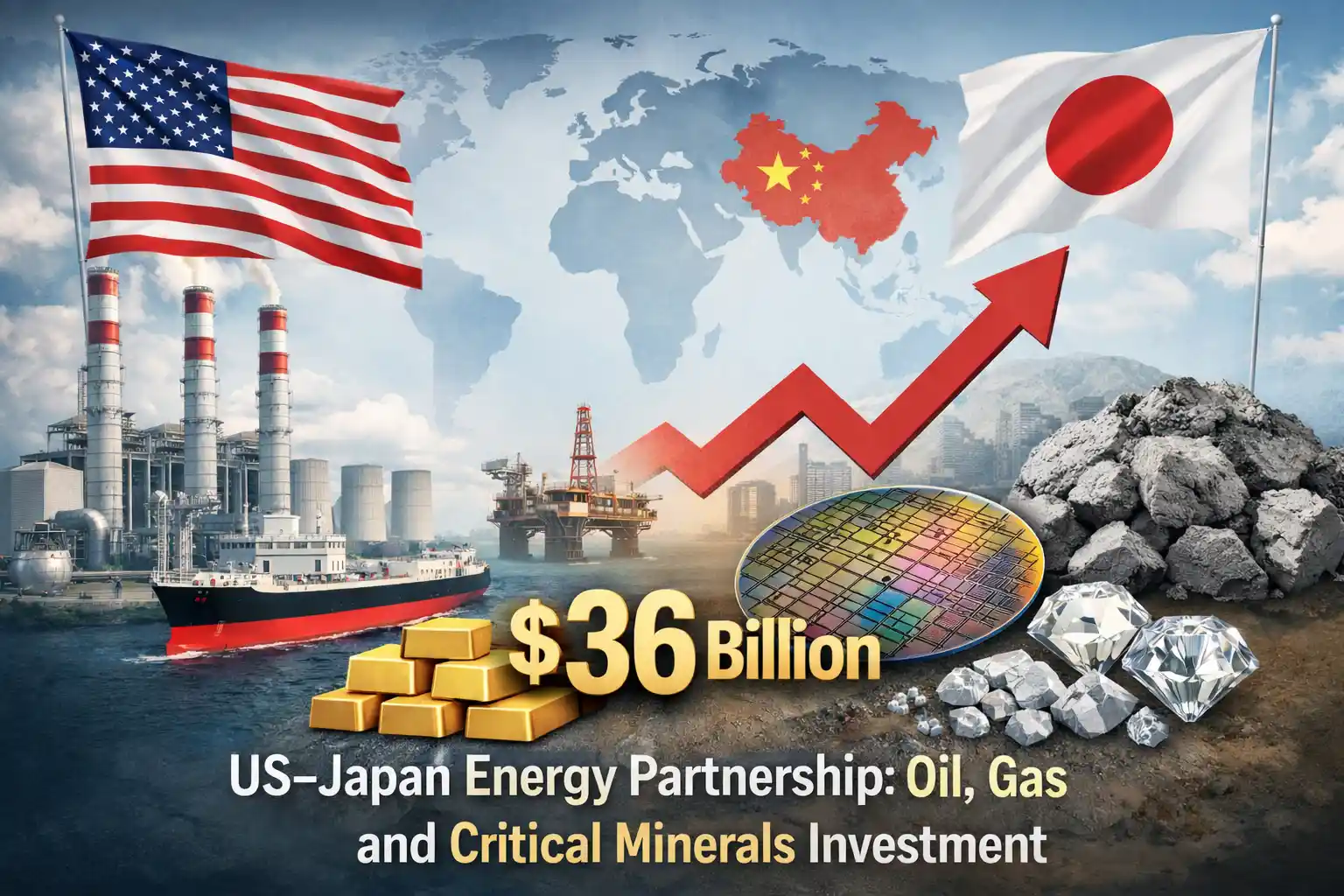
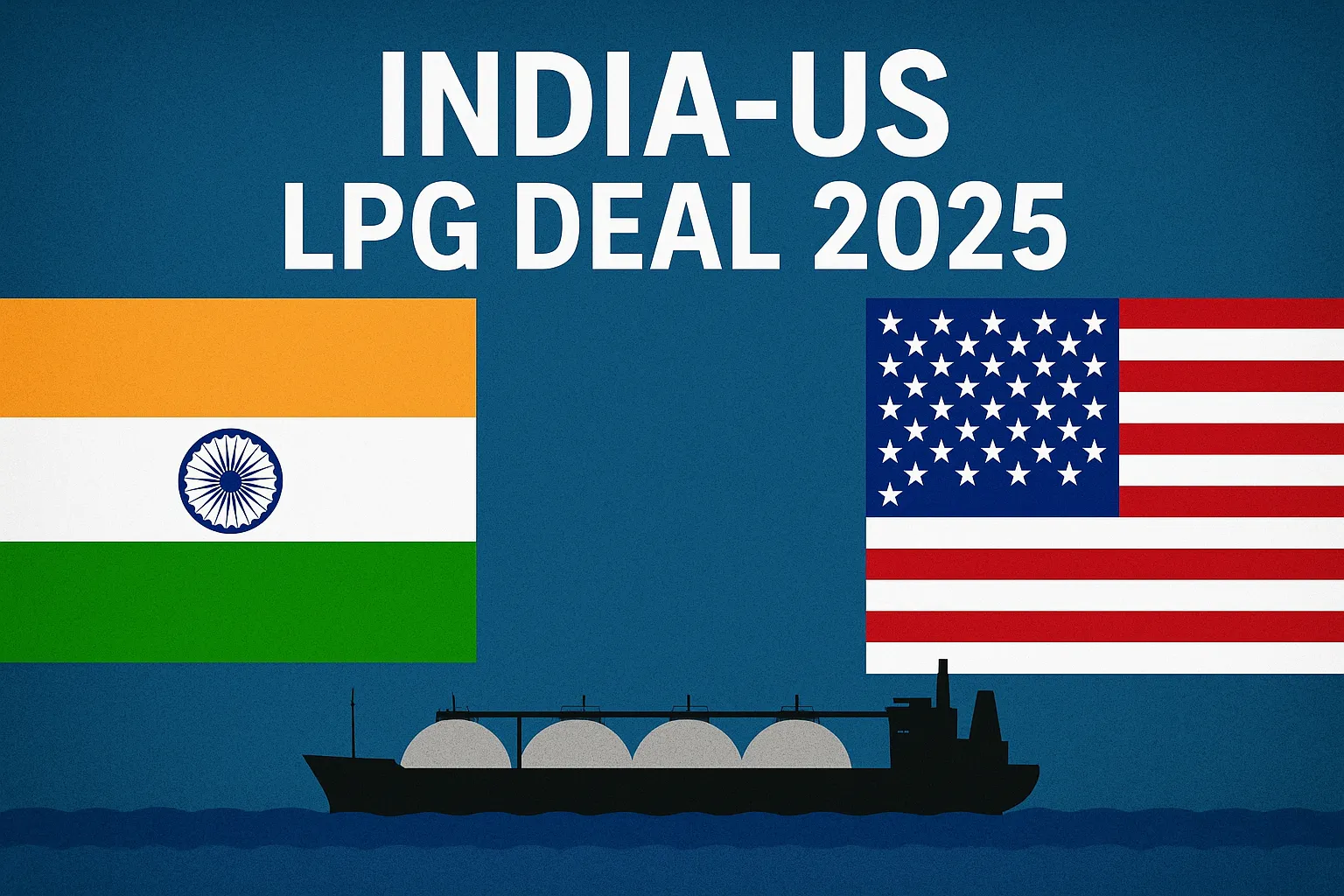
In a landmark move that marks a major shift in India’s global energy strategy, the Government of India has signed its first-ever structured LPG import contract with the United States. Under this agreement, India will import 2.2 million tonnes (MTPA) of liquefied petroleum gas (LPG) in 2026—a volume equivalent to around 10% of India’s total annual LPG imports.
Union Petroleum and Natural Gas Minister Hardeep Singh Puri described this deal as a “historic first,” emphasizing that it significantly enhances India’s energy security at a time when global energy markets are volatile and geopolitically sensitive.
Key Details of the LPG Agreement
1. Who Is Involved?
India’s top state-run oil companies—
- Indian Oil Corporation (IOC)
- Bharat Petroleum Corporation Ltd (BPCL)
- Hindustan Petroleum Corporation Ltd (HPCL)
—jointly finalized the contract with US-based suppliers.
2. Supply Route
Imports will originate primarily from the US Gulf Coast, a major global hub for LPG production and export. The LPG cargoes will be transported to India using VLGC ships (Very Large Gas Carriers).
3. Volume and Shipments
The contract includes around 48 VLGC shipments, collectively adding up to roughly 2.2 million tonnes of LPG.
4. Pricing Mechanism
The price of LPG will be linked to the American benchmark Mount Belvieu, known globally for transparent and competitive LPG pricing. This gives India greater predictability and stability in pricing.
5. Additional Flexibility
Suppliers have been provided an option to deliver one out of every four shipments from alternative sources, ensuring smoother logistics and supply flexibility.
Why This Deal Matters: Strategic Significance
1. Reducing Overdependence on the Middle East
India has traditionally sourced most of its LPG from Middle Eastern suppliers like
- Saudi Arabia
- Kuwait
- UAE
- Qatar
This deal gives India a reliable non-Middle East supply line, reducing geopolitical risk and strengthening supply diversification.
2. Strengthening India–US Energy Partnership
The agreement is being viewed not just as a commercial deal but as a strategic diplomatic milestone.
It deepens:
- Bilateral trade ties
- Energy cooperation
- Supply-chain integration
between the world’s largest democracy and the world’s biggest LPG exporter.
3. Improving India’s Energy Security
With domestic LPG consumption rising due to the success of schemes like Ujjwala Yojana, India needs dependable and long-term supply sources.
This contract helps India secure predictable, assured, long-term availability of LPG.
4. Supporting Domestic Consumers
A structured contract ensures:
- Stable pricing
- Better planning
- Lower risk of supply shortages during global disruptions
These benefits ultimately help stabilize domestic LPG cylinder availability.
Benefits to India: Detailed Analysis
► 1. Stronger Supply Assurance
By adding the US as a major supplier, India expands its energy portfolio, reducing any future impact of:
- Middle East tensions
- Production cuts
- Shipping disruptions
- Price shocks
► 2. Diversification of Energy Sources
India is increasingly moving toward multi-geography sourcing, and the US deal fits perfectly into that long-term national strategy.
► 3. Lower Trade Imbalance with the US
As India imports more energy from the US, the bilateral trade deficit shrinks.
This strengthens India’s position in ongoing trade negotiations with Washington.
► 4. Long-Term Price Stability
The Mount Belvieu benchmark brings transparency in pricing.
India can project future price trends more accurately, helping in:
- Budgeting
- Subsidy planning
- Market analysis
Challenges and Risks Involved
While the deal is strategic, it also comes with certain challenges:
1. High Shipping Costs
Transporting LPG from the Gulf Coast to India is more expensive than from Middle Eastern countries because of longer distances.
This can increase the landed cost of LPG.
2. Global Price Volatility
US LPG markets can fluctuate based on:
- Weather
- Storage levels
- Domestic US demand
- Global oil & gas trends
India must remain prepared for periodic pricing swings.
3. Infrastructure Requirements
Handling larger imports will require:
- More LPG storage
- Improved port facilities
- Efficient distribution networks
Especially for large-scale VLGC arrivals.
4. Political and Trade Risks
US political shifts or changes in trade policy can impact future supply terms.
A Broader View: India’s Global Energy Strategy
This deal signals that India is adapting to new global energy dynamics.
With rising LPG demand due to:
- Urbanization
- Growing households
- Clean cooking initiatives
- Industrial consumption
India must maintain long-term supply partnerships with multiple countries.
The US, now a major global exporter of LPG and LNG, is becoming a key partner in India’s energy roadmap—much like it has in:
- Crude oil
- Natural gas
- Renewable technology
- Green hydrogen discussions
What This Means for 2026 and Beyond
1. More US–India Energy Trade
If this structured contract proves successful, both countries may expand cooperation to:
- Longer-duration LPG contracts
- LNG supply agreements
- Joint investment in energy infrastructure
2. Improved Domestic LPG Availability
State-run oil companies will have better inventory control and can maintain larger buffer stocks.
3. Better Preparedness for Global Shocks
Whether Middle East tensions rise or global energy prices fluctuate, US supply lines give India a dependable alternative.
4. Future Possibility of Multi-Year Deals
This one-year structured deal may pave the way for:
- 3-year
- 5-year
or even decade-long LNG/LPG supply partnerships.
A Big Win for India’s Energy Roadmap
India’s first structured LPG import agreement with the United States marks a transformative moment in India’s energy policy.
This deal strengthens:
- Energy security
- Diplomatic bonds
- Supply diversification
- Price stability
While there are challenges like higher freight costs and market volatility, the overall strategic benefits outweigh the risks.
If managed well, this partnership could set the foundation for long-term India–US energy cooperation, supporting India’s growing demand and ensuring stable access to essential cooking fuel for millions of households.
Source: PIB Press