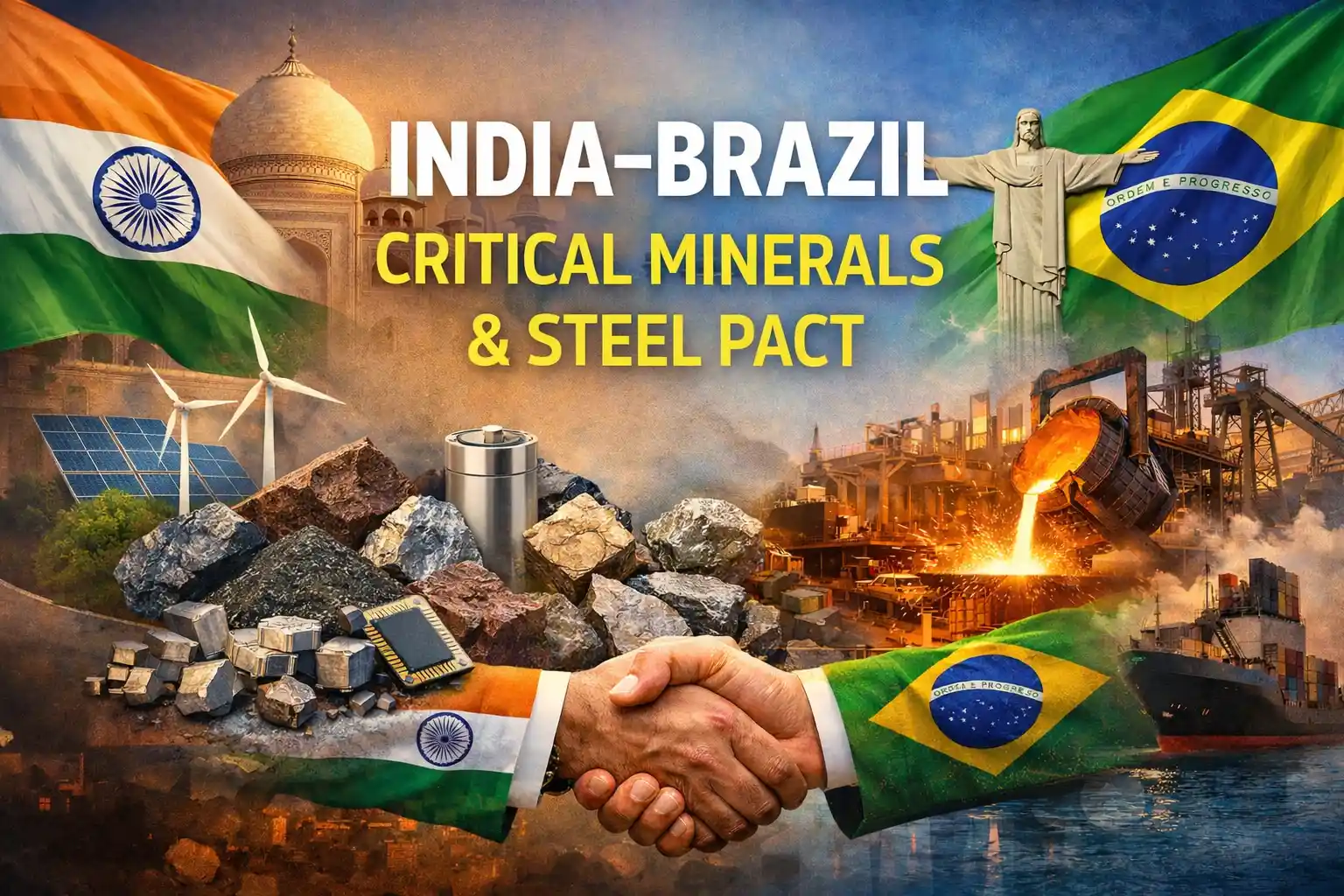
India and Brazil have signed a major agreement covering critical minerals, rare earth elements (REEs), and steel-sector raw materials, marking a significant step toward strengthening supply chain resilience and deepening long-term industrial cooperation.
The agreement was formalized at Hyderabad House in New Delhi in the presence of Indian Prime Minister Narendra Modi and Brazilian President Luiz Inácio Lula da Silva during high-level bilateral talks.
This partnership goes beyond mining—it represents a broader strategy focused on industrial growth, technology collaboration, and resource security.
Institutional Framework Between Key Ministries
The Ministry of Steel, Government of India, and the Ministry of Mines and Energy of the Federative Republic of Brazil signed a Memorandum of Understanding (MoU) to strengthen cooperation in mining and minerals required for the steel sector.
The MoU establishes an institutional framework aimed at ensuring reliable and sustainable development of raw materials across the steel value chain.
Key Areas of Cooperation
Under the agreement, both countries will collaborate in the following areas:
1️⃣ Critical Minerals & Rare Earth Elements
- Exploration of mineral reserves
- Mining and extraction
- Processing and value addition
- Development of secure and diversified supply chains
2️⃣ Steel Sector-Specific Cooperation
- Attracting investments in exploration, mining, and infrastructure
- Mineral processing and recycling technologies
- Automation and advanced technologies in mining operations
- Use of Artificial Intelligence (AI) in geoscientific data analysis
- Best practices in mineral extraction, beneficiation, and environmental management
Why Brazil Is a Strategic Partner
Brazil is among the world’s leading producers of iron ore and holds significant reserves of minerals critical to steelmaking, including:
- Iron ore
- Manganese
- Nickel
- Niobium
- Rare earth elements
Enhanced cooperation with Brazil is expected to improve India’s long-term access to essential raw materials and advanced technologies.
Reducing Overdependence on China
China has maintained a dominant position in global rare earth processing and supply. Recent export controls and geopolitical tensions have highlighted vulnerabilities in global supply chains.
The India–Brazil pact is widely seen as a strategic move to diversify sourcing and reduce excessive dependence on a single supplier for critical raw materials.
Importance for India’s Steel Sector
India currently has a steelmaking capacity of 218 million tonnes. With rising domestic demand driven by infrastructure expansion and industrialization, Indian companies are significantly increasing production capacity.
In this context, the MoU will:
- Strengthen mineral resource development for steel production
- Facilitate access to advanced mineral processing and recycling technologies
- Enable data-driven exploration methods
- Improve resilience and sustainability across the steel supply chain
The partnership is expected to support efficient preparation of steelmaking inputs and promote technology-led improvements across the entire value chain.
Impact on Key Industries
1. EV & Battery Sector
A secure mineral supply can reduce production risks and improve cost efficiency.
2. Defense Manufacturing
Rare earth elements are essential for advanced weapons systems, sensors, and magnets.
3. Renewable Energy
Wind turbines and solar technologies rely heavily on critical minerals.
4. Electronics & Semiconductors
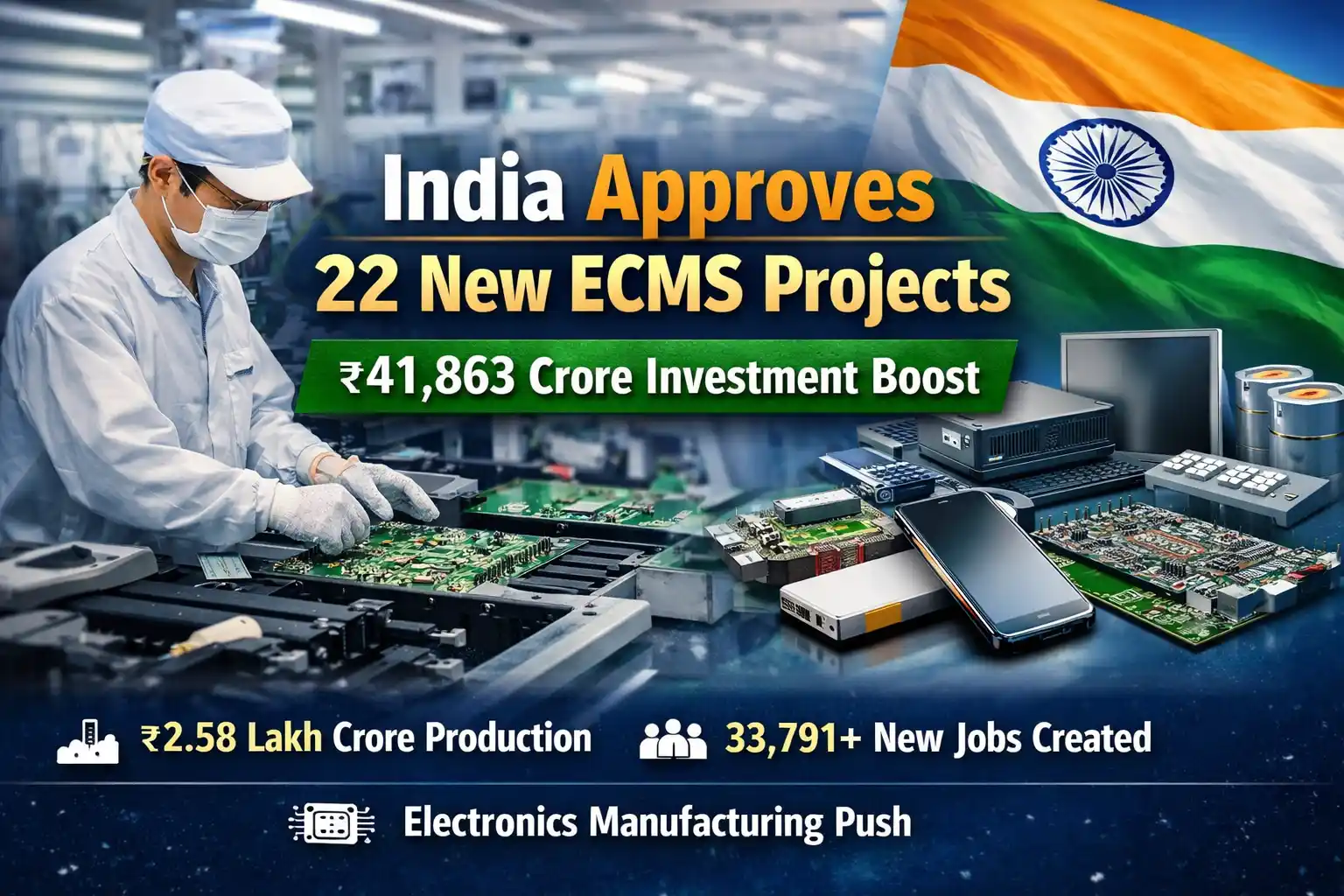
Supports India’s push toward high-tech manufacturing.
5. Steel & Infrastructure
Ensures sustainable raw material supply for large-scale industrial expansion.
Bilateral Trade Expansion Target
Both countries have set an ambitious goal of increasing bilateral trade to $20–30 billion in the coming years. The critical minerals and steel partnership is expected to play a central role in boosting cooperation across:
- Energy
- Technology
- Automotive manufacturing
- Defense production
- Long-term industrial investments
Strategic & Geopolitical Significance
Beyond economics, the agreement reflects deeper geopolitical alignment between two major Global South economies. India and Brazil have consistently advocated for balanced global trade systems and stronger South–South cooperation.
The pact signals a coordinated effort to build resilient supply networks outside traditional dominant suppliers while reinforcing their broader strategic partnership.
Outcome
The India–Brazil critical minerals and steel cooperation agreement is far more than a mining collaboration.
It represents a strategic shift toward:
- Supply chain security
- Industrial expansion
- Technology-driven growth
- Long-term economic resilience
If implemented effectively through joint investments, infrastructure development, and technology sharing, the pact could significantly strengthen India’s EV, defense, high-tech manufacturing, and steel sectors in the years ahead.
Source: PIB