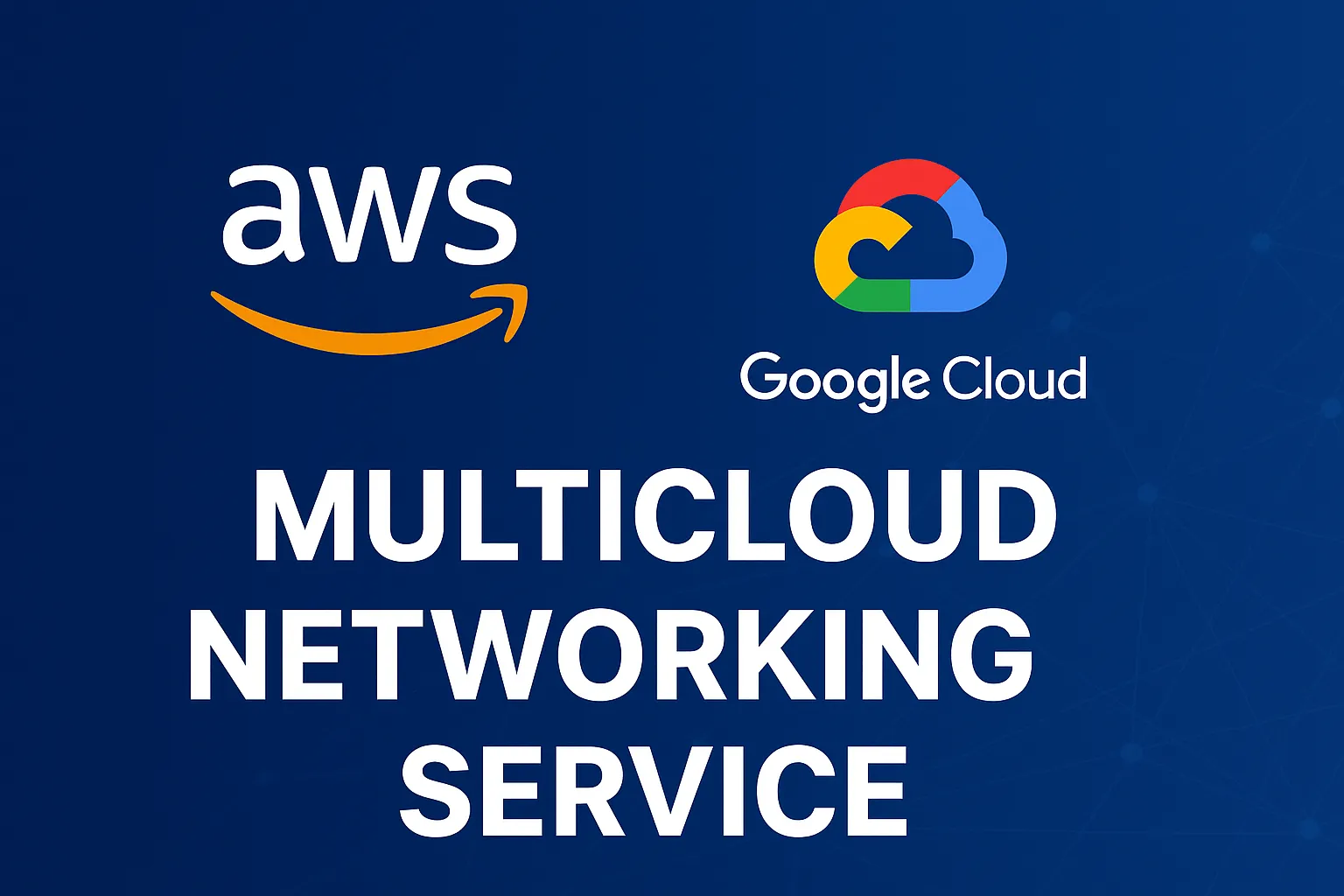
A major breakthrough has taken place in the global cloud industry. The world’s two biggest technology giants—Amazon Web Services (AWS) and Google Cloud—have officially launched a joint Multicloud Networking Service that provides fast, secure, and seamless cloud-to-cloud connectivity for businesses around the world.
This move is being seen as one of the most significant collaborations in the cloud sector. The companies stated that the new service will shape the future of multicloud operations, especially for industries like AI, big data, fintech, healthcare, logistics, retail, and global enterprises.
What Exactly Is the Multicloud Networking Service?
In simple terms, this new service allows businesses to create a private, high-speed, low-latency network link between AWS and Google Cloud.
Before this service was introduced, companies that used both clouds had to deal with:
- complex networking steps,
- expensive infrastructure,
- long setup times,
- and risks of misconfigurations.
The new multicloud service eliminates these challenges. Now, businesses can set up a secure and fast inter-cloud connection within minutes, instead of waiting for weeks.
Which Technologies Power This Service?
This service brings together two powerful networking systems from both companies:
1. AWS Interconnect – Multicloud
A networking system that makes it easier for AWS users to connect with external cloud providers.
2. Google Cloud Cross-Cloud Interconnect
Google’s advanced solution designed to seamlessly connect Google Cloud with other cloud environments.
By merging these two technologies, AWS and Google Cloud have created a unified multicloud system that has not existed before.
Key Features of the New Multicloud Service
1. High-Speed Data Transfer
Businesses can move data and applications between AWS and Google Cloud at extremely fast speeds—ideal for AI and big data workloads.
2. Low Latency
Cross-cloud applications now respond almost in real time due to reduced latency.
3. Private and Secure Link
The connection is encrypted and continuously monitored, greatly reducing the chances of cyber threats or data breaches.
4. Fast Setup
A process that earlier required weeks of planning and configuration can now be completed in just a few minutes.
5. High Reliability
With multiple redundant pathways, the system ensures that operations continue without interruption even if one network fails.
Who Benefits the Most?
1. AI and Big Data Companies
AI model training, real-time analytics, media processing, and large-scale data projects will become much faster and more efficient with smoother cloud-to-cloud transfers.
2. Global Enterprises
Multinational companies that operate across continents can now run their workloads across both clouds with fewer complications.
3. Fintech and Banking
Security and reliability are critical in financial systems. Private encrypted interconnects make multicloud banking operations more trustworthy.
4. Healthcare and Research
Genomic analysis, medical imaging, and research workloads benefit from fast, stable, and secure data movement.
5. E-Commerce and Logistic Platforms
Real-time inventory systems, pricing engines, and supply chain networks can run more smoothly with faster data access.
Why Was This Service Needed?
The world is rapidly shifting toward multicloud ecosystems.
Many enterprises already use a combination of AWS, Google Cloud, and Microsoft Azure.
But the biggest challenge has always been connecting these clouds to each other.
Earlier, companies had to rely on:
- complex routing,
- physical network devices,
- multiple firewalls,
- and heavy manual monitoring.
This made the process:
- time-consuming,
- expensive,
- and prone to errors.
The new AWS–Google multicloud service solves these problems by offering a managed, easy-to-use, and more efficient way to connect both clouds.
Impact on the Global Cloud Market
For the first time, two major cloud rivals have collaborated directly to build a unified networking solution.
This indicates several major shifts in the cloud industry:
- Competition is moving toward collaboration.
- Multicloud is no longer the “future”—it is the present reality.
- Customer demand is pushing cloud providers to work together.
Experts believe this move will increase pressure on Microsoft Azure to launch similar collaborative solutions.
What Does This Mean for India?
India is one of the world’s fastest-growing digital markets.
Indian businesses—including startups, fintech firms, banks, and technology companies—are adopting cloud services rapidly.
With the new multicloud service, India is likely to see several benefits:
1. Faster AI Development
Many Indian AI startups rely on AWS compute and Google’s AI APIs. Connecting both clouds easily will speed up their projects.
2. Lower Costs
Companies will save money because expensive physical networking and complex setups are no longer required.
3. Better Latency Across Regions
India–Singapore and India–US data routes will perform better.
4. Support for National Digital Projects
Large-scale Indian missions like Digital Health Records, UPI data management, EV mobility analytics, and digital banking systems may find this service useful.
Challenges Ahead
While the new service is extremely powerful, it comes with some challenges:
- Multicloud service packages may be expensive for small businesses.
- Large deployments still require skilled cloud engineers.
- Huge data transfers between clouds might add extra charges.
- Data sovereignty laws in some countries could create restrictions.
However, industry analysts believe the advantages outweigh the limitations.
A New Era for Cloud Technology
The collaboration between AWS and Google Cloud marks the beginning of a new era in cloud technology. Where cloud providers once competed fiercely, they are now working together to give businesses better speed, higher reliability, and more advanced capabilities.
The new multicloud networking service promises:
- greater flexibility,
- faster performance,
- stronger security,
- and higher efficiency
for all types of industries worldwide.
From AI to banking and from healthcare to e-commerce—the impact of this service will begin to appear within the next few months.
This historic partnership could shape the direction of global cloud transformation for years to come.
Source: Cloud google blog