
हिंदी में पढ़ने के लिए मेनू बार से हिंदी भाषा चयन करें।
On 1 February 2026, the Finance Minister presented the Union Budget 2026–27 in Parliament, announcing several measures including higher infrastructure spending, new high-speed rail corridors, support for semiconductor and manufacturing industries, assistance for MSMEs, agriculture and rural development programs, increased allocation for health and education, simplified tax rules, and changes in STT for F&O trading, along with multiple sector-focused initiatives.
The budget includes decisions related to roads, railways, industries, agriculture, jobs, technology, healthcare, and taxation, which are expected to impact citizens, businesses, and investors.
Let us now understand all the major announcements and their impact in detail in simple language.
Budget Overview
The Union Budget is the government’s financial plan for the coming year — showing how much India will earn and spend, and where the money will go. The 2026–27 budget focuses on:
🌟 Key Goals
- Economic growth: India wants strong long-term growth.
- Jobs & opportunities: Support for industries and startups.
- Infrastructure boost: Strong spending on roads, rails, waterways, etc.
- Ease of living & doing business: Simplifying taxes and compliance for people and companies.
- Future tech & innovation: Focus on AI, semiconductors, biotech research.
Overall, the budget tries to balance progress with financial discipline — meaning growth while keeping government borrowing and spending in check.
Government Finances & Spending
Capital Expenditure (Capex)
The government has allocated a record ₹12.2 lakh crore for building infrastructure in 2026–27 — which is about 9% more than the previous year.
This Capex money will be used to build:
- Roads, highways, bridges
- Railways and high-speed rail lines
- Ports and waterways
- Urban infrastructure
- Energy and industrial clusters
Why this matters: High infrastructure spending creates jobs, attracts private investment, and improves connectivity across India.
Transport & Connectivity — Road to Fast Growth
Seven High-Speed Rail Corridors
The budget announces seven high-speed rail corridors, connecting major cities such as:
- Mumbai–Pune
- Pune–Hyderabad
- Hyderabad–Bengaluru
- Chennai–Bengaluru
- Delhi–Varanasi
- And others.
These are planned as “growth connectors” — meaning they help people travel faster and boost business activity between cities.
Waterways & Coastal Shipping
- 20 new National Waterways will be developed in the next 5 years.
- A plan to increase inland and coastal cargo transport from 6% to 12% by 2047 is proposed, making shipping more cost-effective.
Dedicated Freight Corridors
New freight lines, like the Dankuni-Surat corridor, aim to make cargo movement cheaper and faster, easing logistics for businesses.
Manufacturing, Industry & Strategic Sectors
Biopharma SHAKTI
The government announced ₹10,000 crore over 5 years to make India a global hub for biopharmaceuticals — including core research, clinical trials, and production of advanced medicines.
India Semiconductor Mission 2.0
This program supports chip manufacturing, design, and R&D so India can make more electronic components domestically and be globally competitive.
Electronics & Tech Manufacturing
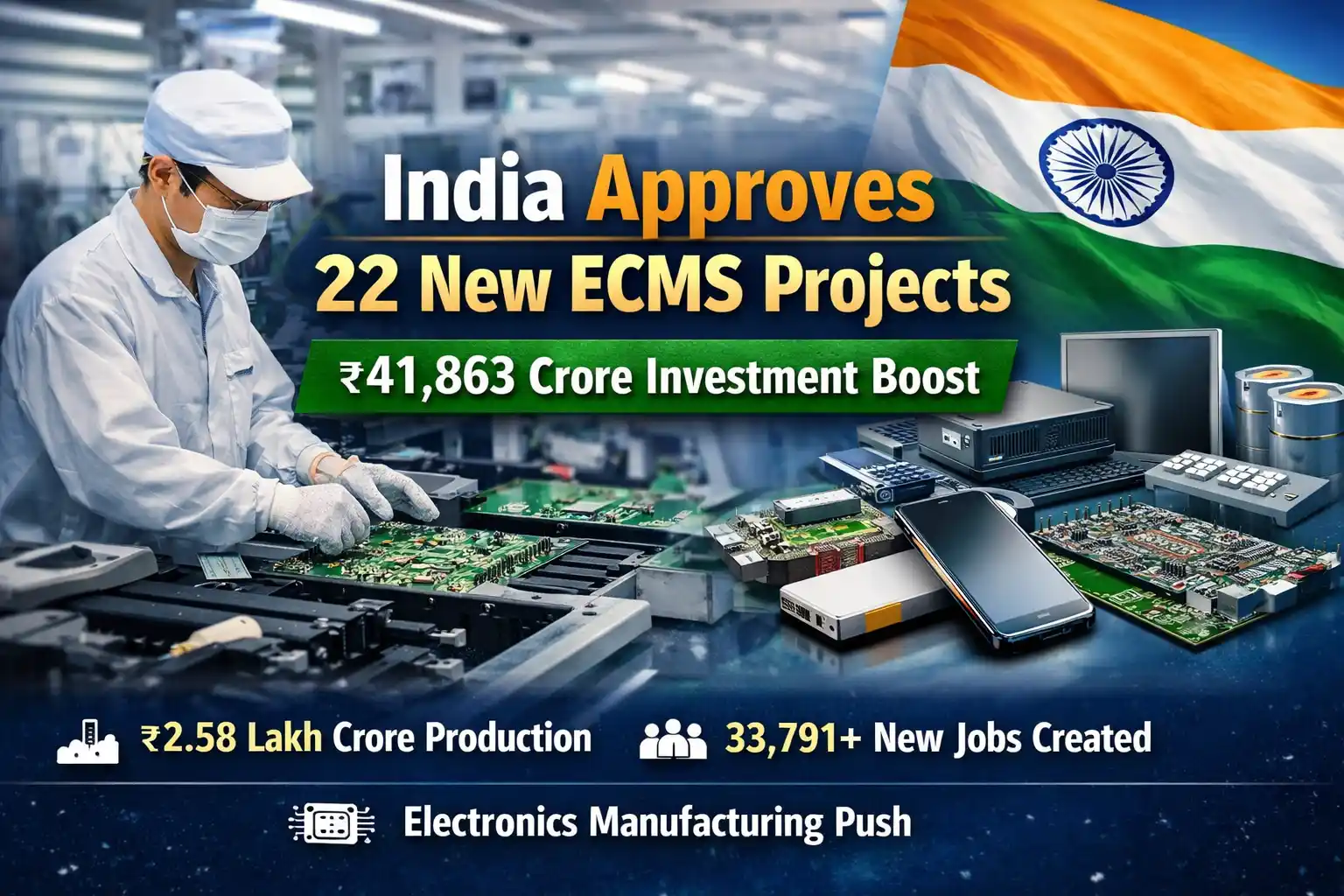
Outlay for electronics component manufacturing has been increased to ₹40,000 crore to build deeper supply chains in India.
Chemical & Rare Earth Corridors
New chemical parks and rare earth mineral corridors will be developed to boost processing, research, and industrial use, especially in mineral-rich states.
🧵 Textiles & Legacy Industries
The budget includes support for:
- Big textile parks
- A National Fibre Scheme
- Reviving traditional industrial clusters
… to create jobs and strengthen exports.
Jobs, Skills & Services Sector
The government has plans to:
- Set up committees and programs linking education, skills, and employment.
- Promote the services sector (which includes IT, tourism, hospitality).
- Launch sports talent & development programs like a strengthened Khelo India Mission.
These moves aim to help young people find jobs, especially in emerging areas like AI, digital tech, and creative industries.
Taxation — What’s Changed & What’s Not
Income Tax
There is no change in the main tax slabs for individuals, so your basic income tax payments stay the same.
Income Tax Rules Simplified
From April 1, 2026, a new Income Tax Act and simpler ITR forms will come into effect. The goal:
- Reduce tax disputes
- Make filing easier
- Encourage people and businesses to comply voluntarily.
Lower TCS for Overseas Spending
Tax Collected at Source (TCS) on money spent abroad for:
- Education
- Medical treatment
- Travel
has been lowered — giving relief to many families.
STT Increased on F&O Trading
STT on Futures increased from 0.02% to 0.05%, and on Options from 0.10% to 0.15%, making F&O trading slightly costlier mainly for active traders.
Other Tax Measures
There are incentives like:
- Special tax breaks for cloud and data center services
- Reduction in corporate minimum tax (MAT) for some companies.
Agriculture & Rural Economy
The budget emphasizes agriculture productivity and rural prosperity:
- A new multilingual AI platform (Bharat-VISTAAR) will give farmers real-time advice and data.
- Continued support for irrigation projects, farmers’ income programs, and market infrastructure.
- Focus on high-value crops like coconut, cashew, and cocoa.
This means farmers will get better tools, tech, and support to increase earnings and reduce risk.
Health, Education & Social Welfare
Healthcare
Healthcare spending has increased in Budget 2026, including support for:
- Health research
- New medical facilities and medical tourism hubs
- Scaling up allied health education.
Education
Funds are allocated to improve schools, vocational training, and skill development, especially for youth — so students can match jobs in the future economy.
Social Inclusion
Special support is planned for women, youth, and people with disabilities, including training programs and better disability employment access.
Defence & Security
Defence spending has increased, focusing on:
- Modernization of forces
- Boosting domestic defence production and exports
- Improving strategic capabilities.
This supports India’s defense industry and reduces dependency on imports.
What This Budget Means for You and India
⭐ For Common People
- No major hike in income tax slabs.
- Relief on overseas education and medical remittances.
- More infrastructure means better travel, transport, and jobs.
💼 For Businesses
- Big support for manufacturing, semiconductors, electronics.
- Easier tax compliance.
- Special incentives for SMEs and strategic industries.
🇮🇳 For India’s Growth
- Record infrastructure spending.
- Focus on future technologies like AI, semiconductors, biotech.
- Sustainable mobility and connectivity projects boosting long-term growth.
Summary — Simple Takeaway
Union Budget 2026-27 is “growth-oriented but balanced.”
It aims to build strong infrastructure, support future industries, help businesses grow, simplify taxes, and improve lives — while maintaining fiscal discipline.