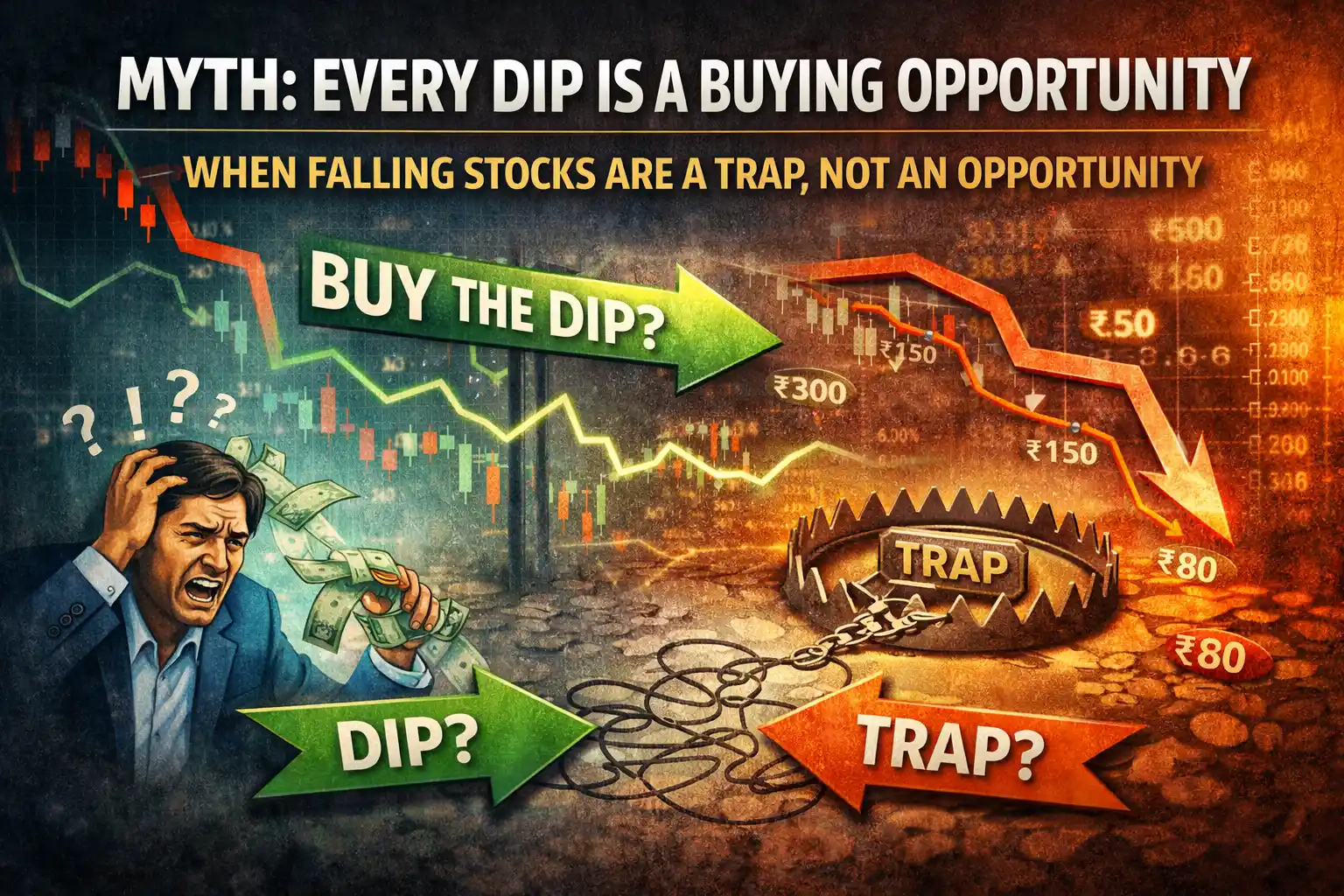
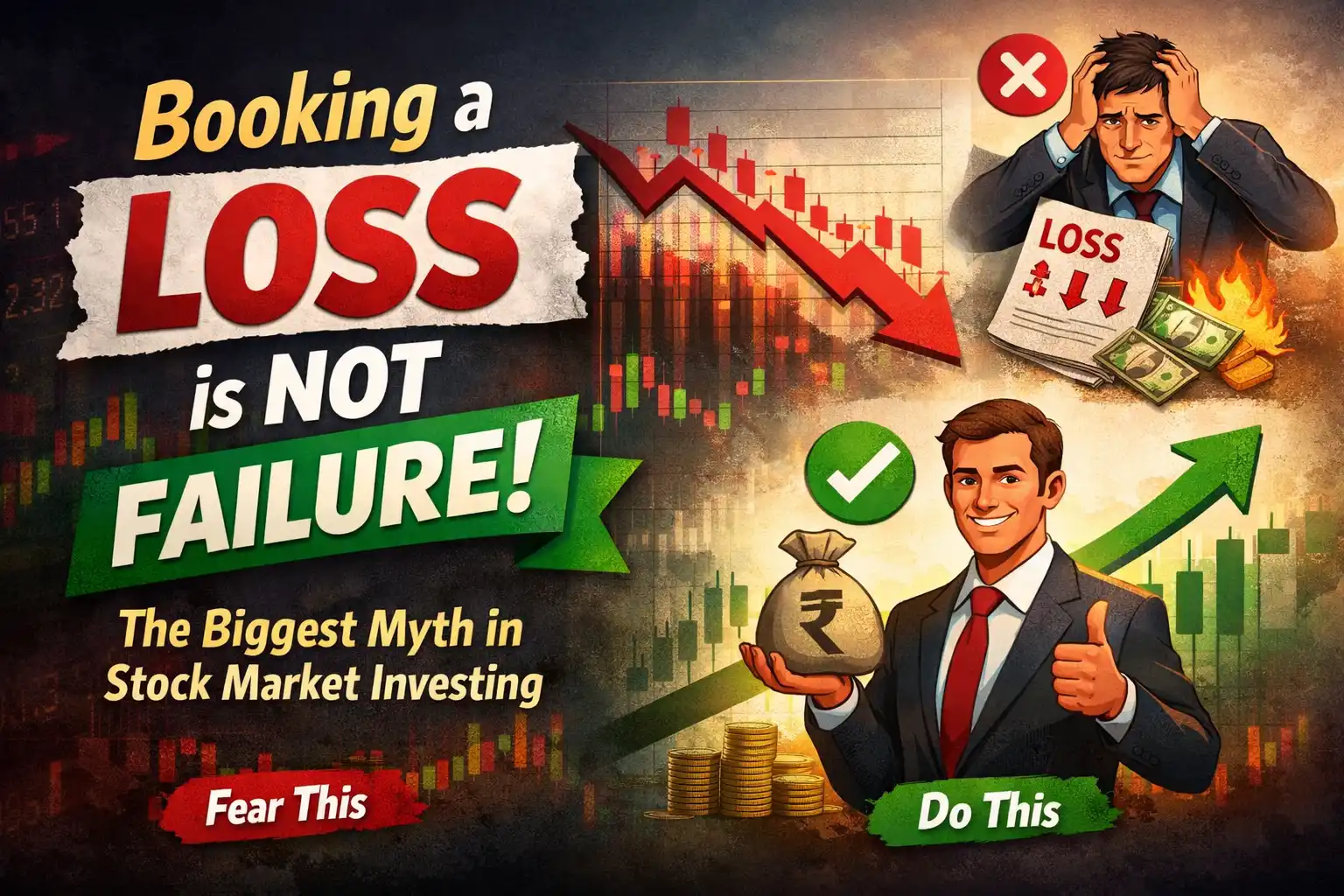
In the stock market, one belief quietly destroys more wealth than bad stocks or market crashes:
“If I book a loss, I have failed.”
Because of this mindset:
- Investors book profits too early
- Hold losses for years
- And finally blame the market
The truth is simple but uncomfortable:
👉 The market is not the problem. Decisions are.
Loss booking is seen as defeat, while in reality, it is one of the most professional skills in investing.
❌ Myth: Booking a Loss Means You Were Wrong
Common thinking:
- Loss booking = bad stock selection
- Loss booking = investor’s defeat
- Loss booking = permanent damage
So investors say:
- “It will come back”
- “Let me wait till breakeven”
- “I won’t sell at a loss”
This is exactly where real damage begins.
✅ Fact: Loss Booking Is a Capital Protection Strategy
Professional investors follow one golden rule:
“Protect capital first. Profits come later.”
Booking a loss means:
- You accepted a mistake early
- You saved your capital from being stuck
- You freed money for better opportunities
Making money is important,
but staying in the game is more important.
Investor Psychology: Why People Avoid Booking Losses
1️⃣ Ego Problem
The mind resists saying:
“My analysis was wrong.”
2️⃣ Hope Trap
“Just a little recovery and I’ll exit.”
Markets don’t run on hope.
They run on numbers and reality.
3️⃣ Anchoring Bias
Investors emotionally attach to their buying price,
but the market doesn’t care what price you paid.
Example: The Real Cost of Not Booking a Loss
Case 1: Loss Not Booked
- Bought stock at ₹100
- Price fell to ₹70
- Investor refused to sell
The stock stayed between ₹60–70 for two years.
During this time:
- Capital remained blocked
- Quality stocks doubled or tripled
👉 The real loss wasn’t ₹30 — it was lost opportunity.
Case 2: Loss Booked Early
- Bought stock at ₹100
- Fell to ₹80
- Investor accepted the mistake
Moved ₹80 into a fundamentally strong stock.
After two years:
- ₹80 became ₹140
👉 Here, loss booking created wealth, not destruction.
⚠️ When Holding a Loss Becomes Dangerous
Holding is risky when:
- The business thesis has failed
- Debt rises unexpectedly
- Cash flow turns negative
- Management keeps changing guidance
- The entire sector is in structural decline
At this point, holding is not patience — it is denial.
🛡️ How Smart Investors Handle Losses
✅ Rule 1: Business Over Price
Decisions are based on business reality, not emotions.
✅ Rule 2: Accept Mistakes Early
A small loss today prevents a disaster tomorrow.
✅ Rule 3: Rotate Capital
Exit weak stocks and move to strong ones.
✅ Rule 4: Follow a System
Exit rules are decided before entering the trade or investment.
The Most Dangerous Line Investors Say
“It’s not a loss until I sell.”
For the market:
- The loss already exists
- You just haven’t accepted it
Acceptance is the first step to recovery.
Loss Booking vs Failure – The Real Difference
| Mindset | Outcome |
| Loss booking = failure | Capital gets trapped |
| Loss booking = learning | Capital grows |
| Ego-driven holding | Wealth destruction |
| Discipline-driven exit | Wealth protection |
Fear Wrong Decisions, Not Losses
The most dangerous investor is not the one who books losses,
but the one who keeps saying:
“I’ll wait.”
Booking a loss is:
- Not weakness
- Not defeat
- Not humiliation
👉 It is a professional decision.
Remember:
The market does not punish you for being wrong.
It punishes you for refusing to accept it.
If you learn to book losses wisely,
you learn how to survive — and grow — in the market long term