
The Shiny Trap
Have you ever noticed that investors are naturally drawn to stocks with high ROE (Return on Equity) and high P/E (Price-to-Earnings ratio)?
The common belief is:
“The company is highly profitable and trading at a premium – it must be a safe winner.”
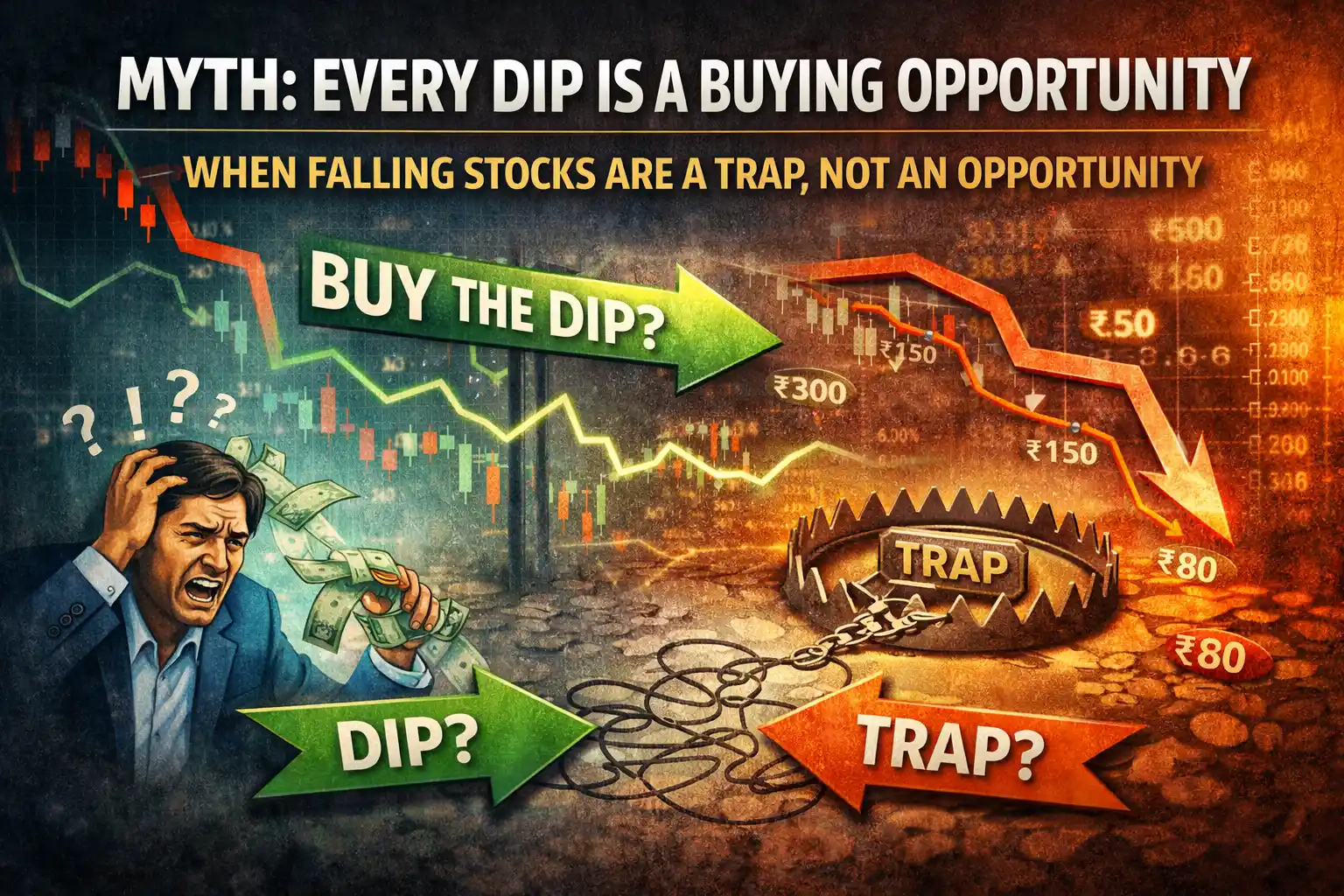
But here’s the catch: this combination can often be a hidden trap for investors. Simply looking at the numbers isn’t enough. Sustainability, valuation, and underlying risk are the factors that truly determine whether the stock is a long-term winner or a dangerous gamble.
In this article, we will explore:
- What high ROE and high P/E really indicate
- Why this can turn into a danger zone
- Real-life examples to make it crystal clear
- Actionable takeaways for retail investors
1️⃣ ROE (Return on Equity) – A Magic Number or a Warning Sign?
Definition: ROE = Net Profit ÷ Shareholder Equity × 100
It tells you how efficiently a company is generating profits from shareholders’ equity.
Why high ROE attracts investors:
- Sign of efficient management
- Measure of strong profitability
The hidden danger:
- High ROE isn’t always healthy
- It can be artificially inflated due to:
- High debt (less equity increases ROE)
- Share buybacks (reducing equity inflates ROE)
Example:
A company earns ₹50 crore profit on ₹100 crore equity → ROE = 50%.
If the company buys back ₹50 crore shares, equity becomes ₹50 crore → ROE jumps to 100%!
Problem: The profit hasn’t changed, but risk has increased significantly.
2️⃣ P/E (Price-to-Earnings) – How Expensive is the Stock?
Definition: P/E = Market Price ÷ Earnings per Share (EPS)
It shows how much investors are paying for each rupee of earnings.
High P/E usually signals:
- High growth expectations
- Market optimism or hype
The hidden danger:
- If expectations are unrealistic, the stock becomes overvalued
- Even a minor disappointment can lead to sharp price drops
Example:
Stock A: Price = ₹1,350, EPS = ₹10 → P/E = 135 (very high)
Expected growth = 15%, actual growth = 10% → Stock may drop 20–30%
3️⃣ High ROE + High P/E = Danger Zone
Why this combination is risky:
| Factor | Explanation |
| High ROE | Shows profitability, but can hide equity or debt risk |
| High P/E | Market expectations are already baked in; small negative news can trigger big drops |
| Combined effect | Stock becomes extremely sensitive → a minor hiccup leads to a massive fall |
Insight:
Investors often assume high ROE + high P/E = strong stock.
In reality, these stocks are sensitive to risks and especially dangerous in small and mid-cap segments.
4️⃣ Real-Life Example
Company X – Hypothetical Example
- ROE: 45%
- P/E: 80
- Debt: 60% of equity
- Recent buyback: ₹100 crore
Scenario:
- Market expected EPS growth = 20%
- Actual growth = 12%
- Stock price reaction: 25% drop in 1 month
Lesson: The combination of high ROE + high P/E attracted investors, but overvaluation and hidden risk caused heavy losses.
5️⃣ How to Avoid the Trap
- Check ROE quality:
Is it driven by real profit or artificially inflated through debt/buybacks? - Compare P/E with peers & historical trends:
High P/E is only justified if growth and margins are sustainable. - Look beyond numbers:
Assess management credibility, cash flow, debt levels, and market share. - Maintain a margin of safety:
Never invest blindly in “shiny” stocks; buy only when valuation is reasonable.
6️⃣ Key Takeaways for Retail Investors
- High ROE + High P/E ≠ guaranteed success
- Always assess sustainability of ROE and underlying risk
- High expectations = high sensitivity → plan your exit strategy
- Diversification and patience remain the best risk mitigation tools
💡 Rule of Thumb: Shiny stocks attract attention, but awareness, discipline, and diligence protect your money.
A Lesson for Every Investor
“The stock market doesn’t reward flashy numbers; it rewards discipline, patience, and understanding.
High ROE may dazzle you, and a high P/E may lure you, but the real winners are those who look beyond the shine, analyze the risks, and invest with clarity. Remember, every shiny stock has a shadow – and learning to see it is what separates a successful investor from a trapped one.”