Imagine a company reporting ₹100 crore in profit. Headlines praise it, analysts upgrade ratings, and investors rush to buy the stock. Everything looks perfect on paper.
But behind the scenes, the same company is struggling to pay salaries on time, delaying payments to suppliers, and taking short-term loans just to survive.
Sounds shocking?
This happens more often than most investors realize.
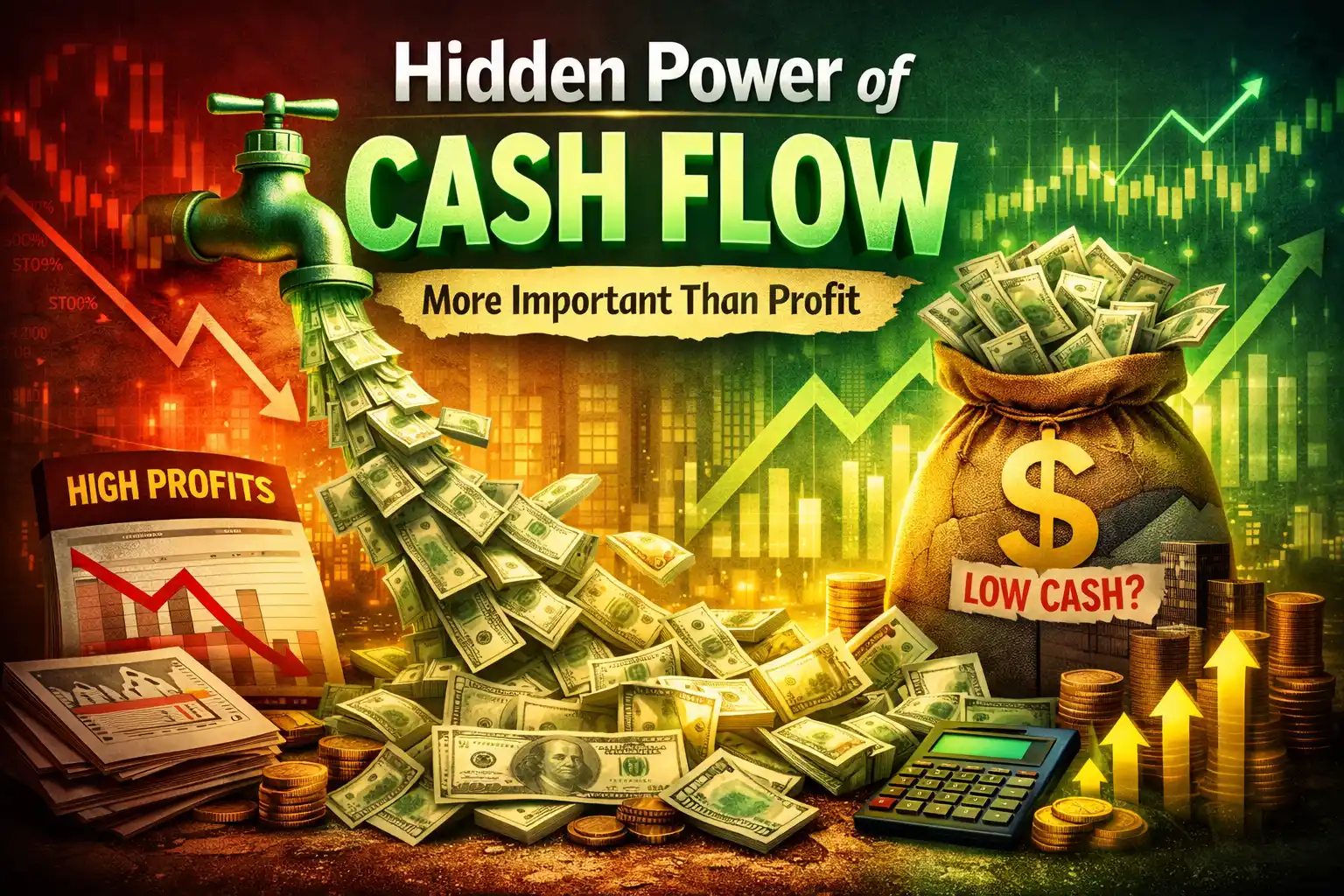
The reason is simple: profit is an accounting number, but cash flow is real money.
And in the world of business and stock markets, real money decides survival.
That’s why experienced investors quietly focus less on flashy profits and more on something far more powerful and hidden — Cash Flow.
“Profit is opinion, cash flow is fact.”
This article will reveal why cash flow is often more important than profit, how companies manipulate profits but not cash, and how smart investors use cash flow to avoid hidden traps.
Cash Flow vs Profit — The Fundamental Difference
🔹 What Is Profit?
Profit is calculated using accounting rules:
Revenue − Expenses = Profit
It includes:
- Credit sales (money not yet received)
- Non-cash items like depreciation
- Adjustments and assumptions
So profit can look strong even when cash is not coming in.
🔹 What Is Cash Flow?
Cash flow shows the actual movement of money:
- Cash coming into the business
- Cash going out of the business
No assumptions. No adjustments.
Just real money.
👉 A company can show high profit and still be short of cash — but no company can survive without cash.
Why Cash Flow Shows the Real Financial Health
Cash flow tells you whether a company can:
- Run daily operations smoothly
- Pay employees and suppliers on time
- Repay loans without stress
- Survive during bad market conditions
A profitable company with weak cash flow is like a luxury car without fuel — impressive to look at, but going nowhere.
The Three Types of Cash Flow (And What They Reveal)
Every cash flow statement is divided into three critical parts:
➤ A. Operating Cash Flow (OCF) — The Most Important
Cash generated from the core business.
✔ Positive OCF = business is healthy
❌ Negative OCF = warning sign
If a company cannot generate cash from its main operations, long-term sustainability becomes doubtful.
➤ B. Investing Cash Flow
Cash used for or generated from:
- Buying machinery
- Selling assets
- Long-term investments
Negative investing cash flow is not always bad — it may indicate expansion.
➤ C. Financing Cash Flow
Cash from:
- Loans
- Share issuance
- Dividend payments
High dependence on financing cash flow means the company is surviving on borrowed money, not business strength.
Example: Profit Looks Great, Cash Flow Tells the Truth
Company ABC Reports:
- Net Profit: ₹50 lakh (Looks impressive)
But Cash Flow Statement Shows:
- Operating Cash Flow: −₹20 lakh
- Investing Cash Flow: −₹30 lakh
- Financing Cash Flow: +₹15 lakh
Net Cash Flow: −₹35 lakh
👉 Conclusion:
Despite profits, the company is burning cash and relying on external funding.
For investors, this is a serious red flag.
Free Cash Flow (FCF) — The Investor’s Favorite Metric
Free Cash Flow is the cash left after running the business and maintaining assets.
📌 Formula:
Free Cash Flow = Operating Cash Flow − Capital Expenditure
Why FCF matters:
- Pays dividends
- Reduces debt
- Funds expansion
- Protects during downturns
A company with rising free cash flow has true financial strength.
How Companies Show Profit but Still Face Trouble
This happens due to:
- Heavy credit sales
- Delayed customer payments
- High inventory build-up
- Aggressive accounting practices
Profit may look good today, but cash arrives late or never.
That’s why many companies collapse despite being “profitable” on paper.
How Smart Investors Use Cash Flow Analysis
Instead of focusing only on EPS and net profit, smart investors check:
- Operating Cash Flow trend
- Free Cash Flow consistency
- Profit vs Cash Flow gap
- Cash flow growth over years
👉 Sustainable businesses show profits backed by strong cash flow.
The Ultimate Lesson
Profit can impress you.
Revenue can excite you.
But cash flow protects you.
In investing and business, profit tells a story — but cash flow reveals the truth.
🔥 Profit shows performance
💰 Cash flow shows survival, strength, and honesty
The smartest investors don’t chase headline profits.
They quietly follow the cash.
Because in the end:
Companies don’t fail due to lack of profit — they fail due to lack of cash.