

Before trading in Futures, it is extremely important to understand how a Futures contract is structured.
Many beginners enter Futures trading without knowing:
- What exactly is being traded
- Why contracts expire
- How lot size affects profit and loss
A Futures contract is not just a price bet—it is a standardized agreement defined by the exchange.
In this article, we will break down the three core components of a Futures contract:
- Underlying Asset
- Expiry Date
- Lot Size
Each part will be explained in simple language with practical examples.
Underlying Asset – What Are You Actually Trading?
The underlying asset is the base asset on which a Futures contract is created.
In Futures trading, you are not directly trading shares, but a contract that derives its value from an underlying asset.
Types of Underlying Assets
In the Indian stock market, Futures contracts are available on:
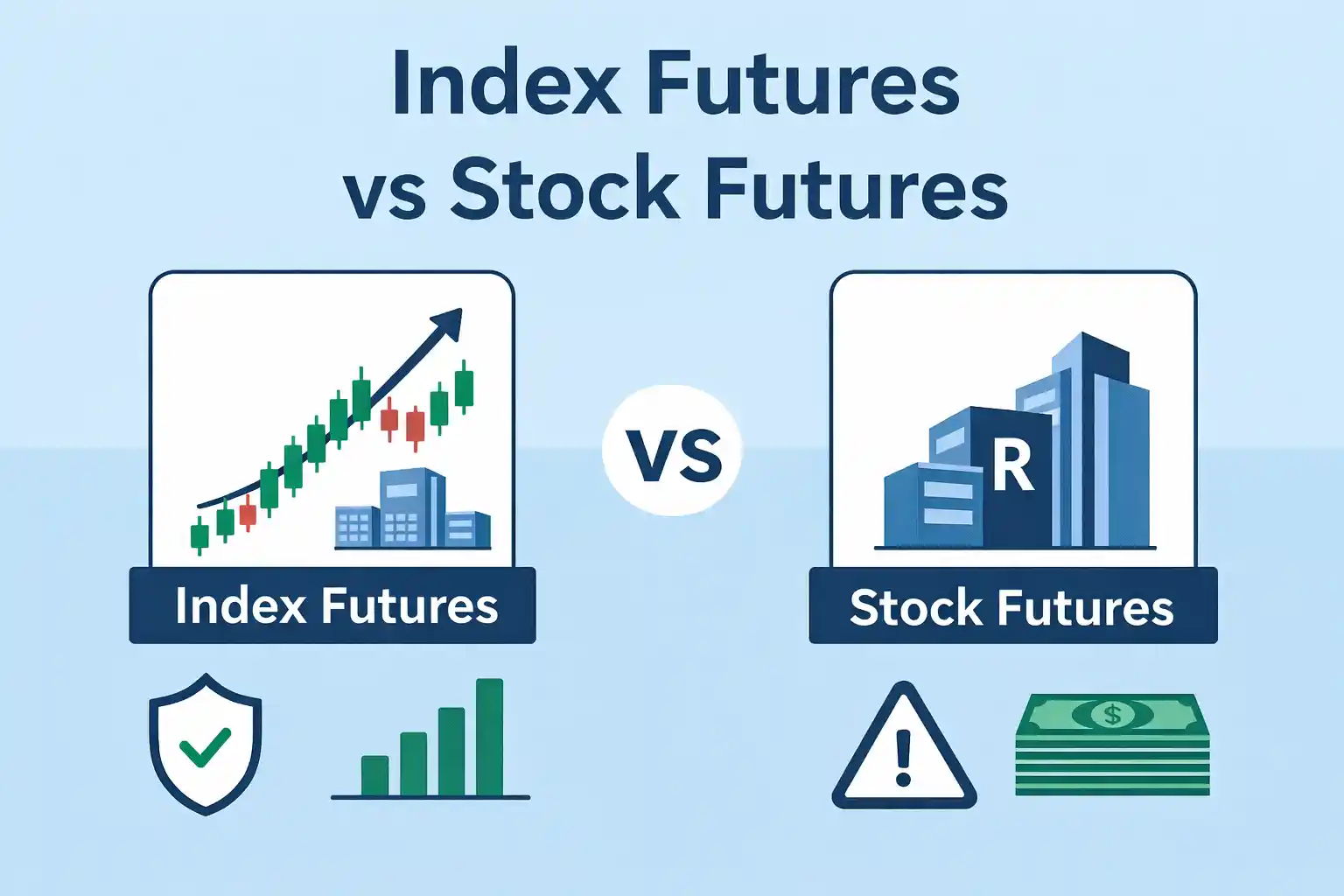
- Index Futures – Nifty 50, Bank Nifty, Fin Nifty
- Stock Futures – Reliance, TCS, Infosys, etc.
How Underlying Works
The price of a Futures contract moves almost in line with the underlying asset’s price.
Example:
- Reliance share price = ₹2,500
- Reliance Futures price ≈ ₹2,505
If Reliance shares rise, Reliance Futures also rise.
If shares fall, Futures price falls.
Why Underlying Is Important
Understanding the underlying helps traders:
- Track price movement
- Analyze fundamentals and technicals
- Predict Futures price behavior
👉 Key Point: Futures derive their value entirely from the underlying asset.
Expiry Date – Why Futures Are Time-Bound
Every Futures contract has a fixed expiry date, after which the contract becomes invalid.
In India, Futures contracts usually expire on the last Thursday of the month.
Types of Expiry
Most exchanges offer:
- Near-month contract (current month)
- Next-month contract
- Far-month contract
What Happens on Expiry
On expiry day:
- The contract is settled automatically
- Positions are squared off or cash-settled
- Traders must exit or roll over positions
Example:
- You buy Nifty Futures (March expiry)
- On last Thursday of March → contract expires
- If position is open, it is settled at closing price
Why Expiry Matters
Expiry affects:
- Liquidity
- Volatility
- Strategy selection
As expiry approaches, price movements often become more volatile.
👉 Key Point: Futures are not long-term investments; they are time-bound contracts.
Lot Size – The Fixed Trading Quantity
Lot size is the minimum quantity in which a Futures contract can be traded.
You cannot trade one share in Futures—you must trade in lots.
What Is Lot Size
Lot size is decided by the exchange and is fixed for each contract.
Examples:
- Nifty Futures lot size = 75 units
- Bank Nifty Futures lot size = 15 units
- Reliance Futures lot size = 250 shares
How Lot Size Impacts Profit & Loss
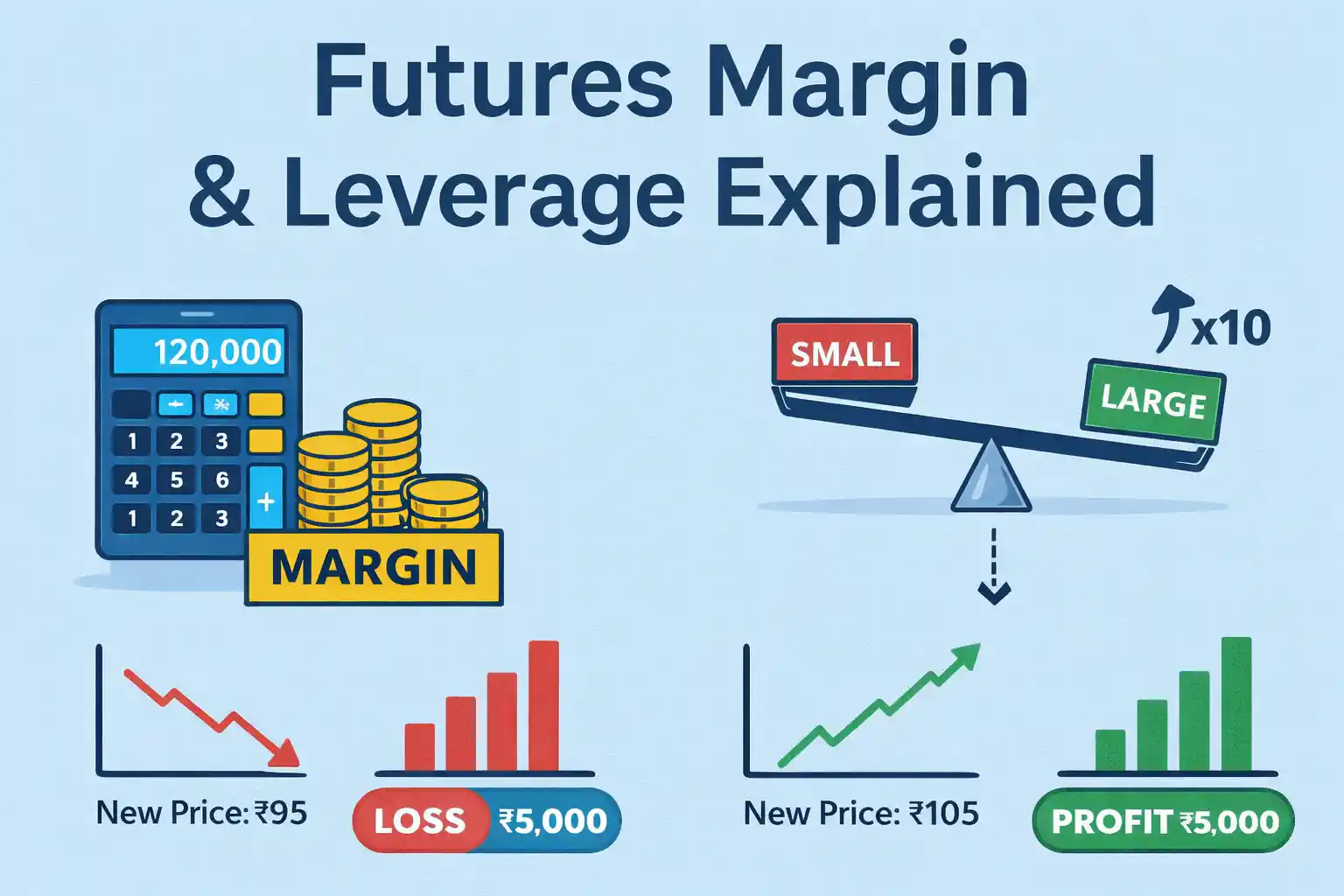
Profit and loss in Futures are calculated as:
(Price Change × Lot Size)
Example:
- Buy Nifty Futures at 20,000
- Sell at 20,100
- Price difference = 100 points
- Lot size = 75
- Profit = 100 × 75 = ₹7,500
Similarly, losses also increase with lot size.
Why Lot Size Is Important
Lot size determines:
- Capital required
- Risk exposure
- Position sizing
👉 Key Point: Bigger lot size = higher profit potential and higher risk.
How These Three Components Work Together
Let’s combine all three elements in one example.
Example:
- Underlying: Nifty 50
- Futures Price: 20,000
- Lot Size: 75
- Expiry: Last Thursday of the month
A 1-point move in Nifty results in:
₹75 profit or loss
This shows how small price movements can create large P&L in Futures.
Common Beginner Mistakes
Many beginners:
- Ignore lot size and take oversized positions
- Forget expiry dates
- Trade without tracking the underlying asset
Understanding the contract structure helps avoid these costly mistakes.
Strong Foundation for Futures Trading
A Futures contract is built on three pillars:
- Underlying asset – decides price movement
- Expiry date – defines time limit
- Lot size – decides risk and reward
Without understanding these, Futures trading becomes pure gambling.
With clarity, it becomes a structured and disciplined trading tool.
Master the structure first—strategies come later.

























































)
