
Futures and Options (F&O) trading attracts many traders because of high profit potential, but at the same time it carries significant risks.
Most beginners focus only on profits, but professional traders always understand both benefits and risks before entering F&O.
In this article, we will explain:
- Major benefits of F&O trading
- Key risks involved in Futures and Options
- Practical examples for better understanding
- Why risk awareness is more important than profit expectations
PART A – Benefits of F&O Trading
Leverage – Trade with Less Capital
One of the biggest advantages of F&O is leverage.
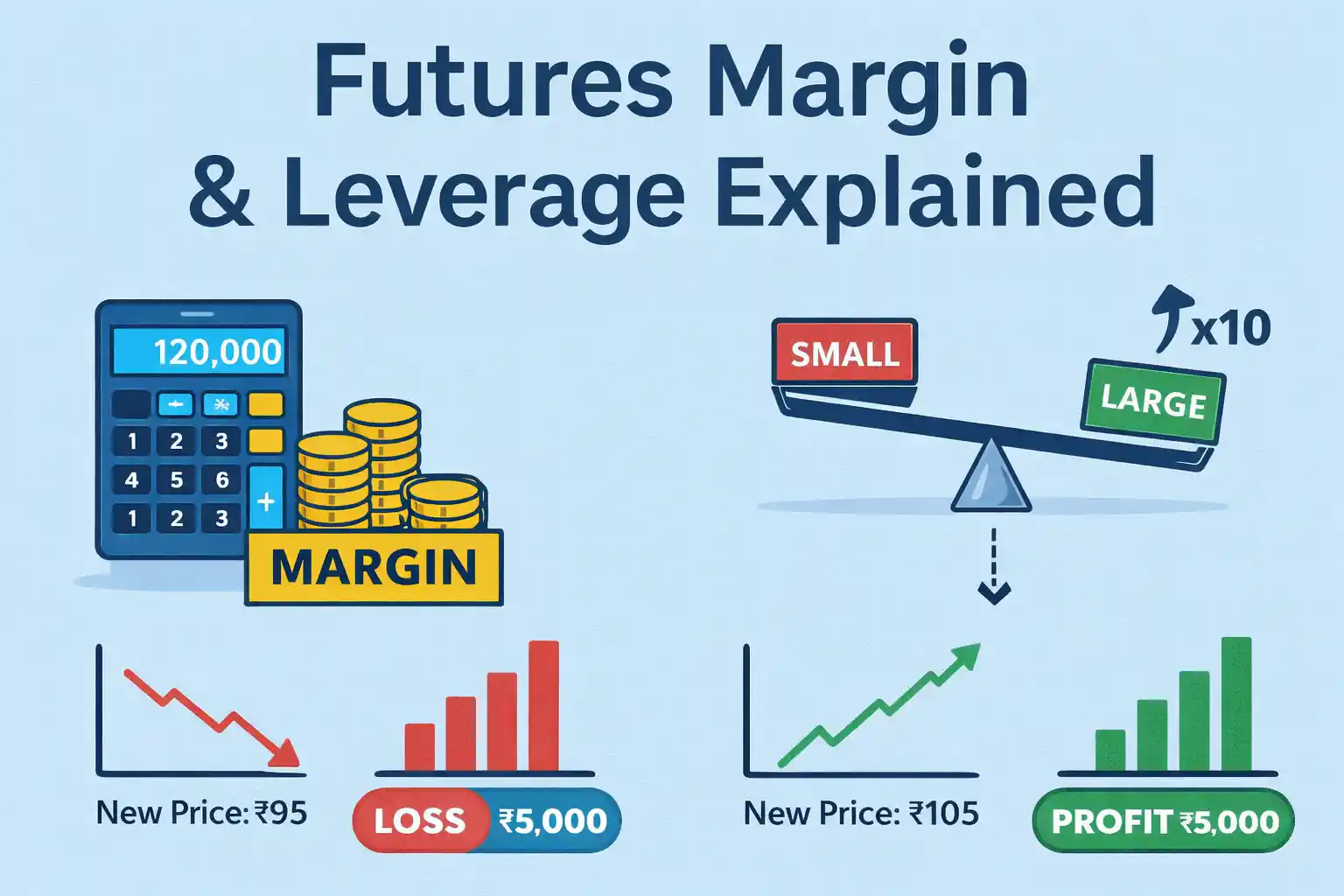
Leverage means you can control a large contract value with a small amount of money.
In Futures, you only pay margin, not full contract value.
In Options, buyers pay only premium.
Example:
- Nifty Futures contract value = ₹15,00,000
- Margin required = approx ₹1,50,000
This allows traders to take bigger positions with limited capital.
Why it’s a benefit:
Leverage increases profit potential if the market moves in your favor.
Hedging – Protecting Your Portfolio
F&O is widely used for hedging, which means reducing risk in your existing investments.
Investors use Futures or Options to protect their stock portfolio from market falls.
Example:
You own shares worth ₹5 lakh.
- Market falls sharply → Portfolio value drops
- Buying a Put Option can compensate for this loss
Why it’s a benefit:
Hedging helps in risk management and provides stability during market volatility.
Profit in Rising, Falling, and Sideways Markets
Unlike cash market, F&O allows you to make money even when markets fall or move sideways.
- Futures: Profit from both upward and downward moves
- Options: Profit using strategies even in sideways markets
Example:
- Falling market → Sell Futures or Buy Put
- Sideways market → Option strategies like Straddle or Iron Condor
Why it’s a benefit:
More trading opportunities in all market conditions.
High Liquidity and Transparency
Major F&O contracts (Nifty, Bank Nifty, large-cap stocks) have high liquidity.
This means:
- Easy entry and exit
- Narrow bid-ask spreads
- Fair pricing
Why it’s a benefit:
Liquidity ensures lower execution risk and smoother trading experience.
Standardized Contracts
All F&O contracts are standardized by the exchange.
This includes:
- Lot size
- Expiry date
- Strike prices
Why it’s a benefit:
Standardization reduces confusion and increases market transparency.
PART B – Risks of F&O Trading
High Risk Due to Leverage
While leverage increases profits, it also multiplies losses.
A small unfavorable market move can result in large losses.
Example:
- Futures position worth ₹15 lakh
- Market moves against you by just 2%
- Loss = ₹30,000+
Why it’s a risk:
Losses can exceed initial margin if not managed properly.
Unlimited Loss in Futures
In Futures trading, losses are theoretically unlimited because prices can keep moving against your position.
Example:
- You buy Futures
- Market crashes sharply
- Loss keeps increasing with every price fall
Why it’s a risk:
Without stop-loss and discipline, losses can become very large very fast.
Time Decay in Options
Options lose value as expiry approaches. This is called Time Decay (Theta).
Even if the market doesn’t move, option premium can reduce daily.
Example:
- You buy a Call Option
- Market stays flat
- Option price keeps falling
Why it’s a risk:
Option buyers can lose money even without wrong market direction.
Complexity and Emotional Trading
F&O trading involves:
- Greeks (Delta, Theta, Vega)
- Volatility
- Strategy selection
Beginners often trade without understanding, leading to emotional decisions.
Why it’s a risk:
Lack of knowledge and discipline leads to consistent losses.
Margin Calls and Forced Exit
In Futures, if losses increase and margin falls below required level, brokers issue a margin call.
If not fulfilled, positions may be forcefully squared off.
Why it’s a risk:
Sudden market moves can cause unexpected exits and losses.
Benefits vs Risks – Quick Comparison
| Aspect | Benefits | Risks |
| Leverage | Higher profit potential | Higher losses |
| Hedging | Portfolio protection | Cost of premium |
| Market Direction | Profit in all conditions | Wrong view = loss |
| Capital | Low initial capital | Margin calls |
| Flexibility | Advanced strategies | High complexity |
Balanced View on F&O
F&O trading is a powerful financial tool, not a shortcut to easy money.
- Benefits: Leverage, hedging, flexibility, liquidity
- Risks: High losses, time decay, emotional trading
Final Advice:
F&O is best suited for traders who understand risk management, discipline, and position sizing.
Beginners should learn step by step, start small, and never ignore risks.
































































)
