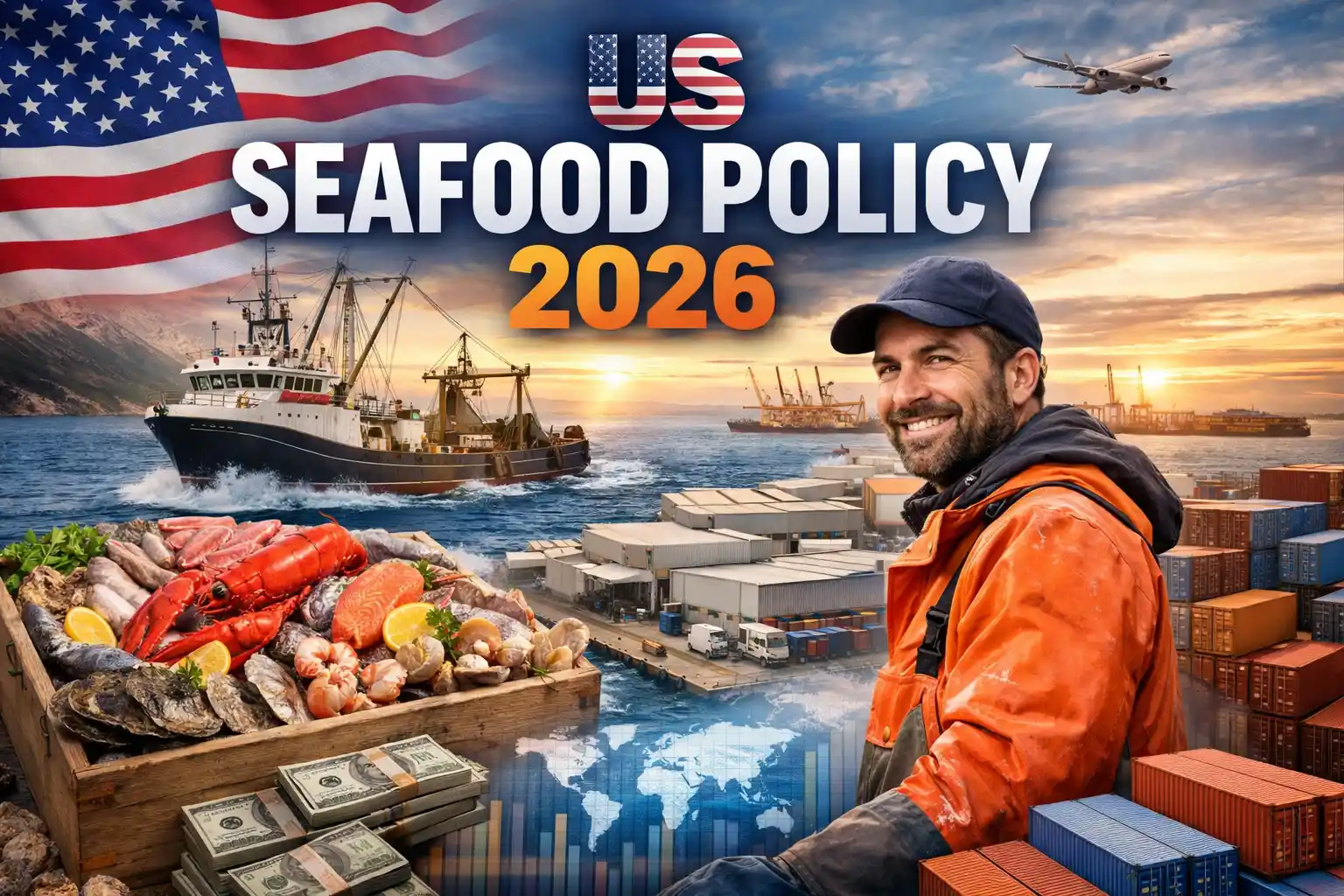
The United States has taken a major strategic step to reshape its seafood industry. The U.S. Department of Agriculture (USDA) has officially launched the “Office of Seafood,” aimed at providing agriculture-level support to the fisheries sector.
This marks the first time the US government is extending such structured and institutional backing to the seafood industry. The move is expected to directly impact fishermen, seafood companies, exporters, and coastal economies.
Policy Highlights: What Will Change?
This seafood policy is not just an announcement—it is a multi-layer reform:
Financial Support System
- Low-interest loans for fishermen
- Government-backed subsidies
- Risk management programs (insurance, disaster relief)
This will reduce financial uncertainty in the fishing business
Supply Chain & Infrastructure Development
- Expansion of cold storage networks
- Modernization of seafood processing units
- Improved transportation and logistics
This will reduce wastage and improve profitability
Export Promotion Strategy
- Aggressive promotion of US seafood in global markets
- Improved certification and quality standards
- Launch of trade support programs
Strong focus on boosting export revenue
Data & Market Intelligence
- Development of production tracking systems
- Better market demand and pricing data
- Data-driven policy decisions
This will bring transparency and efficiency to the industry
Strategic Objectives of the Policy
This policy focuses on long-term transformation, not just short-term support:
1. Strengthening Food Security
The US currently depends heavily on seafood imports
The goal is to increase domestic production
2. Providing Economic Stability to Fishermen
The fishing industry faces high risks:
- Weather dependency
- Fuel costs
- Price fluctuations
Government support will help stabilize incomes
3. Reviving Coastal Economies
Regions like Alaska, Maine, and the Gulf Coast heavily depend on fisheries
This policy will boost employment, local businesses, and infrastructure
Economic Impact Analysis
Short-Term Impact
- Immediate financial relief for fishermen
- Increased confidence in the industry
- Potential rise in private investments
Long-Term Impact
- Significant growth in US seafood exports
- Reduced import dependency
- Increased contribution of fisheries to GDP
Business & Industry Perspective
This policy will benefit multiple sectors, both directly and indirectly:
Direct Beneficiaries:
- Fisheries companies
- Seafood exporters
- Processing units
Indirect Beneficiaries:
- Cold storage companies
- Logistics and shipping sector
- Packaging industry
This policy will strengthen the entire ecosystem
Global Market Impact
The global seafood market already has strong players such as:
- China
- Norway
This US policy is expected to intensify competition
It may reshape international trade dynamics
Emerging exporters like India and Vietnam could face pressure
Challenges & Risks
Like any major reform, this policy also faces challenges:
1. Implementation Challenges
Setting up a new department and executing policies will take time
2. Environmental Risks
- Overfishing
- Climate change
- Impact on ocean ecosystems
3. Global Competition
Competing with established exporters will not be easy
Final Analysis
This policy is not just about fisheries—it represents a strategic economic shift for the United States.
In simple terms:
“The US is now treating the seafood industry with the same importance as agriculture to turn it into a long-term growth engine.”
If implemented effectively:
- Fishermen’s incomes will improve
- Coastal economies will strengthen
- The US could emerge as a major player in the global seafood market
Source: usda