As the Indian rupee continues to face pressure against the US dollar, the Reserve Bank of India (RBI) has moved into action mode to prevent stress in the financial system. Since January 20, 2026, the central bank has taken a series of carefully calibrated steps aimed not at defending a specific rupee level, but at ensuring liquidity stability, orderly markets, and smooth functioning of the banking system.
With the rupee hovering near ₹91–92 per dollar, foreign investor outflows rising, and dollar demand remaining strong, RBI’s challenge has been twofold:
manage currency volatility without choking liquidity, and protect credit flow without triggering panic.
So far, RBI’s approach has been measured, tactical, and focused on confidence rather than shock treatment.
Why RBI Had to Act: The Background
By mid-January, several pressure points began to converge:
- The rupee weakened sharply against the dollar
- Foreign portfolio investors (FPIs) stepped up selling
- RBI intervened in the spot forex market by selling dollars
- Dollar sales drained rupee liquidity from the banking system
If left unaddressed, this could have led to:
- Tight liquidity for banks
- Higher borrowing costs
- Slower credit growth
- Increased volatility in equity and bond markets
To prevent this chain reaction, RBI stepped in with liquidity-focused tools rather than interest-rate changes.
RBI Uses FX Swaps to Ease Liquidity Stress
What RBI did
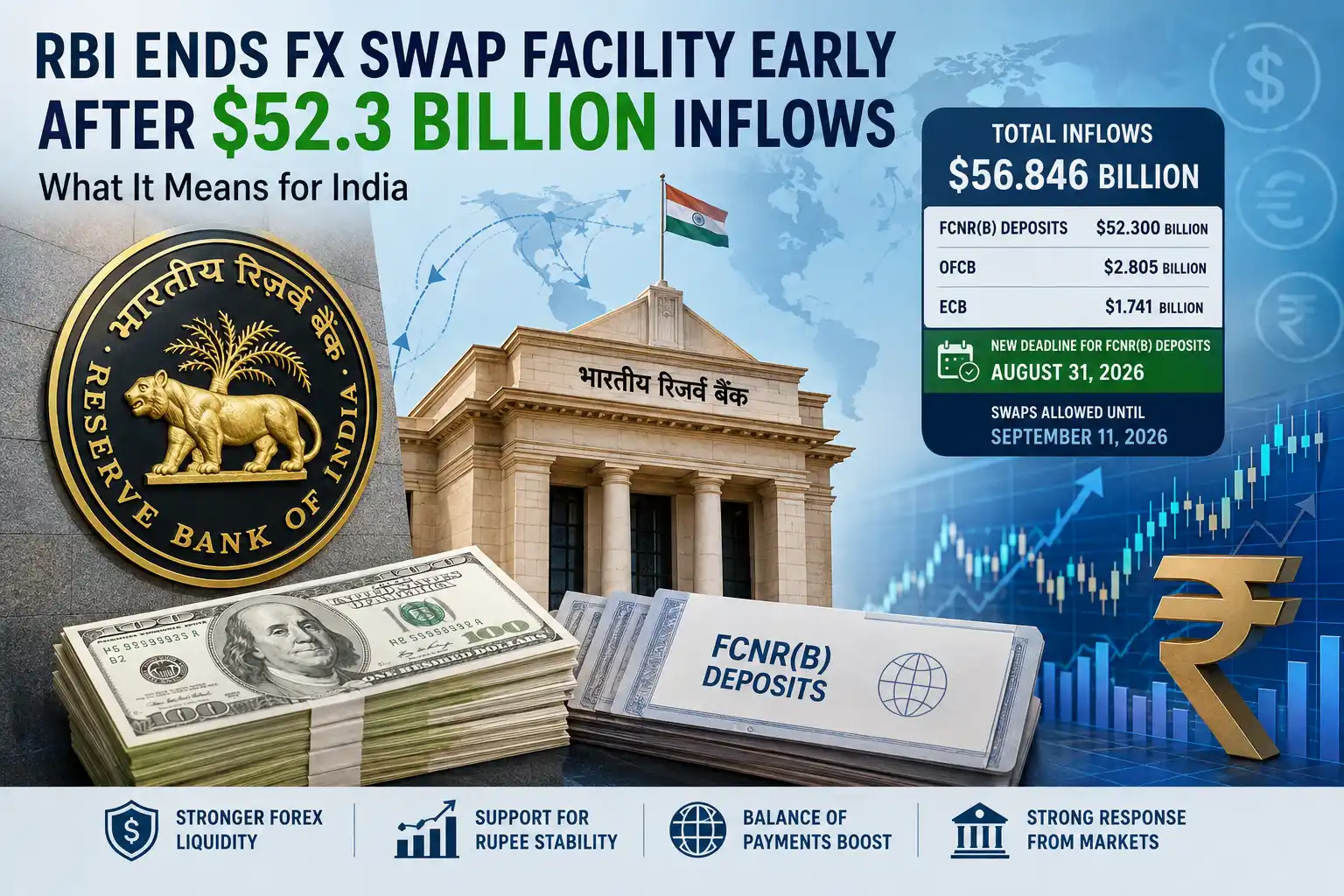
RBI conducted USD/INR buy–sell FX swaps worth over $2 billion.
What this means
- Banks sold dollars to RBI in the spot market
- RBI provided rupee liquidity to banks
- The transaction will be reversed at a future date
Why this step mattered
When RBI sells dollars in the spot market to support the rupee, it absorbs rupees from the system. FX swaps help neutralize this liquidity drain without altering policy rates.
Example
If a bank suddenly finds its lending capacity reduced due to tight liquidity, an FX swap allows RBI to inject cash quickly, ensuring loan disbursements continue smoothly.
RBI Signals a Strong Liquidity Backstop
What RBI indicated
RBI signaled that it was ready to inject more than ₹2 trillion into the banking system using multiple tools.
Why this signal was important
This communication alone acted as a confidence booster:
- Banks were reassured that liquidity would not tighten sharply
- Bond markets stabilized
- Panic-driven speculation eased
The message was clear: liquidity stress would not be allowed to escalate.
Short-Term Support Through VRR Operations
What RBI did
RBI announced 90-day Variable Rate Repo (VRR) operations.
What VRR does
- Provides short-term funds to banks
- Interest rate is market-determined
- Helps manage temporary cash mismatches
Example
If a bank needs funds for the next two to three months to support lending or meet regulatory requirements, VRR provides immediate access without forcing a hike in loan rates.
What RBI Is Expected to Do Next ?
What RBI plans
RBI has indicated it will conduct a $10 billion USD/INR buy–sell swap, likely with a three-year tenor.
Why this is significant
- This is a medium-to-long-term liquidity measure
- It reassures banks about future funding availability
- It supports currency stability without draining forex reserves abruptly
What this signals
RBI is preparing a longer-term liquidity cushion, not just firefighting short-term stress.
Impact on the Banking Sector
RBI’s actions have ensured:
- Adequate liquidity with banks
- No disruption in loan disbursement
- Continued credit growth momentum
Example
Without these steps, banks may have tightened lending norms for home loans, MSMEs, and businesses. RBI’s interventions helped avoid that outcome.
Impact on Bond Markets and Interest Rates
- Liquidity infusion increases demand for government bonds
- Bond prices rise, yields soften
- Borrowing costs for the government and corporates remain under control
This helps maintain financial stability at a time of global uncertainty.
Impact on the Rupee and Forex Markets
- RBI is not defending any fixed rupee level
- It is preventing sharp, disorderly moves
- Volatility has been reduced, not eliminated
In short, the rupee may remain weak, but a free fall scenario is being actively avoided.
Impact on Equity Markets
- Systemic risk perception has declined
- Banking and rate-sensitive stocks benefit from liquidity support
- Short-term volatility may persist due to global factors
For long-term investors, RBI’s actions act as a stability signal rather than a warning sign.
Broader Economic Impact
- Credit flow remains intact
- Financial system stability preserved
- Growth momentum protected
- No immediate liquidity-driven slowdown
By focusing on liquidity rather than rates, RBI has avoided choking economic activity.
RBI’s Strategy in One Line
From January 20 onward, RBI has made one thing clear:
it will manage volatility, protect liquidity, and maintain confidence—without fighting the market’s natural direction.
The central bank’s approach can be summed up as:
Stability over shock, liquidity over panic, and management over reaction.
The effectiveness of the upcoming proposed measures, including the February 4 swap, will determine how durable this stability remains in the weeks ahead.
Source: RBI Press