India is taking a decisive step toward becoming a global clean energy exporter with the development of a massive Green Ammonia unit in Kakinada, Andhra Pradesh. This landmark project is being seen as one of the most important clean-energy investments in India and a major milestone in the country’s transition toward a low-carbon economy.
With rising global demand for green fuels, the Kakinada project positions India at the center of the future green ammonia and green hydrogen supply chain.
Construction Gains Momentum
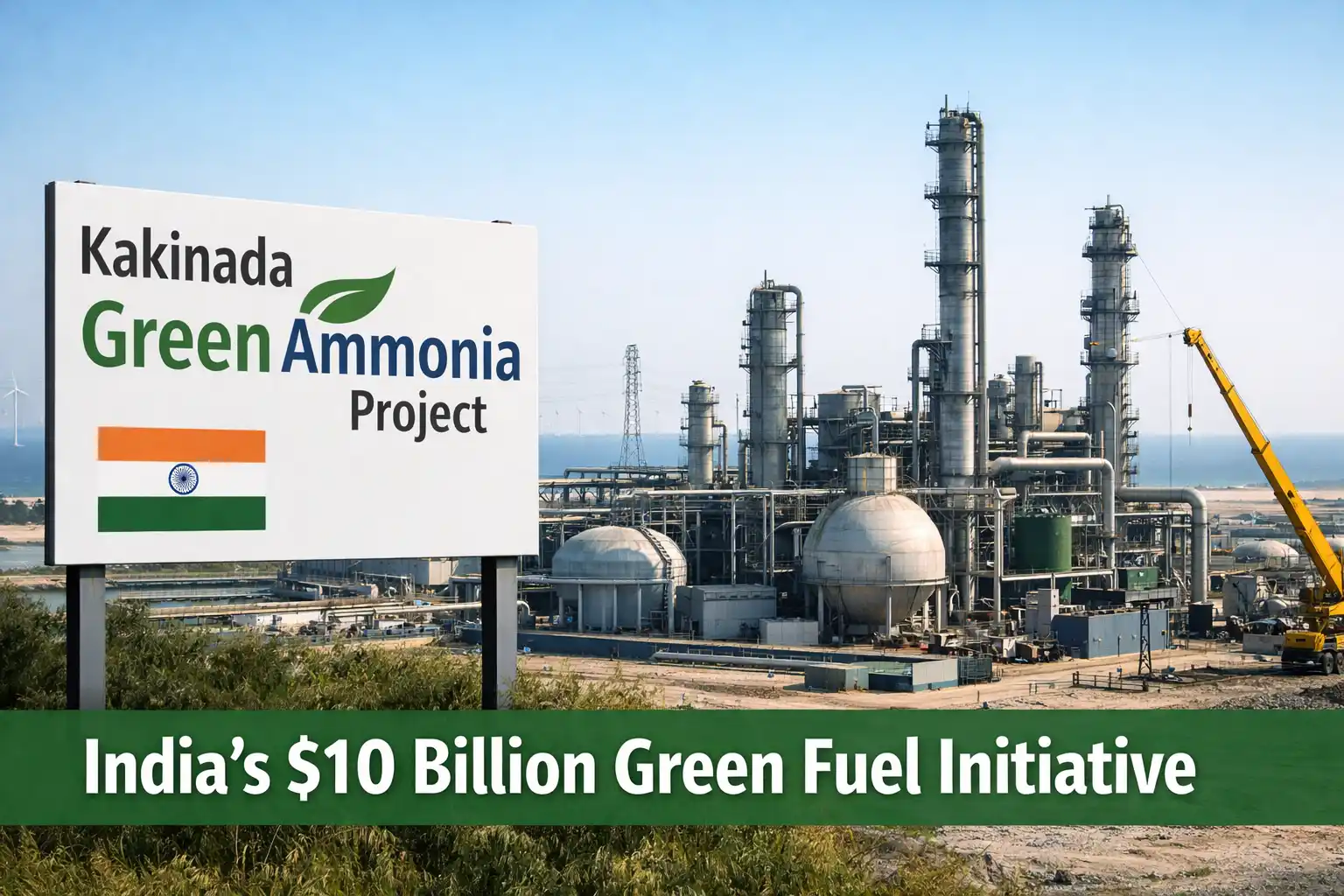
The construction of the Green Ammonia project in Kakinada has officially begun after the foundation stone ceremony conducted by the Andhra Pradesh government. The project involves an estimated investment of $10 billion (around ₹90,000 crore), making it one of the largest green energy investments ever made in India.
State officials have highlighted that this project will transform Kakinada into a global clean energy export hub, attracting international attention and long-term foreign investment.
What Is Green Ammonia and Why Is It Important?
Green ammonia is produced using green hydrogen, which is generated through renewable electricity such as solar and wind power. Unlike conventional ammonia, it does not rely on coal, oil, or natural gas.
Key advantages of green ammonia:
- Near-zero carbon emissions
- Cleaner alternative for fertilizers
- Potential fuel for shipping and power generation
- Easy storage and transport compared to hydrogen
As industries worldwide look to reduce carbon emissions, green ammonia is emerging as a critical fuel of the future.
Inside the Kakinada Green Ammonia Project
The Kakinada facility is designed as an integrated green energy complex, bringing multiple clean-energy processes together at one location.
The project will include:
- Large-scale green hydrogen production
- Green ammonia synthesis units
- Renewable power generation (solar and wind)
- Storage facilities and export infrastructure
An existing fertilizer plant is being converted into a modern green ammonia unit, ensuring efficient use of land and infrastructure.
Strong Export Focus, Europe as a Key Market
A major highlight of the Kakinada project is its export-oriented strategy. European countries are rapidly moving away from fossil fuels and are actively seeking long-term supplies of clean energy.
In a major development:
- Germany-based energy company Uniper has signed a long-term offtake agreement
- The deal includes the purchase of 500,000 tonnes of green ammonia per year
- The first export shipments are expected to begin around 2028
This agreement underscores the growing global trust in India’s clean-energy capabilities.
Company Profile: AM Green
The project is being developed by AM Green, a clean-energy company backed by the founders of Greenko Group, one of India’s leading renewable energy players.
About AM Green:
- Focus areas: Green hydrogen and green ammonia
- Vision: Make India a global exporter of green fuels
- Strategy: Large-scale projects with international technology partners
AM Green aims to develop multiple green fuel projects across India over the coming decade.
Capacity, Investment and Timeline
Project highlights:
- Total capacity: 1.5 million tonnes per year
- Phase 1: 0.5 MTPA by 2027
- Phase 2: 1.0 MTPA by 2028
- Full capacity: By 2030
Investment & jobs:
- Total investment: ₹90,000+ crore
- Employment generation: 8,000+ direct and indirect jobs
- Significant boost to local infrastructure and logistics
Why This Project Matters for India
✔ Strengthens India’s National Green Hydrogen Mission
✔ Reduces dependence on fossil fuel imports
✔ Generates long-term foreign exchange through exports
✔ Positions Andhra Pradesh as a clean-energy manufacturing hub
✔ Supports India’s climate and net-zero commitments
The Bigger Picture
The Kakinada Green Ammonia project signals a major shift in India’s energy strategy. It shows that India is moving beyond domestic renewable power generation to become a global supplier of next-generation clean fuels.
As global industries transition toward decarbonisation, projects like this will play a crucial role in shaping the future energy economy.
Bottom Line
The Green Ammonia unit in Kakinada is more than just an industrial project—it represents India’s ambition to lead the global clean-energy revolution. Once operational, it will firmly place India on the world map as a reliable, large-scale supplier of green fuels.
Source: AM Green official press release (January 12, 2026), along with recent media coverage