The Indian government has delivered a major shock to the tobacco and cigarette industry at the start of the new year by announcing a sharp increase in excise duty on cigarettes. The revised tax structure will come into effect from February 1, 2026.
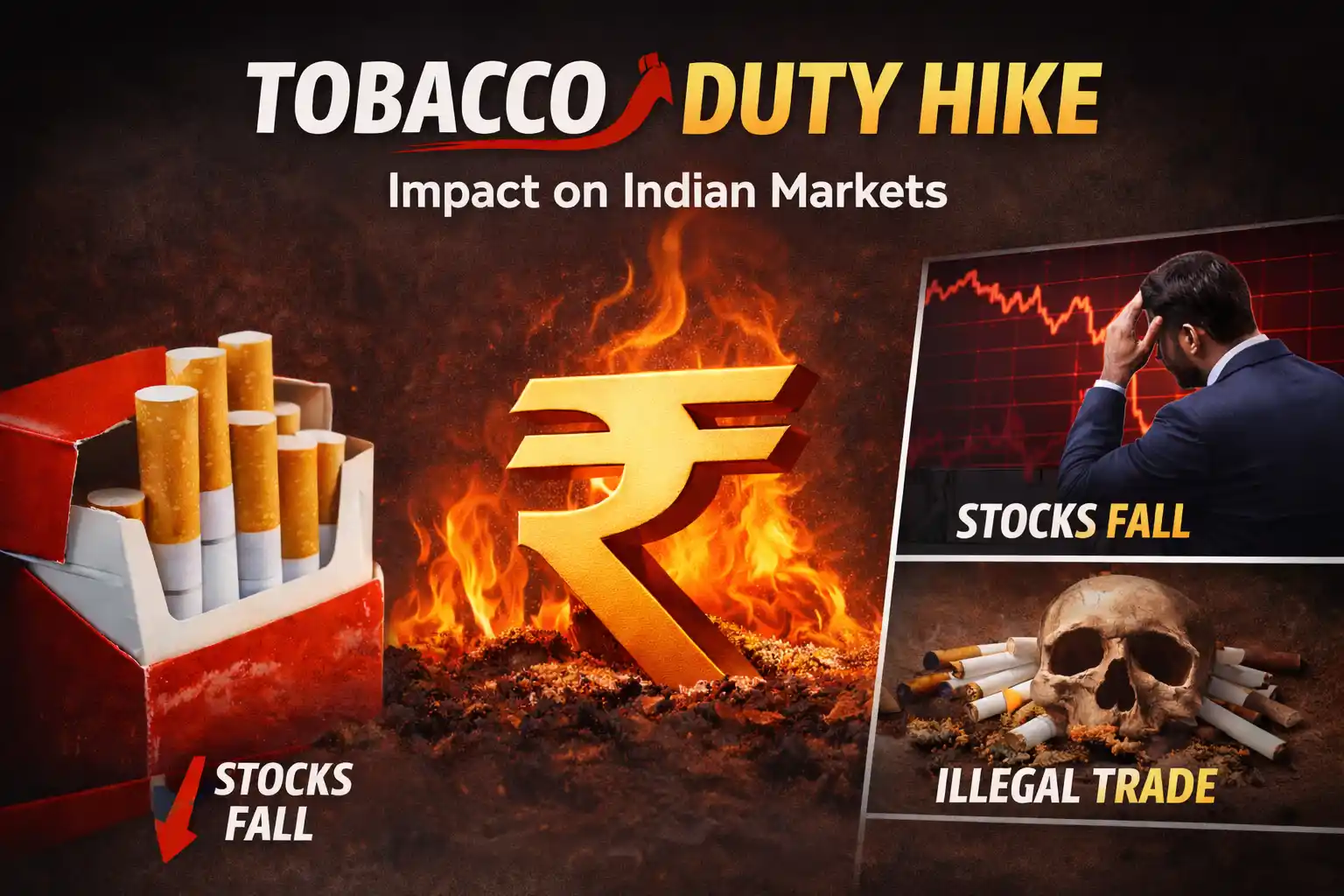
The move has triggered a strong reaction across markets, with tobacco stocks falling sharply, investors losing billions, and farmers and industry bodies raising serious concerns.
What Is the Latest Decision?
The government has overhauled the taxation structure on cigarettes by:
- Reintroducing central excise duty on cigarettes
- Continuing the 40% Goods and Services Tax (GST)
- Keeping additional cesses in place
With excise duty added back on top of GST, the overall tax burden on cigarettes has increased significantly. The duty varies depending on the length and category of cigarettes, impacting both mass-market and premium segments.
How Much More Will Cigarettes Cost?
According to market estimates:
- Cigarette prices may rise by 15% to 40%
- A cigarette currently priced at ₹18 may cost ₹21–₹22 or more
- Premium cigarette brands are expected to see even steeper price hikes
This means smoking will become substantially more expensive for consumers across income groups.
Why Has the Government Increased Tobacco Duty?
The government has cited two key reasons:
✅ Public Health Priority
Tobacco consumption is linked to serious health issues. Higher taxes are intended to discourage smoking and reduce long-term healthcare costs.
✅ Revenue Stability
The earlier GST compensation cess framework has been modified. The reintroduction of excise duty aims to maintain government revenue without disrupting the tax system.
However, the sudden and steep nature of the hike has surprised markets and the industry.
Stock Market Reaction: Heavy Selling in Tobacco Shares
The announcement led to intense selling pressure in tobacco-related stocks.
📌 ITC Takes the Biggest Hit
- ITC shares fell 9%–14%, marking one of their steepest declines in nearly six years
- Investors rushed to factor in lower cigarette volumes and margin pressure
📌 LIC Suffers Massive Losses
- Life Insurance Corporation (LIC), a major shareholder in ITC, reportedly lost around ₹10,445 crore in market value within two days
📌 Brokerages Turn Cautious
- Several brokerages downgraded ITC’s rating
- Analysts warned of declining cigarette demand, weaker earnings growth, and pressure on cash flows
Company Profile: ITC Limited
ITC Limited is one of India’s largest and most diversified conglomerates.
- Market leader in cigarettes with brands like Gold Flake, Classic, and Navy Cut
- Strong presence in FMCG, hotels, paperboards, and agri-business
- Cigarettes remain ITC’s most profitable segment, funding expansion into non-tobacco businesses
Despite diversification, the cigarette business still plays a critical role in ITC’s profitability, making the tax hike a major concern.
Tobacco Farmers Voice Strong Opposition
The duty hike has sparked protests among tobacco farmers, especially in Andhra Pradesh and Karnataka.
Farmers argue that:
- Higher taxes will reduce cigarette consumption
- Tobacco procurement by companies may decline
- Farm incomes will come under severe pressure
They have urged the government to reconsider or roll back the decision to protect livelihoods.
Industry Warning: Risk of Illegal Cigarette Trade
Tobacco industry bodies have warned that:
- Excessive taxation could lead to a surge in illegal and smuggled cigarettes
- Government revenue may decline instead of increasing
- Similar outcomes were seen during earlier periods of steep tax hikes
The industry has called for a balanced tax policy rather than sudden increases.
Impact on Consumers
For consumers, the impact will be immediate:
- Cigarettes will become significantly more expensive
- Lower-income smokers will be hit hardest
- Availability of cheaper, unregulated cigarettes may increase
While the government expects health benefits, market participants caution about unintended consequences.
Outcome
The government’s decision to raise tobacco duty marks a major policy shift aimed at improving public health and stabilizing tax revenue. However, its immediate impact has been visible across:
- Stock markets
- Large institutional investors
- Tobacco companies
- Farmers and consumers
As the new tax structure comes into force in February, the coming months will reveal whether the policy successfully reduces tobacco consumption—or whether economic and market pressures force a rethink.
Source: PIB