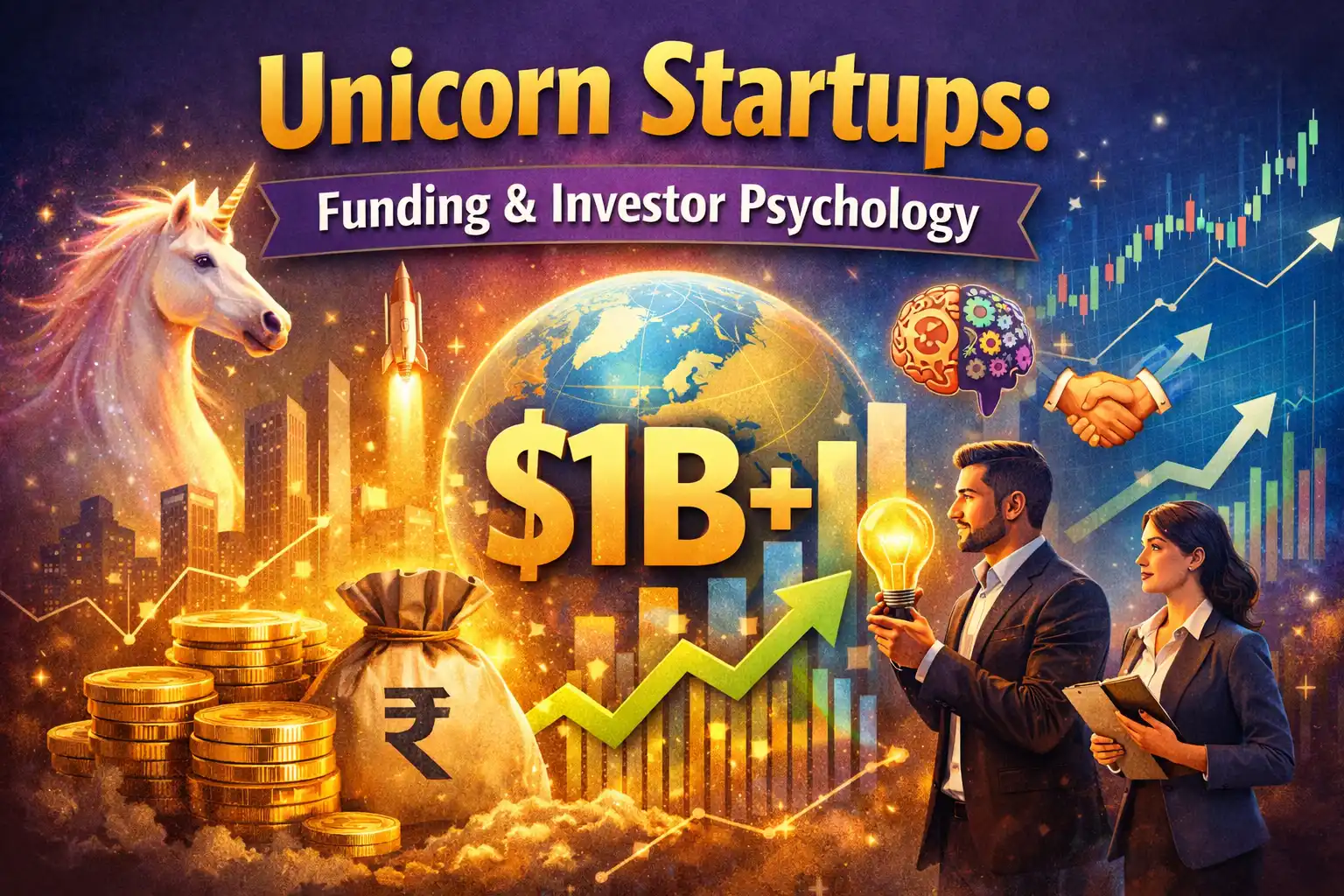
Imagine you are the founder of a startup with a vision so powerful that big companies and investors are willing to invest millions of dollars in it. These are the Unicorn startups — private companies valued at over $1 billion (approximately ₹8,000 crore). But becoming a Unicorn isn’t just about raising money. It’s a strategic game where the founder’s vision, market understanding, and investor psychology play a huge role.
In this article, you will learn:
✔ How Unicorn startups raise funding — from seed stage to large rounds
✔ The secrets of investor psychology that give companies their high valuations
✔ A real Indian example — Zepto’s journey to becoming a Unicorn
✔ The myths and realities behind Unicorn status
This article provides rare and fascinating insights into how Unicorn startups operate, their growth strategies, and how they leverage investor behavior — knowledge most people rarely see.
What Makes a Unicorn Startup?
A Unicorn startup is a private company valued at over $1 billion. This happens when investors trust not only the company’s current revenue but also its future growth potential and vision.
🔹 For example, Zepto raised $200 million in August 2023, reaching a valuation of $1.4 billion, making it India’s first Unicorn of the year.
Funding at this stage is more than money — it’s a vote of confidence that the startup can achieve massive growth in the future.
Fundraising Stages — From Seed to Unicorn
Before becoming a Unicorn, startups usually go through several fundraising stages:
🔹 Pre-seed / Seed
- Early stage funding for building a product or prototype.
- Investors: Angel investors and small venture funds.
- Goal: Show a working MVP and initial market interest.
🔹 Series A / B / C …
- As the startup gains traction, larger VCs and institutional investors participate.
- Each round increases the company’s valuation as investors anticipate future growth = higher returns.
📌 Zepto’s journey reflects this: from small initial funding to Series E, it achieved a $1.4 billion valuation.
Investor Psychology — The Mind Behind Unicorn Valuation
Unicorn funding is not just about numbers — investors value insight, psychology, and belief:
🟣 Vision over Present Profits
Investors focus on future potential, not just current profits.
🟣 Traction & Growth
A growing user base and market demand attract investor attention.
🟣 Storytelling Skills
Founders who clearly articulate their vision can easily gain investor trust.
These factors often matter more than financial metrics in achieving Unicorn valuation.
Zepto — A Real Unicorn Case Study
Zepto is an Indian quick-commerce startup delivering groceries and essentials in 10 minutes.
🔹 In Series E, Zepto raised $200M, reaching a $1.4B valuation, becoming India’s first Unicorn of 2023.
Lessons from Zepto’s journey:
✔ Fast execution and operational discipline build investor trust.
✔ Funding supports growth, technology improvements, and supply chain scaling, not just marketing.
This shows that vision + execution + traction are the engines of Unicorn success.
Unicorn Bubble — Myth or Reality?
Not every Unicorn has a sustainable business model. Experts argue that some valuations are overinflated, meaning investors fund hype rather than fundamentals, creating a potential “Unicorn bubble.”
Founders and investors need to focus on realistic growth plans and unit economics to avoid risks.
Key Takeaways for Becoming a Unicorn
✔ Unicorn status is a signal of confidence, not just big money.
✔ Investor psychology values vision + traction above all.
✔ Funding rounds are opportunities for learning and scaling, not just raising cash.
✔ Real-world case studies, like Zepto, show how vision translates into execution.
The Power of Unicorn Startups
Becoming a Unicorn is not just about achieving a $1B valuation — it’s about validating your vision, earning investor belief, and resonating with the market. Unicorn startups prove that with the right purpose, clear execution strategy, and market demand, you can redefine industry standards.
Every investment is a story of trust, and every Unicorn hides an inspiring founder journey. This article aimed to provide those rare insights — showing that building a Unicorn is as much about strategy and psychology as it is about money.