The biggest truth of the stock market that most investors ignore
Every new investor enters the stock market with one common question:
“Will the market go up or down next?”
Turn on the TV or open social media and you’ll hear:
- “Nifty will touch 25,000”
- “A big market crash is coming”
- “This stock will double soon”
We listen to these predictions, feel confident, and invest our money.
But suddenly, the market moves in the opposite direction.
Then a painful question hits us:
“If predicting the market was so easy, why do even experts get it wrong?”
This is where one powerful idea changes everything:
👉 Successful investors don’t try to predict the market — they react to it.
The Biggest Problem with Market Prediction
Prediction means believing that the future is fixed.
But the stock market is:
- Not just numbers
- Not just logic
- A reflection of human emotions
And emotions change without warning.
❌ Why predictions usually fail:
- Unexpected news breaks
- Government policies change
- Global events like wars, interest rates, or crude prices impact markets
- Big institutional players suddenly change direction
👉 In short, the future is never certain in the market.
Real-Life Market Example
In 2020, most people believed:
“The market will not recover for many years.”
But within months, the market hit new all-time highs.
- Those who waited for predictions to come true missed the rally.
- Those who reacted to what the market was actually doing made money.
The difference was not knowledge — it was approach.
What Does “Reacting to the Market” Mean?
Reacting means:
- Accepting what the market is showing right now
- Putting ego aside
- Following price action instead of opinions
Simply put:
❌ “I think the market should go up”
✅ “The market is going up, so I’ll go with it”
Prediction vs Reaction (Simple Comparison)
| Prediction | Reaction |
| Opinion-based | Data-based |
| Ego-driven | Discipline-driven |
| Hold losses hoping to be right | Exit quickly when wrong |
| Depends on news | Depends on price & trend |
What the Market Is Always Telling Us
The market constantly sends signals:
- Rising prices → strong demand
- Falling prices → excess supply
- Rising volume → big money involvement
👉 The market never lies — our interpretation often does.
Example: The Prediction Trap
Imagine this situation:
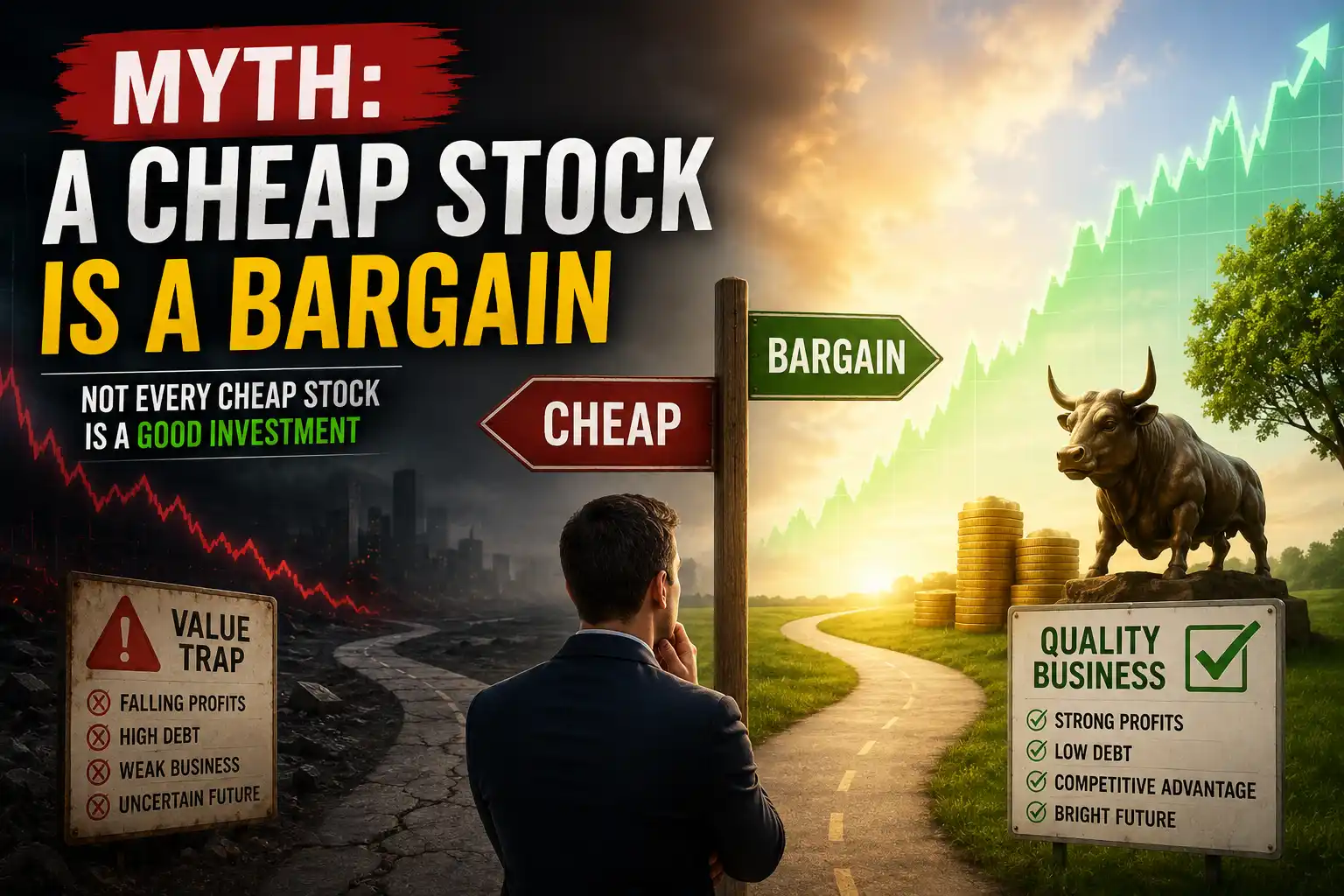
- You believe a stock is “very cheap”
- You buy it
- The stock falls further
Your mind says:
“Now it’s even cheaper, let me buy more.”
But the market is actually saying:
“Something is wrong.”
This is the danger of prediction —
you trust your opinion more than the market’s message.
🔔 How a Reaction-Based Investor Thinks
A reaction-based investor:
- Waits when prices fall
- Enters only after confirmation
- Exits quickly if proven wrong
- Holds positions only while the trend supports them
👉 Their goal is not to look smart, but to protect capital.
Trend Following Is Not Prediction
Many people think:
“Following trends is also predicting the future.”
It’s not.
Trend following means:
- Staying with the current direction
- Riding the move as long as it lasts
- Exiting when the trend breaks
This is not guessing the future —
it’s accepting the present.
Psychological Advantage of Reacting
Investors who react instead of predict:
- Experience less stress
- Accept losses quickly
- Avoid overconfidence
- Survive longer in the market
Those who predict:
- Stay emotionally attached
- Feel constant pressure
- Struggle with ego
- Slowly lose capital
Does Prediction Ever Work?
Yes — sometimes predictions work.
But market success is not about being right once.
It’s about being right consistently.
And consistency comes from reaction, not prediction.
Practical Takeaways for Readers
- Focus more on price, less on news
- Follow systems, not opinions
- Reduce the use of “I think”
- Pay attention to “What the market is showing”
🧨 Outcome
The stock market is like an ocean.
Those who keep predicting the direction of the wind often sink.
But those who adjust their sails according to the waves
travel far and survive long.
👉 To succeed in the market, don’t try to fight it.
👉 Understand it. Respect it. React to it.
Because in the stock market:
You don’t need to know the future —
you just need to handle the present correctly.