Imagine a world where we don’t depend on coal, oil, or even sunlight to generate electricity.
What if we could produce clean, stable power 24×7 directly from the heat stored deep inside the Earth?
That promise is driving Next-Generation Geothermal Energy — a technology that could reshape the global energy system after 2030.
What Is Geothermal Energy?
Geothermal energy is electricity generated from the natural heat stored beneath the Earth’s surface.
Deep underground, there are:
- Molten rocks (magma)
- High-pressure steam
- Extremely hot rock formations
Together, these create massive natural heat reservoirs.
Traditional geothermal plants already exist, but they only work in locations where natural hot water or steam is available near the surface.
Next-gen geothermal breaks this limitation.
How Does Next-Generation Geothermal Work?
1️⃣ Enhanced Geothermal Systems (EGS)
This technology allows geothermal plants to operate even in areas without natural steam reservoirs.
Process:
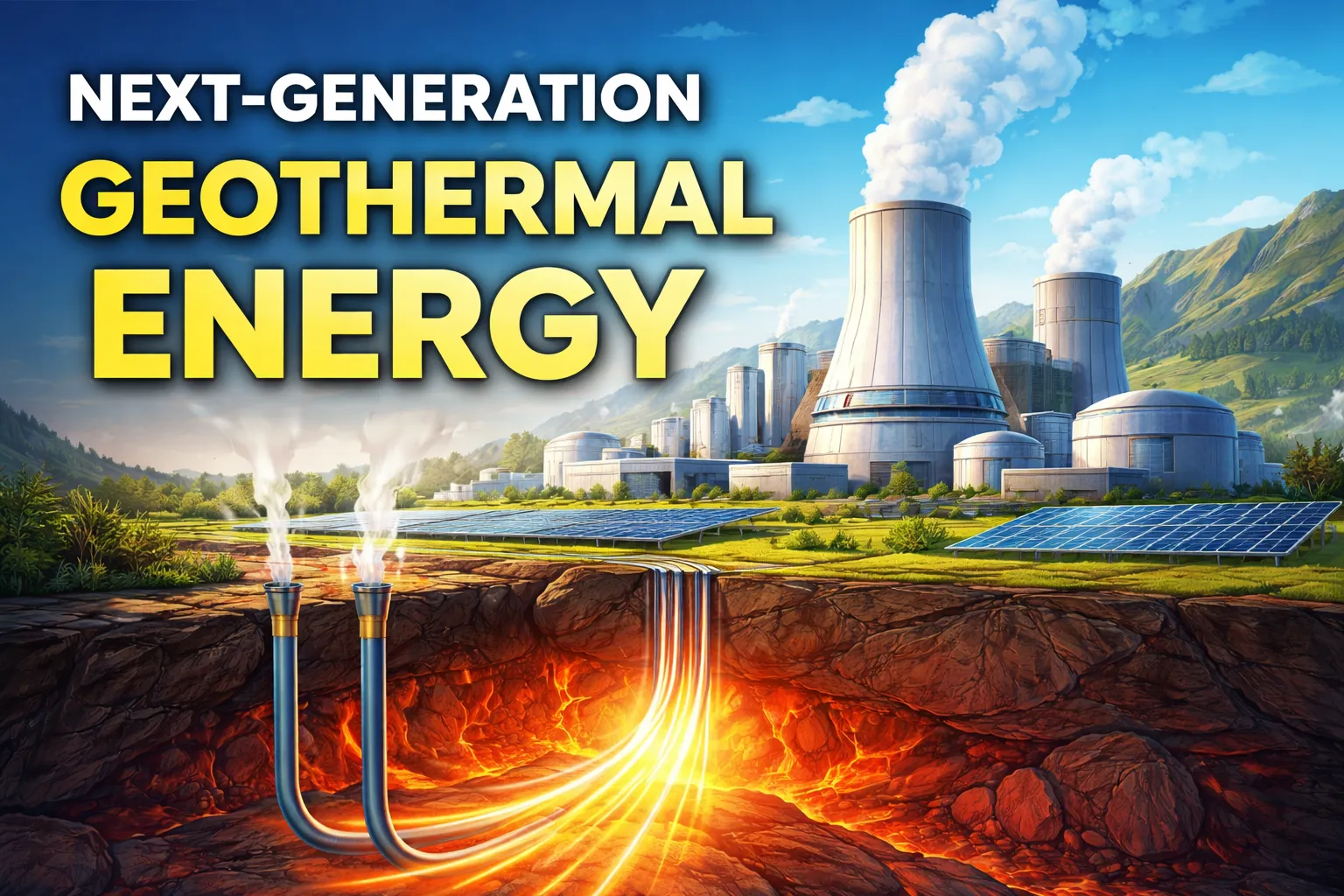
- Drill 3–5 km (or deeper) into hot rock formations
- Create small fractures in rocks
- Inject water underground
- The water heats up and returns to the surface
- Steam drives turbines to generate electricity
Companies working in this field:
- Fervo Energy
- Chevron
2️⃣ Super-Hot Rock Technology
Ultra-deep drilling can reach temperatures above 400°C.
At these temperatures, energy output increases dramatically.
Research support:
- MIT
3️⃣ Using Oil & Gas Drilling Technology
Advanced drilling techniques developed for the oil industry are now being adapted for geothermal projects — helping reduce costs and improve efficiency.
Which Companies Are Working on It?
🇺🇸 United States
- Fervo Energy – EGS deployment
- Chevron – geothermal partnerships
- Baker Hughes – drilling technology
🇮🇸 Iceland
- Reykjavik Energy – advanced geothermal projects
🇯🇵 Japan
- Mitsubishi Heavy Industries – geothermal turbines
What Are the Benefits?
✅ 1) 24×7 Clean Energy
Unlike solar or wind, geothermal produces continuous power.
✅ 2) Very Low Carbon Emissions
Far cleaner than coal-based power plants.
✅ 3) Stable Electricity Prices
No fuel cost — only initial drilling investment.
✅ 4) Energy Security
Reduces dependence on imported oil and gas.
How Big Is the Global Potential?
If deep drilling becomes more affordable, geothermal could supply a significant portion of global electricity demand.
Countries actively funding research include:
- United States
- Japan
When Will This Technology Scale?
- 2026–2030: Pilot projects expand
- 2030–2035: Large-scale commercial rollout begins
- 2040+: Major contributor to clean energy mix
Companies like Fervo have already supplied electricity to the grid at pilot scale.
⚠️ What Are the Challenges?
- High deep-drilling costs
- Risk of micro-seismic activity
- Large upfront capital requirement
However, just like solar panel costs declined over time, geothermal drilling costs may also decrease with scale and innovation.
What About India?
India has geothermal potential, especially in the Himalayan belt and regions like Ladakh.
If India invests early:
- Energy imports could decline
- Green transition could accelerate
- Long-term power stability could improve
Future Outlook – Could This Be the Next Energy Revolution?
Today, geothermal isn’t making headlines.
But in 10–15 years, it could become the third pillar of clean energy alongside solar and wind.
Many experts call it the “Hidden Giant of Clean Energy.”
“The heat stored inside the Earth for millions of years is not just a geological phenomenon — it is a future power bank.
If humanity learns how to safely and economically harness this energy, we could reduce energy crises, oil conflicts, and carbon pollution.
Next-Generation Geothermal Energy is not just another technology — it is a silent revolution that could lead the world toward a truly sustainable future.”