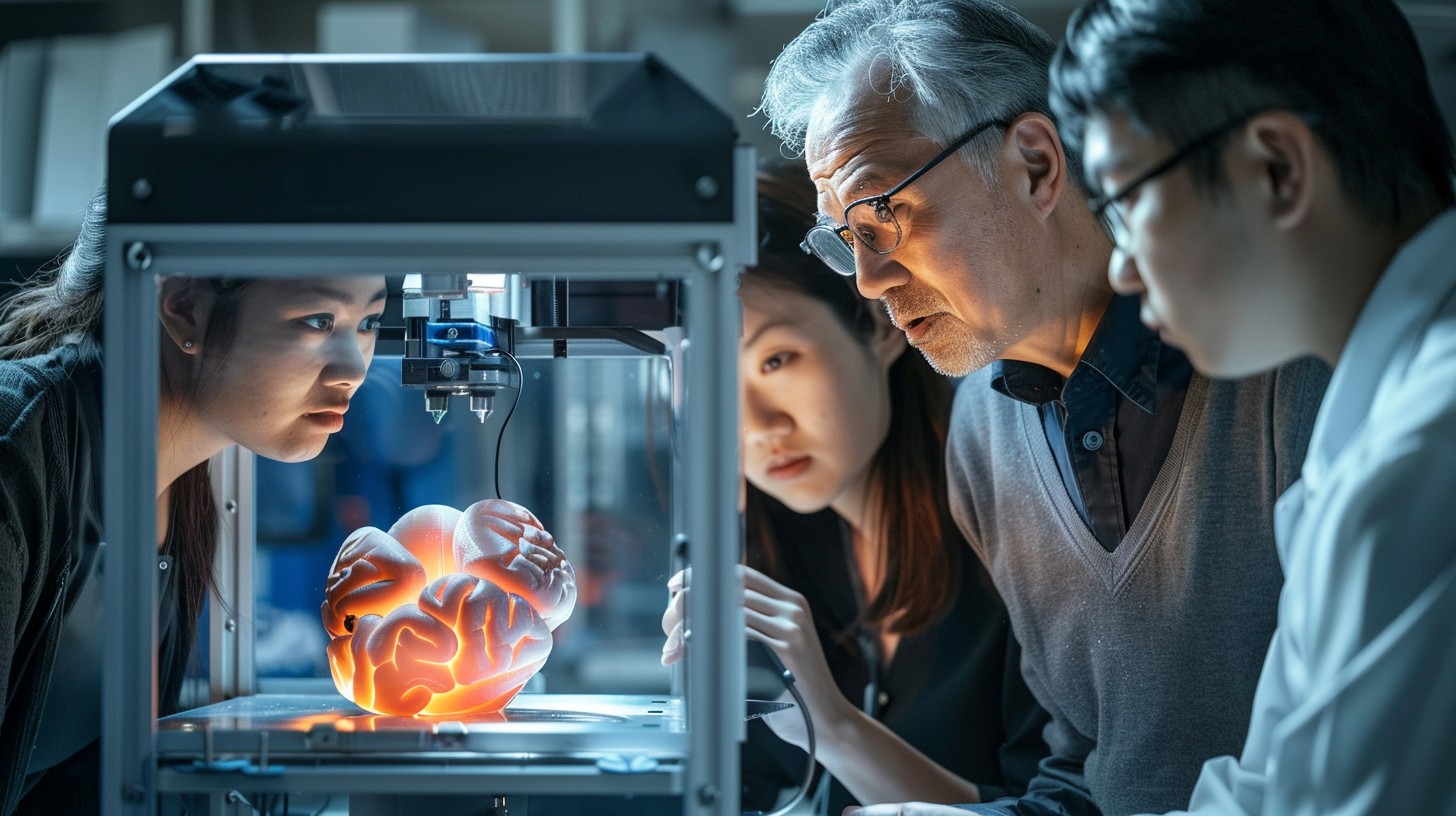
For centuries, humans have tried to understand one fundamental mystery: how the human brain creates thoughts, memories, emotions, and consciousness.
Today, advances in neuroscience, artificial intelligence, and supercomputing have brought this question closer to science than philosophy.
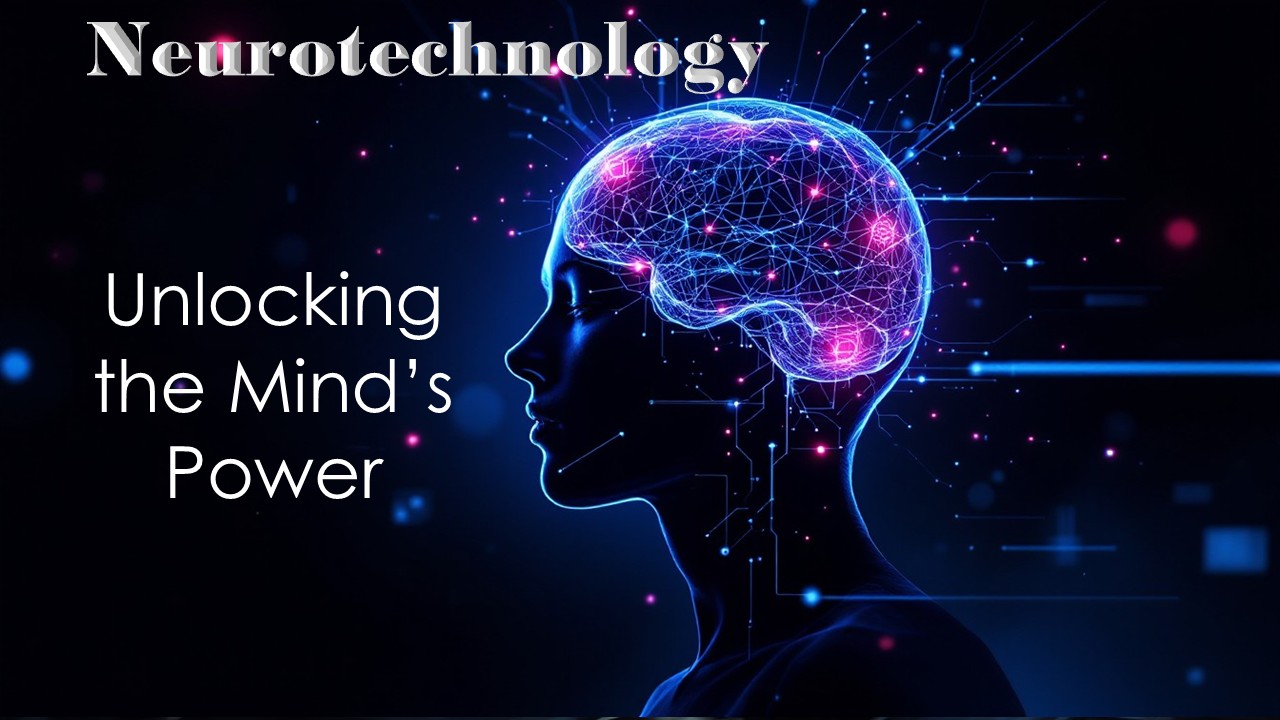
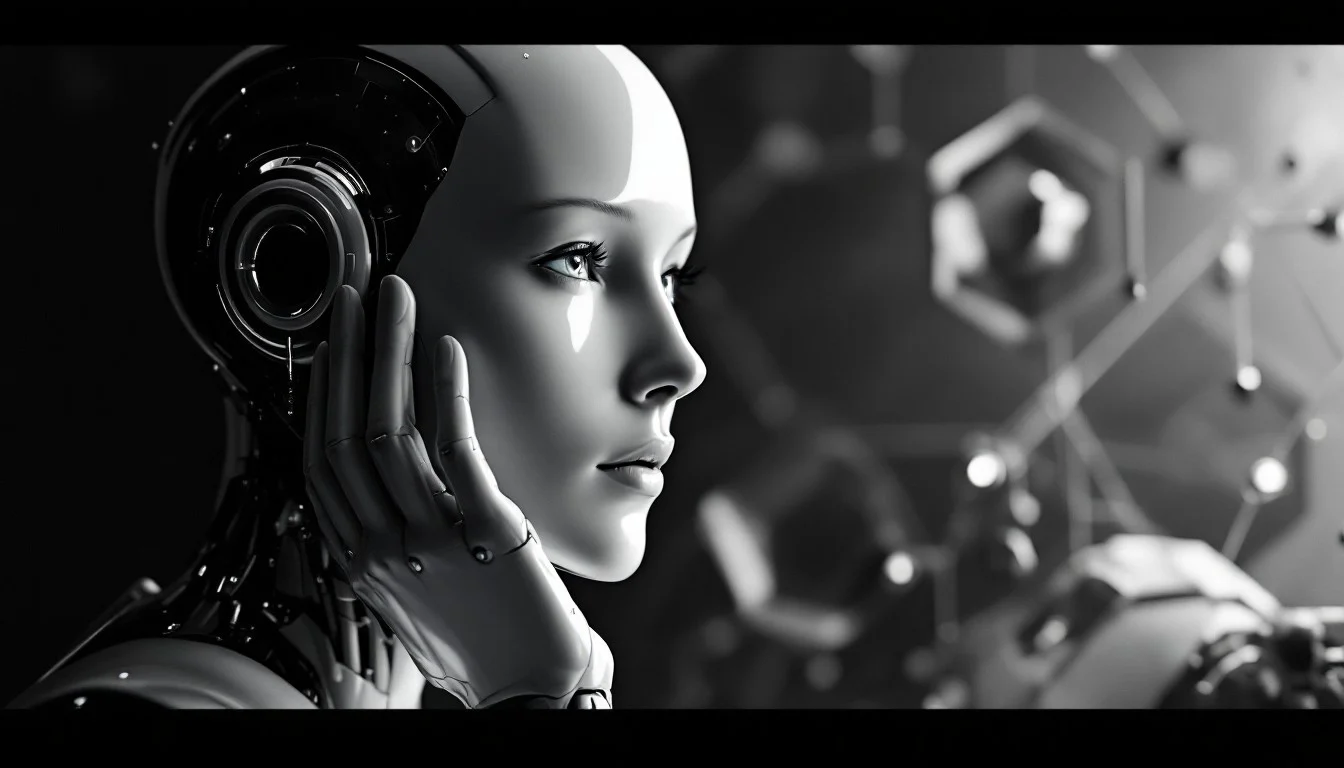
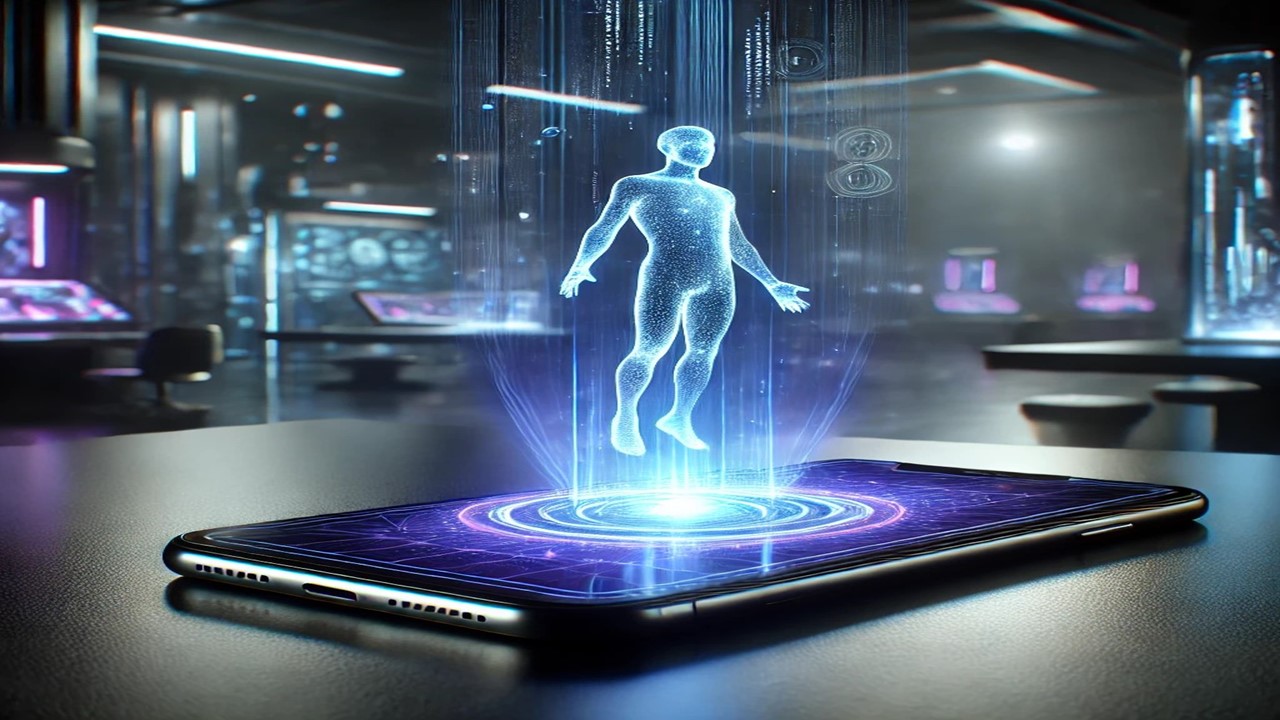
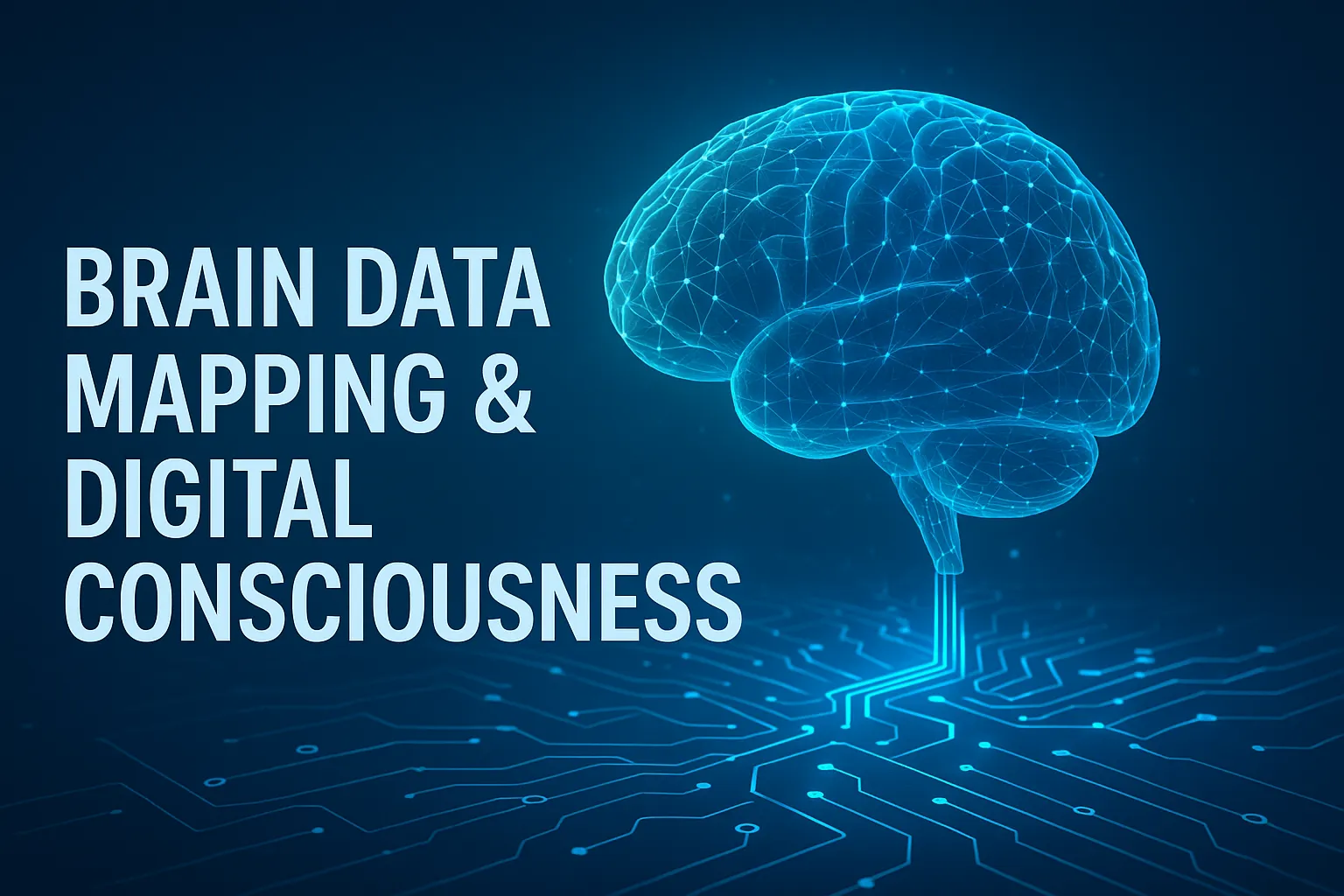
Brain Data Mapping & Digital Consciousness is an emerging research field that aims to digitally map the human brain and explore whether human consciousness can be understood, simulated, or even replicated using technology.
Many experts believe this research could redefine healthcare, human–machine interaction, and our understanding of intelligence itself.
What Is Brain Data Mapping & Digital Consciousness?
Brain Data Mapping refers to the process of identifying, recording, and analyzing the structure and activity of neurons and neural connections in the brain.
The goal is to convert brain activity into data that machines can read, analyze, and model.
Digital Consciousness goes one step further. It explores whether awareness, self-perception, memory, and decision-making can be digitally simulated or transferred into computational systems.
In simple terms:
- Brain Data Mapping creates a detailed map of how the brain works
- Digital Consciousness studies whether human-like awareness can exist in a digital form
How Will This Technology Work?
This technology does not rely on a single system. It is built on the integration of multiple advanced technologies:
- High-resolution brain imaging to capture neural activity
- Sensors and brain–computer interfaces to record signals
- AI and machine learning models to identify patterns
- Supercomputers to simulate brain behavior
- Data models to predict decisions and responses
At present, only small portions of brain activity can be mapped accurately. Mapping the entire human brain remains a long-term goal.
Technologies Involved in This Research
Brain Data Mapping and Digital Consciousness combine several scientific disciplines:
- Neuroscience
- Artificial Intelligence and Machine Learning
- Brain–Computer Interface (BCI) technology
- Supercomputing and high-performance computing
- Cognitive science and psychology
- Big data analytics
This makes it one of the most complex interdisciplinary research areas in modern science.
Which Countries Are Leading This Research?
Several countries are investing heavily in this field:
- United States – Leading large-scale brain research and AI-neuroscience projects
- China – Focused on medical, AI, and defense applications
- European Union – Collaborative neuroscience initiatives across multiple countries
- Japan – Research on human–machine interaction and brain-inspired computing
- South Korea – Advanced work on neuromorphic and brain-based systems
India is also conducting early-stage research in neuroscience and AI, though it is still behind global leaders.
Companies and Organizations Working on It
Research in this field is being carried out by:
- Advanced AI research laboratories
- Brain–Computer Interface startups
- Medical and neuroscience institutes
- Defense research organizations
- Research divisions of major technology companies
Many projects remain confidential due to ethical, security, or strategic concerns.
Current Status of the Research
As of now, the research has reached the following stage:
- Partial brain activity mapping is possible
- Certain emotions and responses can be predicted in controlled environments
- Animal brain mapping is more advanced than human brain mapping
- Human memory and consciousness cannot yet be fully mapped or transferred
- No verified digital consciousness has been created
In short, we can observe and analyze the brain, but we do not yet fully understand it.
When Will This Technology Reach the Public?
Experts estimate different timelines for different applications:
- Medical treatment applications: 10–15 years
- Memory assistance and neural rehabilitation: 15–20 years
- Digital consciousness simulation: 25–40 years or more
Due to ethical and safety concerns, progress will likely remain slow and tightly regulated.
How Can This Technology Benefit People?
If successfully developed, this technology could offer transformative benefits:
- Treatment of paralysis, brain injuries, and neurological disorders
- Better understanding and treatment of Alzheimer’s and memory loss
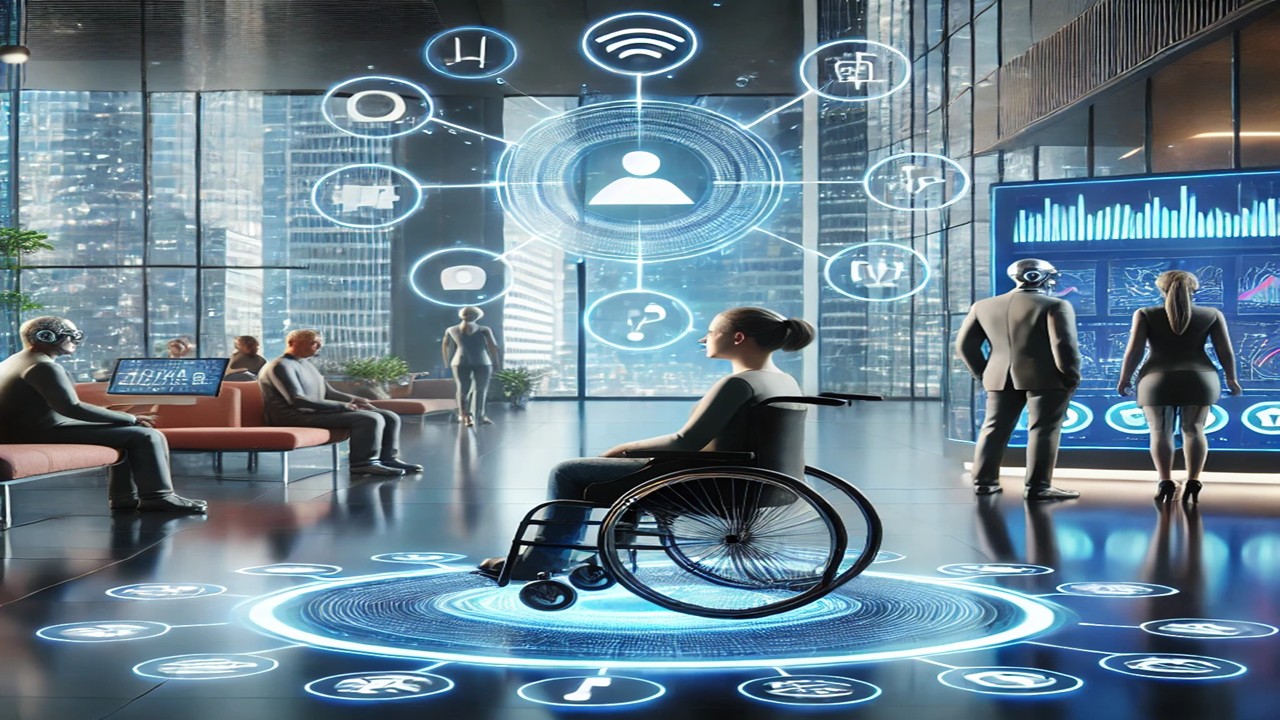
- Communication tools for people with disabilities
- Personalized learning and skill enhancement
- A new era of human–AI collaboration
Healthcare is expected to be the first major beneficiary.
Major Challenges and Limitations
Several critical challenges stand in the way:
- Extreme complexity of the human brain
- Lack of a clear scientific definition of consciousness
- Ethical and privacy risks
- Possibility of misuse or surveillance
- Data security and ownership concerns
- Legal and moral accountability
The biggest question remains:
If the brain becomes data, where do we draw the line between human and machine?
Ethical and Social Concerns
This research raises serious ethical questions:
- Who owns brain data and memories?
- Should digital consciousness have rights?
- Could this technology increase inequality?
- Can governments or corporations misuse it?
Because of these concerns, global discussions on neuro-rights and ethical AI have already begun.
Outcome
Brain Data Mapping & Digital Consciousness is not just another technological advancement—it is a field that challenges our understanding of human identity, intelligence, and existence.
Although the research is still in its early stages, its potential impact is enormous.
Used responsibly, it could revolutionize medicine and human capability.
Used irresponsibly, it could become one of the most dangerous technologies ever created.
The coming decades will decide whether this technology helps humanity understand itself better—or whether it forces humanity to redefine what it means to be human.
Join our chatroom Bizchat for professional talks and more!